

2012-2017 Hyundai Veloster Fuse Box (BCM) Issues: Solving Electrical Problems and Parasitic Drain
This guide covers common failures, recalls, and critical compatibility details for the Veloster's main interior fuse box, also known as the Body Control Module or Smart Junction Box.
- This part is a computer called the Smart Junction Box (SJB) or Body Control Module (BCM), not just a simple fuse holder.
- Compatibility is critical. You MUST match the OEM part number exactly, paying close attention to your vehicle's options like turn-key vs. push-button start.
- A replacement BCM will likely require programming by a dealer or a specialized shop to work correctly with your car's keys and security system.
- Common failure symptoms include a dead battery (parasitic draw), erratic lights and wipers, and even no-start conditions.
Symptoms of a Failing Veloster Fuse Box (BCM)

When the Smart Junction Box (SJB), or Body Control Module (BCM), begins to fail, it can cause a wide range of confusing and seemingly unrelated electrical issues. Because this module controls so many different systems, symptoms can vary greatly. Owners often report strange behavior that comes and goes intermittently.
1. Parasitic Battery Drain
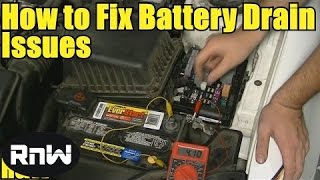
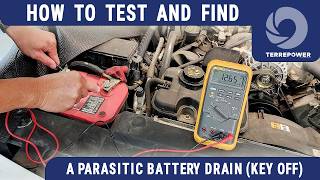
One of the most common and frustrating symptoms is a parasitic battery drain. A faulty BCM may fail to go into a low-power "sleep mode" after the car is turned off, causing it to continuously draw power and drain the battery overnight. Forum users have traced significant draws (as high as 1-3 amps) back to circuits controlled by the BCM, such as the multimedia/radio system or door locks. If your battery repeatedly dies after sitting for a day or two, a faulty BCM is a likely suspect.
🎬 Watch: How to find a parasitic battery drain yourself.2. Erratic or Non-Functioning Electronics
Since the BCM is the command center for body electronics, its failure can lead to unpredictable behavior. You might experience:
- Lighting Problems: Headlights, taillights, or interior lights flickering, staying on, or not working at all.
- Wiper Issues: Wipers turning on by themselves or not responding to the switch.
- Power Window/Lock Malfunctions: Power windows not opening/closing, or door locks engaging or disengaging randomly.
- Warning Lights: Multiple, unrelated warning lights may appear on the dashboard as the BCM sends faulty signals.
3. No-Start or Stalling Condition
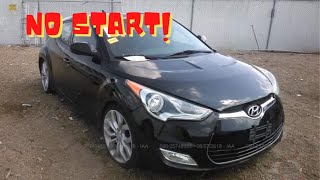
In more severe cases, a BCM failure can prevent the car from starting. It can fail to recognize the key, or it may not send the proper signal to the starter relay or other modules required for engine start-up. Some owners have also reported stalling at idle, followed by an inability to shift the transmission out of gear until the car is restarted multiple times, pointing to a complex electrical failure involving the BCM.
🎬 See a real-world diagnosis of a Veloster no-start issue.Known Issues, Recalls, and Technical Service Bulletins (TSBs)

While the BCM itself hasn't been the subject of a direct recall, several electrical system recalls for the 2012-2017 Veloster are important to be aware of, as they involve the vehicle's fuse boxes and wiring.
- NHTSA Recall 251 (Campaign 24-01-027H): This critical safety recall affects 2012-2015 Velosters. The Anti-Lock Brake System (ABS) module can leak brake fluid internally, causing an electrical short that can lead to a fire in the engine compartment, even when the car is parked. The remedy involves dealers replacing fuses in the engine compartment fuse box. Owners are advised to park outside and away from structures until this recall is performed.
- NHTSA Recall 242 (TSB 23-01-062H): Affecting 2012-2014 Velosters, this recall addresses the Rear Parking Assist Sensors, which can allow water intrusion. This can cause an electrical short, increasing the risk of fire. The fix requires dealers to inspect the sensors and replace a 10A fuse in the junction box with a lower amperage fuse.
These recalls highlight the sensitivity of the Veloster's electrical systems and the importance of ensuring all related fuses are correct and in good condition.
Warning: A used BCM may have been sourced from a vehicle that did not have these important recall services performed. Always check your vehicle's VIN for open recalls on the NHTSA website.
Buying a Used 2012-2017 Veloster Fuse Box: What to Know

Purchasing a used BCM can be a cost-effective solution, but it requires careful attention to detail to ensure you get the right part that will work in your car.
1. Match Part Numbers Exactly
This is the most critical step. Hyundai used many different BCM versions for the Veloster, depending on the model year, trim level, and options like a conventional key or a push-button start system. The part number on your original module MUST match the part number on the replacement unit. Even a small difference in the number can lead to incompatibility. Do not rely on visual similarity alone.
2. Verify Vehicle Options
As stated in the initial data, compatibility is highly dependent on your vehicle's features. The most significant split is between models with a traditional turn-key ignition and those with a push-button start (smart key) system. A BCM from a smart key car will not work in a turn-key car, and vice-versa. Also, features like navigation, automatic climate control, and the turbo engine can dictate which BCM is required.
3. Inspect for Physical Damage
When you receive the used BCM, inspect it carefully for any signs of damage. Look for:
- Water Intrusion: Check for corrosion, water stains, or a powdery residue on the connectors or circuit board. Water damage is a common cause of BCM failure and a damaged replacement will not last.
- Melted Plastic or Burn Marks: Any sign of heat damage around the fuse sockets or connectors indicates a previous short circuit. Do not install a module with these signs.
- Bent or Damaged Pins: Ensure all the connector pins are straight and clean.
Programming and Installation
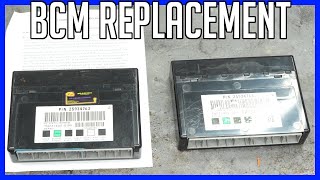
A key question for any used electronic module is whether it needs to be programmed. For the 2012-2017 Veloster BCM, the answer is often yes, programming may be required. This is not a simple plug-and-play part in most cases. The BCM is linked to the vehicle's immobilizer and key system. After installation, the module may need to be configured to the vehicle's specific options and the keys may need to be relearned to the new module. While some sources suggest it might work without programming if the part number is an exact match, it is best to assume a visit to a Hyundai dealership or a well-equipped independent shop with Hyundai-specific diagnostic tools will be necessary to ensure full functionality.
🎬 Watch: A step-by-step guide on how to replace a BCM.Cost to Replace a Veloster BCM
The cost can vary significantly based on the parts source and labor.
| Item | Estimated Cost |
|---|---|
| New OEM Part | $400 - $600 |
| Used OEM Part | $75 - $200 |
| Shop Labor (Installation & Diagnosis) | $100 - $200 |
| Dealer Programming | $100 - $250 |
| Total Estimated Cost (Used Part) | $275 - $650 |
Frequently Asked Questions (FAQ)
Can I drive my Veloster with a bad fuse box (BCM)?
It is not recommended. While the car may still run, a faulty BCM can cause unpredictable behavior of critical systems like headlights. In severe cases, it can cause the car to stall or fail to start, potentially leaving you stranded. Given the fire risk highlighted by related recalls, any major electrical issue should be addressed immediately.
Is the interior fuse box the same as the one in the engine bay?
No. The Veloster has two main fuse boxes. The one in the engine bay primarily handles high-current systems related to the engine and powertrain. The one inside the car, on the driver's side of the dashboard, is the Smart Junction Box (BCM) discussed in this article, which controls body electronics.
Do I need to disconnect the battery before replacing the BCM?
Yes, absolutely. Before attempting to unplug or replace any electronic module, you must disconnect the negative battery terminal to prevent electrical shorts and damage to the new module or other vehicle components.
Why is my battery dying, and how do I know if it's the BCM?
A dying battery is often caused by a parasitic draw. To test for this, a mechanic can use a multimeter to measure the current being drawn from the battery when the car is off. If the draw is excessive (typically over 50-80 milliamps after the car's modules have gone to sleep), they can pull fuses one by one. If pulling a fuse labeled for the BCM, radio, or interior lights causes the draw to drop significantly, it strongly points to a faulty BCM or a component it controls.
Helpful Videos


Technical Specifications
OEM Part Numbers: 95400-2V040 95400-2V041 95400-2V044 95400-2V047 95400-2V071 95400-2V074 95400-2V137 95400-2V177 95400-2V197 95400-2V084
Located on the driver's side of the dashboard, behind a cover. Controls body electrical functions including lights, wipers, locks, and security.
We Have This Part in Stock



The information in this article is provided for general reference and educational purposes only. Vehicle specifications, procedures, and part compatibility can vary by production date, trim level, and region. Always consult your vehicle's factory service manual and verify part numbers before purchasing or performing repairs. Safety-critical components such as airbags, seat belts, and braking systems should be installed by a qualified professional.
- Hyundai Veloster:
- 🎬 Helpful Videos
- 🛍️ Shop This Part
- Symptoms of a Failing Veloster Fuse Box (BCM)
- 1. Parasitic Battery Drain
- 2. Erratic or Non-Functioning Electronics
- 3. No-Start or Stalling Condition
- Known Issues, Recalls, and Technical Service Bulletins (TSBs)
- Buying a Used 2012-2017 Veloster Fuse Box: What to Know
- 1. Match Part Numbers Exactly
- 2. Verify Vehicle Options
- 3. Inspect for Physical Damage
- Programming and Installation
- Cost to Replace a Veloster BCM
- Frequently Asked Questions (FAQ)
- 🎟️ Get 5% Off