

2007-2016 Hyundai Santa Fe Fuse Box: No-Start, Fire Recalls, and Part Matching Guide
This guide covers common failures, critical fire-related recalls, and how to choose the correct replacement engine fuse box for second and third-generation Hyundai Santa Fe models.
- A major fire risk recall exists for 2013-2016 models related to the ABS module; owners should park outside until the recall fix is performed.
- Compatibility is critical. The OEM part number on the replacement fuse box MUST exactly match the original to ensure all vehicle features work correctly.
- The engine compartment fuse box does not require dealer programming; it is a plug-and-play part if the part number is correct.
- The most common symptom of failure is a 'crank, no-start' condition, often caused by a non-serviceable fuel pump relay inside the fuse box.
Important: Two Generations, Three Different Vehicles

Before diagnosing or buying a fuse box for a 2007-2016 Santa Fe, you must identify which vehicle you have. This year range covers two distinct generations and three different vehicle types that do not share the same fuse boxes.
- 2007-2012 Santa Fe (Second Generation, "CM"): This was a single model available with either a 2.7L V6, 3.3L V6, or 3.5L V6 engine over its lifespan. Compatibility is generally simpler for these years but matching the part number is still recommended.
- 2013-2016 Santa Fe (Third Generation, "DM/NC"): This generation is more complex and was sold as two different vehicles:
- Santa Fe Sport: The smaller, 5-passenger model with 2-rows of seating, typically equipped with a 2.4L 4-cylinder or 2.0L Turbo engine.
- Santa Fe (LWB): The larger, 7-passenger Long Wheelbase model with 3-rows of seating, almost always equipped with a 3.3L V6 engine. For the 2019 model year, this was renamed the 'Santa Fe XL'.
Warning: Fuse boxes for the Santa Fe Sport and the 3-row Santa Fe (LWB) are NOT interchangeable. You must use a part designed for your specific model.
Known Issues, Recalls, and Technical Service Bulletins (TSBs)

CRITICAL: ABS Module Fire Risk Recall
Numerous 2013-2018 Santa Fe, Santa Fe Sport, and Santa Fe XL models are under a major safety recall for a defect in the Anti-Lock Brake System (ABS) module. This module can malfunction and cause an electrical short, potentially leading to an engine compartment fire, even when the vehicle is parked and turned off.
NHTSA and Hyundai strongly advise owners to park these vehicles outside and away from structures until the recall repair is performed.
- NHTSA Recall Numbers: 22V-056, 22V810000 (also known as Hyundai Recalls 218, 237, and 205).
- The Fix: A Hyundai dealer will inspect the ABS module and install a new, revised multi-fuse in the engine compartment fuse box free of charge. In some cases, the ABS module itself may be replaced.
- How to Check: You can enter your 17-digit Vehicle Identification Number (VIN) on the NHTSA website to see if your specific vehicle is affected.
Tow Hitch Wiring Fire Risk Recall
Some 2019-2023 models are covered, but the issue may affect earlier models with dealer or port-installed accessory tow hitches. The tow hitch wiring harness module can allow moisture inside, causing a short circuit and fire risk. The fix involves installing a new fuse and a waterproofed wiring kit.
Symptoms of a Failing Fuse Box

A faulty engine fuse box can cause some of the most confusing and intermittent problems. Look for these common signs:
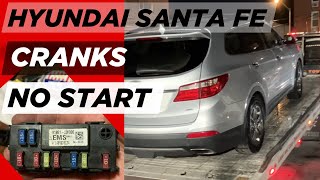
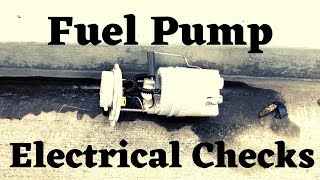
- Engine Cranks But Won't Start: This is the most common failure symptom across all years. It is often caused by the failure of an internal, non-serviceable relay 🎬 Watch: Diagnosing a Santa Fe EMS box crank-no-start issue that powers the fuel pump. You may notice you no longer hear the faint 2-second hum from the fuel tank 🎬 See: How to perform fuel pump electrical tests when you turn the key to the 'ON' position.
- Multiple, Unrelated Electrical Failures: The radio, dashboard lights, power windows, and climate control may all stop working at once or intermittently. This happens because the main power feeds to these different circuits all run through the fuse box.
- Intermittent Stalling While Driving: A failing fuse box can momentarily cut power to the fuel pump or engine computer, causing the engine to shut off in traffic. This is a serious safety hazard.
- Visible Damage or Burning Smell: A distinct smell of burning plastic or visible melting, charring, or white/green corrosion on the fuse box terminals is a clear sign of a serious internal failure.
- Repeatedly Blowing Fuses: If a new fuse blows immediately after being installed, it could point to a short within the fuse box's internal circuitry.
| Symptom | Possible Cause | Severity |
|---|---|---|
| Engine cranks, no start | Internal fuel pump relay failure | Critical |
| Multiple accessories fail at once | Internal power distribution failure | Serious |
| Intermittent stalling | Loss of power to ECU or fuel pump | Critical |
| Smell of burning plastic | Overheating terminal or internal short | Critical |
Buying a Used Fuse Box: What to Look For

A used OEM fuse box is an excellent, cost-effective alternative to an expensive new part. However, you must be extremely careful to get the correct one.
Warning: You cannot buy a fuse box for these vehicles based on year and model alone. The OEM part number printed on the sticker of the replacement part MUST exactly match the part number on your original unit.
1. Match the Part Number Exactly
The correct part number depends on several factors, and even a small difference can mean it won't work. The part number is printed on a sticker on the side of the fuse box housing.
- Generation: 2007-2012 parts are different from 2013-2016 parts.
- Model (2013-2016): Santa Fe Sport vs. Santa Fe (LWB).
- Engine: 2.4L, 2.0T, 3.3L, 3.5L, etc.
- Ignition Type: Push-button start (Smart Key) vs. traditional turn-key ignition.
- Options: Features like All-Wheel Drive (AWD), factory towing packages, or heated windshields can require a different fuse box configuration.
2. Perform a Physical Inspection
- Check for Corrosion: Carefully inspect all connector pins on the bottom and sides of the box. Look for any signs of white or greenish powder, which indicates water damage. A water-damaged fuse box is a bottomless pit of future problems.
- Look for Melted Plastic: Pay close attention to the slots for high-amperage fuses and the main power input studs. Any melting or charring indicates the box has overheated and should be rejected.
- Ensure Covers are Intact: The fuse box should come with its main cover to protect it from moisture and debris in the engine bay.
Pro Tip: After installing the replacement fuse box, do not discard your old one. Transfer all the original fuses and relays from your old box to the replacement unit. This ensures all amperage ratings are correct for your specific vehicle, as a used part may have had fuses moved around.
Programming and Installation Guide
Does the engine fuse box need to be programmed?
No. For the 2007-2016 Santa Fe, the main engine compartment fuse box (Junction Block) does not require any programming, flashing, or dealer intervention. It is a plug-and-play module, provided you have sourced a replacement with the exact same OEM part number as your original.
Note: This does not apply to the interior fuse panel, which is often integrated with the Body Control Module (BCM) and may require programming.
Replacement Steps Overview
Replacing the engine fuse box is a manageable DIY task for someone with basic mechanical skills. The process generally takes 1-2 hours.
- Disconnect the Negative Battery Terminal. This is the most important safety step.
- Remove the Fuse Box Cover. It is typically held on by clips.
- Unbolt Main Power Leads. There will be one or more large-gauge wires bolted to studs on the fuse box. These are the main power feeds from the battery and alternator.
- Unbolt the Fuse Box Housing. Remove the bolts securing the fuse box assembly to the vehicle's chassis.
- Disconnect Wiring Harnesses. Carefully lift the fuse box to access the large electrical connectors on the underside. Each connector has a locking tab that must be pressed or slid to release it. Do not force them.
- Install the New Box. Installation is the reverse of removal. Ensure all connectors click securely into place before bolting down the housing and reconnecting the battery.
Cost of Replacement
Replacing a Santa Fe fuse box can be expensive if you buy new, making a quality used part an attractive option.
| Part Source | Estimated Cost |
|---|---|
| New OEM | $400 - $600+ |
| New Aftermarket | $200 - $400 |
| Used OEM | $75 - $250 |
| Shop Labor | $150 - $300 |
Frequently Asked Questions (FAQ)
Do I need to program a replacement fuse box for my Santa Fe?
No, the main engine compartment fuse box for 2007-2016 models is plug-and-play and does not require programming. You must, however, match the part number exactly.
My car cranks but won't start. Could it be the fuse box?
Yes, this is a classic symptom. The internal relay for the fuel pump is often soldered to the fuse box's circuit board and cannot be replaced separately. When it fails, the fuel pump gets no power, and the car will not start.
What's the difference between the engine and interior fuse box?
The engine fuse box (Junction Block) handles high-power components like the starter, fuel pump, and cooling fans. The interior fuse box (often part of the BCM) handles lower-power cabin accessories like the radio, interior lights, and power outlets.
Will a fuse box from a Santa Fe Sport fit my 3-row Santa Fe?
No. The Santa Fe Sport and the larger 3-row Santa Fe (LWB) are different vehicles with different wiring and engines. You must use a fuse box specifically for your model, with a matching part number.
Why do I need to check for recalls? Isn't a bad fuse box a separate problem?
The major fire recalls for 2013-2016 models involve the ABS module shorting out, which can damage the fuse box or cause a fire originating from it. Furthermore, the official recall fix involves installing a new multi-fuse in the fuse box, so its status is directly related to the recall.
Helpful Videos
Technical Specifications
OEM Part Numbers: 91115-2B020 91115-2B050 911152B020 911152B050 912004Z270 912004Z271 912004Z280 912004Z281 912004Z470 912004Z471 91210B8490 91210B8491 91210B8500 91210B8501 91210B8560 91950-2B710
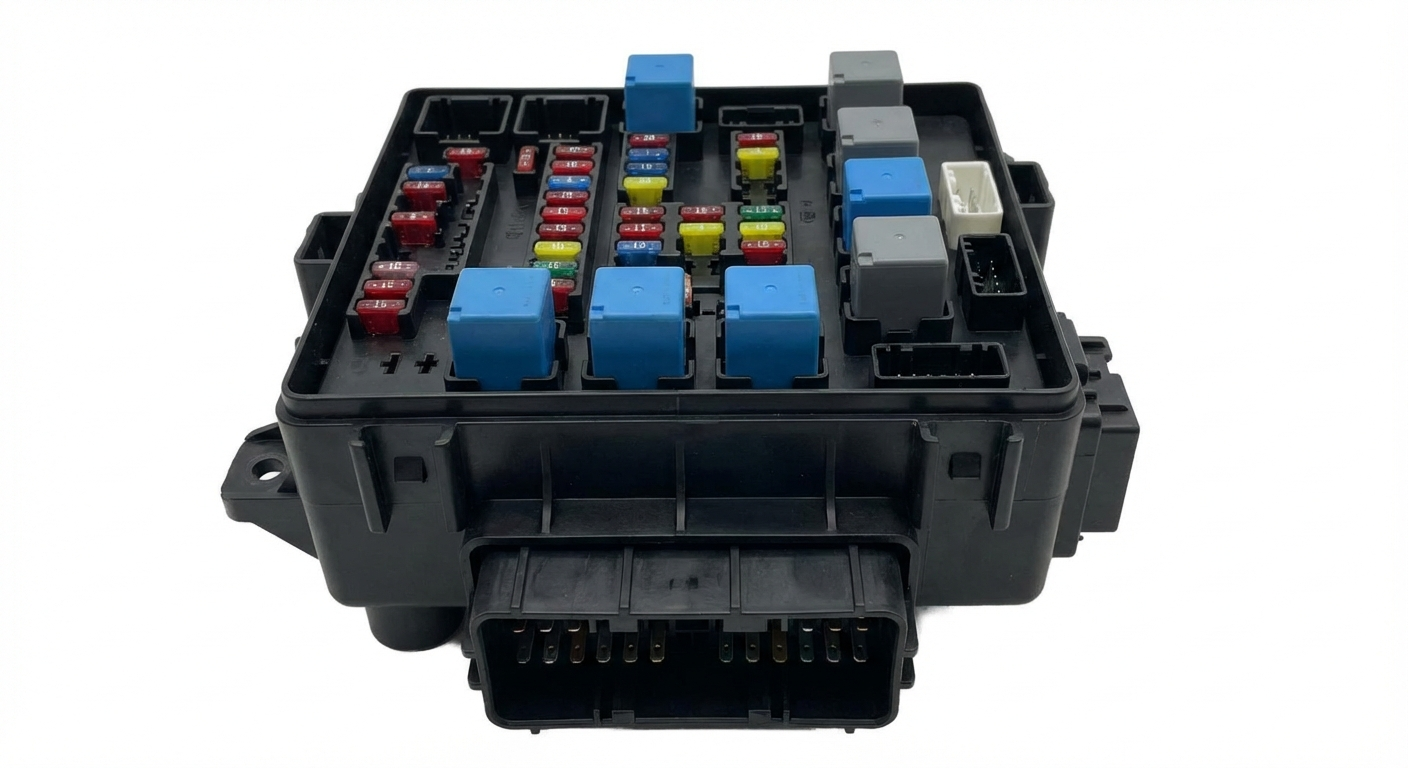
Houses blade fuses (low profile mini, standard mini), J-case fuses, and integrated, non-serviceable relays. Connects to the main vehicle wiring harness via multiple locking plug connectors.
We Have This Part in Stock



The information in this article is provided for general reference and educational purposes only. Vehicle specifications, procedures, and part compatibility can vary by production date, trim level, and region. Always consult your vehicle's factory service manual and verify part numbers before purchasing or performing repairs. Safety-critical components such as airbags, seat belts, and braking systems should be installed by a qualified professional.
- Hyundai Santa Fe:
- 🎬 Helpful Videos
- 🛍️ Shop This Part
- Important: Two Generations, Three Different Vehicles
- Known Issues, Recalls, and Technical Service Bulletins (TSBs)
- CRITICAL: ABS Module Fire Risk Recall
- Tow Hitch Wiring Fire Risk Recall
- Symptoms of a Failing Fuse Box
- Buying a Used Fuse Box: What to Look For
- 1. Match the Part Number Exactly
- 2. Perform a Physical Inspection
- Programming and Installation Guide
- Does the engine fuse box need to be programmed?
- Replacement Steps Overview
- Cost of Replacement
- Frequently Asked Questions (FAQ)
- 🎟️ Get 5% Off