

2018-2026 Hyundai Kona Fuse Box: A Guide to Generations, Powertrains, and Part Numbers
This guide explains the critical differences between Hyundai Kona fuse boxes to help you find the correct used part and avoid common compatibility mistakes.
- Compatibility is critical: You must match the OEM part number from your old fuse box exactly. Year, model, and engine are not enough.
- Gasoline and Electric (EV) models use completely different, non-interchangeable fuse boxes.
- First generation (2018-2023) and second generation (2024-2026) parts are not compatible.
- A replacement fuse box with a matching part number does NOT require programming or a dealer visit.
Key Differences in Kona Fuse Boxes

Finding the right fuse box for a Hyundai Kona is more complicated than for many other vehicles. Several versions exist, and they are not interchangeable. Ordering the wrong one will result in wasted time and money. Before buying, you must identify which generation, powertrain, and trim level your vehicle is.
First Generation (2018-2023) vs. Second Generation (2024-2026)
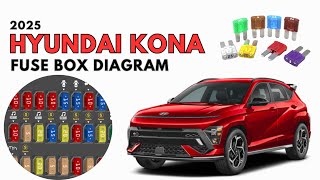
The Hyundai Kona underwent a major redesign for the 2024 model year. Fuse boxes from the first generation (2018-2023) are not compatible with the second generation (2024 and newer). 🎬 Watch: 2024-2026 Kona fuse box locations and diagram guide The wiring, mounting points, and internal circuitry are completely different. Always confirm the model year of the donor vehicle when purchasing a used fuse box.
Gasoline vs. Kona Electric (EV)
The most significant variation is between the gasoline and all-electric models. The Kona EV has a high-voltage battery system and unique components like an Integrated Charging Control Unit (ICCU) that are not present in the gas version. This results in a completely different fuse box design to manage the distinct electrical architecture. A fuse box from a gasoline Kona will not work in a Kona EV, and vice-versa.
Trim Level and Options
Different trim levels (like the performance-oriented 'N' model) and factory options can also dictate which fuse box is used. Features like a sunroof, premium audio systems, or advanced driver-assistance systems require different circuits and fuses. This is why simply matching the year and engine is not enough; the part number on your original fuse box is the only way to guarantee compatibility.
Warning: This vehicle may have several different cabin and engine bay fuse boxes depending on the generation, powertrain (gasoline or electric), and trim level. Please verify that the part number on your original fuse box matches the replacement unit before ordering.
Symptoms of a Failing Fuse Box


A failing fuse box can cause some of the most confusing and frustrating electrical problems. While a single blown fuse is a simple fix, a problem with the box itself can lead to widespread issues.
- Multiple, Unrelated Electrical Failures: This is the most common symptom. For example, the radio, power windows, and interior lights might all stop working at once.
- Intermittent Electrical Problems: Components may work one moment and fail the next. This can be caused by loose connections or corrosion within the fuse box terminals.
- Repeatedly Blowing Fuses: If a new fuse blows immediately after being installed, it could point to a short circuit in the component's wiring. However, if multiple different fuses blow repeatedly, it may indicate a problem within the fuse box itself.
- Visible Damage: Look for melted plastic around fuse terminals, discoloration, or a burning smell. These are clear signs of overheating and a serious electrical fault.
- Corrosion: White or greenish powder on the terminals can disrupt electrical flow and cause intermittent issues. This is often caused by water intrusion.
- Car Won't Start: If a critical fuse or relay in the main engine bay fuse box fails, it can prevent power from reaching the starter or fuel pump.
Known Issues, Recalls, and Technical Service Bulletins (TSBs)

While there are no widespread recalls specifically for the fuse box itself, several electrical system recalls and TSBs are relevant for Kona owners.
- NHTSA Recall 23V-901 (Hyundai Recall 252): Affects certain 2024 Kona models. The 12-volt positive battery cable could be damaged in a frontal crash by contacting the ECM bracket, potentially causing an electrical short and increasing the risk of an engine compartment fire. The remedy involves installing protective sheathing over the wiring connected to the junction block.
- NHTSA Recall 20V-630 (Hyundai Recall 196): Affects certain 2019-2020 Kona Electric vehicles. The high-voltage lithium-ion battery could short-circuit, increasing the risk of a fire. The remedy involves a software update and battery inspection/replacement. Owners were advised to park outside and away from structures.
- NHTSA Recall 21V-127: An expansion of the previous recall for 2019-2020 Kona Electric models due to fire risk from an internal battery cell short.
- Service Campaign 9A4 (TSB 23-01-073H-1): For 2019-2023 Kona Electric models, this campaign addresses an EV warning light with specific DTCs (P1AA6 to P1AAF) by updating the Battery Management System (BMS) software to improve diagnostics.
- 12-Volt Battery Drain: Some owners of 2024 models have reported premature 12-volt battery failure, which can cause a variety of electrical symptoms. 🎬 Watch: Real-world 12-volt battery drain issues on the 2024 Kona
Buying a Used Fuse Box
A used OEM fuse box is an excellent, cost-effective alternative to an expensive new part. However, careful inspection and verification are essential.
The Golden Rule: Match the Part Number
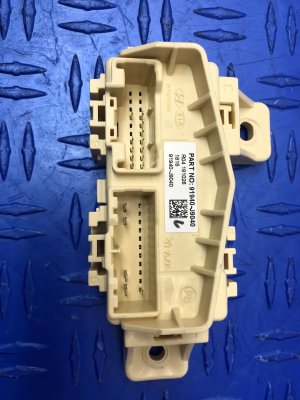
Because of the many variations, you must match the OEM part number from your original fuse box to the replacement part. The part number is typically printed on a sticker or stamped directly into the plastic housing. Do not rely on visual comparison alone.
Physical Inspection Checklist
- Check for Corrosion: Inspect all metal pins and terminals. Any sign of green or white crusty buildup means the part was exposed to moisture and should be avoided.
- Look for Heat Damage: Examine the plastic around each fuse and relay socket. Any melting, warping, or discoloration indicates a past short circuit or overload.
- Inspect Connectors: Ensure all plastic connector housings are intact, with no cracks or broken locking tabs. Bent or pushed-out pins can cause connection problems.
- Verify Integrity: Check that the main housing isn't cracked or broken, which could allow moisture and dirt to enter.
Pro Tip: When you receive your used fuse box, it's a good practice to replace all the old fuses and relays with new ones or transfer the known-good ones from your original unit. This eliminates the fuses themselves as a potential point of failure.
Replacement and Programming
For the Hyundai Kona, the main fuse boxes (junction blocks) are primarily power distribution centers and generally do not contain integrated control modules. This means they typically do not require programming or flashing after installation.
- Programming Required? No. A replacement fuse box with the exact same part number should be a direct swap without the need for dealer software.
- Anti-Theft Link? No. The fuse box is not tied to the vehicle's immobilizer system.
DIY Replacement Walkthrough
- Disconnect the Battery: ALWAYS disconnect the negative battery terminal before working on any part of the electrical system. This prevents short circuits and protects you and the vehicle's electronics.
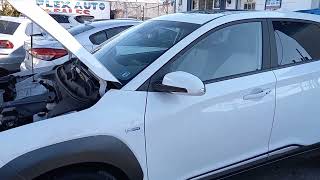
- Locate the Fuse Box: The cabin fuse box is typically behind a small panel on the driver's side of the dashboard. 🎬 See this video to find every fuse box location The engine compartment fuse box is usually near the 12-volt battery.
- Remove Covers and Fasteners: Remove any plastic covers and the bolts or nuts securing the fuse box to the vehicle's chassis.
- Disconnect Electrical Connectors: Carefully release the locking tabs on each wiring harness connector and pull them straight out. Do not force them. Some large connectors may have a lever-lock mechanism.
- Swap the Unit: Install the replacement fuse box and reconnect all wiring harnesses, ensuring they click securely into place.
- Transfer Fuses and Relays: Move all fuses and relays from your old box to the corresponding locations in the new one. This ensures the correct amperage ratings are in the correct circuits.
- Reconnect Battery: Reconnect the negative battery terminal and test all electrical functions.
Cost Comparison
Replacing a fuse box can be expensive if you buy new from a dealer. A used OEM part offers significant savings.
| Part Type | Estimated Cost |
|---|---|
| New OEM | $400 - $1,200+ (Varies greatly by specific part number) |
| New Aftermarket | Not commonly available |
| Used OEM | $45 - $150 |
| Shop Labor | $100 - $250 |
Frequently Asked Questions (FAQ)
Do I need to program a replacement fuse box for my Hyundai Kona?
No, as long as you are replacing your original fuse box with a used unit that has the exact same OEM part number, no programming or dealer visit is required. It is a direct plug-and-play replacement.
Where are the fuse boxes located on a 2018-2026 Hyundai Kona?
The Hyundai Kona has two primary fuse boxes. The interior fuse panel is located on the driver's side, behind a cover on the lower part of the dashboard. The engine compartment fuse box is located under the hood, typically on the driver's side near the 12-volt battery.
Can I use a fuse box from a gasoline Kona in my Kona EV?
No, absolutely not. The electrical systems of the gasoline and electric versions are fundamentally different. The fuse boxes are not interchangeable and using the wrong one could cause severe damage to your vehicle's electrical components.
Why do I have to match the part number exactly? Can't I just match the year?
No. Within the same model year, Hyundai used different fuse boxes for different powertrains (gas/electric), trim levels, and optional features. The only way to guarantee that the replacement part has the correct internal wiring and circuits for your specific vehicle is to match the OEM part number exactly.
Helpful Videos
Technical Specifications
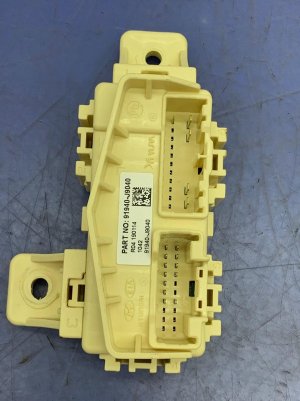
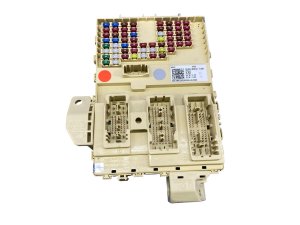
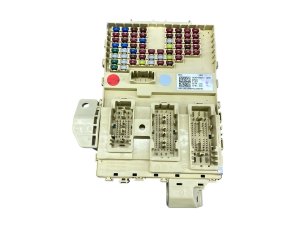
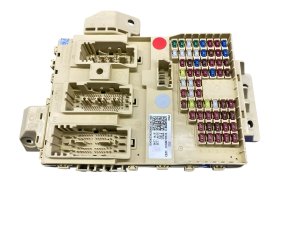
OEM Part Numbers: 91701-J9430 91940-J9040 91940J9040 91950-I3120 91951-J9140 91951J9410 91960-BE010 91960-BE011 91960-BF011 91960BE010 91960BE011 91950-J9012
Houses various ATO, Mini, and multi-block fuses and relays for the vehicle's 12-volt electrical system.
We Have This Part in Stock


The information in this article is provided for general reference and educational purposes only. Vehicle specifications, procedures, and part compatibility can vary by production date, trim level, and region. Always consult your vehicle's factory service manual and verify part numbers before purchasing or performing repairs. Safety-critical components such as airbags, seat belts, and braking systems should be installed by a qualified professional.
- Hyundai KONA:
- 🎬 Helpful Videos
- 🛍️ Shop This Part
- Key Differences in Kona Fuse Boxes
- First Generation (2018-2023) vs. Second Generation (2024-2026)
- Gasoline vs. Kona Electric (EV)
- Trim Level and Options
- Symptoms of a Failing Fuse Box
- Known Issues, Recalls, and Technical Service Bulletins (TSBs)
- Buying a Used Fuse Box
- The Golden Rule: Match the Part Number
- Physical Inspection Checklist
- Replacement and Programming
- DIY Replacement Walkthrough
- Cost Comparison
- Frequently Asked Questions (FAQ)
- 🎟️ Get 5% Off