

2000-2006 Hyundai Elantra Fuse Box: A Guide to Solving Electrical Gremlins
Your definitive reference for diagnosing, replacing, and buying a used interior or engine bay fuse box for the 2000-2006 Hyundai Elantra.
- This Elantra has two fuse boxes: an interior one (Part No. 91110-2D001) for accessories and an engine bay one (Part No. 912102D002) for major systems. Identify the correct one before buying.
- These fuse boxes are plug-and-play and DO NOT require any dealer programming or VIN matching.
- Intermittent total power loss while driving is a key symptom pointing to a failing main relay inside the fuse box.
- When buying a used fuse box, prioritize units with no visible corrosion or heat damage and an exact part number match.
Symptoms of a Failing Fuse Box

A problem with a fuse box can be frustrating, often causing issues that seem unrelated. While a single blown fuse usually points to a problem with a specific component, a failing fuse box itself can cause widespread and intermittent electrical chaos.
- Multiple Unrelated Failures: One of the most common signs is when several electrical components stop working at once. For example, the radio, interior lights, and power outlets might all die simultaneously.
- Intermittent Power Loss: The entire vehicle may lose power for a split second while driving, often accompanied by a clicking sound from the dashboard area. This can feel like the car is stalling and then catching again. This often points to a failing main relay inside the fuse box or a poor connection to the box itself.
- Engine Won't Start or Stalls: If the relays or fuses for the fuel pump, ignition system, or Engine Control Unit (ECU) lose connection, the engine may not start at all, or it may start and then immediately stall. 🎬 See how a faulty relay can cause a no-start condition
- Repeatedly Blowing Fuses: If a new fuse blows immediately after being replaced, it usually indicates a short circuit in that component's wiring. However, if multiple different fuses blow over time, it could suggest an internal short or corrosion within the fuse box itself.
- Visible Corrosion or Damage: Green or white crusty buildup on the fuse terminals or connectors is a clear sign of moisture intrusion and damage.
- Burning Smell or Melted Plastic: A smell of burning plastic or visible melting around a fuse or relay socket is a critical warning sign of a severe overload or a loose connection causing high resistance and heat. This requires immediate attention.
Interior vs. Engine Bay Fuse Box: Which One Do You Need?

It is critical to identify which of the two fuse boxes in your Elantra is failing before purchasing a replacement. Ordering the wrong one is a common and frustrating mistake.
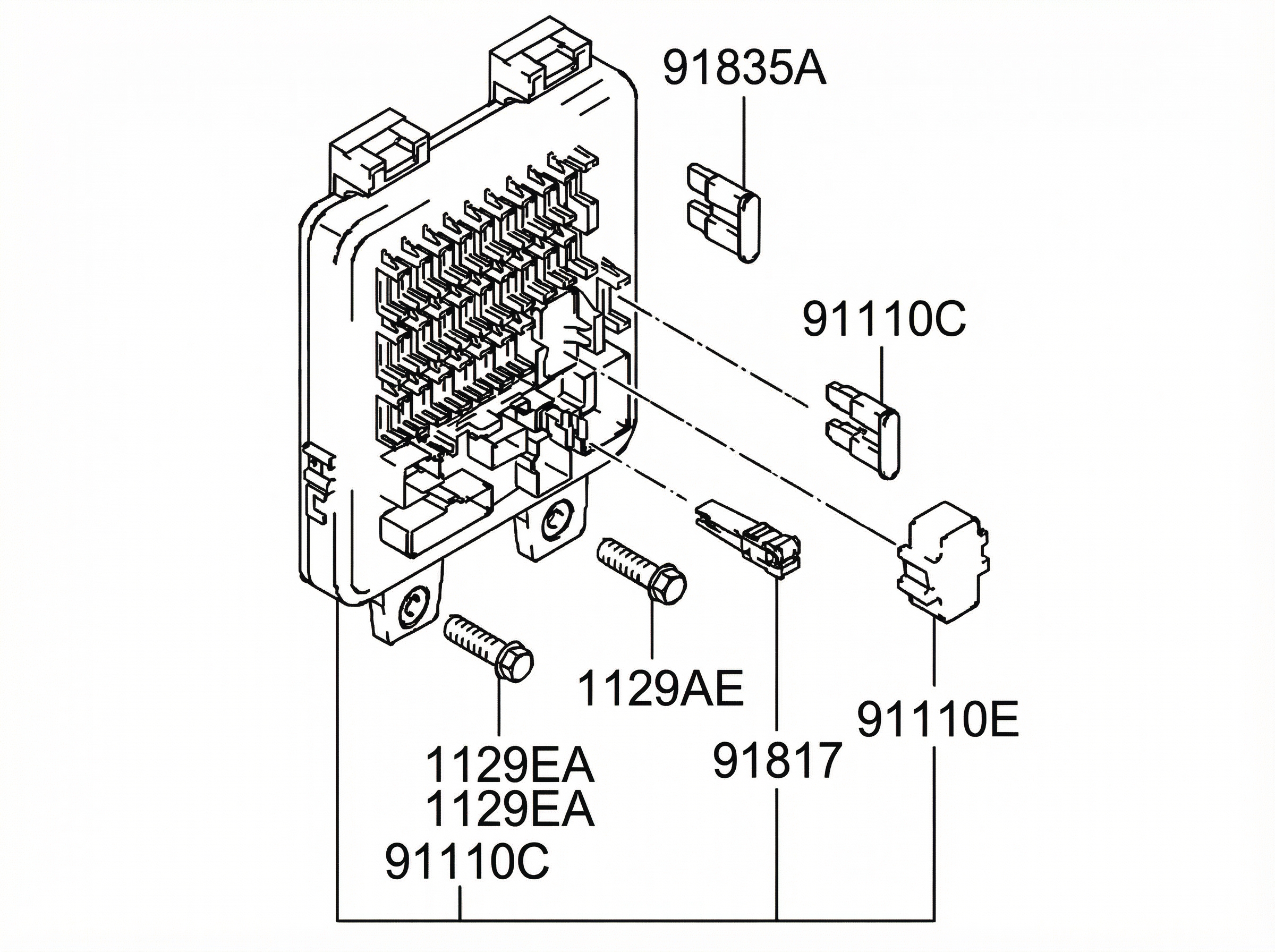
Interior Fuse Box (Junction Block)
Pro Tip: This is the part you need if you're having problems with interior accessories like the stereo, power outlets, turn signals, or instrument cluster lights.
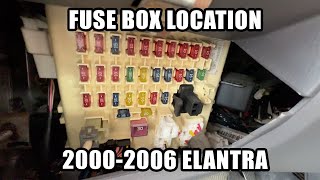
- Location: On the driver's side of the dashboard, behind a small removable cover or storage cubby.
- Function: Controls most of the low-current electrical systems inside the car.
- Known OEM Part Number:
91110-2D001(this number supersedes the older91110-2D000).
Engine Bay Fuse Box (Relay and Fusible Link Box)
Pro Tip: This is the part to inspect for no-start conditions, a dead battery that won't charge, or failures of major systems like headlights or the radiator fan.
- Location: In the engine compartment on the driver's side, usually next to the battery. 🎬 Watch: Quick video showing both fuse box locations on your Elantra
- Function: Houses high-amperage main fuses (fusible links) and relays for critical engine and chassis components.
- Known OEM Part Number:
912102D002(for 2004-2006 models). Earlier years may use a different number, so always match your original part.
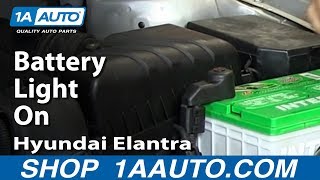
Warning: A no-charge condition where the battery light is on, even after replacing the alternator and battery, can be caused by a blown 120A main fusible link in this engine bay box.
🎬 Watch: How to check the 120A main alternator fuseBuying a Used 2000-2006 Elantra Fuse Box

For a vehicle of this age, a quality used OEM fuse box is often the most economical and reliable repair. Aftermarket manufacturers typically do not produce entire fuse box assemblies, making your choices new OEM or used OEM. A used unit from a reputable supplier can provide original factory quality for a fraction of the dealer price.
Here’s what to look for when buying used:
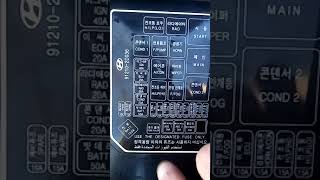
- Match the Part Number EXACTLY: This is the most important step. While fuse boxes may look similar, internal wiring can differ between model years or trim levels. The part number is printed on a sticker on the side of the unit. Match it to your original part.
- Inspect for Corrosion: Look closely at all the electrical pins and terminals in the photos. Avoid any unit that shows signs of green or white powder, rust, or water staining. Corrosion is the #1 enemy of a fuse box and the main reason they fail.
- Check for Heat Damage: Examine the plastic around each fuse and relay socket. Look for any signs of melting, discoloration, or warping. This indicates a past electrical overload that may have compromised the internal connections.
- Ensure It's Complete: A good used fuse box should come with all its original relays. While fuses are easy to swap from your old box, the relays can be expensive to purchase individually.
- Verify the Source Vehicle: If possible, choose a part from a vehicle with lower mileage and no reported flood or fire damage.
Programming and Installation
The fuse boxes in a 2000-2006 Hyundai Elantra are straightforward electrical components and do not require any programming, flashing, or VIN matching after installation. Replacement is a plug-and-play procedure.
Some owners confuse fuse box replacement with key fob programming, which is handled by a separate computer called the ETACS module. If you are replacing the fuse box, it will not affect your key fobs or the vehicle's immobilizer system.
Replacement Walkthrough (Simplified)
- Disconnect the Battery: ALWAYS disconnect the negative battery terminal before working on any part of the electrical system.
- Access the Old Fuse Box: For the interior box, pull the cover off the dash. For the engine bay box, unclip the plastic lid.
- Unplug Connectors: Carefully press the release tabs on each wiring harness connector and pull them straight out. Do not pull by the wires. Some main connectors may have a locking lever that needs to be swung open.
- Unbolt the Unit: Remove the bolts or nuts holding the fuse box in place.
- Install the New Box: Bolt the replacement fuse box into position, reconnect all wiring harnesses until they click securely, and then reconnect the negative battery terminal.
- Test All Functions: Start the car and test all the components that were previously malfunctioning.
Cost of Replacement
The cost to replace a fuse box can vary significantly based on the part source and labor rates.
| Part/Service | Estimated Cost | Notes |
|---|---|---|
| New OEM (Dealer) | $450 - $700 | For the part only. The interior junction block (91110-2D001) has an MSRP over $600. |
| New Aftermarket | Not Available | Complete fuse box assemblies are generally not produced by aftermarket companies. |
| Used OEM | $30 - $100 | The most cost-effective option. Prices vary by seller and condition. |
| Shop Labor | $100 - $250 | Replacement is relatively simple, taking a professional 1-2 hours. |
Frequently Asked Questions (FAQ)
Does a 2000-2006 Elantra fuse box need to be programmed?
No. Neither the interior nor the engine bay fuse box requires any programming, flashing, or dealer visit after installation. It is a direct-swap, plug-and-play part.
My car loses all power for a second and then comes back. Could this be the fuse box?
Yes, this is a classic symptom of a failing main relay or a poor connection within the fuse box. When the connection is momentarily lost, the entire car can shut down and then restart as the connection is re-established. Swapping the main relay with another identical relay in the box is a good first diagnostic step.
Where are the fuse boxes located on a 2000-2006 Elantra?
There are two. The interior fuse box is behind a cover on the driver's side of the dashboard, to the left of the steering wheel. The engine bay fuse box is under the hood on the driver's side, next to the battery.
Can I just clean the corrosion off my old fuse box?
Sometimes, cleaning the terminals can be a temporary fix if the corrosion is minor and only on the surface. However, moisture that causes external corrosion has often seeped inside the unit, damaging the multi-layered internal circuits. If you see significant corrosion, replacement with a clean used unit is a more reliable long-term solution.
Are there any recalls on the fuse box for this Elantra?
No, there are no specific recalls issued by the NHTSA for the fuse box assemblies on the 2000-2006 Hyundai Elantra. There were recalls for other electrical components like the stop lamp switch, but not the fuse box itself.
Helpful Videos
Technical Specifications
OEM Part Numbers: 91110-2D001 91110-2D000 912102D002
Houses blade-type fuses (ATM, MAXI) and standard 4/5-pin automotive relays. Includes main fusible links (up to 120A) in the engine bay unit.
We Have This Part in Stock

The information in this article is provided for general reference and educational purposes only. Vehicle specifications, procedures, and part compatibility can vary by production date, trim level, and region. Always consult your vehicle's factory service manual and verify part numbers before purchasing or performing repairs. Safety-critical components such as airbags, seat belts, and braking systems should be installed by a qualified professional.
- Hyundai Elantra:
- 🎬 Helpful Videos
- 🛍️ Shop This Part
- Symptoms of a Failing Fuse Box
- Interior vs. Engine Bay Fuse Box: Which One Do You Need?
- Interior Fuse Box (Junction Block)
- Engine Bay Fuse Box (Relay and Fusible Link Box)
- Buying a Used 2000-2006 Elantra Fuse Box
- Programming and Installation
- Replacement Walkthrough (Simplified)
- Cost of Replacement
- Frequently Asked Questions (FAQ)
- 🎟️ Get 5% Off