

2005-2017 Honda Odyssey Fuse Box: Solving Electrical Gremlins & Trim Level Traps
This guide explains the critical differences between the under-hood fuse box and the programmable interior MICU, helping you correctly diagnose and replace the right part.
- There are two main fuse boxes: a plug-and-play under-hood box and a programmable interior box (MICU).
- The interior fuse box (MICU) MUST be programmed by a dealer after replacement, or the engine will not start.
- Part numbers must be matched EXACTLY to your vehicle's year and trim level (LX, EX, EX-L, Touring) for the part to function correctly.
- A parasitic battery drain or multiple random electrical failures are classic symptoms of a failing interior MICU.
Critical First Step: Under-Hood Box or Interior MICU?

Before buying any parts, it's essential to understand that the 2005-2017 Honda Odyssey has two main fuse boxes with different functions and replacement procedures. Misdiagnosing which one is faulty can lead to wasted time and money.
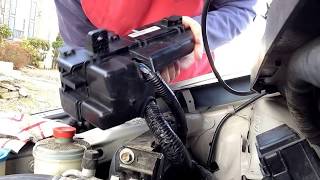
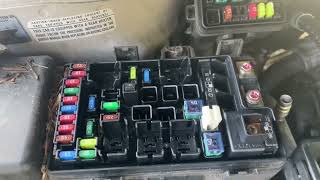
- Under-Hood Fuse Box: This is primarily a power distribution center. Failures here are often physical and visible. Symptoms point to major systems not working. This part is typically plug-and-play and does not require programming.
- Interior Fuse Box (MICU): This is the vehicle's body control module. Failures cause bizarre, widespread electrical issues. A replacement MICU MUST be programmed to the vehicle by a dealer or a properly equipped independent shop, or the engine will not start.
Warning: The most important factor for either fuse box is matching the part number to your vehicle's specific Year and Trim Level (LX, EX, EX-L, Touring). Higher trims have more features, and the fuse boxes are different to support them. Installing a fuse box from a different trim will cause features to work incorrectly or not at all.
2005-2010 Honda Odyssey (Third Generation)


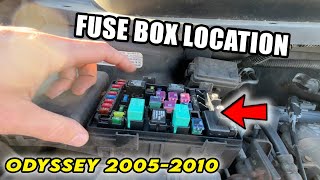
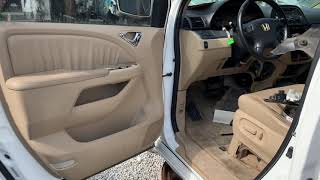
This generation has up to four fuse/relay locations: a main box and a secondary box in the engine bay, and fuse panels on the driver's and passenger's side of the dashboard. 🎬 Watch: Locate all fuse panels on 2005-2010 models. The primary points of failure are the main under-hood box and the driver's interior fuse box (MICU).
Known Issues & Variants
- Water Intrusion: The under-hood fuse box can be susceptible to corrosion if covers are not seated correctly, leading to poor connections and melted terminals.
- Power Sliding Doors: On models equipped with power sliding doors, a specific 40-amp fuse for the right-side door is located in the secondary under-hood fuse box. Failure of this fuse is a common diagnostic starting point for an inoperative door.
- Trim-Specific Part Numbers: Part numbers in the 38200-SHJ-XXXX series must be matched exactly. An EX-L fuse box will not function correctly in a base LX model.
2011-2017 Honda Odyssey (Fourth Generation)
The fourth-generation Odyssey continued the use of a main under-hood fuse box for power distribution and an integrated MICU in the driver's side interior fuse panel for body control. The electrical architecture is more integrated in this generation.
Known Issues & Variants
- Parasitic Drain: A failing interior MICU is a common cause of parasitic battery drain. The module can fail to go into "sleep" mode when the van is turned off, causing the battery to die overnight. This is often misdiagnosed as a bad battery or alternator. 🎬 Watch: How to perform a parasitic battery drain test.
- No Aftermarket Equivalents: For the interior MICU, there are no new aftermarket units available. Buyers must choose between a new OEM part from a dealer or a used OEM part, both of which require programming.
- Immobilizer Link: The interior MICU is a critical part of the immobilizer system. If you replace it and do not have it programmed, the van will not recognize your key and will not start. A flashing green key icon on the dashboard is the tell-tale sign of this issue.
- Trim-Specific Part Numbers: Part numbers in the 38200-TK8-XXXX series are very specific. LX, EX, EX-L, and Touring models all use different fuse boxes. You must match the part number from your original unit.
Symptoms of a Failing Fuse Box

Symptoms vary greatly depending on which fuse box is failing.
Under-Hood Fuse Box Failure Symptoms:
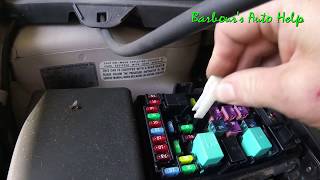
- Melted Fuses or Terminals: A visual inspection may show burn marks, melted plastic, or a burnt smell around a specific fuse or relay.
- Single System Failure: A major system like the headlights, A/C compressor, or cooling fans may stop working entirely.
- Repeatedly Blowing Fuses: If a specific fuse blows immediately after being replaced, it can indicate a short circuit within the fuse box itself.
Interior Fuse Box (MICU) Failure Symptoms:
- Multiple, Unrelated Electrical Problems: This is the most common symptom. For example, the wipers, radio, and power locks may all stop working at the same time.
- Parasitic Battery Drain: The battery dies overnight or after a few days of sitting, even with a new battery installed.
- No-Start with Flashing Green Key Light: The engine may crank but will not start, and a green key-shaped light flashes on the dash. This indicates an immobilizer fault, often caused by a bad MICU. 🎬 See how to troubleshoot a flashing green key no-start issue.
- Intermittent Operation: Windows may stop working, lights may flicker, or alarms may go off randomly as the internal logic of the MICU fails.
Buying a Used Fuse Box: What to Look For

A used OEM fuse box can be a cost-effective solution, but careful inspection and matching are critical.
- Match the Part Number EXACTLY: This is the most important rule. Find the part number on your original fuse box and buy one with the identical number. Do not rely on visual comparisons alone.
- Verify the Donor Vehicle's Trim Level: Ensure the used part came from a vehicle with the same trim level (LX, EX, EX-L, Touring) as yours.
- Inspect for Corrosion: Thoroughly check all terminals, pins, and connectors for any signs of green or white corrosion, rust, or water damage. Do not buy a part that shows any signs of moisture intrusion.
- Check for Physical Damage: Look for broken plastic tabs, cracked housings, or melted areas.
- Factor in Programming Costs: If you are buying a used interior fuse box (MICU), remember that it is not a plug-and-play part. You MUST budget for the cost of having it programmed by a dealer or specialist, which can be $150-$300.
Pro Tip: For this part, a used OEM unit is often a better choice than a new aftermarket one (if you could even find one). The OEM box is built to Honda's exact specifications with the correct internal relays and wiring, ensuring proper function once installed and programmed.
Cost of Replacement
| Part Type | Cost |
|---|---|
| New OEM (Dealer) | $950 - $1,500 |
| New Aftermarket | Not commonly available |
| Used OEM (Salvage) | $75 - $400 |
| Shop Labor (Replacement) | $200 - $450 |
| Shop Labor (Programming MICU) | $150 - $300 |
Frequently Asked Questions (FAQ)
Does a replacement Honda Odyssey fuse box need to be programmed?
It depends. The main under-hood fuse box generally does NOT require programming. However, the interior driver's side fuse box (the MICU) absolutely MUST be programmed to the vehicle's immobilizer system. Failure to do so will result in a no-start condition.
Why is my battery dying overnight? Could it be the fuse box?
Yes. A common symptom of a failing interior fuse box (MICU) is a parasitic battery drain. The faulty module prevents the vehicle's electronics from shutting down completely, draining the battery while the van is parked.
Can I install a fuse box from a Touring model into my EX to get more features?
No. This will not work. The vehicle's wiring harness and other computer modules are not set up for it. You must replace your fuse box with one that has the exact same part number and is from a vehicle with the same trim level.
What's the difference between the under-hood and interior fuse boxes?
The under-hood box is a relatively simple power distribution center for high-power items. The interior box is a complex computer (the MICU) that controls most of the body functions like lights, wipers, and locks, and is tied to the vehicle's security system.
Helpful Videos




Technical Specifications
OEM Part Numbers: 32100TK8A01 32100TK8A10 32100TK8A11 32100TK8A20 32100TK8A21 32100TK8C10 32100TK8C11 32100TK8C20 32100TK8C21 38250SHJA21 38250SHJA22 38250SHJC22 38256TK8A01 38200-SHJ-A22 38200-TK8-A22 38200-TK8-A21
Fuse box assemblies are specific to vehicle generation (2005-2010 use SHJ-based part numbers; 2011-2017 use TK8-based part numbers) and trim level (LX, EX, EX-L, Touring).
We Have This Part in Stock



The information in this article is provided for general reference and educational purposes only. Vehicle specifications, procedures, and part compatibility can vary by production date, trim level, and region. Always consult your vehicle's factory service manual and verify part numbers before purchasing or performing repairs. Safety-critical components such as airbags, seat belts, and braking systems should be installed by a qualified professional.
- Honda Odyssey:
- 🎬 Helpful Videos
- 🛍️ Shop This Part
- Critical First Step: Under-Hood Box or Interior MICU?
- 2005-2010 Honda Odyssey (Third Generation)
- Known Issues & Variants
- 2011-2017 Honda Odyssey (Fourth Generation)
- Known Issues & Variants
- Symptoms of a Failing Fuse Box
- Under-Hood Fuse Box Failure Symptoms:
- Interior Fuse Box (MICU) Failure Symptoms:
- Buying a Used Fuse Box: What to Look For
- Cost of Replacement
- Frequently Asked Questions (FAQ)
- 🎟️ Get 5% Off