

Honda CR-V Fuse Box Guide (2007-2019): Decoding Part Numbers and Solving Electrical Issues
This in-depth guide explains the complex compatibility of 2007-2019 Honda CR-V fuse boxes, helping you find the exact right part and avoid common replacement headaches.
- Compatibility is extremely complex; you MUST match the part number from your original fuse box exactly.
- Fuse boxes differ significantly across the three generations (2007-11, 2012-16, 2017-19) and by trim level (LX, EX, etc.) and drivetrain (FWD/AWD).
- Models from 2012-2019 may require professional programming after installation for the vehicle to function correctly.
- When buying a used fuse box, inspect it carefully for any signs of melting, corrosion, or broken tabs before purchase.
The #1 Challenge: Matching the Right Fuse Box to Your CR-V

Replacing a fuse box on a 2007-2019 Honda CR-V is notoriously difficult due to a vast number of variations. A part from one CR-V will often not work in another, even if they look identical. This is because Honda used many different fuse boxes depending on the vehicle's specific configuration.
Warning: Compatibility is determined by your CR-V's generation, model year, trim level (LX, EX, EX-L, SE, Touring), drivetrain (FWD or AWD), and sometimes even the factory where it was built. You cannot successfully swap a fuse box from an EX-L into an LX, or from an AWD model into a FWD model. You must match the part number exactly.
Generational Differences: 2007-2011 vs. 2012-2016 vs. 2017-2019

The 2007-2019 model years span three distinct CR-V generations, each with its own unique fuse box design and part number series.
Third Generation (2007-2011)
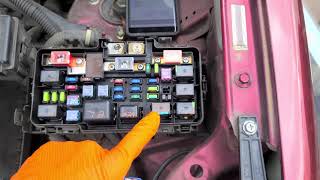
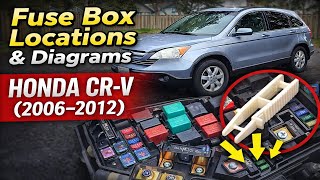
These models typically use a simpler fuse box design. The under-hood unit is primarily a power distribution center without complex integrated modules. Common part numbers for the interior fuse box often start with 38200-SWA-. For example, 38200-SWA-A02 is listed for 2007-2009 LX models. 🎬 Watch: How to locate and change under-hood fuses on 2007-2011 CR-Vs These units are generally not considered to require programming after installation.
Fourth Generation (2012-2016)
This generation saw an increase in electronic complexity. Some fuse boxes in this era are labeled as "Rewritable," indicating they may contain a configurable module like the MICU (Multiplex Integrated Control Unit). Part numbers often begin with 38200-T0A- or involve the main engine harness with numbers like 32200-T0A- or 32200-T1W-. The sheer number of variations based on trim and drivetrain makes matching part numbers critical. For example, a multi-block fuse with part number 38232-TR0-A01 is used across many trims in this generation, but the main box assembly it fits into will differ.
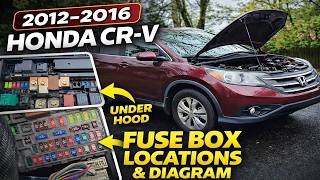
🎬 See this 2012-2016 CR-V fuse box location and diagram guideFifth Generation (2017-2019)
The fifth-gen CR-V features the most integrated and complex electrical system. The under-hood fuse box is often part of a larger assembly called the "Engine Room Wire Harness." These parts, with numbers starting with 32200-TLC- or 32200-TLA-, are highly specific to trim and features. The interior fuse box (part numbers often start with 38200-TLA-) is also very specific. Due to the integrated control modules, replacement of these assemblies on a 5th-gen CR-V will likely require programming by a dealer or a properly equipped independent shop to ensure all vehicle features work correctly.
Common Symptoms of a Failing Honda CR-V Fuse Box

- Multiple Unrelated Electrical Failures: Lights, radio, windows, and other systems failing at the same time can point to a problem in the fuse box that supplies them all.
- Engine Will Not Crank or Start: A failure in the main fuse or a critical relay within the under-hood box can prevent the starter or fuel pump from receiving power.
- Burning Plastic Smell: An acrid or burning smell coming from under the hood or dash is a serious warning sign of overheating wires or melting components in the fuse box.
- Visible Damage: Obvious signs like melted plastic around fuse or relay sockets, green or white crusty corrosion, or scorch marks are clear indicators of failure.
- Buzzing or Hissing Sounds: A fuse box should be silent. Any buzzing or hissing noises suggest an electrical short or arcing, which is a fire hazard.
- A/C System Not Working: On some Honda models, a common failure is the A/C compressor clutch relay. When it fails, it can overheat and melt its socket in the fuse box, requiring the entire box to be replaced. 🎬 Watch: How to troubleshoot CR-V AC fuses and relays
Buying a Used Fuse Box: A Step-by-Step Guide

Given the high cost of new OEM fuse box assemblies, a used OEM part is an excellent value. However, you must be extremely careful to get the correct one.
- Locate Your Original Part Number: This is the most critical step. The part number is printed on a sticker on the side of the fuse box assembly. You will likely need to remove the cover and possibly unclip the box to see it clearly. Do not rely on a part number from a website or a forum; use the one from your specific vehicle.
- Match the Part Number EXACTLY: Do not buy a fuse box if the part number is "close" or from a similar vehicle. Even a one-digit difference can mean it won't work. For example, the initial data showed many similar part numbers like 32200-T0BA10, 32200-T0BA11, and 32200-T0BA12; these small revisions can be critical.
- Inspect the Used Part Thoroughly: Before purchasing, examine photos of the used part carefully. Look for:
- No Corrosion: Check all electrical pins and terminals for any signs of green or white powder.
- No Melted Sockets: Pay close attention to the sockets for high-power relays (like for the A/C) to ensure they are not melted or discolored from heat.
- Intact Housing: Make sure all plastic mounting tabs and clips are intact and not broken.
- Complete Assembly: Ensure the fuse box comes with its cover, as the diagram on the inside is essential.
- Why Used OEM is a Smart Choice: For a part this complex, a used OEM fuse box is often superior to a new aftermarket one. A matching OEM part guarantees the correct internal wiring and component quality designed by Honda for your specific vehicle. Aftermarket versions may use lower-quality materials and may not perfectly replicate all functions, leading to new, hard-to-diagnose electrical problems.
Programming and Installation
Pro Tip: Before swapping a fuse box, disconnect the vehicle's battery to prevent electrical shorts and protect sensitive electronics.
For Third Generation (2007-2011) CR-Vs, programming is generally not required. The replacement is typically a direct swap.
For Fourth (2012-2016) and Fifth (2017-2019) Generations, especially for units marked as "Rewritable" or that contain an integrated MICU or BCM, programming may be necessary. When the fuse box is replaced, the vehicle may not start or certain features (like keyless entry, power windows, or interior lighting) may not work correctly until the module is programmed to the vehicle's VIN and specific options. This procedure usually requires a diagnostic scan tool found at a Honda dealership or a well-equipped independent auto repair shop.
Replacement Cost Comparison
| Part Type | Estimated Cost |
|---|---|
| New OEM | $750 - $1,800+ |
| New Aftermarket | $250 - $600 |
| Used OEM | $75 - $350 |
| Shop Labor | $150 - $400 |
Note: Prices are estimates and can vary based on vehicle specifics, part availability, and local labor rates. Programming costs, if required, are additional.
Frequently Asked Questions (FAQ)
Do I need to program a replacement fuse box for my CR-V?
It depends on the year. For 2007-2011 models, it's unlikely. For 2012-2019 models, it is very possible, especially if the fuse box integrates a control unit (MICU/BCM). If the part is listed as "Rewritable," expect to need programming.
Where are the fuse boxes located on a Honda CR-V?
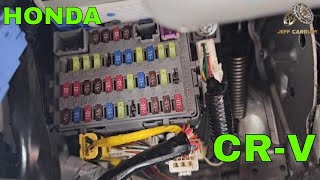
There are two primary fuse box locations. The first is in the engine bay, usually near the battery. The second is inside the cabin, under the driver's side dashboard.
Can I use a fuse box from an EX-L model in my LX?
No. The wiring and features are different. Using a fuse box from a different trim level will likely cause multiple electrical systems to fail or not function as intended. You must match the part number from your original unit.
What's the difference between the under-hood and interior fuse box?
The under-hood fuse box generally controls high-current systems essential for the engine and vehicle operation, such as the starter, fuel pump, cooling fans, and ABS. The interior fuse box manages lower-current accessories inside the cabin, like the radio, power outlets, interior lights, and power windows.
Helpful Videos


Technical Specifications
OEM Part Numbers: 32200-TLC-A00 32200-TLC-A01 32200-T0A-A20 32200-T0A-A21 32200-T0A-A22 32200-T0B-A10 32200-T0B-A11 32200-T0B-A12 32200-T0B-A20 32200-T0B-A21 32200-T0B-A22 32200-T1W-A00 32200-T1W-A10 32200-T1W-A20 38200-SWA-A02 38200-SWA-A12 38200-T0A-X04 38200-TLA-A01 38200-TLA-A11
Varies significantly by part number. Consists of a main housing containing blade fuses, multi-block fuses, and relays. Later models may integrate a Multiplex Integrated Control Unit (MICU) or Body Control Module (BCM).
We Have This Part in Stock



The information in this article is provided for general reference and educational purposes only. Vehicle specifications, procedures, and part compatibility can vary by production date, trim level, and region. Always consult your vehicle's factory service manual and verify part numbers before purchasing or performing repairs. Safety-critical components such as airbags, seat belts, and braking systems should be installed by a qualified professional.
- Honda CR-V:
- 🎬 Helpful Videos
- 🛍️ Shop This Part
- The #1 Challenge: Matching the Right Fuse Box to Your CR-V
- Generational Differences: 2007-2011 vs. 2012-2016 vs. 2017-2019
- Third Generation (2007-2011)
- Fourth Generation (2012-2016)
- Fifth Generation (2017-2019)
- Common Symptoms of a Failing Honda CR-V Fuse Box
- Buying a Used Fuse Box: A Step-by-Step Guide
- Programming and Installation
- Replacement Cost Comparison
- Frequently Asked Questions (FAQ)
- 🎟️ Get 5% Off