

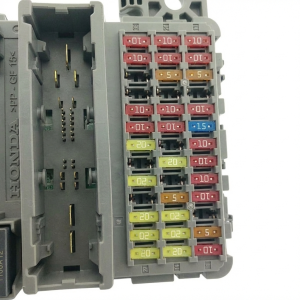
2012-2015 Honda Civic Fuse Box (MICU): Why Replacement Requires Programming
This isn't just a fuse panel; it's the car's brain for body electronics, and swapping it without the right steps will leave you with a car that won't start.
- The interior fuse box is also the MICU (Multiplex Integrated Control Unit) and is tied to the vehicle's anti-theft immobilizer.
- After replacement, the car WILL NOT START until the unit is reprogrammed to the vehicle's keys by a dealer or locksmith.
- You must match the part number from your original fuse box EXACTLY. There are many variations and they are not interchangeable.
- Common failure symptoms include dead batteries from parasitic drain, or non-working wipers, A/C, and interior lights.
Is a New Fuse Box Required? Programming and Immobilizer Warning

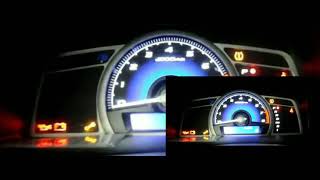
Warning: This is the most important information in this article. The 2012-2015 Civic's interior fuse box (MICU) is linked to the anti-theft immobilizer system. If you replace the fuse box—even with a perfectly matching used one—the car WILL NOT START. The engine will not crank and you will likely see a green key symbol flashing on the dashboard. After installation, the new module must be professionally programmed to your vehicle's keys and immobilizer system. This can be done by a Honda dealership or a qualified automotive locksmith with the appropriate diagnostic tools. 🎬 Watch: A locksmith demonstrates the programming process after installation. Do not attempt this replacement unless you have a plan for reprogramming the unit.
Symptoms of a Failing 2012-2015 Civic Fuse Box (MICU)

When the MICU begins to fail, it can cause a wide range of strange and seemingly unrelated electrical problems. Because the MICU controls so many different systems, you may experience one or more of the following issues:
- No Air Conditioning: The A/C compressor may not engage, even if the rest of the system is fine.
- Wiper Malfunctions: The intermittent wiper setting may stop working, or the wipers may not function at all.
- Lighting Issues: The dome light may not turn on when a door is opened.
- Missing Chimes: The key-in-ignition chime or headlight-on warning may be absent.
- Power Window Failure: One or more power windows may stop responding to the switches.
- Parasitic Battery Drain: A faulty MICU can fail to go into its low-power "sleep mode" after the car is turned off, leading to a dead battery overnight or after a few days.
- Parking Brake Light: The parking brake indicator light on the dash may stay illuminated even when the brake is released.
Buying a Used Fuse Box: What You MUST Know


Due to the high cost of a new OEM fuse box, a used unit is an excellent value. However, compatibility is everything. Follow these steps to ensure a successful repair.
- Match the Part Number EXACTLY: Honda used dozens of different fuse boxes for this generation of Civic, depending on the model year, body style (Coupe or Sedan), trim level (LX, EX, Si, Hybrid), and transmission type. You cannot substitute one for another. The only way to guarantee compatibility is to match the part number from your original fuse box to the one you are buying.
- Inspect the Unit: When buying a used part, check for any signs of water damage, corrosion on the pins, or melted plastic around the relay sockets. These are signs of a hard life and you should look for a cleaner unit.
- Budget for Programming: Remember that a used fuse box is not a plug-and-play part. Factor in the cost of having it reprogrammed by a locksmith or dealer, which typically costs between $100 and $250.
- Why Used OEM is a Good Choice: Unlike cheap aftermarket electronics that often have high failure rates, a used OEM Honda MICU is a factory-quality part. As long as you match the part number and have it programmed correctly, it is the most reliable and cost-effective solution.
Part Number Compatibility Table
Fitment for this part is extremely specific. The warnings provided in the initial prompt are correct and crucial. Always verify the part number on your original unit before ordering a replacement. The list below is a reference based on dealer catalogs but may not be exhaustive.
| Part Number | Known Fitment |
|---|---|
| 38200-TR0-A31 | 2012 Honda Civic Sedan (EX, HF, LX with 1.8L Gas, Auto Trans) |
| 38200-TR0-A32 | 2013 Honda Civic Sedan (LX with 1.8L Gas) |
| 38200-TR0-A42 | 2013 Honda Civic |
| 38200-TR0-A52 | 2013 Honda Civic |
| 38200-TR0-A61 | 2013 Honda Civic Sedan (EX) |
| 38200-TS9-A01 | 2015 Honda Civic Coupe (EX, 5-Speed Manual) |
| 38200-TS9-A11 | 2014-2015 Honda Civic Coupe (EX, EX-L with Auto Trans) |
Pro Tip: Some part numbers are listed as "Rewritable," which explicitly refers to the need for programming. Even if the listing doesn't say this, any replacement MICU for this vehicle will require programming.
Known Issues, Recalls, and TSBs
There are no active recalls or widespread Technical Service Bulletins (TSBs) from Honda specifically for the failure of the interior fuse box/MICU in the 2012-2015 Civic. Failures are typically isolated incidents due to age, electrical shorts, or environmental factors like water intrusion.
This generation of Civic did have several other unrelated recalls, including for a potential driver's side driveshaft separation (NHTSA 12V-256), a misaligned fuel feed line O-ring (NHTSA 11V-264), and an incorrect steering column assembly on a small batch of vehicles (NHTSA 12V-573). These issues are not related to the MICU.
Cost of Replacement

The cost to replace the fuse box/MICU can vary significantly based on the parts and labor source.
| Item | Estimated Cost |
|---|---|
| New OEM Part | $600 - $1,200+ |
| Used OEM Part | $50 - $150 |
| Shop Labor (Installation) | $100 - $250 (1-2 hours) |
| Shop/Locksmith (Programming) | $100 - $250 |
| Total DIY (Used Part + Programming) | $150 - $400 |
| Total Shop Repair (Used Part) | $250 - $650 |
| Total Dealer Repair (New Part) | $800 - $1,700+ |
Frequently Asked Questions (FAQ)
Will my car start after I install a replacement fuse box?
No. Because the fuse box (MICU) is part of the immobilizer system, the car will not start until the replacement unit is programmed to your vehicle's keys by a Honda dealer or a qualified locksmith.
Can I program the new fuse box myself?
No, not without specialized, professional-grade automotive diagnostic tools and software like the Honda HDS (Honda Diagnostic System). This is not a procedure that can be done by a DIY mechanic with standard tools.
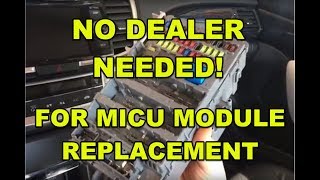
🎬 Watch: A workaround for replacing the MICU without dealer programming.What is the difference between a fuse box and a MICU?
A traditional fuse box is a simple plastic holder for fuses and relays that distributes power. A MICU (Multiplex Integrated Control Unit) is a computer that not only holds fuses but also actively controls various electronic systems in the car. For the 2012-2015 Civic, these two components are combined into one unit.
Why are there so many different part numbers?
The part numbers vary based on the vehicle's specific configuration: year, trim (LX, EX, Si), body style (Coupe, Sedan), and transmission. Each configuration has slightly different electronic features, and the MICU must be programmed from the factory to control them. This is why you must match the part number exactly.
Helpful Videos
Technical Specifications
OEM Part Numbers: 38200-TR0-A31 38200-TR0-A32 38200-TR0-A42 38200-TR0-A52 38200-TR0-A61 38200-TS9-A01 38200-TS9-A11 38200-TR0-A22 38200-TS8-A71 38200-TS8-A52 38200-TS8-A32 38200-TS8-A22 38200-TR2-A02
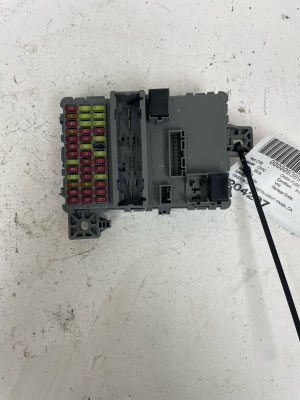
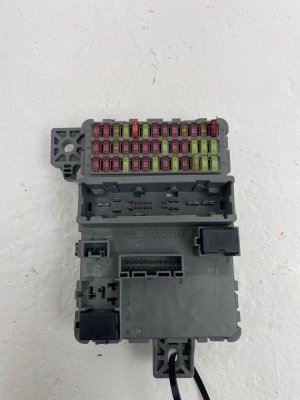
The interior fuse box is an integrated electronic module known as the Multiplex Integrated Control Unit (MICU). It controls body electronics and contains the vehicle's immobilizer data.
We Have This Part in Stock




The information in this article is provided for general reference and educational purposes only. Vehicle specifications, procedures, and part compatibility can vary by production date, trim level, and region. Always consult your vehicle's factory service manual and verify part numbers before purchasing or performing repairs. Safety-critical components such as airbags, seat belts, and braking systems should be installed by a qualified professional.
- Honda Civic:
- 🎬 Helpful Videos
- 🛍️ Shop This Part
- Is a New Fuse Box Required? Programming and Immobilizer Warning
- Symptoms of a Failing 2012-2015 Civic Fuse Box (MICU)
- Buying a Used Fuse Box: What You MUST Know
- Part Number Compatibility Table
- Known Issues, Recalls, and TSBs
- Cost of Replacement
- Frequently Asked Questions (FAQ)
- 🎟️ Get 5% Off