

Ford Edge & Lincoln MKX (2015-2023) Fuse Box Guide: BCM Programming & BJB Water Leaks
Your definitive guide to diagnosing, replacing, and understanding the two critical fuse boxes—the interior Body Control Module (BCM) and the underhood Battery Junction Box (BJB)—in the 2015-2023 Ford Edge and 2016-2018 Lincoln MKX.
- These vehicles have two main fuse boxes: the interior Body Control Module (BCM) which requires programming, and the underhood Battery Junction Box (BJB) which does not.
- A failing BCM often causes a parasitic battery drain, while a failing BJB is a common cause of a no-start condition due to water intrusion and corrosion.
- A replacement BCM is NOT plug-and-play. It must be professionally programmed to the vehicle's VIN and options, a procedure that requires at least two working keys.
- When buying a used part, you must match the BCM part number exactly. For the BJB, your primary inspection should be for any signs of water damage or corrosion.
Understanding the Two Fuse Boxes in Your Edge or MKX

When troubleshooting electrical issues in a 2015-2023 Ford Edge or 2016-2018 Lincoln MKX, it's critical to know which fuse box you're dealing with. They have very different functions, failure modes, and replacement procedures.
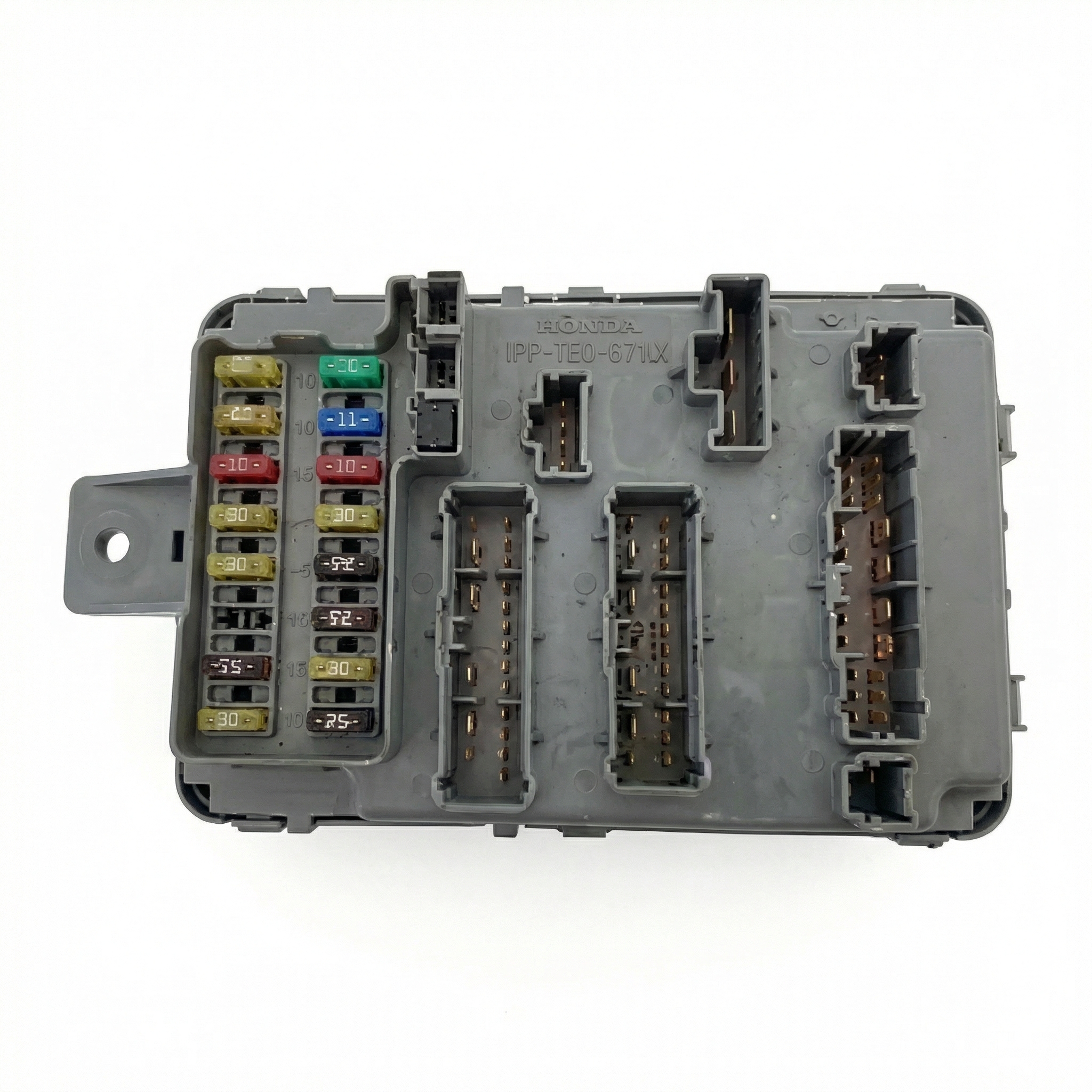
- Interior Fuse Box (BCM/SJB): Located under the driver's side dashboard, to the left of the steering column. This is the vehicle's body computer. It controls comfort, convenience, and security functions. This module requires mandatory programming upon replacement.
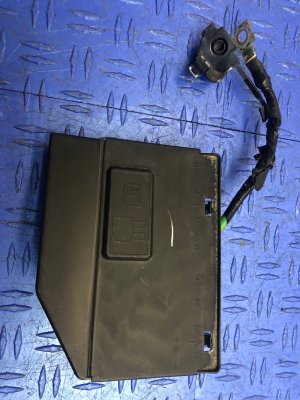
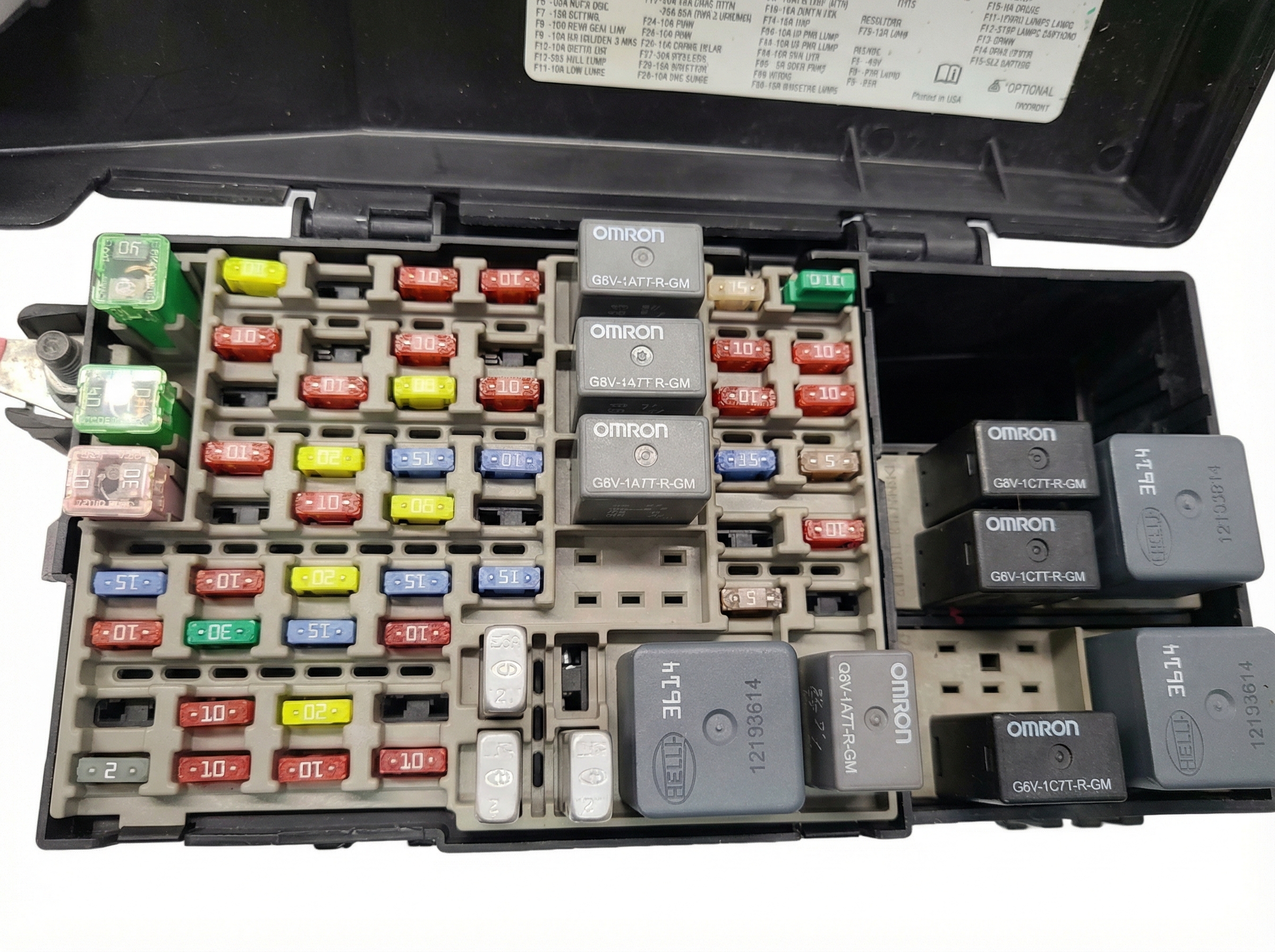
- Underhood Fuse Box (BJB): Located in the engine bay, this box distributes high-amperage power to run the vehicle's core systems. Its most common problem is water damage. This module generally does not require programming.
Part 1: Interior Fuse Box / Body Control Module (BCM)

The BCM is the electronic brain for the vehicle's cabin. When it fails, it can create bizarre and frustrating electrical gremlins that may seem unrelated.
Symptoms of a Failing BCM
- Parasitic Battery Drain: The most common complaint is a battery that dies overnight or after a few days of sitting. A faulty BCM can fail to go into 'sleep mode', causing a constant power draw. In one documented case for a 2017 Lincoln MKX, a 1.7-amp draw was traced back to the BCM. 🎬 Watch: Diagnosing a 1.7-amp parasitic battery drain on an MKX.
- Erratic Interior Electronics: Lights flickering, radio turning on or off by itself, power windows not working, or dashboard chimes sounding randomly are all classic signs of a BCM issue.
- Incorrect Instrument Cluster Warnings: You may see false warnings for tire pressure, brakes, or traction control, or gauges may stop working entirely.
- Security System and Starting Problems: Since the BCM is tied into the vehicle's anti-theft system (PATS), a failure can sometimes result in a no-start condition.
BCM Programming and Installation: NOT Plug-and-Play
Warning: You cannot simply swap a BCM from one vehicle to another. A replacement BCM, whether new or used, must be programmed to your vehicle's specific VIN and options.
Programming is required to make the module communicate with the rest of the vehicle's systems and to configure it for your car's unique features (like heated seats, specific headlight types, etc.). This process involves several steps:
- Module Configuration (As-Built Data): The technician must download the configuration data from your old BCM if possible. If the old module is dead, this data can be retrieved from Ford's database using the vehicle's VIN.
- Installation: The new BCM is installed.
- Data Download: The saved configuration data is loaded onto the new BCM.
- PATS Relearn (Key Programming): The Passive Anti-Theft System must be initialized. This procedure requires having at least two working, programmed keys for the vehicle.
This programming can be performed by a Ford/Lincoln dealer using their Integrated Diagnostic System (IDS) software. Some well-equipped independent shops with the right tools can also do it. Advanced DIYers with a tool like FORScan and a compatible adapter may be able to perform the programming, but it is a complex process with a risk of rendering the vehicle inoperable if done incorrectly.
🎬 Watch: Professional walkthrough of programming a new Ford BCM.Part 2: Underhood Fuse Box / Battery Junction Box (BJB)

The BJB is the primary power distribution center. While less electronically complex than the BCM, it is prone to a major physical failure: water damage.
Pro Tip: The underhood fuse box has a two-layer design. Many critical fuses, including those for the starter, ABS, and fuel pump, are located on the bottom of the box. To access them, you must release two latches on the sides, lift the box, and pivot it over to expose the underside.
🎬 See how to access the hidden starter fuse and relays.Symptoms of a Failing BJB
- No-Start or No-Crank: Complete silence or a single click when trying to start the engine. This can be caused by a failure of the internal circuits that power the starter relay or powertrain modules.
- Engine Won't Shut Off: In some cases, a short circuit inside the BJB can keep power flowing to the ignition or fuel systems even after the key is turned off.
- Multiple System Failures: You may experience a loss of power steering, ABS, and other major systems all at once.
- Visible Corrosion: The most obvious sign is green or white corrosion on the fuse box terminals and connectors when you open the cover. This is a clear indication of water intrusion.
The #1 Cause of Failure: Water Intrusion
The BJB is located in the engine bay in an area where water from the cowl (the area below the windshield) can drip onto it. If the fuse box cover is not perfectly seated and sealed, water will get inside and corrode the multi-layered circuit boards, causing short circuits and open circuits. After any service, or if you are buying a used vehicle, always check that the BJB cover is fully latched on all sides.
Known Issues, Recalls, and TSBs
While not always directly involving the fuse boxes, several electrical recalls can produce symptoms that might be confused with a BCM or BJB failure.
| Recall Number | Vehicles Affected | Summary |
|---|---|---|
| NHTSA 20V469 | 2015-2018 Edge & 2016-2018 MKX | Front brake hoses may rupture, leading to a loss of brake fluid. This can trigger a brake warning light. |
| NHTSA 19S41 | 2016-2017 Lincoln MKX (3.7L) | The battery positive cable harness can rub against a bracket and short circuit, increasing fire risk and causing potential power loss. |
| NHTSA 20S37 | 2016-2018 Lincoln MKX | Wiring for the 16-way power seats can be damaged by the seat frame, potentially affecting the airbag system. |
| NHTSA 18V567 (18S25) | 2018 Edge & 2018 MKX | Power supply cables at the starter and alternator may not have been properly secured, which can cause electrical arcing and voltage problems. |
| NHTSA 16V733 (16C14) | 2015-2016 Ford Edge | Incorrect ABS/ESC software may have been installed during service, which can disable stability control warnings. The fix involves replacing the ABS module. |
Buying a Used Fuse Box: A Buyer's Checklist

Buying a used OEM fuse box is a great way to save money, but you must be careful to get the right part. Follow these steps depending on which box you are replacing.
For an Interior BCM / SJB:
- Match the Part Number EXACTLY: This is the most important step. There are dozens of variations based on vehicle options like Active Park Assist, lighting packages (HID vs. Halogen), heated/cooled seats, and more. An incorrect part number will not program correctly. Find the number on your original module before ordering.
- Verify Vehicle Options: The provided warnings are correct. Fitment depends heavily on your vehicle's specific features. If you cannot match the part number, you must ensure the donor vehicle had the exact same options as yours.
- Plan for Programming: A used BCM is not a plug-and-play part. Factor in the cost and time to have it professionally programmed. Ask the seller if they can provide the VIN of the donor vehicle, as this can sometimes help your technician retrieve the necessary 'as-built' data.
For an Underhood BJB:
- Perform a Thorough Visual Inspection: The number one killer of these boxes is water. Look for any signs of white or green corrosion on the external connectors and internal fuse slots. Do not buy a part with any visible corrosion.
- Check for Physical Damage: Ensure the plastic housing is not cracked and that all mounting tabs and cover latches are intact. A damaged cover will lead to future water intrusion.
- Match the Part Number: While programming is not typically required, matching the part number is still the best practice to ensure all internal circuits match your vehicle's needs (e.g., for models with a power inverter or specific lighting).
Cost to Replace Fuse Box / BCM
| Part / Service | Estimated Cost | Notes |
|---|---|---|
| New OEM BCM (Interior) | $550 - $700 | Part only. Price varies by specific part number. |
| New OEM BJB (Underhood) | $200 - $400 | Part only. Price varies by specific part number. |
| Used OEM BCM (Interior) | $75 - $250 | Requires programming. Price depends on condition and source. |
| Used OEM BJB (Underhood) | $50 - $200 | Inspect carefully for corrosion before buying. |
| Shop Labor (BCM Replacement) | $115 - $170 | Does not include programming. |
| Shop Labor (BJB Replacement) | $150 - $300 | Access can be time-consuming. |
| BCM Programming Fee | $100 - $250 | Typically 1-2 hours of labor at a dealer or qualified shop. |
Frequently Asked Questions (FAQ)
My battery keeps dying. Is it the fuse box?
It could be. A parasitic battery drain is a classic symptom of a failing interior Body Control Module (BCM) that isn't entering its low-power sleep mode. A mechanic can perform a parasitic draw test by measuring the amperage draw from the battery after the car has been shut off for a while. By pulling fuses one by one, they can isolate the circuit causing the drain. If the draw disappears when a BCM-related fuse is pulled, the module is likely the culprit.
Can I replace the fuse box myself?
Maybe. Replacing the underhood BJB is feasible for a DIYer with moderate skills, as it's a physical swap that doesn't require programming. However, accessing the bottom layer of fuses can be tricky. Replacing the interior BCM is physically possible but requires mandatory, complex programming with special tools afterward. For most people, BCM replacement is a job best left to a professional shop or dealer.
What is 'as-built' data?
'As-built' data is the specific configuration file for your vehicle as it left the factory. This file tells the BCM which options your car has (e.g., sunroof, type of headlights, power seats) so it can control them correctly. When a new BCM is installed, this data must be loaded onto it for everything to work.
Why are there so many different part numbers for the fuse box?
The numerous part numbers correspond to the many different combinations of optional features on the Ford Edge and Lincoln MKX. The BCM part number changes based on options like the lighting package, Active Park Assist, power seat complexity, and more. The underhood BJB also has variations for features like the 400W power inverter. This is why matching the part number from your original module is absolutely critical to ensure compatibility.
Helpful Videos



Technical Specifications
OEM Part Numbers: F2GZ-14A068-A F2GZ-14A068-C F2GZ-14A068-F F2GZ-14A068-K FU5Z-15604-D G2GT14A067BD G2GZ-14A068-H GU5T-15604-ADD HU5T14A094 HU5T14A094MD HU5Z14526K J2GZ-14A068-A G2GZ-14A068-B GU5Z15604Q
Location (BCM): Interior, driver's side, under dashboard. Location (BJB): Engine compartment, driver's side. The BJB features a two-layer design requiring the top section to be pivoted to access fuses on the bottom.
We Have This Part in Stock


The information in this article is provided for general reference and educational purposes only. Vehicle specifications, procedures, and part compatibility can vary by production date, trim level, and region. Always consult your vehicle's factory service manual and verify part numbers before purchasing or performing repairs. Safety-critical components such as airbags, seat belts, and braking systems should be installed by a qualified professional.
- Ford Edge:
- Lincoln MKX:
- 🎬 Helpful Videos
- 🛍️ Shop This Part
- Understanding the Two Fuse Boxes in Your Edge or MKX
- Part 1: Interior Fuse Box / Body Control Module (BCM)
- Symptoms of a Failing BCM
- BCM Programming and Installation: NOT Plug-and-Play
- Part 2: Underhood Fuse Box / Battery Junction Box (BJB)
- Symptoms of a Failing BJB
- The #1 Cause of Failure: Water Intrusion
- Known Issues, Recalls, and TSBs
- Buying a Used Fuse Box: A Buyer's Checklist
- For an Interior BCM / SJB:
- For an Underhood BJB:
- Cost to Replace Fuse Box / BCM
- Frequently Asked Questions (FAQ)
- 🎟️ Get 5% Off