

2004-2006 VW Phaeton Trunk Fuse Box: Water Damage, Part Numbers, and Replacement
This guide covers the common failures, part number variations, and replacement considerations for the main fuse and relay panel located in the trunk of the 2004-2006 Volkswagen Phaeton.
- The main fuse box is located in the trunk on the driver's side, not the engine bay; water leaks in the trunk are the primary cause of failure.
- A replacement fuse box does NOT require any programming or coding, it is a direct swap.
- You must match the OEM part number exactly, including the suffix letter (A, B, C), as they correspond to different vehicle options.
- Before installing a replacement, you must find and fix the source of the water leak to prevent repeat failure.
Primary Fuse & Relay Panel Locations

The 2004-2006 Volkswagen Phaeton utilizes a sophisticated and decentralized electrical system with multiple fuse and relay panels. Understanding their locations is key to proper diagnosis.
- Main Fuse Box (This Article's Focus): This is the primary power distribution hub. It is located on the left (driver's) side of the trunk, concealed behind the carpeted trim panel. 🎬 Watch this video guide to locating VW Phaeton fuse panels It contains main system fuses and important relays for components like the fuel pumps and battery changeover system.
- Passenger Compartment Fuse Box: A smaller panel for interior electronics is located under the dashboard on the driver's side.
- Engine Compartment E-Box (Electronics Box): Found in the plenum chamber (the area below the windshield), this box contains engine management relays and fuses, such as those for the ECU (Engine Control Unit) and secondary air pump.
Symptoms of a Failing Trunk Fuse Box

A failing trunk fuse box in a Phaeton often creates a cascade of confusing electrical problems that can seem unrelated. Because it supplies power to so many different modules, symptoms are rarely straightforward.
- Multiple, Unrelated Electrical Failures: This is the most common sign. You might experience issues with the air suspension, fuel pumps, interior lights, and power seats all at once.
- No-Start or Intermittent Start: The vehicle may crank but not start, or fail to crank at all, due to a loss of power to the fuel pump relays or starter relay circuit.
- Complete Loss of Power: In severe cases, the entire vehicle may seem dead, with no response when the key is turned. This can be mistaken for a dead battery, but the issue lies in the distribution of power from the battery. 🎬 See how a trunk fuse issue can cause a no-start condition
- Visible Corrosion or Melting: Physical inspection may reveal green or white crusty corrosion on the terminals, or melted plastic around the fuse and relay sockets from overheating.
- Buzzing or Clicking Noises: Audible buzzing or rapid clicking from the trunk area can indicate a failing relay or a poor connection within the fuse box itself.
- Frequently Blowing Fuses: If a specific main fuse blows repeatedly without an obvious cause in the component it protects, the fuse box may have an internal short.
Warning: Many symptoms of a bad fuse box overlap with a failing KESSY (Keyless Entry/Start Authorization) module or dead batteries. The Phaeton's dual-battery system can also mask problems. A comprehensive diagnosis is necessary before replacing parts.
Known Issues: Water Intrusion

The number one killer of the Phaeton's trunk-mounted electronics is water damage. The location on the driver's side of the trunk makes the fuse box highly susceptible to moisture from several common leak points:
- Failed Trunk Lid Seals: A worn or damaged weatherstrip around the trunk opening can allow water to drip down onto the side trim and into the electronics area.
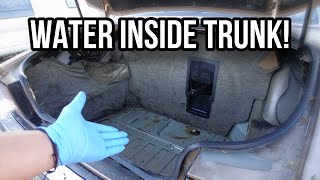
- Clogged Drains: Drains around the trunk channel or, on some vehicles, sunroof drains that exit nearby can become clogged with debris, causing water to overflow into the trunk. 🎬 Watch how to track down and fix common trunk water leaks
- Rear Windshield Seal Failure: Less common, but a leak in the seal of the rear windshield can allow water to run down into the trunk cavity.
When water enters the fuse box, it causes corrosion on the delicate copper and brass terminals. This corrosion creates resistance, leading to heat, voltage drops, and eventual failure of the connections, causing the widespread electrical issues noted above.
Buying a Used Fuse Box
Due to the high cost and potential scarcity of new OEM units, a quality used fuse box is often the best solution. Here’s what to look for:
- Inspect for Corrosion: This is the most critical step. Carefully examine every terminal, pin, and socket, both top and bottom. Look for any signs of green or white powder, discoloration, or rust. A part with even minor corrosion should be rejected, as the damage is often worse than it appears.
- Verify the Part Number EXACTLY: The Phaeton uses several versions of this fuse box, denoted by the suffix letter (e.g., 3D0-937-548-A, B, C). These letters represent revisions and may correspond to different vehicle options like the dual-battery system or heated windshield. You MUST match the full original part number. Using a box with a different suffix may lead to incompatibility.
- Check for Physical Damage: Ensure there are no cracks in the plastic housing or signs of melting around any of the high-amperage fuse locations.
- Source from a Dry Climate: If possible, purchase a part from a vehicle that was operated in a dry, arid region. This significantly reduces the risk of pre-existing, hidden water damage.
Pro Tip: When you receive your used fuse box, use a contact cleaner spray and a small brush to clean all terminals before installation. This ensures the best possible connection and can prevent future issues.
Programming and Installation
The main trunk fuse box is a non-intelligent power distribution unit. It does not contain a microprocessor and does not require any programming, coding, or flashing after installation. It is a direct plug-and-play replacement.
However, the installation process must be done carefully:
- Disconnect the Battery (or Batteries): The Phaeton has either a single or dual battery setup in the trunk. It is absolutely essential to disconnect the negative terminal(s) of all vehicle batteries before beginning work to prevent electrical shorts and personal injury.
- Label Connectors: Take photos or label the numerous large electrical connectors before unplugging them to ensure they are reinstalled in their correct locations.
- Transfer Fuses and Relays: Used fuse boxes are typically sold as the housing only. You will need to carefully transfer all fuses and relays from your old unit to the replacement. Inspect each fuse and relay for damage or corrosion as you move them.
- Address the Water Leak: Before installing the replacement fuse box, you must find and fix the source of the original water leak. If you do not, the new part will quickly suffer the same fate.
Cost of Replacement
| Part Type | Estimated Cost |
|---|---|
| New OEM | $450 - $600+ (if available) |
| New Aftermarket | Not typically available |
| Used OEM | $100 - $250 |
| Shop Labor | $150 - $300 |
Frequently Asked Questions (FAQ)
Where is the main fuse box on a 2004-2006 VW Phaeton?
It is located on the driver's side of the trunk, behind the removable carpeted trim panel. It is not in the engine bay.
Does a replacement Phaeton trunk fuse box need to be programmed?
No. This part is a power distribution center and does not have any software. It does not need to be coded or programmed to the vehicle.
Why are there so many different part numbers for this fuse box?
The different part numbers, especially the letter at the end (A, B, C), signify different revisions or configurations for specific vehicle options like the dual-battery system (used on W12 models) or heated windshield. It is critical to match your original part number when buying a replacement.
My car has dozens of weird electrical problems. Could it be the fuse box?
Yes, it's a strong possibility. Because this single panel provides power to so many different systems, its failure can cause a wide range of seemingly unrelated faults, from a no-start condition to malfunctioning lights and accessories. However, these symptoms can also be caused by failing batteries or a bad KESSY module, so proper diagnosis is key.
Helpful Videos


Technical Specifications
OEM Part Numbers: 3D0-937-548-A 3D0937548 3D0937548A 3D0937548B 3D0937548C 3D0937576 3D0937576A
Houses main system fuses and relays for power distribution. Located in the left side of the trunk.

The information in this article is provided for general reference and educational purposes only. Vehicle specifications, procedures, and part compatibility can vary by production date, trim level, and region. Always consult your vehicle's factory service manual and verify part numbers before purchasing or performing repairs. Safety-critical components such as airbags, seat belts, and braking systems should be installed by a qualified professional.
- Volkswagen Phaeton: