

2013-2018 Lexus ES300h Engine Fuse Box: A No-Programming, Direct-Fit Replacement Guide
This guide covers the essential details for diagnosing and replacing the engine fuse box in your 2013-2018 Lexus ES300h, including why it's a straightforward, no-programming-required repair.
- The engine fuse box for the 2013-2018 Lexus ES300h does NOT require any programming or flashing, making a used replacement a simple, plug-and-play repair.
- This part is highly reliable; before replacing it, rule out more common issues like a weak 12V battery or problems with specific components.
- The fuse box is an assembly of multiple parts. When buying used, ensure the main block's part number (e.g., 82720-33350 or 82720-33351) matches your original unit.
- You must transfer all fuses and relays from your old box to the replacement unit to ensure correct circuit protection.
Primary Function of the 2013-2018 ES300h Engine Fuse Box

The engine fuse box in the 2013-2018 Lexus ES300h serves as the main hub for the vehicle's 12-volt electrical system. Often referred to by Lexus as the "Engine Room Junction Block," its job is to safely distribute battery power to essential components. It houses a combination of standard fuses, high-amperage fusible links, and relays that act as switches for high-power devices. This centralized design protects sensitive electronics from power surges and short circuits. A failure in this box can lead to a wide range of seemingly unrelated electrical problems, making it a key component to inspect during electrical diagnostics.
Symptoms of a Failing Engine Fuse Box

While widespread failure of the entire fuse box assembly is uncommon on the ES300h, it can happen due to factors like water intrusion, heat, or physical damage. When it does fail, the symptoms can be confusing. It's important to differentiate fuse box failure from a bad battery, alternator, or individual component issue.
- Multiple Unrelated System Failures: The most telling sign is when several different electrical systems stop working at once. For example, the radio, power windows, and headlights might all fail simultaneously.
- No-Start or No-Crank Condition: A critical failure within the fuse box can prevent power from reaching the starter relay or the engine computer, resulting in a car that won't start.
- Specific Components Not Working: A single circuit trace failure inside the box can disable one specific system, like the fuel pump or cooling fans, even if the corresponding fuse is good.
- Loose or Melted Fuses: If fuses for certain circuits are loose in their sockets or show signs of melting, it points to a problem with the terminals inside the box itself.
- Visible Corrosion or Burning: Obvious signs of water damage (white or green crust) or a burnt plastic smell around the fuse box are clear indicators of a problem.
Associated OBD-II Codes
The fuse box itself does not generate diagnostic trouble codes. However, its failure can cause other modules to report codes related to power loss or lack of communication. These may include "U-codes" (communication network codes) or various P-codes indicating a loss of power to a specific sensor or module.
Known Issues, Recalls, and Technical Service Bulletins (TSBs)

The engine fuse box assembly on the 2013-2018 Lexus ES300h is considered a highly reliable part with no major design flaws. Searches for common problems, recalls, or TSBs specifically targeting this component come up empty. However, it's important to be aware of other vehicle issues that can mimic a fuse box problem:
- Fuel Pump Recall: Some ES300h models were part of a larger Toyota/Lexus recall for a failing low-pressure fuel pump. A symptom of this is a no-start condition, which could be misdiagnosed as a fuse/relay issue.
- Pre-Collision System (PCS) Recall: Several recalls were issued for the PCS, which could cause unexpected braking. This is an electronic, not a fuse box, issue.
- Hybrid System Concerns: Issues with the main hybrid battery or inverter can cause a variety of warning lights and no-start conditions. A technician should rule these out before condemning the fuse box.
Pro Tip: Before suspecting the fuse box, always check the health of the 12-volt auxiliary battery. A weak or failing 12V battery is a very common cause of strange electrical behavior in modern hybrids.
Buying a Used 2013-2018 ES300h Engine Fuse Box: What to Know

A used OEM fuse box is an excellent, cost-effective solution. Because this part is not a common failure item, a used unit from a reputable recycler is likely to have a long service life. New aftermarket assemblies are generally not available, making used OEM the best choice over expensive new dealer parts.
Confirming Part Numbers is Critical
The engine fuse box is an assembly of several components. The main block is typically part number 82720-33350, which was later superseded by 82720-33351. Another key part of the assembly is the fusible link block, such as 82740-33050. It is crucial to physically inspect your original unit and match the main part number (e.g., 82720-33350) to ensure the internal circuitry matches your vehicle's specific options.
Physical Inspection Checklist
- Check for Corrosion: Inspect all electrical pins and connectors for any white, green, or chalky residue, which indicates water damage.
- Look for Heat Damage: Check for any melted plastic, discolored terminals, or signs of burning.
- Inspect for Cracks: Ensure the plastic housing is free of cracks that could allow moisture to enter.
- Verify All Connectors are Intact: Make sure none of the connector sockets are broken or have bent pins.
Programming and Installation
Good News: No Programming Required. The 2013-2018 ES300h engine fuse box is a non-intelligent power distribution module. It does not need to be programmed, flashed, or coded to the vehicle. It is a direct, plug-and-play replacement, which makes it an ideal DIY or independent shop repair.
Important: A used fuse box is sold as a bare assembly. You MUST carefully transfer all fuses and relays from your old fuse box to the replacement unit. This ensures all amperage ratings are correct for your vehicle's specific systems. Use a fuse puller and take photos before you begin to ensure everything goes back in the right place.
Replacement Cost Comparison
Prices can vary by supplier and condition. The following is an estimate of what you can expect to pay.
| Part Type | Estimated Cost |
|---|---|
| New OEM | $450 - $600+ (for the complete assembly of multiple blocks) |
| New Aftermarket | Not Generally Available |
| Used OEM | $125 - $300 (for a complete assembly) |
| Shop Labor | $150 - $250 |
Frequently Asked Questions (FAQ)
Does the 2013-2018 ES300h engine fuse box need to be programmed?
No. The engine fuse box for this vehicle does not contain any software and does not require any programming or dealer intervention after installation. It is a straightforward swap.
What's the difference between the engine fuse box and the interior fuse box?
The engine fuse box (Engine Room Junction Block) handles high-current circuits for major vehicle systems like the engine, cooling fans, and headlights. The interior fuse box (often under the dashboard) handles lower-current, cabin-related accessories like the radio, interior lights, and power outlets.
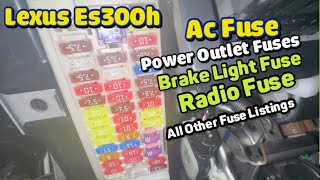
🎬 Watch this guide to locate the radio, cigarette lighter, and AC fusesCan I replace just one part of the fuse box assembly?
Yes, individual blocks like the main relay block (82720-33351) or fusible link block (82740-33050) can be purchased new from a dealer. However, if you are buying used, it is often more practical and cost-effective to get the entire assembly, as diagnosing a failure in one specific internal block can be difficult.
Why do I need to transfer my old fuses and relays to the used box?
A used fuse box is typically sold as the core housing and its internal circuitry. The fuses and relays are specific to your vehicle's equipment and their condition is known. Transferring them ensures that all circuits have the correct amperage protection as intended by the factory for your specific car.
Is it safe to work on the fuse box of a hybrid vehicle?
The engine fuse box operates on the standard 12-volt system, not the high-voltage hybrid system. However, it is still critical to disconnect the 12-volt battery before starting work. The high-voltage system uses distinct orange cables and connectors that should not be touched unless you are properly trained and have disconnected the main hybrid service plug.
Helpful Videos
Technical Specifications
OEM Part Numbers: 82720-33350 82720-33351 82740-33020 82740-33050 82662-33470
12-volt DC power distribution system. Comprised of multiple blocks including the main relay block and fusible link block.

The information in this article is provided for general reference and educational purposes only. Vehicle specifications, procedures, and part compatibility can vary by production date, trim level, and region. Always consult your vehicle's factory service manual and verify part numbers before purchasing or performing repairs. Safety-critical components such as airbags, seat belts, and braking systems should be installed by a qualified professional.
- Lexus ES300h:
- 🎬 Helpful Videos
- Primary Function of the 2013-2018 ES300h Engine Fuse Box
- Symptoms of a Failing Engine Fuse Box
- Associated OBD-II Codes
- Known Issues, Recalls, and Technical Service Bulletins (TSBs)
- Buying a Used 2013-2018 ES300h Engine Fuse Box: What to Know
- Confirming Part Numbers is Critical
- Physical Inspection Checklist
- Programming and Installation
- Replacement Cost Comparison
- Frequently Asked Questions (FAQ)
- 🎟️ Get 5% Off