

2014-2017 Dodge Durango Fuse Box (TIPM): Stalling, Electrical Gremlins & Replacement Guide
This in-depth guide covers the common failure symptoms, critical programming requirements, and part number variations for the 2014-2017 Dodge Durango's main fuse box, also known as the Totally Integrated Power Module (TIPM).
- Programming is mandatory. A replacement TIPM must be configured to your vehicle's VIN and options using a professional scan tool.
- You must match the part number exactly and verify if your vehicle has the Auto Start-Stop feature, as the parts are not interchangeable.
- Engine stalling, crank-no-start, and bizarre electrical issues are classic signs of a failing TIPM, often due to an internal fuel pump relay failure.
- A used OEM or remanufactured unit can offer good value, but compatibility must be confirmed and programming costs must be factored in.
Symptoms of a Failing 2014-2017 Durango Fuse Box (TIPM)

A failing TIPM can be one of the most frustrating issues for a vehicle owner because the symptoms are often intermittent, widespread, and can mimic other problems. The most common signs point to erratic electrical behavior and fuel delivery issues.
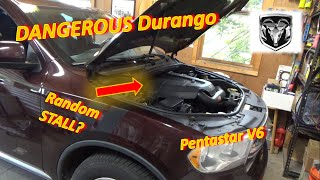
- Engine Stalls While Driving: The most dangerous symptom is the engine shutting off unexpectedly, often at speed. This creates a significant safety risk as it can cause a sudden loss of power steering and brakes. This issue is often linked to the internal fuel pump relay failing. 🎬 Watch: Real-world diagnosis of a stalling Durango
- Crank, No-Start Condition: You turn the key or press the start button, the engine cranks over, but it will not start. This is a classic sign that the TIPM is not activating the fuel pump.
- Fuel Pump Issues: The fuel pump may not receive power, preventing the vehicle from starting. Conversely, the fuel pump relay can get stuck in the 'on' position, causing the pump to run continuously even after the engine is off, leading to a drained battery.
- Multiple, Random Warning Lights: The instrument cluster may light up with numerous, unrelated fault lights for systems like ABS, airbags, and traction control.
- Erratic Electrical Functions: Owners report bizarre behavior like windshield wipers, the horn, or lights turning on and off by themselves. Power windows and door locks may also operate intermittently or not at all.
- Dead Battery: A parasitic drain caused by a faulty TIPM keeping circuits active when the vehicle is off can repeatedly drain the battery.
Common Diagnostic Trouble Codes (DTCs)
When diagnosing a faulty TIPM, a technician will often find a series of communication-related fault codes. These codes indicate that various modules in the vehicle are unable to talk to each other because the TIPM is not routing the messages correctly. Common codes include:
- U0100: Lost Communication with ECM/PCM
- U0103: Lost Communication with Gear Shift Control Module
- U0155: Lost Communication with Instrument Panel Cluster (IPC) Control Module
- U0141: Lost Communication with Front Control Module (TIPM)
Known Issues, Recalls, and Technical Service Bulletins (TSBs)

While the 2014-2017 Durango was not part of the most widespread TIPM recalls that affected earlier models, it shares a similar design and many of the same failure modes. The most significant related recall was for the fuel pump relay.
NHTSA Recall 14V-530 (Expanded by 15V-115)
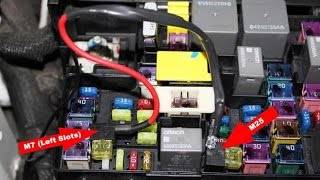
This major recall targeted earlier 2011-2013 Dodge Durango and Jeep Grand Cherokee models for a fuel pump relay inside the TIPM that was prone to failure, causing stalling or a no-start condition. The cause was identified as heat deforming the relay's contact spring. The official remedy was for dealers to install an external fuel pump relay, bypassing the problematic internal one. 🎬 See: How to test and bypass the fuel relay Although the 2014-2017 models were not included, the symptoms described by owners are often identical, suggesting a persistent design weakness.
Warning: Even if your vehicle is not under an active recall, a failure of the internal fuel pump circuit within the TIPM can produce the exact same dangerous stalling condition described in the recall.
Programming and Installation Requirements

This is the single most important factor to understand when replacing the TIPM. You cannot simply swap the part and expect it to work.
Is Programming Required? Yes.
A replacement TIPM, whether new, used, or remanufactured, must be configured to your specific vehicle's VIN and optional features (like trim level, engine size, etc.). Failure to do so will result in features not working, persistent warning lights, or the vehicle not starting at all.
- New OEM Unit: A brand-new TIPM from a dealer must be programmed and configured using the dealer's proprietary diagnostic tools.
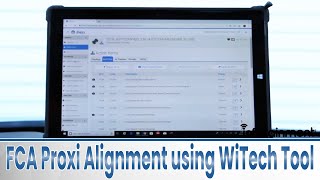
- Used OEM Unit: A used TIPM from another vehicle will require a procedure called "Proxy Alignment" (or PROXI). This process uses an advanced, professional-grade scan tool to force all the vehicle's computers to recognize and communicate with the replacement TIPM. 🎬 Watch: Step-by-step Proxi Alignment tutorial This can be performed by a dealership or a well-equipped independent shop.
- Remanufactured "Plug-and-Play" Unit: Some companies sell remanufactured TIPMs that can be pre-programmed to your vehicle's VIN before they are shipped. This is often a convenient option for DIY installers, as it may not require a trip to the dealer.
Buying a Used 2014-2017 Durango Fuse Box
A used OEM TIPM can be a cost-effective solution, but careful verification is essential to avoid buying an expensive paperweight. Here’s what to look for:
1. Match the Part Number EXACTLY
This is non-negotiable. Do not rely on the vehicle's year or trim alone. You must find the part number on your original TIPM and match it to the replacement. The part number is typically on a white sticker on the side of the unit. The provided list of part numbers (e.g., 68137440AE, 68242830AC) should be used for reference, but always verify against your specific unit.
2. The "Auto Start-Stop" Compatibility Trap
Durangos were available with and without the automatic engine start-stop feature, and they use different TIPMs. A TIPM from a vehicle with this feature is not compatible with one that doesn't have it, and vice-versa. Before ordering, verify if your Durango has this option. You can identify it by looking for the disable button on the center console, which has an icon of an 'A' with a circular arrow around it.
3. Physical Inspection
When you receive the part, inspect it carefully before installation. Look for:
- Corrosion: Check all pins and connectors for any green or white crust, which indicates water damage. Water intrusion is a known cause of failure.
- Melted Plastic: Look for any signs of melting around the fuse or relay sockets, which indicates a severe short or overload.
- Intact Connectors: Ensure none of the plastic connector housings are cracked or broken.
4. What's Not Included
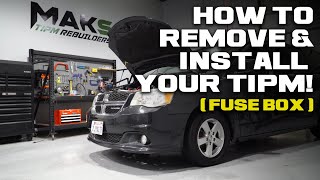
Remember that a used TIPM assembly typically does not include fuses, relays, or the top cover/lid. You will need to carefully transfer all the fuses and plug-in relays from your old unit to the new one. Take a picture of your old fuse box before you start pulling fuses to ensure they all go back in the correct location.
Cost Comparison
| Part Type | Estimated Cost |
|---|---|
| New OEM (Dealer) | $560 - $810 |
| New Aftermarket | $75 - $100 (fuse blocks only, not full TIPM) |
| Used OEM | $175 - $350 |
| Remanufactured | $370 - $450 |
| Shop Labor (Installation & Programming) | $150 - $380 |
Frequently Asked Questions (FAQ)
What's the difference between a fuse box and a TIPM?
A traditional fuse box simply holds fuses and relays. A Totally Integrated Power Module (TIPM) is a computer that not only holds the fuses but also contains circuit boards and microprocessors to actively control and distribute power throughout the vehicle. The unit in the 2014-2017 Durango is a TIPM.
Can I drive with a failing TIPM?
It is not recommended. The most dangerous symptom is the engine stalling unexpectedly while driving, which can lead to a crash. Other issues like a no-start condition or a constantly running fuel pump can leave you stranded or with a dead battery.
My mechanic says my fuel pump is bad. Could it be the TIPM instead?
Yes, absolutely. A "crank, no-start" condition is frequently caused by a failed fuel pump relay inside the TIPM. This prevents power from ever reaching the fuel pump. Before replacing the fuel pump, a good technician will verify that the pump is receiving 12-volt power during startup. If it's not, the TIPM is the likely culprit.
Can an independent shop or a locksmith program a new TIPM?
It depends on their equipment. A dealership is always able to program a new or used TIPM. A well-equipped independent shop with high-end diagnostic tools (like advanced Autel or Snap-on scanners) or specialized software (like AlfaOBD) can perform the necessary "Proxy Alignment" for a used unit. Some companies also offer mail-in services to program a module to your VIN. A locksmith is generally not equipped for this type of module programming.
Helpful Videos
![TIPM [Dodge, Chrysler, Jeep] Removal and Solution](https://img.youtube.com/vi/qea1H85HBwU/mqdefault.jpg)
Technical Specifications
OEM Part Numbers: 68137440AB 68137440AC 68137440AD 68137440AE RL137440AE 68242830AC 68242830AD 68242830AE 68251629AB 68251629AC 68251629AD
Also known as the Totally Integrated Power Module (TIPM) or Power Distribution Center (PDC). Contains internal, non-serviceable relays and a central circuit board. Different versions exist for models with and without the Auto Start-Stop feature.
We Have This Part in Stock



The information in this article is provided for general reference and educational purposes only. Vehicle specifications, procedures, and part compatibility can vary by production date, trim level, and region. Always consult your vehicle's factory service manual and verify part numbers before purchasing or performing repairs. Safety-critical components such as airbags, seat belts, and braking systems should be installed by a qualified professional.
- Dodge Durango:
- 🎬 Helpful Videos
- 🛍️ Shop This Part
- Symptoms of a Failing 2014-2017 Durango Fuse Box (TIPM)
- Common Diagnostic Trouble Codes (DTCs)
- Known Issues, Recalls, and Technical Service Bulletins (TSBs)
- NHTSA Recall 14V-530 (Expanded by 15V-115)
- Programming and Installation Requirements
- Is Programming Required? Yes.
- Buying a Used 2014-2017 Durango Fuse Box
- 1. Match the Part Number EXACTLY
- 2. The "Auto Start-Stop" Compatibility Trap
- 3. Physical Inspection
- 4. What's Not Included
- Cost Comparison
- Frequently Asked Questions (FAQ)
- 🎟️ Get 5% Off