

2012-2021 Charger & 2012-2014 300 Fuse Box Guide: Solving Electrical Issues & Alternator Failures
This guide details the common failures, recalls, and replacement of the engine bay fuse box, also known as the Power Distribution Center (PDC), for the Dodge Charger and Chrysler 300.
- The most common cause of fuse box failure is damage from a faulty alternator; always test the alternator when replacing the fuse box.
- This part does NOT require programming. If you match the part number from your original unit, it is a plug-and-play replacement.
- There are many variations. You must match the part number exactly and ensure you have the correct part for a civilian or Police Package vehicle.
- When buying used, inspect the main power terminal for melting and all connectors for corrosion (water damage).
Known Issues, Recalls, and Common Failures

The Power Distribution Center (PDC) in the Dodge Charger and Chrysler 300 is often reliable, but it can be damaged by external events, particularly alternator failure. Several major recalls are directly or indirectly related to the health of this part.
Alternator Failure Recalls (NHTSA 14V-634 and 17V-435)
The most significant issue affecting the PDC is the failure of the alternator. Two major recalls address this problem for 2011-2014 models.
- NHTSA Campaign ID: 14V-634 (Chrysler Recall P60): This recall targeted 2011-2014 models with the 3.6L engine and a 160-amp alternator. The alternator's diodes could fail suddenly, leading to a vehicle stall without warning, loss of electrical power, and potentially an under-hood fire.
- NHTSA Campaign ID: 17V-435 (Chrysler Recall T36): This expanded the previous recall to include more vehicles, covering 2011-2014 Charger and 300 models with 3.6L or 5.7L engines and 160, 180, or 220-amp alternators. The cause was identified as diode thermal fatigue.
Warning: A failing alternator can send a voltage spike through the electrical system, damaging the PDC, the battery, and other sensitive electronic modules. If you are replacing a PDC, it is critical to test the alternator to ensure it is not the root cause of the failure.
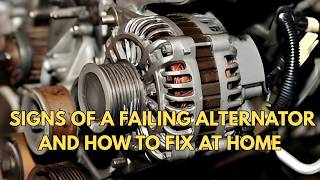
🎬 Watch: How to identify common symptoms of a bad alternator.ABS/ESC Fuse Overheating (NHTSA 12V-197)
For 2011-2012 Dodge Charger and Chrysler 300 models, a recall was issued because a fuse in the PDC related to the Anti-lock Brake System (ABS) and Electronic Stability Control (ESC) could overheat. This could lead to a loss of these critical safety features. The dealer remedy was to relocate the fuse to a different position within the PDC. This issue, first noticed in police vehicles, was later expanded to civilian models.
Water Intrusion
Like any engine bay component, the PDC is vulnerable to water damage. If the cover is not properly sealed, water can enter and cause corrosion on the internal terminals and circuit board. This leads to intermittent electrical problems that are difficult to diagnose. Clogged sunroof drains or cowl vents can sometimes direct water onto the fuse box.
Symptoms of a Failing Fuse Box / PDC

A failing PDC can cause a wide range of confusing symptoms. Because it controls power to so many different components, problems can appear to be unrelated.
- Engine Stalling or No-Start: The engine may crank but not start, or it may stall while driving if the fuel pump, ignition system, or engine computer loses power.
- Multiple, Unrelated Electrical Failures: You might experience issues like headlights not working, the radio cutting out, power windows failing, and the A/C not blowing, all at once.
- Warning Lights on the Dash: A failing PDC can trigger numerous warning lights, such as the check engine light, battery light, ABS, or ESC lights.
- Visible Damage: You may see melted plastic around fuse or relay sockets, or signs of burning or arcing on the main power terminals.
- Diagnostic Trouble Codes (DTCs): While there is no specific code for a bad PDC, its failure often causes a flood of communication codes (U-codes) as modules lose power and can no longer talk to each other. You may also see system voltage codes like P0560 (System Voltage Malfunction), P0562 (System Voltage Low), or P0563 (System Voltage High).
Buying a Used Fuse Box: What to Look For

A used OEM Power Distribution Center is an excellent, cost-effective alternative to an expensive new part, especially since aftermarket options are not readily available. Because this part does not require programming, a used unit can be a simple plug-and-play replacement. Here’s what to inspect:
- Match the Part Number EXACTLY: This is the most important step. There are many variations of this PDC based on engine, model year, and options (especially the Police Package). Find the part number on your original fuse box and match it precisely to the used part. Do not rely on visual comparison alone.
- Inspect the Main Power Stud: Carefully examine the large B+ terminal where the main power wire from the alternator connects. Look for any signs of melting, discoloration, or arcing. This is a common failure point, especially if the vehicle's alternator failed.
- Check for Heat Damage: Look at all fuse and relay sockets. The plastic should be clean and free of any melting, warping, or charring. Melted plastic indicates a circuit was severely overloaded.
- Look for Corrosion: Check the terminals inside the sockets and on the connectors on the underside for any green or white crusty buildup. This is a clear sign of water damage, and the part should be avoided.
- Verify Civilian vs. Police Package: The Dodge Charger Pursuit (Police Package) uses a different PDC to accommodate heavy-duty wiring for lights, sirens, and other equipment. These are not interchangeable with civilian models. Ensure the donor vehicle was not a police car unless yours is.
Pro Tip: When you receive your used PDC, it's a good practice to swap your original fuses and relays into the replacement unit, provided they are in good condition. This ensures you have the correct amperage ratings for all circuits in your specific vehicle.
Programming and Installation Requirements

The engine bay Power Distribution Center on the 2012-2021 Dodge Charger and 2012-2014 Chrysler 300 does NOT require any programming, flashing, or dealer intervention after installation. It is a non-intelligent part that simply routes power.
This is a significant advantage for DIY repair and for buyers of used parts. As long as the part number on the replacement unit matches the original, the installation is plug-and-play. The process generally involves:
- Disconnecting the negative battery terminal.
- Unbolting the main power cables from the PDC.
- Releasing the locking tabs on the large wiring harness connectors on the underside and unplugging them.
- Unbolting the PDC housing from the vehicle.
- Installation is the reverse of removal.
Replacement Cost Comparison
The cost to replace the engine bay PDC can vary significantly depending on the source of the part and labor rates.
| Part Source | Estimated Cost |
|---|---|
| New OEM | $250 - $500 |
| New Aftermarket | Not commonly available |
| Used OEM | $75 - $175 |
| Remanufactured | $200 - $400 |
| Shop Labor | $150 - $300 |
Frequently Asked Questions (FAQ)
Does the fuse box need to be programmed to my car's VIN?
No. The engine bay Power Distribution Center (PDC) is a non-intelligent module. It does not store VIN information or require any programming. If you match the part number, it is a direct swap.
Is this the same as a TIPM?
While sometimes called a TIPM (Totally Integrated Power Module) out of habit, this part is more accurately just a Power Distribution Center (PDC). Older Chrysler vehicles had complex, failure-prone TIPMs that integrated a control computer. This newer design separates the control functions into other modules, making the PDC a simpler and more robust part that just holds fuses and relays.
Where is the engine fuse box located?
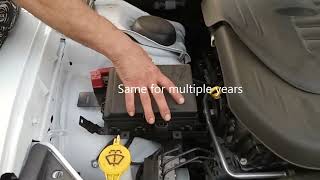
The main engine fuse box (PDC) is located in the engine compartment, on the passenger side of the vehicle. These vehicles also have a second fuse box located in the trunk, next to the battery.
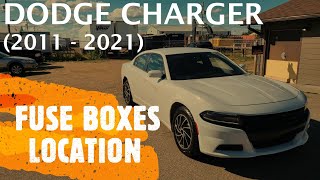
🎬 Watch: A quick walkthrough of all fuse box locations.Can I use a fuse box from a Charger Police car in my civilian Charger or Chrysler 300?
No. The Police Package (Pursuit) models have different electrical requirements and use a specific PDC to handle the extra load from police equipment. You must use a PDC from a civilian vehicle to ensure compatibility.
OEM Part Numbers
Due to the large number of variations based on year, engine, and options, it is essential to match the part number from your original unit. The list below contains known part numbers but may not be exhaustive. Always verify compatibility before purchasing.
- 68273147, 68273147AA
- 68304824, 68304824AD
- 68368600, 68368600AA
- 68068072AA
- 68169897AA
- 68172195AA
- 68213738AD
- 68336801AC
- 68336803AC
- 68083960AA
Important: Many of these numbers may be for individual components like covers or have been superseded. The only way to guarantee a match is to read the number off your original fuse box housing.
Helpful Videos
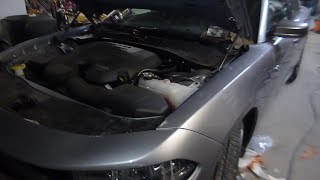
Technical Specifications
OEM Part Numbers: 68273147 68273147AA 68304824 68304824AD 68368600 68368600AA 7254060030 68068072AA 68169897AA 68172195AA 68213738AD 68336801AC 68336803AC 68083960AA
Houses various mini, low-profile mini, and J-case fuses, as well as micro and ISO relays. Located in the engine compartment on the passenger side.
We Have This Part in Stock



The information in this article is provided for general reference and educational purposes only. Vehicle specifications, procedures, and part compatibility can vary by production date, trim level, and region. Always consult your vehicle's factory service manual and verify part numbers before purchasing or performing repairs. Safety-critical components such as airbags, seat belts, and braking systems should be installed by a qualified professional.
- Dodge Charger:
- Chrysler 300:
- 🎬 Helpful Videos
- 🛍️ Shop This Part
- Known Issues, Recalls, and Common Failures
- Alternator Failure Recalls (NHTSA 14V-634 and 17V-435)
- ABS/ESC Fuse Overheating (NHTSA 12V-197)
- Water Intrusion
- Symptoms of a Failing Fuse Box / PDC
- Buying a Used Fuse Box: What to Look For
- Programming and Installation Requirements
- Replacement Cost Comparison
- Frequently Asked Questions (FAQ)
- OEM Part Numbers
- 🎟️ Get 5% Off