

2009-2018 Charger & 2009-2014 Chrysler 300 TIPM: Solving Electrical Gremlins and No-Start Issues
If your Dodge Charger or Chrysler 300 is acting possessed with random electrical issues, the problem is likely the complex and failure-prone Totally Integrated Power Module (TIPM).
- This is not a simple fuse box; it's a complex computer called a TIPM that is known to fail, causing widespread electrical problems.
- When buying a used TIPM, you MUST match the part number from your original unit. A dealer VIN lookup is not reliable.
- A used TIPM will likely require programming by a dealer to your car's VIN and options. For DIY, a pre-programmed remanufactured unit is a safer choice.
- A recall (M10) was issued for 2011-2012 models for an overheating fuse issue that could disable the ABS and ESC systems.
What is a TIPM and Why Does It Fail?

The Totally Integrated Power Module (TIPM) in your 2009-2018 Dodge Charger or 2009-2014 Chrysler 300 is the command center for all vehicle electronics. Unlike old-fashioned fuse boxes, the TIPM contains a complex circuit board with processors and, critically, internal, non-serviceable relays. Many of the most common failures are due to these internal relays, particularly the one for the fuel pump, which can fail and either stop providing power or get stuck in the 'on' position. 🎬 Watch: How to test and bypass a faulty fuel pump relay This design means that a simple relay failure often requires the replacement of the entire expensive module.
Symptoms of a Failing TIPM

A bad TIPM can make you think your car is haunted. The symptoms are often intermittent and can appear completely random. If you are experiencing several of these issues, the TIPM is a primary suspect.
- Engine Will Not Start: The most common symptom. The engine may crank but will not start because the TIPM is not activating the fuel pump. In other cases, it may not crank at all.
- Engine Stalls While Driving: The TIPM can suddenly cut power to the fuel pump or ignition system, causing the engine to die unexpectedly, which is a major safety hazard.
- Fuel Pump Problems: You may hear the fuel pump running continuously even after the car is turned off, leading to a drained battery. Conversely, the pump may not turn on at all.
- Electrical Gremlins: This is the hallmark of TIPM failure. You may experience windshield wipers, the horn, or interior lights turning on and off by themselves; power windows and door locks acting erratically; or headlights flickering or failing to work.
- Dead Battery: A faulty TIPM can cause a parasitic drain that kills the battery overnight.
- Warning Lights: Various warning lights may illuminate on the dashboard for no apparent reason.
Known Issues, Recalls, and TSBs
There is one major recall that directly involves the Power Distribution Center (another name for the TIPM) on these vehicles.
- NHTSA Recall #12V197000 (Chrysler #M10): This recall was issued for 2011-2012 Dodge Charger and Chrysler 300 models. The issue involved the Power Distribution Center overheating, which could lead to a loss of Anti-lock Brakes (ABS) and Electronic Stability Control (ESC), increasing the risk of a crash. The dealer remedy was to relocate the ABS/ESC system fuse to a different position within the module. This problem was initially discovered in police vehicles, which experience more severe use.
Diagnosing a Bad TIPM

Because the symptoms overlap with many other potential issues, diagnosis can be tricky. Always check the battery, alternator, and all relevant fuses before condemning the TIPM.
- Scan for Codes: A professional scan tool can communicate with the TIPM. Look for U-prefix codes (Communication codes) like U0100 (Lost Communication) or U1119 (Lost IPM Message), which indicate a problem with the module itself.
- Visual Inspection: Open the TIPM cover and look for any signs of corrosion (white or green powder) on the fuses, relays, or connector pins. A burnt smell or melted plastic is also a clear sign of failure.
- The "No Bus" Message: If the instrument cluster displays a "No Bus" message, it means it has lost communication with the TIPM and other key modules, pointing strongly to a TIPM failure.
Important Vehicle Variations: Police vs. Civilian Models

Warning: Dodge Charger Pursuit (Police Package) vehicles have significant differences in their electrical systems. They are equipped with heavy-duty alternators, additional wiring for police equipment, and may use a different TIPM or have different programming. A TIPM from a civilian model will likely not work correctly in a police model, and vice-versa. Always ensure a replacement part comes from an identical vehicle.
Buying a Used TIPM: The Definitive Guide

Buying a used TIPM can save you hundreds of dollars, but it comes with risks. Here is what you absolutely need to know.
The #1 Question: Does a Used TIPM Need Programming?
The short answer: Yes, you should assume programming is required. The TIPM is configured to a specific vehicle's VIN and its unique set of options (engine size, trim level, etc.).
- The Official Procedure: The correct way to replace a TIPM is to install the new or used unit and have a Chrysler/Dodge dealer use their proprietary StarSCAN tool to program it to your vehicle's VIN. Without this step, the car may not start, or you may have numerous features that do not work correctly.
- The "Plug and Play" Gamble: Some owners and mechanics report success by swapping in a used TIPM with the exact same part number from a vehicle with the exact same engine and options. This is a gamble. It may work perfectly, it may work with minor issues, or it may not work at all. If you try this, a "soft reset" procedure is often required after installation.
- The Safe Alternative (Remanufactured): Many companies sell remanufactured TIPMs online. They will ask for your VIN and pre-program the module before shipping it to you. This makes it truly "plug and play" and is the recommended path for most DIYers.
How to Find the Correct Part Number
Pro Tip: Do not rely on a VIN lookup or a dealer to tell you the part number. You must physically look at the sticker on the side of your existing TIPM to get the correct part number. There can be multiple different part numbers for the same year and model. Matching the main number is critical. The two-letter suffix (e.g., AA, AB, AC) indicates revisions; getting an exact match is safest, but sometimes later revisions are compatible.
What to Inspect on a Used Unit
If buying from a salvage yard, carefully inspect the module before purchase. Remove the top cover and check for:
- Corrosion: Any white or green crust on the fuses, relays, or the main board is a major red flag for water intrusion.
- Physical Damage: Look for cracks in the housing or damage to any of the multi-pin connectors.
- Burnt Smell: A distinct electrical burnt smell indicates a critical failure.
Cost Comparison
| Part Source | Estimated Cost | Notes |
|---|---|---|
| New OEM (Dealer) | $800 - $1,300+ | Brand new part, but often on backorder. Requires dealer programming. |
| New Aftermarket (Dorman, etc.) | $450 - $700 | Remanufactured units, often with a warranty. May or may not be pre-programmed. |
| Used OEM (Salvage Yard) | $75 - $250 | Most affordable but highest risk. Part number match is critical and programming is likely needed. |
| Remanufactured (Pre-Programmed) | $300 - $600 | Your best bet for DIY. Sent with your VIN programmed for plug-and-play installation. |
| Shop Labor (Installation & Programming) | $150 - $300 | Installation is quick (about 1 hour), but programming adds time and cost. A dealer may charge a 1-hour minimum for programming alone. |
Step-by-Step Replacement Guide (DIY)
The physical replacement is relatively simple and takes less than an hour. The TIPM is located in the engine bay on the passenger side.
- Disconnect the Battery: Always disconnect the negative battery terminal first. The battery is located in the trunk.
- Remove Power Cable: Use a 13mm socket to remove the nut holding the main positive battery cable to the stud on the TIPM.
- Unclip the Module: Press the plastic tabs on the sides of the TIPM to release it from its mounting bracket. Lift it up to access the connectors underneath.
- Disconnect Connectors: There are several large, color-coded connectors on the bottom. Each has a locking tab or lever that must be released before it can be unplugged. Take a photo before you begin to ensure they go back in the right spots.
- Install New Unit: Connect all electrical connectors firmly, ensuring the locking levers click into place. Seat the TIPM into its bracket, and re-attach the main power cable.
- Perform Soft Reset: Reconnect the battery (positive terminal first, then negative). Turn the ignition key to the 'RUN' position (but do not start the engine) and wait for two minutes. This allows the vehicle's modules to recognize the new TIPM. Turn the key off, then start the vehicle normally.
Frequently Asked Questions
What's the difference between the fuse box in the engine bay and the one in the trunk?
The box in the engine bay is the TIPM, the intelligent computer that controls everything. The panel in the trunk is a simpler Power Distribution Center that primarily houses fuses for components located in the rear of the vehicle. The failure-prone component is the TIPM in the engine bay.
Can I just replace a bad relay inside the TIPM?
For the most part, no. The critical relays, like the one for the fuel pump, are permanently soldered to the internal circuit board and are not designed to be serviced by a typical mechanic. While some specialized electronics repair shops can do this, it's not a DIY job. Some external bypass kits exist for the fuel pump relay as a workaround.
Will a TIPM from a Chrysler 300 work in a Dodge Charger?
Yes, it is possible, as they are built on the same platform. However, compatibility depends entirely on the part number, the engine, and the vehicle's options. You cannot assume it will work just because the model year is the same. You must match the part number exactly.
My mechanic says I need a new TIPM, but it's on backorder. What can I do?
This is a common problem. Your best options are to seek out a pre-programmed remanufactured unit from a reputable online seller or to send your own TIPM to a repair service. These options are often faster and more affordable than waiting for a new part from the dealer.
Helpful Videos
![TIPM [Dodge, Chrysler, Jeep] Removal and Solution](https://img.youtube.com/vi/qea1H85HBwU/mqdefault.jpg)
Technical Specifications
OEM Part Numbers: 68273147 68273147AA 68304824 68304824AD 68368600 68368600AA 04607310AB 04607767AC 04692270AD 68044658AA 68067455AD 68068072AA 68169897AA 68172195AA 68213738AD
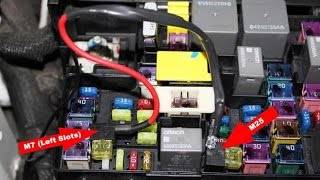
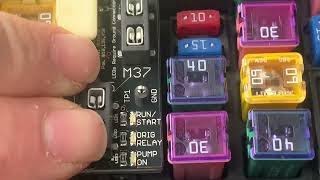
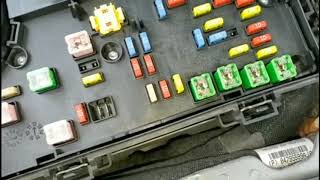
The engine compartment fuse box is a Totally Integrated Power Module (TIPM). It contains the vehicle's primary fuses, relays (many of which are internal and non-serviceable), and a microprocessor that controls power distribution throughout the vehicle. It has multiple color-coded multi-pin connectors on the underside and a main power stud on top.
We Have This Part in Stock



The information in this article is provided for general reference and educational purposes only. Vehicle specifications, procedures, and part compatibility can vary by production date, trim level, and region. Always consult your vehicle's factory service manual and verify part numbers before purchasing or performing repairs. Safety-critical components such as airbags, seat belts, and braking systems should be installed by a qualified professional.
- Dodge Charger:
- Chrysler 300:
- 🎬 Helpful Videos
- 🛍️ Shop This Part
- What is a TIPM and Why Does It Fail?
- Symptoms of a Failing TIPM
- Known Issues, Recalls, and TSBs
- Diagnosing a Bad TIPM
- Important Vehicle Variations: Police vs. Civilian Models
- Buying a Used TIPM: The Definitive Guide
- The #1 Question: Does a Used TIPM Need Programming?
- How to Find the Correct Part Number
- What to Inspect on a Used Unit
- Cost Comparison
- Step-by-Step Replacement Guide (DIY)
- Frequently Asked Questions
- 🎟️ Get 5% Off