

2019-2023 Dodge Challenger Fuse Box: Solving Electrical Gremlins with the Right Part
This in-depth guide explains the common failures of the Challenger's underhood fuse box, how to choose the correct used replacement, and why it's a surprisingly simple DIY job.
- The underhood fuse box (PDC) for the 2019-2023 Challenger does NOT require dealer programming; it is a plug-and-play part.
- Matching the Mopar part number exactly is critical for compatibility. Different vehicle options require different PDCs.
- Common failure symptoms include random electrical issues, a no-start condition, or engine stalling. Always test the battery first.
- A used OEM unit is a great value, typically costing between $200-$300, compared to over $370 for a new part.
Symptoms of a Failing Dodge Challenger Fuse Box (PDC)

When the Power Distribution Center begins to fail, it can create some of the most confusing and frustrating problems a car owner can experience. Because it controls so many different systems, symptoms are often inconsistent and appear random. Before suspecting the PDC, always have your battery professionally tested. A weak or failing battery can cause many similar electrical issues in these vehicles.
- Engine Will Not Start or Stalls: The engine may crank but refuse to start, or it may start and then stall intermittently. This is often because the PDC is failing to properly power the fuel pump or engine control circuits.
- Random Electrical Failures: Accessories may turn on and off by themselves, or stop working altogether. This includes headlights, interior lights, windshield wipers, the radio, and power windows.
- Multiple Warning Lights: The dashboard may light up with various warning indicators, such as the check engine light, ABS light, or traction control light, sometimes without any corresponding fault codes stored in the system. 🎬 Watch: Real-world example of a Scat Pack electrical issue fix.
- Communication (U-series) OBD-II Codes: While a failing PDC may not have a specific trouble code pointing directly to it, it can cause a flood of communication errors between the vehicle's various control modules.
- Visible Damage: In some cases, you may smell burning plastic or see physical evidence of failure, such as melted relays or corroded terminals within the fuse box itself.
Pro Tip: Many strange electrical problems are traced back to water intrusion. Before replacing the PDC, check for signs of moisture or corrosion around the fuse box, on its connectors, and on the firewall where the wiring passes through.
Known Issues, TSBs, and Recalls

While older Dodge, Chrysler, and Jeep models were subject to major recalls for faulty Totally Integrated Power Modules (TIPMs), there are no specific recalls for the underhood Power Distribution Center on the 2019-2023 Dodge Challenger as of early 2026. The primary known issue is general vulnerability to electrical faults caused by moisture and corrosion, which is common to fuse boxes in most vehicles.
Buying a Used 2019-2023 Challenger Fuse Box: What You Must Know

Buying a used Power Distribution Center is an excellent way to save a significant amount of money, especially since these units are surprisingly easy to replace. However, getting the right part is absolutely critical.
1. Programming: Plug and Play!
This is the most important takeaway: The 2019-2023 Challenger underhood PDC does NOT require programming or flashing after installation. It is a "plug-and-play" component. Unlike the main Engine Control Module (ECM) or Body Control Module (BCM), which are coded to the vehicle's VIN, the PDC can be swapped directly. This makes a used OEM unit a fantastic value, as no expensive dealer visit is required for installation.
2. Match The Part Number EXACTLY
The PDC is the central hub for all of your car's options. Because of this, there are many different versions of the fuse box. A PDC from a V6 model with halogen headlights will not work correctly in a V8 model with HID headlights and adaptive cruise control. The internal wiring is different. You MUST match the Mopar part number on your original PDC with the part number of the used unit you are buying. Providing the seller with your vehicle's VIN is the best way to guarantee fitment.
Warning: Some part numbers you find online, such as 68378638AA and 68430148AA, are for the plastic cover only, not the complete fuse box assembly. Be sure you are buying the full Power Distribution Center, which is sometimes described as "Wiring - Headlamp to Dash" or "Engine Fuse Box Assembly."
3. Physical Inspection
When your used PDC arrives, inspect it carefully before installation:
- Check for Corrosion: Look at all the male connector pins on the bottom of the unit. They should be clean and shiny. Any green or white crusty buildup is a major red flag for water damage.
- Look for Heat Damage: Inspect the sockets for the relays and high-amperage fuses. Any melted or discolored plastic indicates a past circuit overload and the unit should be rejected.
- Inspect the Housing: Ensure all plastic mounting tabs and connector clips are intact and not cracked or broken.
4. Fuses and Relays
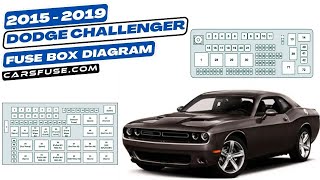
Most used fuse boxes are sold as a complete assembly with fuses and relays included. However, it's good practice to compare the fuses and relays in the replacement unit to your original one. Your specific vehicle may have fuses that a donor car did not. Be prepared to transfer any necessary fuses or relays from your old PDC to the new one. The layout is printed on the underside of the fuse box cover.
🎬 See this guide to locate and identify your fuse box.Cost of a 2019-2023 Dodge Challenger Fuse Box
Prices can vary based on the specific part number and vehicle options. The following is an estimated cost breakdown:
| Part Type | Estimated Cost |
|---|---|
| New OEM (Dealer) | $370 - $775 |
| New Aftermarket | Not commonly available |
| Used OEM (Salvage) | $200 - $300 |
| Shop Labor for Replacement | $150 - $250 |
DIY Replacement Walkthrough

Replacing the underhood PDC is a straightforward job that a DIY mechanic can typically complete in about an hour. The main challenge is carefully handling the numerous electrical connectors.
- Disconnect the Battery: The battery is in the trunk. Disconnect the negative terminal first. Wait at least 3-5 minutes before proceeding to allow the vehicle's capacitors to discharge.
- Remove the PDC Cover: Release the clips holding the top cover onto the PDC.
- Disconnect Main Power Feeds: There will be one or more large-gauge wires bolted to terminals in the PDC, typically from the battery and alternator. Remove the nuts and detach these cables.
- Unbolt the PDC Housing: Locate the bolts or nuts that secure the PDC housing to the vehicle body and remove them.
- Disconnect Harnesses: Carefully lift the PDC. The underside will have multiple large wiring harnesses plugged into it. Each connector has a release tab or lever. Depress the tab and gently wiggle the connector loose. Do not pull on the wires themselves. Using a plastic trim tool can help release stubborn clips.
- Install the New PDC: Installation is the reverse of removal. Plug in all wiring harnesses until they click securely. Bolt down the housing, re-attach the main power feeds, and replace the cover. Reconnect the battery (positive terminal first, then negative).
Frequently Asked Questions (FAQ)
Does a used 2019-2023 Challenger fuse box need to be programmed?
No. The underhood Power Distribution Center (PDC) is a plug-and-play part and does not require any dealer programming or VIN flashing.
Can I use a fuse box from a different Challenger model or year?
No. You must use a fuse box with the exact same Mopar part number as your original. Different trim levels, engines, and options (like AWD, HID headlights, etc.) use different internal wiring in the PDC. Using the wrong one will cause electrical malfunctions.
🎬 Watch: Detailed fuse box location and diagram walkthrough.What's the difference between the Power Distribution Center (PDC) and the Body Control Module (BCM)?
The PDC is the underhood fuse box that primarily handles high-current power distribution to components like the starter, fuel pump, and fans. The BCM is a separate computer, usually inside the cabin, that controls "body" functions like interior lighting, power locks, security systems, and windows. The BCM is a programmed module, while the PDC is not.
Why are my car's electrical systems acting so randomly?
This is the classic symptom of a failing PDC or TIPM. Because the PDC is the central hub for power, a fault on its internal circuit board can send improper signals or cut power to multiple, unrelated systems, causing them to malfunction intermittently. However, always test the battery first, as a weak battery can cause very similar symptoms.
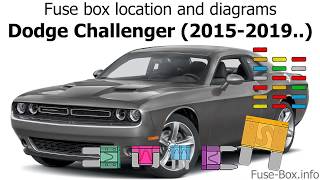
Helpful Videos
Technical Specifications
OEM Part Numbers: 68378638AA (Cover Only) 68384601AC 68430148AA (Cover Only) 68498588AB 68498588AC 68378638AA 68384605AC 68407069AD 68384600AC 68406700AB
The Dodge Challenger uses two fuse boxes: a main Power Distribution Center (PDC) in the engine bay and a secondary fuse box in the trunk next to the battery.
We Have This Part in Stock



The information in this article is provided for general reference and educational purposes only. Vehicle specifications, procedures, and part compatibility can vary by production date, trim level, and region. Always consult your vehicle's factory service manual and verify part numbers before purchasing or performing repairs. Safety-critical components such as airbags, seat belts, and braking systems should be installed by a qualified professional.
- Dodge Challenger:
- 🎬 Helpful Videos
- 🛍️ Shop This Part
- Symptoms of a Failing Dodge Challenger Fuse Box (PDC)
- Known Issues, TSBs, and Recalls
- Buying a Used 2019-2023 Challenger Fuse Box: What You Must Know
- 1. Programming: Plug and Play!
- 2. Match The Part Number EXACTLY
- 3. Physical Inspection
- 4. Fuses and Relays
- Cost of a 2019-2023 Dodge Challenger Fuse Box
- DIY Replacement Walkthrough
- Frequently Asked Questions (FAQ)
- 🎟️ Get 5% Off