

2011-2017 Equinox & Terrain Fuse Box: The Hidden Cause of Stalling and Electrical Problems
This guide explains the common failures, complex part numbers, and replacement procedure for the underhood fuse box in the 2011-2017 Chevrolet Equinox and GMC Terrain.
- A faulty underhood fuse box is a known cause of intermittent stalling and no-start conditions, often setting codes P1682 and P0689.
- This part does NOT require programming; it is a plug-and-play replacement after you transfer all fuses and relays from the old unit.
- Compatibility is extremely complex. You must match the OEM part number exactly, considering the engine, emissions package (Federal or California), and specific production date for 2015-2016 models.
- A used OEM fuse box is a cost-effective and reliable solution, provided you inspect it for damage and verify the part number.
Known Issues: Stalling, No-Start, and False Trouble Codes

The most notorious problem with the fuse box in the 2011-2017 Chevrolet Equinox and GMC Terrain is an internal connection failure that can cause the engine to stall unexpectedly, run rough, or fail to start. This issue is often intermittent and can be difficult to diagnose.
Technical Service Bulletin (TSB) for P1682 and P0689
General Motors has issued technical service bulletins (including PIT5643 and 19-NA-276) that address this specific failure. The root cause is often poor terminal tension or corrosion at a specific pin (terminal 51) within a large connector (X3) on the underside of the fuse box. This weak connection can arc, creating resistance and interrupting power to the engine control module's relay.
This failure can cause a variety of symptoms:
- Sudden engine stalling, sometimes after the vehicle has warmed up or when shifting into gear.
- Intermittent no-start or extended cranking, where the engine turns over but won't fire.
- The "Reduced Engine Power" message appearing on the dashboard.
- An illuminated Check Engine Light with Diagnostic Trouble Codes (DTCs) P1682 (Ignition 1 Switch Circuit 2) and/or P0689 (Engine Controls Relay Feedback Circuit Low Voltage) stored in the computer's memory.
- In some cases, the issue may even cause false codes for other components, like a P0101 for the Mass Airflow (MAF) sensor.
Pro Tip: If you are experiencing these symptoms, especially codes P1682 and P0689 together, the underhood fuse box should be a primary suspect. A mechanic can inspect terminal 51 for signs of arcing or discoloration, which is a strong indicator that the fuse box needs to be replaced.
Symptoms of a Failing Fuse Box

Aside from the specific TSB-related issues, a failing fuse box can cause a wide range of confusing electrical problems. Because it controls so many different circuits, a single internal fault can make it seem like multiple unrelated parts have failed at once.
- Multiple, unrelated electrical failures: For example, the radio, power windows, and headlights may stop working intermittently.
- Fuses that repeatedly blow: If you replace a fuse and it blows again right away or very frequently, it could indicate a short circuit within the fuse box itself.
- Loose fuses or relays: Terminals can lose their tension over time, causing a poor connection that leads to intermittent power.
- Visible damage: A visual inspection may reveal melted plastic around a fuse or relay socket, or green/white corrosion on the metal terminals. This is a clear sign of overheating or water intrusion.
- Burning plastic smell: A strong burning odor from the engine bay could indicate that a circuit inside the fuse box is overheating and melting the housing.
Warning: Do not simply install a higher-amperage fuse to stop it from blowing. Fuses are designed to be the weak link to protect expensive components. Using the wrong fuse can lead to melted wiring, module damage, or even a fire.
Buying a Used Fuse Box: A Guide to Compatibility

This is the most critical section for anyone buying a replacement fuse box. Due to multiple engines, emissions packages, and mid-generation updates, you must get the correct part. Installing the wrong fuse box can result in vehicle systems not working or the vehicle not starting at all.
The Golden Rule: Match the OEM part number from your original fuse box exactly. The part number is typically printed on a sticker on the side or bottom of the unit. Do not rely on visual appearance alone.
How to Verify Compatibility
There are three key factors that determine which fuse box you need:
- Engine Size: The fuse box is different for vehicles with the 2.4L 4-cylinder, 3.0L V6, or 3.6L V6 engine.
- Emissions Package: There are different fuse boxes for vehicles with Federal Emissions (often identified by option code NT7) and California Emissions (often identified by option code NU5 or NU6).
- Production Date (for 2015-2016 models): There was a design change during the 2016 model year. For some engines, parts changed on or around March 19, 2015, or August 3, 2015. This means two 2016 Equinox models with the same engine could have different fuse boxes. Always check the vehicle's build date on the driver's door jamb sticker if you have a 2015 or 2016 model.
Inspecting a Used Part
- Check for Corrosion: Look at all terminals, top and bottom, for any signs of green or white crusty buildup.
- Look for Melted Plastic: Inspect the sockets for fuses and relays. Any sign of melting means the box has overheated and should be avoided.
- Ensure No Broken Tabs: Check that all plastic mounting tabs and cover clips are intact.
- Verify the Part Number: Double-check that the part number on the used unit matches your original. For example, part number 20899626 is listed for some 2012 models with 2.4L California emissions, while other numbers apply to V6 or Federal emissions models.
Programming and Installation
Does the fuse box need to be programmed?
No. The underhood fuse box (UBEC) itself does not contain software and does not need to be programmed or flashed to your vehicle's VIN. It is a plug-and-play component in terms of electronics. Any warnings about programming are typically generic disclaimers from sellers and do not apply to this specific part. The intelligence is in other modules like the BCM and ECM, not the fuse box.
Replacement Walkthrough (DIY Feasible)
Replacing the fuse box is a straightforward job that a DIY mechanic can typically complete in about an hour. The difficulty is low, but attention to detail is critical.
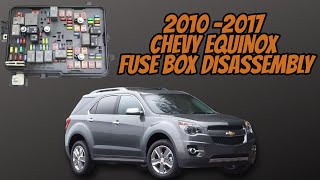
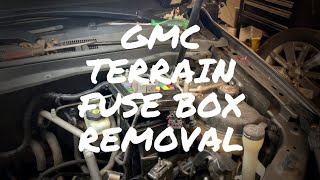
🎬 Watch this detailed fuse box removal and disassembly guide.- Disconnect the Battery: Always disconnect the negative battery terminal before working on any electrical components.
- Remove the Cover: Unclip the large plastic cover from the top of the fuse box.
- Disconnect Main Connectors: There are several large electrical connectors attached to the sides and bottom of the fuse box. Carefully unclip their locking tabs and pull them straight out. You will also need to unbolt the main battery cable that attaches to a stud on the box.
- Remove the Fuse Box: Release the mounting tabs holding the fuse box to its bracket and lift it out of the vehicle.
- CRITICAL STEP - Transfer Fuses and Relays: This is the most important part of the job. One by one, remove each fuse and relay from your old fuse box and place it into the exact same socket in the new fuse box. Use a fuse puller (often included on the back of the cover) and take a picture beforehand for reference. Mixing up fuses or relays will cause electrical problems.
- Install the New Box: Place the new, populated fuse box into the vehicle, reconnect all electrical connectors and the main battery cable, and secure the cover.
- Reconnect Battery and Test: Reconnect the negative battery terminal and test all vehicle functions (lights, wipers, radio, starter, etc.) to ensure everything is working correctly.
Cost of Replacement
| Part Type | Estimated Cost |
|---|---|
| New OEM | $400 - $700+ |
| New Aftermarket | $250 - $450 (availability may be limited) |
| Used OEM | $60 - $150 |
| Shop Labor | $100 - $200 |
Frequently Asked Questions (FAQ)
Will a bad fuse box cause my car to stall?
Yes, a bad underhood fuse box is a known cause of intermittent stalling in the 2011-2017 Equinox and Terrain. This is often due to a poor internal connection that interrupts power to the engine's computer, as outlined in GM service bulletins.
Does a replacement fuse box need to be programmed?
No, the underhood fuse box assembly is not a programmable module. You simply need to transfer all of your existing fuses and relays from the old unit to the replacement unit.
Where is the fuse box located on a Chevy Equinox or GMC Terrain?
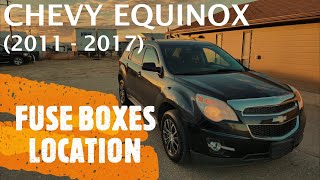
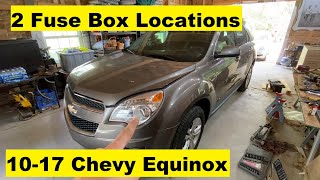
These vehicles have two fuse boxes. The main underhood fuse box (the subject of this article) is in the engine bay on the driver's side. 🎬 Watch: How to find the fuse box location. There is also a smaller interior fuse box located on the passenger side of the center console, accessible from the passenger footwell.
Can I drive with a bad fuse box?
It is not recommended. A faulty fuse box can cause critical systems like the fuel pump, headlights, or even the engine computer to fail without warning, creating a serious safety risk. An unexpected engine stall in traffic could lead to an accident.
What are the OBD-II codes for a bad fuse box?
While a fuse box can cause many codes, the most specific ones related to the common stalling issue are P1682 and P0689. You may also see communication codes (U-codes) if the box is causing network problems between modules.
Helpful Videos
Technical Specifications
OEM Part Numbers: 20899626 20899629 22865685 22878722 22929761 22929762 22929763 23158538 22796250 23325531 23404555 23404556 84080469
Also known as the Underhood Bussed Electrical Center (UBEC). Contains various mini fuses, J-case fuses, and relays that control the vehicle's primary electrical systems.
We Have This Part in Stock



The information in this article is provided for general reference and educational purposes only. Vehicle specifications, procedures, and part compatibility can vary by production date, trim level, and region. Always consult your vehicle's factory service manual and verify part numbers before purchasing or performing repairs. Safety-critical components such as airbags, seat belts, and braking systems should be installed by a qualified professional.
- Chevrolet Equinox:
- GMC Terrain:
- 🎬 Helpful Videos
- 🛍️ Shop This Part
- Known Issues: Stalling, No-Start, and False Trouble Codes
- Technical Service Bulletin (TSB) for P1682 and P0689
- Symptoms of a Failing Fuse Box
- Buying a Used Fuse Box: A Guide to Compatibility
- How to Verify Compatibility
- Inspecting a Used Part
- Programming and Installation
- Does the fuse box need to be programmed?
- Replacement Walkthrough (DIY Feasible)
- Cost of Replacement
- Frequently Asked Questions (FAQ)
- 🎟️ Get 5% Off