

2010-2017 Equinox & Terrain Underhood Fuse Box: A Guide to Failures and Tricky Compatibility
This in-depth guide covers the common failure points, symptoms, and critical compatibility details for the engine bay fuse box in the 2010-2017 Chevrolet Equinox and GMC Terrain.
- Compatibility is critical and complex; you must match the OEM part number exactly, considering the vehicle's year, engine, and emissions system (Federal vs. California).
- The underhood fuse box does NOT require programming, making a used OEM part a viable and cost-effective option for DIY replacement.
- The most common cause of failure is water intrusion from leaks in the windshield cowl or sunroof drains, leading to internal corrosion.
- Symptoms are often widespread and intermittent, including no-start conditions, stalling, and multiple unrelated electrical failures.
Symptoms of a Failing Underhood Fuse Box

A failing underhood fuse box can create a host of confusing and seemingly unrelated electrical problems. Because it's the central hub for so many critical systems, symptoms can be widespread and intermittent. Here are the most common signs that your fuse box may be the culprit:
- No-Crank or No-Start Condition: The engine might turn over but won't start, or it may not crank at all. This is often due to a failure in the circuits that power the fuel pump, starter relay, or engine computer.
- Engine Stalling: The vehicle may stall unexpectedly while driving. This is an extremely dangerous symptom that can be caused by an intermittent loss of power to the fuel pump or ignition system, controlled by the fuse box.
- Multiple Unrelated Electrical Gremlins: One of the most telling signs is when several different electrical components fail at the same time. For example, the headlights, windshield wipers, and radio might all act up simultaneously.
- Visible Corrosion or Melting: A physical inspection is key. Open the fuse box and look for greenish-white corrosion on the terminals, connectors, or the board itself. Melted plastic around any of the fuse or relay sockets is a definite sign of a severe internal short or overload.
- Burning Plastic Smell: A distinct burning odor coming from the engine bay, especially near the fuse box, indicates a serious electrical short and overheating.
- Audible Buzzing or Clicking: Unusual noises from the fuse box can point to a relay that is rapidly cycling due to a poor connection or an internal short circuit.
Known Issues and Common Causes of Failure

Water Intrusion: The #1 Killer
The most common reason for fuse box failure in the Chevrolet Equinox and GMC Terrain is water damage. Leaks from a cracked windshield cowl, improperly sealed windshield, or clogged sunroof drains can allow water to drip directly onto the underhood fuse box. Over time, this moisture seeps inside the unit, causing corrosion on the internal multi-layer circuit boards and pin connectors. This corrosion creates unwanted resistance, which generates heat and can lead to intermittent connections and eventual circuit failure. Several GM Technical Service Bulletins (TSBs) for various models, including newer Equinox and Terrain generations, highlight issues with water leaks from body seams, taillight seals, and roof panels causing widespread electrical problems 🎬 See how to find and repair common water leaks, reinforcing how susceptible these platforms can be to water damage.
Loose Terminals and Connection Problems
General Motors has issued TSBs for other vehicles regarding poor terminal tension within the fuse block. While not specific to the Equinox/Terrain, the principle applies. The terminals that hold the relays and fuses must maintain a tight grip. Road vibrations can cause loose terminals to momentarily lose connection, leading to stalling, warning lights, and hard-to-diagnose intermittent issues. When inspecting a fuse box, pay close attention to how securely the relays fit.
Warning: An engine that stalls while driving is a significant safety hazard. If you are experiencing this symptom, it is not safe to drive the vehicle until the issue is diagnosed and repaired.
Buying a Used Fuse Box: A Buyer's Guide

Because the underhood fuse box on these vehicles does not require programming, a used OEM unit is an excellent, cost-effective solution. However, due to the complex compatibility requirements, you must be extremely careful when purchasing a replacement.
1. Match the Part Number EXACTLY
This is the most critical step. Do not rely on visual appearance alone. You must match the GM part number on your original fuse box to the part number of the replacement unit. There are dozens of different fuse boxes for this platform, and they are not interchangeable.
2. Verify Vehicle Compatibility (Year, Engine, and Emissions)
Even with a matching part number, it's wise to double-check compatibility. The correct fuse box depends on three key factors:
- Model Year: 2010 models often have unique fuse boxes. 2012 models have a specific split based on emissions. Other years have their own variations.
- Engine: The fuse box for a 2.4L 4-cylinder is different from one for a 3.0L or 3.6L V6 engine.
- Emissions System: For 2012 and other model years, there are different fuse boxes for Federal Emissions (RPO code FE9) and California Emissions (RPO codes NU1, NU5, NU6).
Pro Tip: How to Check Your Emissions System
Look for the Vehicle Emissions Control Information sticker under the hood. It will state that the vehicle conforms to EPA regulations and, if applicable, California regulations. You can also check the Service Parts Identification (RPO) sticker, usually located in the glove box, for codes like FE9 (Federal) or NU6 (California).
3. Physical Inspection Checklist
When you have the used part in hand, inspect it carefully:
- Check for Water Damage: Look for any signs of chalky white or green residue on the casing, connectors, or internal board.
- Inspect for Overheating: Check for any melted plastic around fuse/relay sockets or discoloration on the housing.
- Examine the Connectors: All pins on the underside connectors should be straight, clean, and free of corrosion.
- Confirm Physical Integrity: Ensure the plastic housing and all mounting tabs are intact and not cracked or broken.
Programming and Installation
The underhood fuse box (UBEC) for the 2010-2017 Equinox and Terrain does NOT require programming or flashing after installation. This makes it a straightforward DIY replacement.
However, it is critical to distinguish this part from the interior fuse box, which is located inside the passenger cabin. The interior fuse box is integrated with the Body Control Module (BCM) and DOES require programming by a dealer or a properly equipped independent shop to function with your vehicle's specific options and anti-theft system.
Replacement of the underhood unit is generally simple:
- Disconnect the negative battery terminal.
- Remove the fuse box cover.
- Unclip and remove the large electrical connectors from the bottom and sides of the fuse box.
- Release the mounting tabs holding the fuse box in place and lift it out.
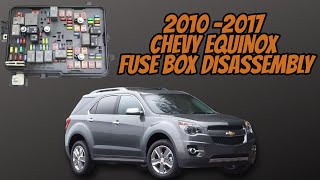
- Installation is the reverse of removal. 🎬 Watch: Step-by-step fuse box removal and disassembly guide
Cost of Replacement
Prices can vary based on the specific part number and availability. The extreme variation in part numbers makes it difficult to find aftermarket options, making used OEM a popular choice.
| Part Type | Estimated Cost |
|---|---|
| New OEM | $500 - $900+ |
| New Aftermarket | Not Widely Available |
| Used OEM | $75 - $250 |
| Shop Labor | $100 - $200 |
Frequently Asked Questions (FAQ)
Does the underhood fuse box need to be programmed?
No. The engine compartment fuse box (UBEC) for the 2010-2017 Equinox and Terrain does not require any programming. It is a direct swap, provided you have the exact correct part number. However, the interior fuse box/BCM does require programming.
Where are the fuse boxes located on the Equinox and Terrain?
There are two main fuse boxes. The one this article focuses on is the underhood fuse box, located on the driver's side of the engine compartment. There is also an interior fuse box (part of the BCM) located inside the cabin, on the passenger side of the center console.
🎬 Watch: How to locate both fuse boxes on your vehicleWhat's the difference between Federal and California emissions parts?
California has stricter emissions standards than the federal EPA. For certain model years, vehicles built to meet California standards used a different fuse box than those built for federal standards. You must replace your fuse box with one that matches your vehicle's original emissions configuration.
Can I just replace a melted relay instead of the whole fuse box?
If a relay or fuse has melted, it has damaged the socket it plugs into. Simply replacing the relay will not fix the underlying poor connection that caused the overheating. The entire fuse box assembly must be replaced to ensure a safe and reliable repair.
Helpful Videos
Technical Specifications
OEM Part Numbers: 20812411 20848336 20848337 20899626 20899629 22865685 22878722 22929761 22929762 22929763 23158538 22796250 23325531 20899629 22819333
Houses various blade-type fuses (Mini, J-Case) and relays. Specific configurations vary widely by part number.
We Have This Part in Stock



The information in this article is provided for general reference and educational purposes only. Vehicle specifications, procedures, and part compatibility can vary by production date, trim level, and region. Always consult your vehicle's factory service manual and verify part numbers before purchasing or performing repairs. Safety-critical components such as airbags, seat belts, and braking systems should be installed by a qualified professional.
- Chevrolet Equinox:
- GMC Terrain:
- 🎬 Helpful Videos
- 🛍️ Shop This Part
- Symptoms of a Failing Underhood Fuse Box
- Known Issues and Common Causes of Failure
- Water Intrusion: The #1 Killer
- Loose Terminals and Connection Problems
- Buying a Used Fuse Box: A Buyer's Guide
- 1. Match the Part Number EXACTLY
- 2. Verify Vehicle Compatibility (Year, Engine, and Emissions)
- 3. Physical Inspection Checklist
- Programming and Installation
- Cost of Replacement
- Frequently Asked Questions (FAQ)
- 🎟️ Get 5% Off