

Acura TL Fuse Boxes (2007-2014): Solving Electrical Issues, Battery Drains, and Programming Mysteries
This guide clarifies the critical differences between the two generations of Acura TL fuse boxes, including which ones need programming and how to diagnose common electrical failures.
- The interior fuse box (MICU) on 2009-2014 TLs MUST be programmed by a dealer or specialist after installation, or the car will not start.
- For 2007-2008 models, a dead battery is most often caused by a faulty HandsFreeLink (Bluetooth) module, not the fuse box. Unplugging it is a common fix.
- The 2007-2008 (3rd Gen) and 2009-2014 (4th Gen) TLs use completely different fuse boxes. You must match the part number from your original unit exactly.
- Widespread, bizarre electrical problems (lights, locks, windows) typically point to a failure in the interior fuse box (MICU), not the under-hood box.
Critical Warning: Two Generations, Two Different Systems

Important: The 2007-2014 Acura TL spans two distinct vehicle generations, and their electrical systems are not interchangeable. You must correctly identify your vehicle's generation before diagnosing or purchasing parts.
- 3rd Generation (2007-2008): Models UA6 and UA7.
- 4th Generation (2009-2014): Models UA8 and UA9.
Part numbers, locations, and programming requirements are different for each generation. This guide is divided into sections to address each one separately.
Part 1: 2007-2008 Acura TL (3rd Generation)

Fuse Box Locations (2007-2008)
The 3rd generation TL has two primary fuse boxes:
- Under-Hood Fuse/Relay Box: Located on the driver's side of the engine compartment, near the air filter housing.
- Interior Fuse Box / MICU: Located under the driver's side of the dashboard, above the footrest.
Common Problems and Diagnosis (2007-2008)
Parasitic Battery Drain: The HandsFreeLink Module is the Likely Culprit
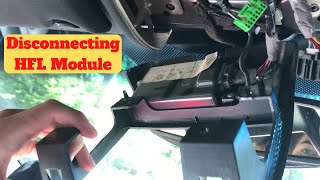
One of the most common electrical problems for the 2007-2008 TL is a battery that dies overnight. While many suspect a faulty fuse box, the issue is almost always a defective HandsFreeLink (HFL) Bluetooth module. This module, located in the overhead console near the sunroof switch, fails to enter sleep mode when the car is off, creating a constant power draw that drains the battery.
Pro Tip: Before replacing any fuse box for a battery drain issue, perform this simple test. After the car has been off for a few minutes, feel the overhead console. If it's warm to the touch, the HFL module is active and draining power. The fix is to simply disconnect the module's electrical connector. 🎬 Watch: How to disconnect the HFL module This is a free repair that solves the problem for most owners.
Interior MICU Failure
A failing interior fuse box (MICU) can cause a wide range of strange, unrelated electrical problems. Symptoms include:
- Interior or exterior lights flickering, staying on, or not working at all.
- Power door locks or windows behaving erratically.
- The security alarm triggering for no reason.
- The key fob failing to lock or unlock the doors.
Programming and Part Numbers (2007-2008)
- Under-Hood Fuse/Relay Box (Part No. 38250-SEP-A11): This part is plug-and-play and does not require any programming. It fits both the 3.2L Base and 3.5L Type-S models for 2007-2008.
- Interior Fuse Box / MICU (Part No. 38200-SEP-A11 and others): Forum discussions suggest that for this specific generation, the MICU may not require programming after a swap, though this is not definitively confirmed. However, given its role in body control, matching the part number exactly is critical. Water intrusion is a common cause of failure, so check for leaks in the area.
Part 2: 2009-2014 Acura TL (4th Generation)

Fuse Box Locations (2009-2014)
The 4th generation TL has three fuse box locations:
- Under-Hood Fuse/Relay Box: Located on the driver's side of the engine bay.
- Driver's Interior Fuse Box / MICU: Located under the dashboard on the driver's side.
- Passenger's Interior Fuse Box: A smaller, secondary panel located on the lower passenger's side panel. 🎬 See this video to locate all 4th-gen fuse boxes
Common Problems and Diagnosis (2009-2014)
Failures in the 4th generation TL are most often related to the sophisticated interior fuse box (MICU).
- Widespread Electrical Failure: Similar to the earlier generation, a bad MICU can cause dozens of seemingly random issues with lights, windows, locks, and warning indicators.
- Start-and-Stall / No-Start: Because the MICU is tied to the immobilizer, a complete failure can prevent the car from recognizing the key, leading to a no-start or a condition where the engine starts and immediately shuts off. A flashing green key symbol on the dash 🎬 Watch: How to fix the flashing green key issue is a tell-tale sign of this issue.
- Wiring Harness Variants: Some under-hood fuse boxes for this generation are sold integrated with the entire engine room wiring harness (e.g., part numbers starting with 32120-). This is a much larger and more labor-intensive part to replace. Verify if you need just the box or the box with the complete harness.
Programming and Part Numbers (2009-2014)
Programming Required: The Driver's Side Interior Fuse Box (MICU) for all 2009-2014 Acura TL models MUST be programmed to the vehicle after installation. This is not an optional step. Failure to program a new or used MICU will result in a no-start condition as the immobilizer will not recognize your keys. This service must be performed by an Acura dealer or a well-equipped independent shop with advanced diagnostic tools.
- Under-Hood Fuse/Relay Box: This unit is generally plug-and-play and does not require programming.
- Driver's Interior Fuse Box / MICU (Part Nos. 38200-TK4-A01, 38200-TK4-A22, etc.): These parts require programming. Part numbers vary based on year, engine (3.5L FWD vs. 3.7L SH-AWD), and transmission. It is absolutely essential to match the part number exactly when sourcing a replacement.
- Passenger's Interior Fuse Box (Part No. 38210-TK4-A02, etc.): This is a simpler junction block and typically does not require programming.
Guide to Buying a Used Acura TL Fuse Box
Buying a used OEM fuse box can offer significant savings, especially for the expensive MICU units. Follow these guidelines to ensure a successful purchase.
- Identify the Correct Box: Determine if you need the under-hood box or the interior MICU. Remember, widespread electrical issues point to the MICU, while failure of a single high-power component (like the fuel pump) might point to the under-hood box.
- Match the Part Number Exactly: This is the most important step. Differences in a single digit can mean incompatibility. Do not rely on visual matches alone. Find the part number on your original unit and match it to the replacement.
- Inspect for Damage: Carefully examine photos of the used part. Look for any signs of white or green corrosion from water damage, melted plastic around terminals, or broken connector tabs. A clean, corrosion-free unit is essential.
- Factor in Programming Costs: If you are buying a used interior MICU for a 2009-2014 TL, you MUST budget for professional programming. Call local dealers or specialty shops beforehand to get a quote for this service.
- Check for Included Harnesses: For 4th generation under-hood boxes, confirm whether the listing is for the box alone or if it includes the entire engine wiring harness, as this dramatically changes the scope of the replacement job.
Cost Comparison
| Part | New OEM Price | Used OEM Price | Shop Labor Cost |
|---|---|---|---|
| 2007-08 Under-Hood Box (38250-SEP-A11) | $330 - $480 | $75 - $150 | $100 - $200 |
| 2009-14 Interior MICU (38200-TK4-A22) | $690 - $1,035 | $100 - $250 | $215 - $420 (plus programming) |
Official Recalls and Service Bulletins

While there are no widespread recalls specifically for fuse box failure on the 2007-2014 Acura TL, there are related historical issues. A 2005 TL recall (NHTSA 05V132000) addressed a loose terminal in the fuse box that could cut power to the fuel pump. A 2007 recall (NHTSA 07V097000) targeted a faulty fuel pump relay, which is housed within the fuse box. The most prominent recalls for the 2007-2014 model years involve Takata airbags and a power steering hose that could leak.
Frequently Asked Questions (FAQ)
Does a used Acura TL fuse box need to be programmed?
It depends on the box and the year. For 2009-2014 models, the interior driver's side fuse box (MICU) absolutely requires programming by a dealer or specialist. The under-hood boxes for all years generally do not require programming. For 2007-2008 models, the interior MICU is less likely to require programming, but matching the part number is still critical.
Why does my 2008 Acura TL battery keep dying?
Before you blame the fuse box, check the HandsFreeLink (Bluetooth) module in the overhead console. A faulty HFL module getting stuck in the 'on' position is a very common cause of parasitic battery drain on 2007-2008 models. Disconnecting this module is a common and effective fix.
Can I replace the fuse box myself?
An experienced DIY mechanic can physically replace any of the fuse boxes. The under-hood box is a straightforward unbolt-and-swap job. The interior MICU is more difficult due to tight access under the dash and numerous connectors. However, for the 2009-2014 interior MICU, the vehicle will not start after the swap until it is professionally programmed.
What's the difference between the under-hood and interior fuse boxes?
The under-hood box is primarily a power distribution center with high-current fuses and relays for components like the engine and cooling fans. The interior box (MICU) is a body control computer that manages dozens of in-cabin electronic features like lights, locks, windows, and the anti-theft system.
Helpful Videos


Technical Specifications
OEM Part Numbers: 38250-SEP-A11 38200-SEP-A01 38200-SEP-A11 32120-TK4-A00 32120-TK4-A01 32120-TK5-A21 38200-TK4-A01 38200-TK4-A02 38200-TK4-A12 38200-TK4-A21 38200-TK4-A22 38210-TK4-A02
Fuse types used are primarily Mini (ATM) blade fuses. The system operates on a 12V DC electrical system.
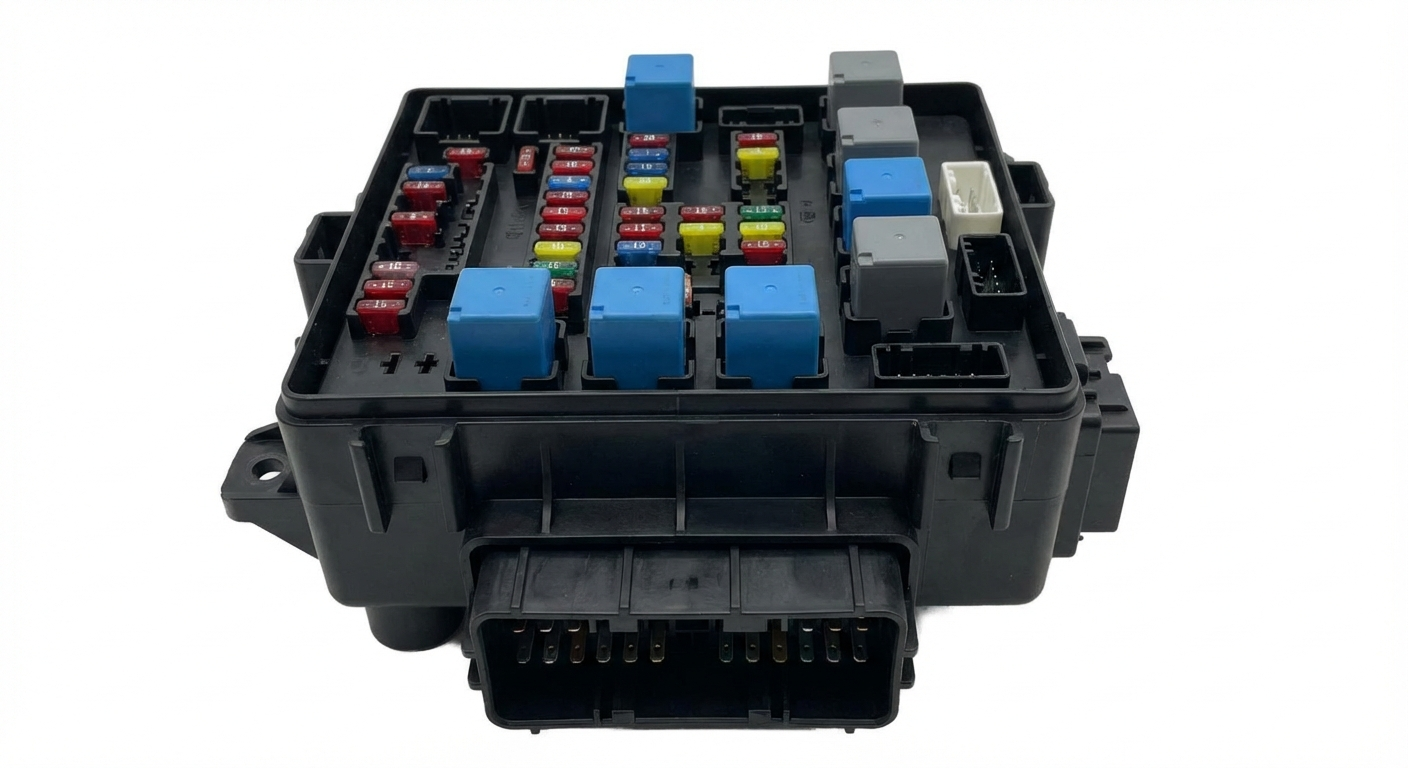
We Have This Part in Stock



The information in this article is provided for general reference and educational purposes only. Vehicle specifications, procedures, and part compatibility can vary by production date, trim level, and region. Always consult your vehicle's factory service manual and verify part numbers before purchasing or performing repairs. Safety-critical components such as airbags, seat belts, and braking systems should be installed by a qualified professional.
- Acura TL:
- 🎬 Helpful Videos
- 🛍️ Shop This Part
- Critical Warning: Two Generations, Two Different Systems
- Part 1: 2007-2008 Acura TL (3rd Generation)
- Fuse Box Locations (2007-2008)
- Common Problems and Diagnosis (2007-2008)
- Programming and Part Numbers (2007-2008)
- Part 2: 2009-2014 Acura TL (4th Generation)
- Fuse Box Locations (2009-2014)
- Common Problems and Diagnosis (2009-2014)
- Programming and Part Numbers (2009-2014)
- Guide to Buying a Used Acura TL Fuse Box
- Cost Comparison
- Official Recalls and Service Bulletins
- Frequently Asked Questions (FAQ)
- 🎟️ Get 5% Off