

2015-2016 Honda CR-V Engine Harness: Diagnosing Electrical Faults & Trim-Specific Fitment
This guide covers the common failure symptoms, a critical TSB, part number variations, and essential compatibility checks for the 2015-2016 CR-V engine wiring harness.
- A known TSB (A16-015) points to corrosion at the crankshaft sensor connector causing codes P0335/P0339; the fix requires replacing the harness.
- Part numbers are trim-specific. The harness for an SE AWD (32200-T1W-A50) is different from other trims; you must match the part number exactly.
- The harness itself does not require programming. It is a passive, plug-and-play component.
- Replacement is a complex, expert-level job (8+ hours) and is not recommended for DIYers.
Known Issues: TSB for CKP Sensor Corrosion (DTC P0335 / P0339)
Honda issued a Technical Service Bulletin (TSB #A16-015, which superseded A15-046) for 2015-2016 CR-V models experiencing a specific electrical problem related to the engine harness. Technicians found that corrosion can develop inside the connector where the engine wiring harness plugs into the Crankshaft Position (CKP) sensor. This poor connection interrupts the signal to the engine computer.
This issue will trigger the Malfunction Indicator Lamp (Check Engine Light) and store diagnostic trouble codes P0335 (CKP Sensor No Signal) or P0339 (CKP Sensor Circuit Intermittent Interruption). Symptoms can include a rough idle, engine hesitation, or a no-start condition. The official Honda repair procedure is to replace both the engine wire harness and the CKP sensor.
Symptoms of a Failing Fuse Block & Wiring Harness
A damaged engine harness can cause a wide range of confusing and intermittent issues. Because it connects to nearly every engine system, a single frayed wire or corroded pin can lead to problems that may seem unrelated.
- Intermittent Electrical Problems: This is the most common sign. You may notice dashboard lights flickering, the radio cutting out, or headlights dimming, especially when hitting bumps.
- Engine Stalling or Misfiring: The engine may shut off unexpectedly while driving or idle roughly. You might also experience random engine misfires that can be hard to diagnose.
- No-Start or Hard Starting: The vehicle may crank but fail to start, or require extended cranking to turn over.
- Check Engine Light: A variety of trouble codes can be triggered by a faulty harness. Besides the specific P0335/P0339 codes from the TSB, you may see codes for sensor circuits being high, low, or open (e.g., P0107, P0113, P0117).
- Persistent Battery Drain: A short circuit in the harness can create a parasitic draw that drains the battery when the vehicle is parked.
- Burning Plastic Smell: A strong burning odor from the engine bay is a critical warning sign of a short circuit heating up the wire insulation and could indicate a fire risk.
- Visible Damage: A visual inspection may reveal obvious causes of failure, such as rodent damage (chewed wires), melted plastic conduit from excessive heat, or chafed wires that have rubbed against engine components.
Buying a Used 2015-2016 CR-V Fuse Block Wiring Harness
Due to the extremely high cost of a new OEM harness, a quality used harness is often the most practical solution. However, careful inspection and verification are essential.
Warning: Part numbers for the engine harness are specific to trim level and drivetrain (AWD vs. 2WD). You must install a harness with the exact same part number as the one you are replacing. Using a harness from a different trim level will likely result in electrical failures.
Verify Your Part Number
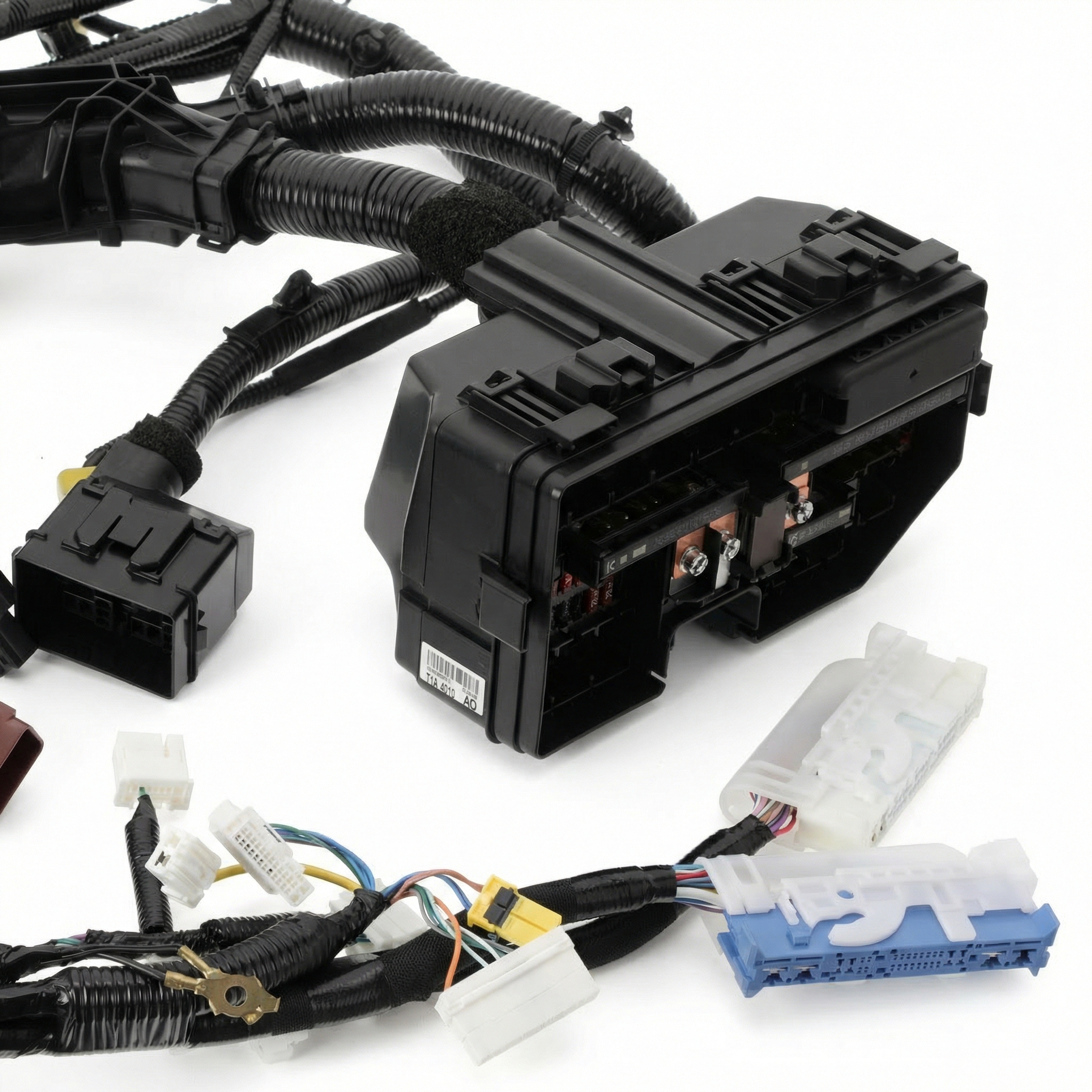
Before purchasing, locate the part number on your original harness. It is typically on a white tag wrapped around one of the main branches of the harness. The fuse box is included with the harness assembly. Below are known part numbers and their associated trims. Do not mix and match.
| Part Number | Vehicle Trim & Drivetrain | Reference |
|---|---|---|
| 32200-T1W-A50 | 2016 CR-V SE (Special Edition) AWD | |
| 32200-T1W-A00 | 2015-2016 CR-V EX AWD | |
| 32200-T1W-A10 | 2015-2016 CR-V LX AWD / EX 2WD | |
| 32200-T1W-C10 / C11 | Fitment varies, potentially for different markets (e.g., Canada). Match your original part number exactly. |
What to Inspect on a Used Harness
- Connectors: Check every single connector plug for cracks, melting, or missing pins. Pay special attention to the large plugs that connect to the ECU and fuse box.
- Wiring: Look for any cut or spliced wires. A professional repair on a single wire is acceptable, but multiple amateur repairs with electrical tape are a major red flag.
- Conduit and Sheathing: The black plastic conduit should be intact and flexible, not brittle or cracked. This protects the wires from heat and abrasion.
- Fuse Box: Inspect the integrated fuse box for any signs of melting, water intrusion, or heavy corrosion on the terminals.
- Source Vehicle: If possible, choose a harness from a vehicle with lower mileage and no signs of fire, flood, or major front-end collision damage.
Why Used OEM is the Best Choice
New aftermarket engine wiring harnesses for this specific vehicle are generally not available due to their complexity. A used OEM harness ensures that all connectors, wire lengths, and wire gauges are identical to the factory part, which is critical for proper function. An incorrect harness can cause immediate and potentially permanent damage to sensitive electronic modules.
Programming and Setup After Installation
Pro Tip: The engine wiring harness itself is a passive component and does not require any programming, flashing, or calibration. It is a direct, plug-and-play replacement, provided you have the correct part number.
While the harness itself doesn't need programming, it connects to modules that do. The Engine Control Module (ECM/PCM) and immobilizer system are linked to your vehicle's keys. Simply replacing the harness will not affect this. However, if you are replacing the ECM at the same time, the new ECM will need to be programmed to the vehicle by a dealer or a qualified locksmith with advanced diagnostic tools.
Cost Comparison
Replacing an engine harness is a significant expense, primarily driven by the high cost of the part and the intensive labor involved.
| Part Type | Estimated Cost |
|---|---|
| New OEM | $2,300 - $3,000 |
| New Aftermarket | Not Generally Available |
| Used OEM | $250 - $600 |
| Shop Labor | $1,000 - $1,600 |
Frequently Asked Questions (FAQ)
Does a replacement engine harness need to be programmed?
No. The harness itself is a set of wires and connectors that does not store any software. It is a plug-and-play part, as long as you use the exact same part number for your vehicle's specific trim and options.
Can I use a harness from an EX model on my SE model?
No. Different trim levels have different features, which means the wiring harnesses are different. For example, the harness for an SE AWD (32200-T1W-A50) is different from the one for an EX AWD (32200-T1W-A00). Using the wrong harness will lead to malfunctioning components or a no-start condition.
What is the most common cause of harness failure on this CR-V?
Aside from physical damage like rodent chewing, a known issue is corrosion at the Crankshaft Position (CKP) sensor connector, as documented in Honda TSB A16-015. This can cause a Check Engine Light with codes P0335 or P0339.
Is replacing the engine wiring harness a DIY job?
No, this is not recommended for DIY mechanics. The replacement is a complex and time-consuming job rated 5 out of 5 for difficulty. It requires removing the intake manifold and carefully disconnecting and routing dozens of connectors throughout the engine bay. An error during installation can damage expensive electronic components.
Technical Specifications
OEM Part Numbers: 32200-T1W-A50 32200-T1W-C10 32200-T1W-C11 32200T1WA50 32200T1WC10 32200T1WC11 32200-T1W-A00 32200-T1W-A10
Includes under-hood fuse and relay box. Connects all engine bay sensors, actuators, and components to the main vehicle computer (ECM/PCM).
We Have This Part in Stock





The information in this article is provided for general reference and educational purposes only. Vehicle specifications, procedures, and part compatibility can vary by production date, trim level, and region. Always consult your vehicle's factory service manual and verify part numbers before purchasing or performing repairs. Safety-critical components such as airbags, seat belts, and braking systems should be installed by a qualified professional.
- Honda CR-V:
- 🛍️ Shop This Part
- Known Issues: TSB for CKP Sensor Corrosion (DTC P0335 / P0339)
- Symptoms of a Failing Fuse Block & Wiring Harness
- Buying a Used 2015-2016 CR-V Fuse Block Wiring Harness
- Verify Your Part Number
- What to Inspect on a Used Harness
- Why Used OEM is the Best Choice
- Programming and Setup After Installation
- Cost Comparison
- Frequently Asked Questions (FAQ)
- 🎟️ Get 5% Off