

2011-2017 Nissan Juke IPDM Fuse Box: Solving No-Start and Electrical Issues
This guide covers the common failures, diagnosis, and replacement of the Intelligent Power Distribution Module (IPDM) in the 2011-2017 Nissan Juke, focusing on why matching part numbers is critical.
- The most common symptom of a bad IPDM is a 'crank but no start' or 'no crank' condition.
- To avoid programming, you MUST replace the IPDM with a used unit that has the exact same part number as the original.
- The part number is on a sticker on the side of the module itself; numbers found online are often for the plastic cover and are incorrect.
- A simple 'Auto Active Test' can be performed without tools to help diagnose the IPDM by cycling lights, wipers, and fans.
Symptoms of a Failing Nissan Juke IPDM

A faulty IPDM can create a variety of symptoms that may seem unrelated. Because it controls so many different systems, its failure can mimic other problems. Here are the most common signs to watch for.
1. Engine Will Not Start (No-Crank or Crank/No-Start)
This is the most serious and common symptom. You may experience a situation where you turn the key or press the start button, and nothing happens (no-crank), or the engine turns over but never fires up (crank/no-start). This often happens because the starter relay or the ECM power relay, which are soldered internally to the IPDM's circuit board, have failed. The issue can be intermittent at first, happening only when the engine is hot or cold, and then become permanent.
2. Random Electrical Issues
Because the IPDM is the central power station, a fault can cause bizarre electrical behavior. This can include:
- Headlights, wipers, or radio turning on or off by themselves.
- A/C compressor not engaging.
- Cooling fans running constantly or not at all.
- Power windows not working.
- Dashboard warning lights illuminating for no reason.
3. Parasitic Battery Drain
A failing IPDM can fail to shut down properly when the car is turned off, causing a slow but steady drain on the battery. If you find your battery is dead overnight or after sitting for a day or two, and the battery and alternator test good, the IPDM is a likely suspect.
4. Specific OBD-II Communication Codes
While a failing IPDM might not always set a specific trouble code for itself, it can cause communication failures across the vehicle's network. A common code associated with this is U1000 (CAN Communication Circuit), which indicates that the IPDM is not communicating with the ECM or other modules. In some cases, a technician may find they cannot connect their scan tool to the vehicle at all.
Diagnosing the IPDM: The "Auto Active Test"

Nissan built a powerful self-test function into the IPDM that you can activate without any special tools. This "Auto Active Test" commands the IPDM to cycle through its main outputs, allowing you to confirm if the module is capable of powering various components.
How to Perform the Auto Active Test:
- Get in the driver's seat and close all doors.
- Turn the ignition ON (engine off). For push-button start, press the button twice without your foot on the brake.
- Within 20 seconds of turning the ignition on, press the driver's door jamb switch 10 times. The door jamb switch is the small rubber-covered button that detects if the door is open or closed.
- Turn the ignition OFF.
- Turn the ignition back ON. The horn should chirp once to signal the test has begun.
The IPDM will now cycle through a pre-set sequence, which repeats three times. You should see and hear the following happen:
- Wipers will operate on low and high speed.
- Parking lights and taillights will turn on.
- Headlights will turn on and flash between low and high beams.
- The A/C compressor clutch will click on and off five times.
- The engine cooling fan(s) will run at various speeds.
What the results mean: If a component like the A/C compressor works during this test but not during normal operation, it suggests the IPDM itself is likely good, and the problem is with the input signal (like the A/C button or a pressure switch). However, if a component does NOT work during this test, it points to a problem with the IPDM, the component itself, or the wiring between them. If the car won't start but the IPDM passes this test, the failure is likely in a part of the module not covered by the test, such as the internal ECM relay.
Buying a Used Fuse and Relay Center (IPDM)

Purchasing a used IPDM is a cost-effective way to fix these issues, but you must be extremely careful about compatibility. Here’s what you need to know.
Warning: The part numbers listed in many databases, such as 24382-1KB1A, are often for the plastic cover of the fuse box, not the electronic module itself. Do not use these numbers to buy a replacement. You must get the part number from the sticker on your car's original IPDM.
1. Match the Part Number EXACTLY
This is the most important rule. Nissan produced many different versions of the IPDM with slight hardware and software differences. To ensure a plug-and-play replacement that does not require programming, the part number on the replacement unit must be identical to the one you are removing. A common part number for the Juke is 284B7-1KJ1E, but you must verify the number on your specific unit. Using a module with a different part number may cause some features not to work or may prevent the car from starting altogether until it is programmed by a dealer.
2. Physical Inspection
When you receive the used IPDM, inspect it carefully:
- Check for Corrosion: Look at the connector pins for any signs of green or white corrosion. Moisture is a common killer of IPDMs.
- No Signs of Tampering: The case should be sealed and show no signs of being pried open. Nissan does not consider these modules serviceable, and an opened case is a major red flag.
- Check the Fuses: A new or used IPDM should come with all fuses and relays installed. Check to make sure none are missing or blown.
3. Why Used OEM is a Good Choice
For a complex electronic part like an IPDM, a used original equipment (OEM) part is often a better choice than a new aftermarket one. OEM modules are built to the vehicle's exact specifications. Aftermarket versions can sometimes have compatibility issues or lower quality internal components that lead to premature failure.
Known Issues, Recalls, and TSBs

As of mid-2024, there are no active recalls specifically for the IPDM on the 2011-2017 Nissan Juke. However, there are several related service campaigns and known issues:
- NHTSA Recall 15V418000: This recall was for a faulty engine start/stop button on 2013-2014 Jukes that could cause the engine to shut off while driving. While not an IPDM issue, the symptoms could be similar.
- NHTSA Recall 14V683000: This addressed a fuel pressure sensor on 2011-2014 models that could loosen and leak fuel.
- General Electrical Complaints: The 2011-2017 Juke has a notable number of owner complaints filed with NHTSA regarding the electrical system, with many describing sudden no-start conditions consistent with IPDM failure.
Cost of Replacing the Juke IPDM
Replacing the IPDM can vary significantly in cost depending on the source of the part and who performs the labor.
| Part Source | Estimated Cost |
|---|---|
| New OEM (Dealer) | $600 - $900+ |
| New Aftermarket | $300 - $500 |
| Used OEM (Recycled) | $75 - $150 |
| Shop Labor | $100 - $200 (1.0-1.5 hours) |
Frequently Asked Questions (FAQ)
Does a replacement IPDM need to be programmed?
Generally, no, IF you use a replacement IPDM with the exact same part number as your original unit. In this case, it is a plug-and-play swap. If you use an IPDM with a different part number, it will likely need to be programmed by a Nissan dealer or a shop with a specialized Nissan CONSULT diagnostic tool.
Where is the IPDM located on a 2011-2017 Nissan Juke?
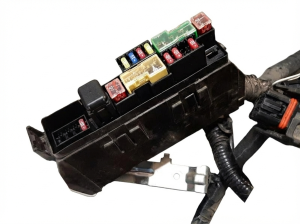
The IPDM E/R is located in the engine compartment, typically on the passenger side, near the battery. It is a black plastic box with several large electrical connectors plugged into the bottom.
Can I replace just one bad relay inside the IPDM?
No. While some relays may be physically removable, Nissan does not support replacing individual relays. The relays for critical components like the ECM and starter are soldered directly to the internal circuit board and are not serviceable. Attempting to replace a removable relay can damage the terminals and cause intermittent connections. The entire module should be replaced as a unit.
My car won't start. Is it the IPDM or the battery?
A no-start can be caused by many things. First, ensure your battery is fully charged and the terminals are clean and tight. If the battery is good but you have a no-crank or crank/no-start condition, especially with other weird electrical symptoms, the IPDM is a strong possibility. Performing the "Auto Active Test" described above can help in diagnosis.
Technical Specifications
OEM Part Numbers: 284B7-1KJ1E (Example IPDM Assembly - verify on your vehicle) 24382-1KB1A (Cover Only) 24382-EG002 (Cover/Bracket) 24383-51E00 (Bracket)
The IPDM is a vehicle-specific computer module. The primary specification is the OEM part number, which must be matched for compatibility.
We Have This Part in Stock

The information in this article is provided for general reference and educational purposes only. Vehicle specifications, procedures, and part compatibility can vary by production date, trim level, and region. Always consult your vehicle's factory service manual and verify part numbers before purchasing or performing repairs. Safety-critical components such as airbags, seat belts, and braking systems should be installed by a qualified professional.
- Nissan Juke:
- 🛍️ Shop This Part
- Symptoms of a Failing Nissan Juke IPDM
- 1. Engine Will Not Start (No-Crank or Crank/No-Start)
- 2. Random Electrical Issues
- 3. Parasitic Battery Drain
- 4. Specific OBD-II Communication Codes
- Diagnosing the IPDM: The "Auto Active Test"
- How to Perform the Auto Active Test:
- Buying a Used Fuse and Relay Center (IPDM)
- 1. Match the Part Number EXACTLY
- 2. Physical Inspection
- 3. Why Used OEM is a Good Choice
- Known Issues, Recalls, and TSBs
- Cost of Replacing the Juke IPDM
- Frequently Asked Questions (FAQ)
- 🎟️ Get 5% Off