

2017 Ford Escape 1.5L Fuse & Relay Center: Programming, Problems, and Replacement
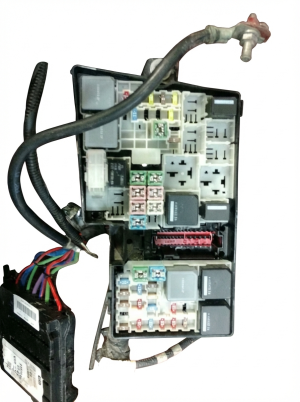
This in-depth guide covers the critical engine-specific compatibility and mandatory programming required when replacing the engine bay fuse box in the 2017 Ford Escape with the 1.5L engine.
- This part is ONLY for 2017 Escapes with the 1.5L engine; it is not interchangeable with 2.0L or 2.5L models.
- Replacement is NOT plug-and-play. The module must be professionally programmed to the vehicle's VIN and security system.
- Failure often causes widespread electrical problems, including a no-start condition or a battery that dies overnight.
- When buying used, you must match the OEM part number (GJ5Z14290RG) and inspect for a missing 25-amp fuse in the F88 slot, as noted in a Ford TSB.
Critical Compatibility: 1.5L Engine ONLY

Warning: This engine bay Fuse and Relay Center is strictly for the 2017 Ford Escape equipped with the 1.5L EcoBoost engine. It is NOT interchangeable with models that have the 2.0L or 2.5L engines. The internal wiring, fuse layouts, and power feeds are different. Installing the wrong part will result in system malfunctions. Always verify compatibility by matching the OEM part number from your original unit.
Symptoms of a Failing Fuse and Relay Center (BCM)

Because this unit controls so many different systems, a failure often produces a wide range of seemingly unrelated electrical problems. Look for these common indicators:
- Electrical Chaos: Wipers turning on by themselves, headlights or interior lights flickering, power windows not working, and the radio behaving erratically are all classic signs.
- No-Start or Intermittent Start: The vehicle may refuse to crank or start, even with a fully charged battery. You might hear a click from the starter relay but the engine won't turn over.
- Parasitic Battery Drain: A faulty BCM can fail to enter its low-power "sleep mode" when the car is off. This causes a continuous power draw that can drain a healthy battery overnight.
- Random Dashboard Warning Lights: You may see a cluster of warning lights for the ABS, airbags, traction control, or security system that turn on and off without a clear reason.
- Diagnostic Trouble Codes (DTCs): A failed BCM will often store network communication codes, which start with a "U" (e.g., U0140 - Lost Communication With Body Control Module). You may also find various "B" (Body), "C" (Chassis), and even phantom "P" (Powertrain) codes that don't seem to have a mechanical cause.
Known Issues, TSBs, and Recalls

Technical Service Bulletin SSM 47875: No Power After BCM Replacement
Ford issued a TSB for 2014-2019 Escapes regarding an issue where a replacement BCM may be shipped without fuse F88 installed. If this 25-amp fuse is missing, the vehicle may have no electrical power after the new module is installed. If you are installing a used or service part, always inspect the fuse slots and confirm fuse F88 is present if your vehicle is not equipped with an auto start/stop system.
Recalls for the 2017 Ford Escape
While there are no recalls specifically for the failure of the engine bay fuse box itself, several electrical system recalls were issued for the 2017 Escape. These include a recall for the power window software (Recall 16C12) and for engine block heaters on 2.0L models. These issues are separate from BCM failure but are relevant to the vehicle's overall electrical system history.
Programming and Installation Requirements

This is NOT a plug-and-play part. A replacement Fuse and Relay Center must be electronically programmed to the vehicle. Failure to do so will result in a no-start condition and malfunctioning systems.
The process is called Programmable Module Installation (PMI) and requires specialized tools.
- Configuration Transfer: Using a diagnostic tool like the Ford's official software (FDRS/FJDS) with a J2534 pass-thru device, a technician must first attempt to copy the configuration data (known as "As-Built" data) from the old module.
- As-Built Data Retrieval: If the old module is completely dead and its data cannot be read, the technician must download the vehicle's original As-Built data from Ford's online database using the VIN.
- Parameter Reset: After the new/used module is installed and has the correct configuration data, a "Parameter Reset" must be performed. This syncs the BCM with the Powertrain Control Module (PCM) and the Passive Anti-Theft System (PATS).
- Key Programming: The final step is to reprogram the vehicle's keys to the newly installed BCM. You must have at least two working keys to complete this process.
This procedure can be performed by a Ford dealership or a well-equipped independent shop that subscribes to Ford's diagnostic software. It is generally not feasible for a DIY mechanic without access to these specific tools and subscriptions.
Buying a Used Fuse and Relay Center
A used OEM unit is a cost-effective alternative to a new part, but careful purchasing is essential.
- Match Part Numbers Exactly: The most critical step is to match the OEM part number on the replacement unit to your original. The primary part number for the 1.5L model is GJ5Z14290RG. Do not trust a listing that claims it fits all engines.
- Verify the Engine Source: Ensure the used part was removed from a 2017 Escape with a 1.5L engine.
- Inspect for Damage: Before purchasing, examine photos for any signs of physical damage, especially corrosion from water or acid. Check for melted plastic around the large fuses or any signs of overheating.
- Check for Missing Fuses: As per TSB SSM 47875, make sure all fuses are present, particularly the F88 slot if applicable.
- Why Used OEM is a Good Choice: For a complex electronic module like this, a used OEM part that has been tested and verified is often more reliable than a cheap, new aftermarket clone which may have compatibility or quality issues.
Replacement Cost Breakdown
Prices can vary based on your location and the chosen repair shop. The main cost driver is the mandatory programming.
| Part/Service | Estimated Cost |
|---|---|
| New OEM Part | $670 - $1,000 |
| Used OEM Part | $90 - $175 |
| Shop Labor & Programming | $300 - $800+ |
| Total (Used Part) | $390 - $975 |
| Total (New Part) | $970 - $1,800+ |
Frequently Asked Questions (FAQ)
Does a replacement fuse box for a 2017 Escape need to be programmed?
Yes, absolutely. The engine bay fuse box contains the Body Control Module (BCM). It must be programmed to your vehicle's VIN and security system using a process called Programmable Module Installation (PMI). It will not work correctly if you simply swap it.
Can I install a fuse box from a 2.0L Escape into my 1.5L model?
No. The fuse boxes are specific to the engine due to differences in wiring and the components they control. You must use a fuse box with the exact same part number from another 1.5L Escape.
Why is my battery dying overnight?
A common cause is a failing Body Control Module (BCM) within the fuse box assembly. If the module doesn't go into "sleep mode" properly, it creates a parasitic draw that drains the battery when the car is off. Other causes can include accessories left on or a faulty alternator, but a bad BCM is a known culprit for this symptom.
Can I replace this part myself to save money?
While you can physically swap the part yourself, the vehicle will not start or run correctly until it is professionally programmed. The cost savings would be limited to the physical installation labor (typically 1-2 hours). The majority of the labor cost is for the specialized electronic programming, which requires expensive tools and software subscriptions that most DIYers do not have.
Technical Specifications
OEM Part Numbers: GJ5Z14290RG GJ7T14A076BA
Integrated Body Control Module (BCM). Engine-specific configuration for 1.5L EcoBoost models.
We Have This Part in Stock


The information in this article is provided for general reference and educational purposes only. Vehicle specifications, procedures, and part compatibility can vary by production date, trim level, and region. Always consult your vehicle's factory service manual and verify part numbers before purchasing or performing repairs. Safety-critical components such as airbags, seat belts, and braking systems should be installed by a qualified professional.
- Ford Escape:
- 🛍️ Shop This Part
- Critical Compatibility: 1.5L Engine ONLY
- Symptoms of a Failing Fuse and Relay Center (BCM)
- Known Issues, TSBs, and Recalls
- Technical Service Bulletin SSM 47875: No Power After BCM Replacement
- Recalls for the 2017 Ford Escape
- Programming and Installation Requirements
- Buying a Used Fuse and Relay Center
- Replacement Cost Breakdown
- Frequently Asked Questions (FAQ)
- 🎟️ Get 5% Off