

2008-2009 Audi R8 Fuel Tank: Leaks, Gauge Problems, and Replacement Guide
This guide covers the common failure symptoms, known issues, and critical inspection points for the fuel tanks on the first-generation Audi R8.
- Fuel tank replacement on a 2008-2009 R8 is an expert-level job (5/5 difficulty) because the engine and transmission must be removed for access.
- A strong fuel smell is a critical symptom of a leak and a fire hazard; the vehicle should not be driven.
- The R8 uses separate left and right tanks; you must verify the exact OEM part number for your vehicle's side, engine (V8), and body style (Coupe).
- Erratic fuel gauge readings are a common issue, often caused by the internal fuel level sender, which still requires tank removal to service.
Symptoms of a Failing Fuel Tank

A problem with the fuel tank on a 2008-2009 Audi R8 can manifest in several ways, from dangerous leaks to annoying gauge inaccuracies. Because the fuel system is so integral to the car's performance, it's important to recognize the warning signs early.
- Strong Fuel Smell: A persistent gasoline odor around the rear of the car is a major red flag for a fuel leak. This could be from a crack in the plastic tank itself, a bad seal on the fuel pump assembly, or a leaking hose. This is a serious fire hazard and should be addressed immediately.
- Visible Fuel Leaks: Puddles or wet spots on the ground under the middle or rear of the vehicle are clear signs of a leak. Even a small drip is a serious safety risk.
- Erratic or Incorrect Fuel Gauge: The fuel gauge suddenly dropping to empty, getting stuck on full, or fluctuating wildly is a common complaint. This is often caused by a failing fuel level sending unit inside the tank. In some cases on the R8, this can be an intermittent electrical issue that may be temporarily resolved by resetting the system.
- Check Engine Light: The engine control unit (ECU) monitors the fuel system's pressure via the evaporative emissions (EVAP) system. A leak in the tank or a faulty component can trigger a Check Engine Light with EVAP-related codes.
- Engine Stalling or Hesitation: If the fuel tank is damaged internally or if there's an issue with the fuel pump pickup, the engine may not get a consistent supply of fuel. This can cause it to hesitate during acceleration or stall completely.
- Difficulty Filling the Tank: If the gas pump nozzle clicks off repeatedly before the tank is full, it can indicate a problem with the tank's venting system or filler neck.
Known Issues, Recalls, and TSBs for 2008-2009 Audi R8

While the 2008-2009 Audi R8 has been generally reliable, there are a few documented issues related to the fuel system. No recalls specifically target the fuel tank itself for the 2008-2009 models, but related components have been subject to service actions.
Compatibility Warning: The fuel tank system differs between the V8 and V10 models, as well as Coupe and Spyder (convertible) versions. The initial R8 models were V8s, with the V10 introduced later. Always verify part numbers, as there are distinct left-side (driver) and right-side (passenger) tanks.
- NHTSA Campaign ID 09V-377 (Audi Recall 20Q3/J3): While this recall primarily listed other Audi models, it addressed a potential fuel leak from the fuel tank vent valve under extreme driving conditions on some 2009 models. The valve's internal spring could be too weak, allowing fuel to leak, which increases fire risk.
- Technical Service Bulletins (TSBs): Audi has issued several TSBs related to fuel gauge inaccuracies. TSB-20-09-10 addresses the fuel gauge reading empty after refueling due to wiring issues inside the tank. Other bulletins discuss intermittent fuel gauge behavior and range display problems.
- Fuel Level Sender Problems: Forum discussions frequently mention erratic fuel gauge readings. This is often traced back to the fuel level senders inside the tanks. Sometimes, a simple fuse pull and reset can temporarily fix the problem, but it often points to a failing sender unit.
Buying a Used 2008-2009 R8 Fuel Tank

Due to the high cost of a new OEM fuel tank, a quality used unit is often the best choice. However, careful inspection is critical to ensure you get a safe and functional part.
Physical Inspection Checklist:
- Check for Cracks or Damage: The R8 uses plastic fuel tanks. Carefully inspect the entire surface for any cracks, deep gouges, or signs of heat damage/warping. Pay close attention to the seams and mounting points.
- Inspect All Fittings and Nipples: Check the threaded openings for the fuel pump and the various hose connections. Ensure no plastic is cracked or stripped. Damaged fittings can cause dangerous leaks that are difficult to seal.
- Look for Signs of Previous Repairs: Avoid any tank that shows signs of plastic welding, epoxy, or other sealants. These repairs are often unreliable and a major safety risk.
- Check for Internal Debris: If possible, look inside the tank. Any rust-like particles (from a contaminated fuel source), sludge, or debris is a major red flag. This contamination can clog fuel filters and damage the entire fuel system.
Verify Compatibility:
- Match OEM Part Numbers: This is the most important step. The R8 has separate left (LH) and right (RH) tanks. Part numbers starting with 420201022 are typically for the left (driver's) side in the US, while 420201021 are for the right (passenger) side. Suffixes like J, N, P, or AM denote revisions; try to match your original part number exactly.
- V8 vs. V10 and Coupe vs. Spyder: Ensure the donor vehicle matches your car's engine and body style. There are differences in capacity and component fitment.
- Included Components: Confirm if the used tank includes the fuel pump, level sending unit, and any connecting pipes. A tank assembly that includes these parts offers significantly more value, as these components can fail independently.
Replacement Overview & Difficulty
Replacing the fuel tank on a first-generation Audi R8 is a complex and labor-intensive job that is not recommended for most DIY mechanics.
- Installation Difficulty: 5 out of 5 (Expert Level)
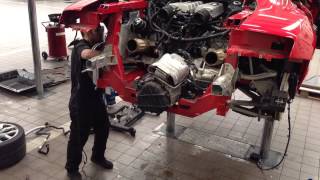
- Reason for Difficulty: The mid-engine design of the R8 means the fuel tanks are buried deep within the chassis. To access and remove them, the engine and transmission must be removed 🎬 Watch this video on Audi R8 engine and fuel tank removal from the vehicle. This is a massive job that requires a vehicle lift, specialized tools, and expert-level mechanical knowledge.
- Professional Installation: This repair should be performed by a qualified technician, preferably one with experience working on Audi R8s. Labor costs will be substantial due to the time required.
Pro Tip: While the engine is out for a fuel tank replacement, it is an excellent time to inspect and service other hard-to-reach components, such as the clutch (on manual models), engine mounts, coolant lines, and starter motor.
Cost Comparison
The cost of replacing an R8 fuel tank is significant, primarily due to the high price of the part and the extensive labor involved.
| Part/Service | Estimated Cost |
|---|---|
| New OEM Fuel Tank (Single Side) | $3,000 - $3,500 |
| Used OEM Fuel Tank (Single Side) | $500 - $1,200 |
| Shop Labor Cost | $2,500 - $4,000+ (Engine removal is required) |
| Total Estimated Job Cost (with Used Part) | $3,000 - $5,200+ |
Note: Prices are estimates and can vary based on location, supplier, and the specific parts included. Aftermarket tanks for this vehicle are generally not available.
Frequently Asked Questions (FAQ)
Can I drive my R8 with a fuel leak?
No. Driving a vehicle with any kind of fuel leak is extremely dangerous and poses a significant fire risk. The vehicle should not be started and should be towed to a repair facility immediately.
My fuel gauge is wrong, but there's no leak. Do I need a new tank?
Not necessarily. An inaccurate fuel gauge is usually caused by a faulty fuel level sending unit, which is located inside the tank. While the tank must be removed to replace the sender, the tank itself may be fine. In some cases, it could also be an electrical glitch that a system reset might temporarily fix.
Why is the replacement so expensive?
The primary reason for the high cost is the labor. Because the Audi R8 is a mid-engine supercar, the entire engine and transmission assembly must be removed to access the fuel tanks. This process can take a technician 30-40 hours.
Is there a difference between the left and right fuel tanks?
Yes. The 2008-2009 R8 uses a saddle-tank design with two separate tanks, one for the left (driver's) side and one for the right (passenger's) side. They have different shapes and part numbers and are not interchangeable.
Helpful Videos
Technical Specifications
OEM Part Numbers: 420201021 420201021J 420201021N 420201021P 420201022 420201022AL 420201022J 420201022AM
Saddle-style dual plastic tank system. Location: Mid-chassis, flanking the engine/transmission. Access requires engine removal.

The information in this article is provided for general reference and educational purposes only. Vehicle specifications, procedures, and part compatibility can vary by production date, trim level, and region. Always consult your vehicle's factory service manual and verify part numbers before purchasing or performing repairs. Safety-critical components such as airbags, seat belts, and braking systems should be installed by a qualified professional.
- Audi R8: