

2008-2017 Lancer Fuel Pump Guide: Federal vs. California PZEV Explained
This guide covers the common failure symptoms, replacement costs, and critical compatibility differences for the 2008-2017 Mitsubishi Lancer fuel pump.
- Crucially, you must verify if your Lancer has Federal or California (PZEV) emissions by checking the under-hood VECI label; the fuel pumps are not interchangeable.
- Symptoms of failure often start as engine hesitation under load and a whining noise from the rear seat area before progressing to stalling or a no-start condition.
- Before replacing the pump, check for the 2015-2016 Lancer fuel pump relay recall (SR-17-005), as a bad relay can mimic pump failure.
- A quality used OEM pump is often a better choice than a cheap new aftermarket unit due to superior fitment and fuel level sender accuracy.
Symptoms of a Failing Fuel Pump

A failing fuel pump in a 2008-2017 Mitsubishi Lancer can cause a variety of symptoms, many of which can be mistaken for other issues. The signs often start subtly and worsen over time until the pump fails completely.
- Engine Hesitation or Sputtering: The most common early sign is engine hesitation, especially under acceleration. You might press the gas pedal and feel a delay or a jerking motion as the pump struggles to supply the extra fuel the engine needs. This can be particularly noticeable when driving uphill or carrying a heavy load.
- Difficulty Starting: The engine may take longer than usual to start. You might have to crank the engine for several seconds before it finally fires up. This can happen because a weak pump can't build up enough pressure in the fuel lines when the car is off.
- Engine Stalling: The engine may stall unexpectedly, sometimes after running for a while. This can be caused by the fuel pump overheating and temporarily shutting down. After it cools, the car might restart, only to stall again later.
- Whining Noise from the Fuel Tank: A noticeable whining or humming sound coming from the rear seat area is a classic sign of a fuel pump motor that is wearing out. A healthy pump is very quiet, so a new, loud noise is a definite red flag.
- Loss of Power: The vehicle may feel sluggish and lack its normal power. This is due to the engine not receiving enough fuel to perform efficiently.
- Engine Cranks but Won't Start: In the case of a complete failure, the engine will turn over (crank) but will not start because there is no fuel being delivered to the cylinders.
Known Issues, Recalls, and Technical Service Bulletins (TSBs)

While there are no widespread fuel pump recalls specifically for the 2008-2017 Lancer generation, there are related issues that are important to know.
- Fuel Pump Relay Recall (SR-17-005): Some 2015-2016 Lancer models were part of a recall for defective power relays. A faulty relay can cut power to the fuel pump, causing the engine to stall or fail to start. This can mimic the symptoms of a bad fuel pump. Before replacing the pump, it's wise to check if your vehicle was affected by this recall and if the relay has been replaced.
- Fuel Return Pipe Recall (Evolution/Ralliart): Some 2008-2009 Lancer Evolution and Ralliart models (which use a different fuel system) were recalled for a fuel return pipe that could crack and leak fuel. This does not apply to the standard non-turbo models this guide covers, but it's important not to confuse the two issues.
- TSB for Cold Engine Hesitation (TSB-09-13-001): Mitsubishi issued a technical service bulletin for some early models that experienced throttle hesitation or stalling when the engine was cold. The fix was an ECM (Engine Control Module) reprogram to adjust fuel injection volume, not a fuel pump replacement. This highlights the importance of proper diagnosis.
Warning: Before assuming the fuel pump has failed, always check the fuel pump fuse and relay first. A simple blown fuse or a faulty relay can cause a no-start condition and is much cheaper and easier to fix.
Compatibility: Federal vs. California (PZEV) Emissions

This is the single most important detail when buying a replacement fuel pump for a 2008-2017 Lancer. The vehicle was built with two different types of emissions systems, and the fuel pumps are not interchangeable.
- Federal Emissions (Tier 2 / BIN 5): This is the standard system for most states.
- PZEV (Partial Zero Emission Vehicle): This system was required for cars originally sold in California and other states that adopted its stricter emissions standards (like New York, Massachusetts, Vermont, etc.). PZEV systems are designed to have zero evaporative emissions, which requires different components in the fuel system, including the fuel pump assembly.
The fuel pump assembly for a PZEV vehicle is different from the Federal emissions version. Using the wrong one can result in a Check Engine Light, failed emissions tests, and improper fuel tank pressure readings. The provided OEM part numbers (1760A167, 1760A251, 1760A319, 1760A322) are for Federal emissions, non-turbo, FWD models only.
Pro Tip: To determine which system your car has, check the Vehicle Emission Control Information (VECI) label located under the hood. It will clearly state whether the vehicle conforms to Federal (Tier 2, etc.) or California (PZEV) regulations.
Buyer's Guide: What to Check Before Purchasing a Used Fuel Pump
A quality used OEM fuel pump can be a reliable and cost-effective alternative to an expensive new unit. Here’s what to look for:
- Verify the Part Number: This is non-negotiable. Match the part number from the used unit to your original pump or confirm the number with a dealership using your VIN. Ensure you are buying a Federal or PZEV pump based on your vehicle's VECI label.
- Inspect the Assembly Housing: Look for any cracks, especially around the hose connections and the top hat where it mounts to the tank. The plastic can become brittle with age. A cracked housing will cause a fuel leak and dangerous fumes.
- Check the Electrical Connector: The pins in the connector should be clean, straight, and free of corrosion or any signs of melting. Melted plastic indicates the pump was overheating and drawing too much current, a sign of imminent failure.
- Examine the Fuel Level Sending Unit: The fuel pump assembly includes the sending unit, which tells your fuel gauge how much gas is in the tank. Check that the float arm moves freely and isn't bent or damaged.
- Consider Mileage: Fuel pumps are a wear item. While they can last over 100,000 miles, a pump from a lower-mileage vehicle is always a safer bet. Ask the seller for the mileage of the donor vehicle if possible.
- Why Used OEM vs. New Aftermarket: While cheap aftermarket pumps are available, they often have higher failure rates. An OEM (Original Equipment Manufacturer) pump, even used, was built to Mitsubishi's exact specifications for fit, flow rate, and durability. This is especially important for the integrated fuel level sender, where aftermarket units are often inaccurate.
Cost Comparison
Prices can vary based on location and supplier, but here is a general cost breakdown for a 2008-2017 Lancer fuel pump assembly (Federal Emissions):
| Part Type | Estimated Cost |
|---|---|
| New OEM | $620 - $780 |
| New Aftermarket | $100 - $350 |
| Used OEM | $50 - $150 |
| Shop Labor | $100 - $200 |
Replacement Overview

Replacing the fuel pump on this generation of Lancer is a moderately difficult job that a skilled DIYer can perform.
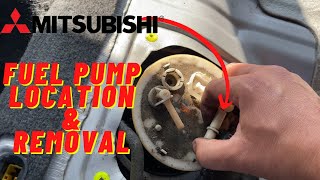
- Location: The fuel pump is located inside the fuel tank and is accessible through a panel under the rear seat cushion. 🎬 Watch: How to locate and replace your Lancer's fuel pump
- Process: The general steps involve disconnecting the battery, removing the rear seat bottom, opening the access cover, disconnecting the fuel lines and electrical connector, and unbolting the retaining ring that holds the pump assembly in place. 🎬 See this step-by-step fuel pump removal walkthrough
- Safety: Working with gasoline is dangerous. It is crucial to work in a well-ventilated area, have a fire extinguisher nearby, and relieve fuel system pressure before disconnecting any lines to prevent fuel spray.
Frequently Asked Questions (FAQ)
Do I need to replace the whole assembly or just the pump motor?
The part is sold as a complete assembly, including the pump motor, fuel level sender, filter sock, and housing. While it is technically possible to replace just the motor inside the housing, it is more complex and not recommended for most people. Replacing the entire assembly is faster, more reliable, and ensures all related components are new.
🎬 Watch: How to change the fuel pump and filter assemblyWill a fuel pump from a Lancer Evolution or Ralliart fit my non-turbo Lancer?
No. The Evolution and Ralliart models are turbocharged and all-wheel drive, and they use a completely different, higher-performance fuel system. Their pumps are not compatible with the standard 2.0L or 2.4L front-wheel-drive models.
My car starts and dies after 2 seconds. Is it the fuel pump?
This specific symptom can be caused by several things. A fuel pump will typically prime (run for 2 seconds) when you turn the key to the 'ON' position. If it shuts off after that, the issue could be the pump, but it could also be a security system issue or a problem with the signal from the engine computer telling the pump to keep running. Proper diagnosis is needed.
Do I need to replace the fuel filter at the same time?
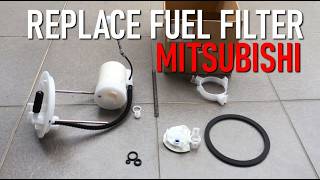
The main fuel filter and strainer (sock) are integrated into the fuel pump assembly. When you replace the complete assembly with a new or used unit, you are also replacing the filter. It is always recommended to replace the filter when installing a new pump to prevent contamination.
OEM Part Numbers
This guide covers the fuel pump assembly for non-turbo, front-wheel-drive models with Federal emissions. These numbers have been verified as interchangeable.
| Part Number | Notes |
|---|---|
| 1760A322 | Replaces 1760A251 |
| 1760A319 | Interchangeable |
| 1760A251 | Superseded by 1760A322 |
| 1760A167 | Early interchange number |
Helpful Videos
Technical Specifications
OEM Part Numbers: 1760A167 1760A251 1760A319 1760A322
Fits 2.0L & 2.4L non-turbo, Front-Wheel Drive (FWD) models with Federal emissions. Assembly includes the pump, fuel level sending unit, and integrated filter/strainer.
We Have This Part in Stock



The information in this article is provided for general reference and educational purposes only. Vehicle specifications, procedures, and part compatibility can vary by production date, trim level, and region. Always consult your vehicle's factory service manual and verify part numbers before purchasing or performing repairs. Safety-critical components such as airbags, seat belts, and braking systems should be installed by a qualified professional.
- Mitsubishi Lancer:
- 🎬 Helpful Videos
- 🛍️ Shop This Part
- Symptoms of a Failing Fuel Pump
- Known Issues, Recalls, and Technical Service Bulletins (TSBs)
- Compatibility: Federal vs. California (PZEV) Emissions
- Buyer's Guide: What to Check Before Purchasing a Used Fuel Pump
- Cost Comparison
- Replacement Overview
- Frequently Asked Questions (FAQ)
- OEM Part Numbers
- 🎟️ Get 5% Off