

2010-2013 Mazda 3 Fuel Pump: Stalling Fixes & The Infamous Access Panel Cut
This guide covers the symptoms, diagnosis, and unique replacement challenges for the fuel pump in 2.0L and 2.5L non-turbo 2010-2013 Mazda 3 models.
- Compatibility is critical: This pump only fits 2.0L/2.5L non-turbo models. Check that the 8th digit of your VIN is 'F' or 'G'.
- Replacement requires either dropping the fuel tank or cutting a larger access panel in the floor under the rear seat.
- Common failure symptoms include engine stalling, hesitation under acceleration, and a distinct whining noise from the fuel tank area.
- A low-mileage used OEM assembly is often a more reliable and economical choice than a new, cheap aftermarket pump.
Symptoms of a Failing Fuel Pump

A weak or failing fuel pump in a 2010-2013 Mazda 3 will cause noticeable issues. Here are the most common signs, often starting subtly and getting worse over time:
- Engine Hesitation or Sputtering: The car may jerk or sputter when you accelerate, especially when going uphill or merging onto a highway. This happens because the weak pump can't supply the extra fuel the engine demands under load.
- Difficulty Starting: You might have to crank the engine for longer than usual before it starts. In the early stages, this might only happen on cold starts. As the pump worsens, it can lead to the car not starting at all.
- Engine Stalling: The engine may stall unexpectedly, sometimes right after starting or while idling at a stoplight. It might restart after a few minutes once the pump cools down, but this is a serious safety concern in traffic.
- Loss of Power: The car feels sluggish and doesn't accelerate as it should. It may struggle to maintain highway speeds.
- Whining Noise from Rear Seat: A noticeable humming or whining sound coming from the fuel tank area (under the rear passenger seat) is a classic sign of a fuel pump motor working too hard and about to fail.
- Check Engine Light: While not always present in the early stages, a failing fuel pump can eventually trigger a Check Engine Light. A common code is P0087 (Fuel Rail/System Pressure - Too Low).
Compatibility: Critical Checks for 2010-2013 Mazda 3

Getting the right fuel pump is critical. Using the wrong one can lead to poor performance or a no-start condition. Follow these checks carefully.
Engine and Model Fitment
This fuel pump assembly fits 2010-2013 Mazda 3 and Mazda 3 Sport models equipped with one of two engines:
- 2.0L MZR non-turbo engine
- 2.5L MZR non-turbo engine
Warning: This part does NOT fit models with the 2.3L Turbo (Mazdaspeed3) or the 2.0L Skyactiv engine. Skyactiv engines were introduced during this generation and use a different fuel system.
The VIN Check: 8th Digit Must Be 'F' or 'G'
The easiest way to confirm you have the correct non-turbo engine is to check the 8th character of your Vehicle Identification Number (VIN).
- VIN 8th Digit 'F': This indicates the standard 2.0L MZR engine.
- VIN 8th Digit 'G': This indicates the PZEV (Partial Zero Emission Vehicle) version of the 2.0L MZR engine.
The fuel pump assembly is the same for the 2.0L ('F' and 'G' VINs) and the 2.5L engines in this year range.
Known Issues, Recalls, and TSBs
As of mid-2026, there are no active recalls from the National Highway Traffic Safety Administration (NHTSA) for fuel pump failure on the 2010-2013 Mazda 3 with the 2.0L or 2.5L non-turbo engines. However, a few related service bulletins exist:
- Cracked Fuel Pump Lock Ring: While not a recall, the plastic lock ring that holds the fuel pump assembly to the tank is a known weak point. It can become brittle with age, crack, and cause a fuel smell or an EVAP leak code like P0455.
- TSB 01-024/12: This bulletin addresses rough idle and stalling on 2012 Mazda 3s, but it specifically applies to vehicles with Skyactiv engines due to fuel temperature issues in the high-pressure pump, confirming they use a different system.
Buying a Used Fuel Pump: What to Look For

A low-mileage, used OEM fuel pump is often a more reliable and cost-effective choice than a cheap, new aftermarket part. OEM pumps are built to a higher quality standard, ensuring correct fuel pressure and a longer service life. Here’s what to inspect:
- Verify the Donor Vehicle: Confirm the pump came from a 2010-2013 Mazda 3 with a 2.0L or 2.5L non-turbo engine. Ask for the donor car's VIN to check the 8th digit ('F' or 'G').
- Inspect the Plastic Housing: Check the white plastic housing for any cracks, especially around the fuel line connections and the top hat where the electrical connector sits. A part from a salvage vehicle could have been damaged during removal or storage.
- Check the Electrical Connector: The pins in the connector should be straight, clean, and free of corrosion. Bent or damaged pins will cause connection problems.
- Look for a Complete Assembly: Ensure you are buying the complete module, including the housing, sending unit (float arm), and pump. It should look like a single, large unit.
- Mileage: Aim for a pump from a vehicle with under 100,000 miles. While OEM pumps are durable, they are a wear item.
Replacement: Dropping the Tank vs. Cutting an Access Panel

Replacing the fuel pump on this Mazda 3 has a significant complication: Mazda did not provide an access panel under the rear seat large enough to remove the pump assembly. This leaves you with two options.
Method 1: Drop the Fuel Tank (The "By-the-Book" Way)
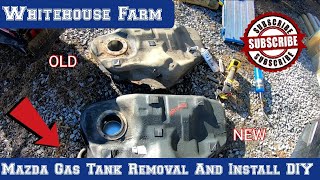
This is the manufacturer-recommended procedure. It involves lifting the vehicle, supporting the fuel tank, removing heat shields and exhaust components, disconnecting filler necks and lines, and lowering the entire tank to access the pump.
- Difficulty: 4/5. Requires significant space, tools, and comfort working under the car.
- Pros: No permanent modification to the vehicle.
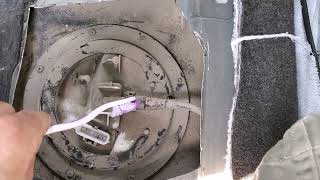
- Cons: Time-consuming and complex. Not easily done without a vehicle lift. 🎬 Watch: Step-by-step guide to dropping the fuel tank
Method 2: Cut an Access Panel (The DIY/Mechanic Hack)
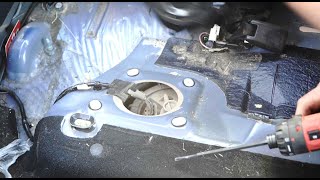
Many owners and independent shops choose to cut an enlarged access hole in the sheet metal under the rear seat. After removing the small factory cover, you can see the top of the pump, but the opening is too small. The process involves carefully cutting a larger circle or square to pull the pump straight out.
Warning: Cutting into your car's chassis carries risks. Use extreme caution to avoid cutting into the fuel tank, lines, or wiring. Sparks from cutting tools are a fire hazard near fuel vapors. Disconnect the battery and ensure proper ventilation.
- Difficulty: 3/5. The pump swap is easy, but this requires metal cutting tools and fabricating a secure cover plate for the new, larger hole.
- Pros: Much faster and avoids dropping the tank. Makes future pump replacements simple.
- Cons: Permanently modifies the vehicle. Must create a sealed, strong cover to prevent exhaust fumes from entering the cabin. 🎬 See how to cut a custom fuel pump access door
Pro Tip: Regardless of the method, always replace the large rubber fuel pump tank seal (Part No. BBM2-42-166A) when you replace the pump. This cheap part prevents fuel leaks and vapor smells. Inspect the metal or plastic lock ring and replace it if it's heavily corroded or cracked.
Cost Comparison
| Part Type | Estimated Cost |
|---|---|
| New OEM | $700 - $1,100 |
| New Aftermarket | $50 - $250 |
| Used OEM | $45 - $85 |
| Shop Labor (Tank Drop) | $225 - $350 |
Frequently Asked Questions (FAQ)
Can I just replace the pump motor instead of the whole assembly?
While technically possible, it is not recommended. Replacing just the motor requires disassembling the plastic module, which can be brittle. A complete used OEM or new aftermarket assembly is a more reliable and often easier repair that also replaces the fuel level sender and strainer.
Will a bad fuel pump always make a whining noise?
No. A whining noise is a common symptom of a worn motor, but a pump can also fail electrically and stop working suddenly with no prior noise. Conversely, some pump noise can be normal, so diagnosis should be based on multiple symptoms.
Do I need a special tool to remove the lock ring?
A special tool exists to grip and turn the lock ring, but it's often not necessary. Most mechanics carefully use a brass punch (to avoid sparks) and a hammer to tap the ridges on the ring and rotate it counter-clockwise to loosen it.
My car smells like gas near the rear seat, is that the fuel pump?
It's very likely related. The most common cause for a fuel smell in that area is a cracked fuel pump lock ring or a failed fuel pump gasket/seal. This allows fuel vapor to escape from the top of the tank into the cabin. It should be addressed immediately as it is a fire hazard.
Helpful Videos
Technical Specifications
OEM Part Numbers: BBM2-42-166A (Gasket Only) LF3T-13-35X LF3T-13-35XA LF3T-13-35XB LF3T-13-35XC LF3T-13-35XD LF3T1335X LF3T1335XA LF3T1335XB LF3T1335XC LF3T1335XD
System operates at approximately 60-71 PSI. This is a complete fuel pump module including the pump, sending unit, and strainer.
We Have This Part in Stock


The information in this article is provided for general reference and educational purposes only. Vehicle specifications, procedures, and part compatibility can vary by production date, trim level, and region. Always consult your vehicle's factory service manual and verify part numbers before purchasing or performing repairs. Safety-critical components such as airbags, seat belts, and braking systems should be installed by a qualified professional.
- Mazda 3 Sport:
- 🎬 Helpful Videos
- 🛍️ Shop This Part
- Symptoms of a Failing Fuel Pump
- Compatibility: Critical Checks for 2010-2013 Mazda 3
- Engine and Model Fitment
- The VIN Check: 8th Digit Must Be 'F' or 'G'
- Known Issues, Recalls, and TSBs
- Buying a Used Fuel Pump: What to Look For
- Replacement: Dropping the Tank vs. Cutting an Access Panel
- Method 1: Drop the Fuel Tank (The "By-the-Book" Way)
- Method 2: Cut an Access Panel (The DIY/Mechanic Hack)
- Cost Comparison
- Frequently Asked Questions (FAQ)
- 🎟️ Get 5% Off