

2004-2009 Mazda 3 Fuel Pump: The Critical California (PZEV) vs. Federal Emissions Guide
Avoid buying the wrong part by learning how to identify your Mazda 3's emissions system before you order a replacement fuel pump.
- You MUST verify if your car has California (PZEV) or Federal emissions before buying; the pumps are not interchangeable and the replacement procedure is different.
- Check the VECI sticker under the hood to determine your emissions system type; PZEV models have a metal fuel tank, while Federal models have a plastic one.
- Common failure symptoms include engine sputtering/stalling, long crank times, a whining noise from the fuel tank, and an inaccurate fuel gauge.
- For Federal emissions models, replacement is often DIY-friendly via an access panel under the rear seat. For PZEV models, the fuel tank may need to be dropped, making it a much more difficult job.
The Single Most Important Check: California PZEV vs. Federal Emissions
Before you even think about diagnosing or ordering a fuel pump for a 2004-2009 Mazda 3, you must determine which emissions system your car has. Mazda produced two versions for the North American market, and their fuel system parts are not interchangeable.
Warning: Installing a Federal emissions fuel pump in a California (PZEV) car, or vice-versa, will not work. It will lead to installation problems, fuel leaks, incorrect fuel gauge readings, and persistent Check Engine Lights.
- California (PZEV) Emissions: These models are equipped with a metal fuel tank and use a specific fuel pump assembly with a metal top. The OEM part numbers for this version typically start with LF67.
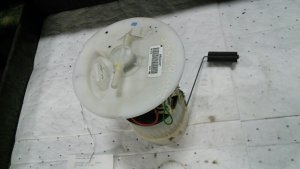
- Federal (FED) Emissions: These models have a plastic fuel tank and use a fuel pump assembly with a large plastic lock ring. The OEM part numbers for this version often start with LF66.
How to Tell Which System You Have
The only way to be certain is to check the Vehicle Emission Control Information (VECI) sticker in your engine bay, usually on the underside of the hood.
- If the sticker mentions conforming to "California" regulations or being a "PZEV" (Partial Zero-Emission Vehicle), you have a California emissions car.
- If the sticker only mentions conforming to "U.S. EPA" regulations, you have a Federal emissions car.
Do not rely on the state where the car was purchased; many vehicles sold nationwide were built to California standards. Always check the sticker.
Symptoms of a Failing Fuel Pump
A weak or failing fuel pump will starve the engine of fuel, leading to a distinct set of symptoms.
- Engine Sputtering or Stalling: The engine may sputter at high speeds or stall unexpectedly, especially under load. This happens because the pump can't supply enough fuel to meet the engine's demand.
- Difficulty Starting: You may experience a long crank time before the engine starts. A weak pump takes longer to build the necessary pressure in the fuel lines. In severe cases, it can lead to a "crank, no start" condition.
- Loud Whining Noise: A failing pump motor will often make a loud, high-pitched whining or humming sound from the rear of the car, near the fuel tank.
- Loss of Power: The car may feel sluggish and have poor acceleration because the engine isn't receiving a consistent fuel supply.
- Check Engine Light: A failing pump can trigger a Check Engine Light. Common codes include P0171 (System Too Lean), indicating more air than fuel, or P0087 (Fuel Rail/System Pressure - Too Low).
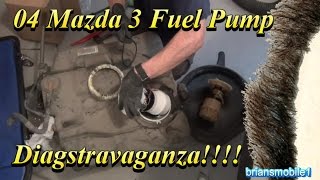
- Inaccurate Fuel Gauge: Since the fuel level sending unit is part of the assembly, a faulty unit can cause the fuel gauge to be stuck on full, empty, or fluctuate wildly. This may trigger code P0463 (Fuel Level Sensor Circuit High Input). 🎬 Watch: Step-by-step fuel pump diagnostics and testing
Known Issues, Recalls, and TSBs
While the first-generation Mazda 3 fuel pump is known in owner forums to be a potential failure point, there are no widespread official recalls specifically for this component on the 2004-2009 models in the US. A major fuel pump recall was issued for much later 2018-2020 Mazda models, but it does not apply to this generation. Always check for any open recalls on your specific vehicle using its VIN on the NHTSA website.
Buying a Used 2004-2009 Mazda 3 Fuel Pump
A quality, low-mileage used OEM fuel pump can be a reliable and cost-effective alternative to expensive new parts. However, careful inspection is key.
Why Used OEM is Often a Smart Choice
Original Equipment (OEM) fuel pumps are built to Mazda's exact specifications for pressure, flow rate, and fuel level sensor calibration. Many cheap aftermarket pumps can fail prematurely, provide incorrect pressure leading to performance issues, or have poorly calibrated sending units that result in an inaccurate fuel gauge. A used OEM pump from a reputable recycler avoids these pitfalls.
What to Inspect Before You Buy
- Verify Emissions Type: This is the most critical step. Match the part number and physical appearance (metal top for PZEV, plastic top for Federal) to your old unit. Do not buy a pump if you cannot confirm it is for the correct emissions system.
- Check the Plastic Housing: On both types, carefully inspect the plastic top hat and housing for any hairline cracks, especially around the fuel line ports and electrical connector. This plastic can become brittle with age and is a common failure point.
- Inspect the Electrical Connector: Look at the pins inside the connector. They should be clean and free of any green or white corrosion, which indicates moisture intrusion and potential electrical problems.
- Confirm It's a Complete Assembly: Ensure you are getting the entire module: the pump, sending unit, float arm, and strainer. These parts are designed to work together.
- Check the Mileage and Source: Whenever possible, choose a part from a lower-mileage vehicle. Reputable auto recyclers will provide this information.
Cost Comparison
Prices can vary significantly based on the emissions type and brand. California (PZEV) pumps are generally more expensive.
| Part Type | Estimated Cost (Part Only) |
|---|---|
| New OEM (Mazda) | $725 - $1100 |
| New Aftermarket (Name Brand like Delphi, Airtex) | $380 - $500 |
| Used OEM | $75 - $200 |
| Shop Labor | $225 - $550+ |
Pro Tip: Labor costs can vary dramatically. The Federal emissions pump can often be replaced in under 2 hours. The California (PZEV) pump may require dropping the fuel tank, a job that can take 4+ hours and cost significantly more. Always confirm the replacement procedure for your specific model with your mechanic.
Replacement Overview & Difficulty
Replacing the fuel pump involves working with gasoline and requires strict safety precautions. The difficulty depends entirely on your car's emissions system.
- Difficulty Rating (Federal): 2/5 (DIY feasible)
- Difficulty Rating (California/PZEV): 4/5 (Professional recommended)
General Replacement Steps:
- Safety First: Disconnect the negative battery terminal. Relieve fuel pressure by running the engine after removing the fuel pump fuse. Work in a well-ventilated area and have a fire extinguisher nearby.
- Access the Pump: Remove the rear seat bottom cushion. It is typically held in by clips and can be pulled up firmly.
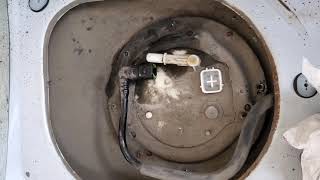
- Remove the Cover: Unscrew the metal access plate on the floor to expose the top of the fuel pump.
- Disconnect Lines: Carefully disconnect the electrical connector and fuel lines. Be prepared for some residual fuel to spill.
- Remove the Pump:
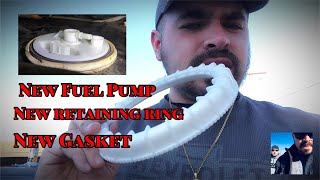
- For Federal models, unscrew the large plastic lock ring. A specialized tool is best, but it can often be tapped loose with a brass punch and hammer. The pump assembly can then be lifted out. 🎬 See this complete fuel pump replacement walkthrough
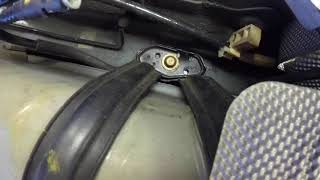
- For California (PZEV) models, the access hole may not be large enough to remove the pump. In many cases, the fuel tank must be partially or fully dropped from the vehicle to get the assembly out, making the job much more complex.
- Installation: Install the new pump with a new gasket/seal, ensuring it is seated correctly. Reassembly is the reverse of removal.
Frequently Asked Questions (FAQ)
What happens if I install the wrong (Federal/PZEV) fuel pump?
It will not fit or function correctly. The Federal pump uses a large plastic lock ring while the PZEV pump bolts to a metal tank. They are physically incompatible. Attempting to install the wrong one can damage the part, the tank, and cause dangerous fuel leaks.
🎬 Watch: Common installation mistakes to avoidCan I just replace the pump motor instead of the whole assembly?
While it is sometimes possible to buy just the internal motor, it is not recommended. The assembly includes the fuel pressure regulator and the fuel level sending unit, which are also common failure points. Replacing the entire module ensures all related components are new and properly calibrated, preventing future issues.
Do I need to replace the fuel filter at the same time?
The primary fuel filter, or strainer, is part of the fuel pump module assembly and will be replaced with it. First-generation Mazda 3 models do not have a separate, serviceable in-line fuel filter like older cars.
My fuel gauge is broken but the car runs fine. Do I still need to replace the whole pump?
Yes. On the 2004-2009 Mazda 3, the fuel level sending unit that controls the gauge is integrated into the fuel pump module. It cannot be purchased and replaced separately. The entire assembly must be replaced to fix the fuel gauge.
Helpful Videos
Technical Specifications
OEM Part Numbers: E8589M FG1247 LF67-13-35X LF67-13-35XA LF67-13-35XB LF67-13-35XC LF67-13-35XD LF67-13-35XE LF67-13-35XF LF671335X LF671335XA LF671335XB LF671335XC LF671335XD LF671335XE LF66-13-35XG LF661335XA LF661335XB LF661335XC LF661335XD
Fits 2004-2009 Mazda 3 with 2.0L or 2.3L engines. Part compatibility is determined by emissions system (California PZEV or Federal). The assembly includes the pump, fuel pressure regulator, sending unit, float, and strainer.
We Have This Part in Stock


The information in this article is provided for general reference and educational purposes only. Vehicle specifications, procedures, and part compatibility can vary by production date, trim level, and region. Always consult your vehicle's factory service manual and verify part numbers before purchasing or performing repairs. Safety-critical components such as airbags, seat belts, and braking systems should be installed by a qualified professional.
- MAZDA 3:
- 🎬 Helpful Videos
- 🛍️ Shop This Part
- The Single Most Important Check: California PZEV vs. Federal Emissions
- How to Tell Which System You Have
- Symptoms of a Failing Fuel Pump
- Known Issues, Recalls, and TSBs
- Buying a Used 2004-2009 Mazda 3 Fuel Pump
- Why Used OEM is Often a Smart Choice
- What to Inspect Before You Buy
- Cost Comparison
- Replacement Overview & Difficulty
- General Replacement Steps:
- Frequently Asked Questions (FAQ)
- 🎟️ Get 5% Off