

2001-2006 Hyundai Santa Fe Fuel Pump: A Guide to Engine-Specific Modules
This guide clarifies the confusing fuel pump options for the first-generation Santa Fe, ensuring you get the right part for your 2.4L, 2.7L, or 3.5L engine.
- Compatibility is critical: The 2.7L V6 uses a different pump than the 2.4L/3.5L models.
- Check the production date for 2003 2.4L models, as a mid-year part change occurred on January 15, 2003.
- Replacement is easy for DIYers due to an access panel under the rear seat; the fuel tank does not need to be dropped.
- Always replace the complete fuel pump module (including filter and sender) and the tank seal to ensure reliability and prevent leaks.
Compatibility: The Most Critical Check

Warning: Not all 2001-2006 Santa Fe fuel pumps are the same. There are critical differences based on engine size and, in one case, the vehicle's production date. Ordering the wrong part will result in a pump that does not fit or function correctly. Verify your vehicle's specifications before purchasing.
The most common compatibility traps for this fuel pump are:
- Engine Size Mismatch: The fuel pump for the 2.7L V6 engine is different from the one used in the 2.4L 4-cylinder and 3.5L V6 models. Many replacement pumps fit the 2.4L and 3.5L but specifically exclude the 2.7L. Always confirm the pump is correct for your specific engine.
- 2003 Model Year Split (2.4L Engine): For Hyundai Santa Fe models equipped with the 2.4L engine, there was a mid-year part change. A different fuel pump is used for models built on or before January 15, 2003, compared to those built after that date. Check the production date on the sticker inside the driver's door jamb before ordering.
Symptoms of a Failing Fuel Pump


A weak or failing fuel pump starves the engine of fuel, causing a variety of noticeable issues. You may experience one or more of the following symptoms:
- Engine Sputtering or Hesitation: The vehicle may sputter or hesitate, especially at higher speeds or under acceleration, as the pump struggles to supply enough fuel to meet demand.
- Difficulty Starting: The engine may take longer than usual to start, requiring multiple cranks to turn over. This happens when the pump can't build enough initial pressure for ignition.
- Stalling: The engine may stall unexpectedly, particularly when it's hot or under load, like when climbing a hill. A complete stall can occur if the fuel flow stops entirely, which can be dangerous in traffic.
- Loss of Power: You may feel a significant lack of power during acceleration or when trying to maintain speed on an incline.
- Whining Noise from the Fuel Tank: A loud humming or whining sound coming from the rear of the vehicle (where the fuel tank is) is a classic sign of a struggling fuel pump motor. A healthy pump should make a very quiet, brief hum when you first turn the key to the 'ON' position.
- Decreased Fuel Economy: An inefficient pump can sometimes cause the engine to run rich, burning more fuel than necessary and leading to a noticeable drop in MPG.
Diagnosing a Fuel Pump Issue

If you suspect a fuel pump failure, here are two common diagnostic steps.
1. The Listening Test
This is the simplest first check. In a quiet environment, have someone turn the ignition key to the 'ON' position (without starting the engine). You should hear a faint, 2-3 second humming or whirring sound from the rear seat area as the fuel pump primes the system. If you hear a loud, grinding whine, the pump is likely failing. If you hear nothing at all, the pump may not be receiving power (could be a fuse or relay issue) or it may have failed completely.
2. Fuel Pressure Test
This is the definitive test. A fuel pressure gauge is needed to measure the pressure at the engine's fuel rail. The first-generation Santa Fe should have a fuel pressure between 38 and 50 PSI. Low pressure often points to a weak pump or a clogged filter. Note that these vehicles may not have a built-in test port (Schrader valve) on the fuel rail, potentially requiring a special adapter to connect the gauge in-line with the fuel supply hose.
Pro Tip: Before condemning the fuel pump, always check the fuel pump fuse and relay. These are located in the fuse box and are much cheaper and easier to replace. A failed relay can mimic the symptoms of a dead fuel pump.
Buying a Used Fuel Pump Assembly
A recycled OEM fuel pump assembly can be a reliable and cost-effective alternative to expensive new parts, especially when compared to lower-quality aftermarket options. Here’s what to look for:
- Verify Compatibility First: This is the most important step. Match the part number from your original pump to the used unit, or ensure the donor vehicle has the exact same year, engine, and (for 2003 2.4L models) production date range. Do not guess.
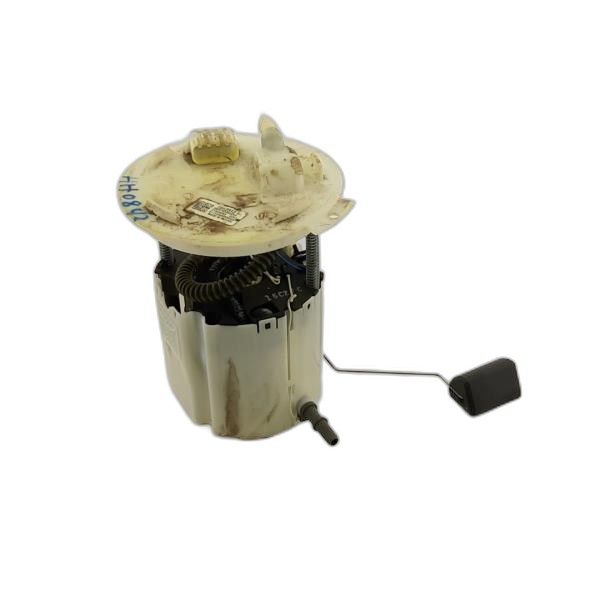
- Inspect the Assembly: Check the plastic housing for any cracks, especially around the hose connections and the top hat where it seals to the tank. Ensure the electrical connector pins are clean, straight, and free of corrosion. The fuel level float arm should move freely without binding.
- Consider Mileage: While a fuel pump's life can vary, a unit from a lower-mileage vehicle is generally a safer bet. Ask the seller for the mileage of the donor vehicle if possible.
- Why Used OEM is Often Better: The fuel pump is a complete, engineered module. A genuine Hyundai assembly is designed for a perfect fit, correct fuel pressure, and accurate fuel level readings. Cheap aftermarket pumps are notorious for premature failure, incorrect fuel gauge readings, and noisy operation. A quality used OEM part often provides better longevity and reliability than a new, non-OEM alternative.
Replacement Overview
Replacing the fuel pump on a 2001-2006 Santa Fe is surprisingly straightforward for a DIY mechanic, thanks to an access panel under the rear seat.
Pro Tip: It's safest to perform this job when the fuel tank is as empty as possible to minimize fumes and the risk of spills.
- Disconnect the Battery: Always disconnect the negative battery terminal before working on the fuel system.
- Access the Pump: The pump is located under the driver's side rear seat. Flip the seat cushion forward. You will need to pull back the carpet and remove a metal access plate held on by several screws to expose the top of the fuel pump assembly.
- Remove Connections: Carefully disconnect the electrical connector and the fuel lines. Be prepared for a small amount of residual fuel to spill; have rags ready.
- Remove the Pump: The pump assembly is held into the tank by a series of small bolts around its perimeter. Remove these bolts, and you can then carefully lift the entire assembly out of the tank.
- Installation: Installation is the reverse of removal. Always use a new tank seal (O-ring) to prevent dangerous fuel leaks and fumes. Ensure the new pump is seated correctly and all bolts are tightened evenly.
Cost of Replacing a 2001-2006 Santa Fe Fuel Pump
Prices can vary based on part choice and labor rates. The easy access for this job keeps labor costs relatively low compared to vehicles where the tank must be dropped.
| Part/Service | Estimated Cost |
|---|---|
| New OEM (Dealer) | $570 - $960 (part only) |
| New Aftermarket | $90 - $480 (part only) |
| Used OEM | $50 - $125 (part only) |
| Shop Labor | $150 - $250 |
Recalls and Technical Service Bulletins (TSBs)
As of this writing, there are no active recalls from the NHTSA for the in-tank fuel pump on the 2001-2006 Hyundai Santa Fe. You may see information about recalls for high-pressure fuel pumps (HPFPs) on newer, direct-injected Hyundai models, but these do not apply to the first-generation Santa Fe, which uses a conventional in-tank pump.
Frequently Asked Questions (FAQ)
How do I know exactly which fuel pump my Santa Fe needs?
First, identify your engine (2.4L, 2.7L, or 3.5L). If you have a 2003 2.4L model, check the production date on the sticker in the driver's door jamb. The best method is to match the part number off your original pump, but verifying by engine and production date is a reliable alternative.
Is it hard to replace the fuel pump myself?
No, this is a very DIY-friendly job. Because Hyundai provided an access panel under the rear seat, you do not need to drop the fuel tank. With basic hand tools, the job can typically be completed in 1-2 hours.
Can I just replace the fuel pump motor instead of the whole assembly?
While individual pump motors are sold, it is strongly recommended to replace the entire assembly. The assembly includes the integrated fuel filter and sending unit. The original filter is likely saturated with contaminants, and replacing only the motor can lead to premature failure of the new motor. Replacing the complete module ensures all related components are new and functioning correctly.
My car cranks but won't start. Could it be the fuel pump relay?
Yes, absolutely. A faulty fuel pump relay will prevent power from reaching the pump, resulting in a no-start condition identical to a failed pump. The relay is an inexpensive part and should be checked or swapped with a known-good relay before you undertake replacing the entire fuel pump assembly.
Technical Specifications
OEM Part Numbers: 31110-26330 31110-26330-DS 31110-26350 31110-26355 31110-26355DS 31110-26500 31110-38200 3111026330 3111026350 3111026355DS 3111026500 31110-38250
Operating Pressure: 38-50 PSI
We Have This Part in Stock




The information in this article is provided for general reference and educational purposes only. Vehicle specifications, procedures, and part compatibility can vary by production date, trim level, and region. Always consult your vehicle's factory service manual and verify part numbers before purchasing or performing repairs. Safety-critical components such as airbags, seat belts, and braking systems should be installed by a qualified professional.
- Hyundai Santa Fe:
- 🛍️ Shop This Part
- Compatibility: The Most Critical Check
- Symptoms of a Failing Fuel Pump
- Diagnosing a Fuel Pump Issue
- 1. The Listening Test
- 2. Fuel Pressure Test
- Buying a Used Fuel Pump Assembly
- Replacement Overview
- Cost of Replacing a 2001-2006 Santa Fe Fuel Pump
- Recalls and Technical Service Bulletins (TSBs)
- Frequently Asked Questions (FAQ)
- 🎟️ Get 5% Off