

2007-2016 Honda CR-V Fuel Pump: Diagnosis and Avoiding the US vs. Japan-Built Trap
This guide covers common failure symptoms, replacement costs, and the critical VIN check required to get the right in-tank fuel pump for your CR-V.
- Your CR-V's country of origin is the most critical factor; check if your VIN starts with 'J' (Japan) or '1'/'3'/'4'/'5' (North America) before buying a pump.
- Common failure symptoms include the engine cranking but not starting, a loud whine from the fuel tank, and hesitation or stalling under load.
- A recall exists for some replacement fuel pumps sold for 2013-2016 models; they can fail and cause the engine to stall while driving.
- Accessing the pump is done from inside the cabin by removing the rear seat cushion; the fuel tank does not need to be removed.
Vehicle Fitment & Compatibility Warning

Warning: The single most important factor when replacing the fuel pump on a 2007-2016 Honda CR-V is the vehicle's country of origin. Pumps for Japan-built models are different from those made in the USA or Mexico, and they are not interchangeable. Before purchasing, you must verify where your CR-V was built.
Check the first character of your Vehicle Identification Number (VIN):
- If the VIN starts with 'J', your CR-V was built in Japan.
- If the VIN starts with '1', '4', or '5', your CR-V was built in the USA.
- If the VIN starts with '3', your CR-V was built in Mexico.
Always match your VIN to the part description to ensure you are buying the correct pump. Installing the wrong pump will result in a no-start condition or improper fuel delivery.
Known Issues, Recalls, and Technical Service Bulletins (TSBs)

While there have been major Honda fuel pump recalls, the primary one (NHTSA Campaign 23V-858) for failing impellers mainly affects later model CR-Vs (2018-2019). However, there are important issues for the 2007-2016 generation.
Safety Recall on Replacement Fuel Pumps (2013-2016 Models)
According to Honda Service Bulletin 24-073, a number of replacement fuel pump assemblies sold by service departments for 2013-2016 CR-Vs were manufactured with defective impellers. These impellers can swell, causing the fuel pump to seize and stop working. This can lead to an engine stall while driving, increasing the risk of a crash. This means that even if your vehicle was not part of an original recall, if the fuel pump was replaced, it could be one of the defective units. A Honda dealer can check your VIN to see if it is subject to this recall.
TSBs on Fuel Leaks (2014-2016 Models)
In 2016, Honda issued technical service bulletins (including TSB #A-PAS-03292016-9) to dealers acknowledging an investigation into fuel leaks. The leak was noted to occur at the connection between the fuel tank and the fuel pump on some 2014-2016 CR-Vs. This issue could result in a strong fuel smell inside or outside the vehicle.
Symptoms of a Failing Fuel Pump

A failing fuel pump can cause a variety of symptoms, which may be intermittent at first.
- Engine Cranks but Won't Start: This is the most common symptom. The starter will turn the engine over, but it won't fire up because it isn't receiving fuel.
- Sputtering, Hesitation, or Stalling: The engine may sputter or hesitate during acceleration, especially under load like going uphill. It might also stall unexpectedly, sometimes after being turned off for a few minutes and then restarted.
- Loud Whining or Buzzing Noise: You may hear a loud, high-pitched whining sound coming from the rear of the vehicle, near the fuel tank. This is the sound of the pump motor struggling to work.
- Loss of Power: The vehicle may feel sluggish and lack acceleration power because the engine is being starved of fuel.
- Decreased Fuel Economy: An inefficient pump can sometimes deliver fuel inconsistently, leading to a noticeable drop in gas mileage.
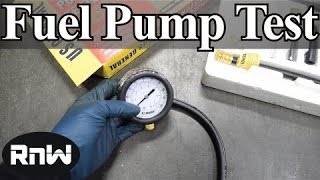
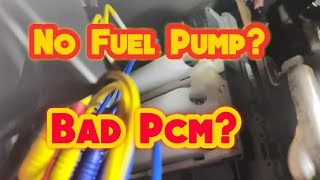
- Check Engine Light: In some cases, low fuel pressure can trigger a Check Engine Light. A common trouble code is P0087 (Fuel Rail/System Pressure - Too Low). 🎬 See how to properly test and diagnose a bad pump.
Buying a Used 2007-2016 CR-V Fuel Pump: What to Check

A used OEM fuel pump can be a reliable and cost-effective alternative to expensive new parts, especially when compared to cheap, low-quality aftermarket units. Here’s what to look for.
1. Verify Compatibility First
Before anything else, use your VIN to confirm your CR-V's country of origin (Japan, USA, or Mexico). Only purchase a used pump that is explicitly listed as fitting your vehicle's build location. If possible, match the OEM part number from your original pump to the used one you plan to buy.
2. Physical Inspection
When you have the used pump in hand, inspect it carefully:
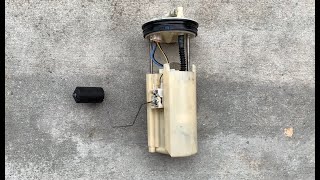
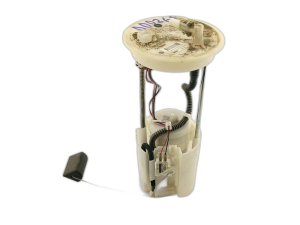
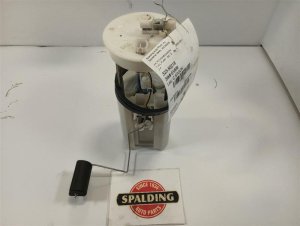
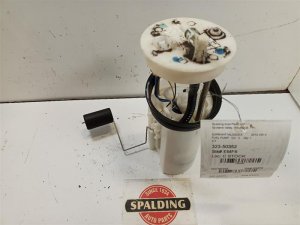
- Housing: Check the white plastic housing for any cracks, especially around the fuel line connections and the top plate. A cracked housing can cause dangerous fuel leaks.
- Electrical Connector: Look at the electrical pins inside the connector. They should be clean and free of corrosion or any signs of melting/overheating.
- Fuel Level Float and Arm: Ensure the float arm moves freely and isn't bent or damaged. This part tells your gas gauge how much fuel is in the tank.
- Strainer: The strainer (or 'sock') at the bottom of the pump should be present and relatively clean. A heavily discolored or clogged strainer suggests it came from a tank with a lot of sediment. It is always recommended to install a new strainer with a used pump.
3. Mileage and Source
Ask the seller for the mileage of the donor vehicle. A fuel pump from a lower-mileage CR-V (under 100,000 miles) is a much safer bet. While these pumps can last a long time, they are a wear item. Avoid pumps from vehicles with excessively high mileage or from regions with poor fuel quality.
4. Why Used OEM is Often Better Than New Aftermarket
For a part as critical and sensitive as a fuel pump, a used Original Equipment Manufacturer (OEM) unit is often superior to a cheap, new aftermarket alternative. OEM pumps are built to Honda's exact specifications for fit, electrical connections, and fuel pressure. Aftermarket pumps, especially budget-friendly ones, can suffer from incorrect pressure ratings, premature failure, and fitment issues with the lock ring and seal, potentially leading to leaks or error codes.
Replacement Overview
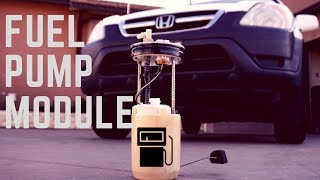
Replacing the fuel pump on a 2007-2016 CR-V is an intermediate-level job. The pump is located inside the fuel tank and is accessed from inside the cabin, so the fuel tank does not need to be dropped.
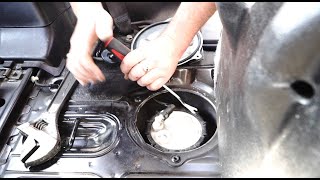
🎬 Watch this step-by-step 2007-2011 CR-V fuel pump replacement DIY.Pro Tip: Work with a nearly empty tank of gas (1/4 tank or less). This reduces the risk of spills and makes the module easier to handle.
- Relieve Fuel Pressure: Disconnect the battery. Then, remove the fuel pump fuse and start the engine, letting it run until it stalls. This clears the fuel from the lines.
- Access the Pump: The access panel is located under the rear seat cushion. You will need to flip the seat cushion forward or remove it to get to the round metal access cover on the floor.
- Disconnect Lines: After removing the cover, carefully clean the area to prevent dirt from falling into the tank. Disconnect the electrical connector and the fuel line. Be prepared for a small amount of fuel spillage.
- Remove the Lock Ring: A plastic lock ring holds the pump module in place. A special tool is recommended, but it can often be removed by carefully tapping it counter-clockwise with a brass punch and hammer. Do not use a steel punch, as it can create sparks.
- Swap the Module: Carefully lift the old pump module out of the tank, being mindful not to bend the float arm. Install the new module with a new rubber tank seal.
- Reassemble: Tighten the lock ring, reconnect the fuel line and electrical connector, and reinstall the access panel and rear seat. After reconnecting the battery, cycle the key to the 'ON' position (without starting) 2-3 times to allow the new pump to prime the system. Start the engine and check for any leaks.
Cost Comparison
Prices can vary by supplier and location, but here are typical cost ranges for the complete fuel pump module:
| Part Type | Estimated Price Range |
|---|---|
| New OEM | $335 - $500 |
| New Aftermarket | $100 - $325 |
| Used OEM | $50 - $125 |
| Shop Labor | $180 - $350 |
Frequently Asked Questions (FAQ)
How do I know if my CR-V was built in Japan or the US?
Check the very first character of your 17-digit VIN. A 'J' indicates it was built in Japan. A '1', '4', or '5' indicates it was built in the USA. A '3' indicates it was built in Mexico. This is the most reliable way to determine which fuel pump you need.
Can I just replace the small pump motor instead of the whole assembly?
While it is sometimes possible to buy just the internal pump motor, it is highly recommended to replace the entire module assembly. The assembly includes a new fuel level sender, strainer, and housing, which can all wear out. Replacing the whole unit ensures all components are new and reduces the chance of having to do the job again if another part of the old assembly fails.
Is a special tool required to remove the fuel pump?
Yes, a special fuel pump lock ring wrench is the official tool to remove and install the plastic lock ring that secures the pump. However, many technicians and DIYers successfully use a brass (non-sparking) punch and a hammer to carefully tap the ring loose and tight again. Using the correct tool prevents damage to the plastic ring.
What is the difference between the 3rd Gen (2007-2011) and 4th Gen (2012-2016) fuel pumps?
The primary differences are in the part numbers and potentially the electrical connections or pressure specifications. They are not interchangeable. For example, part numbers like 17045-SWA-A01 fit the 2007-2011 models, while numbers like 17045-T0A-010 fit 2012-2014 models. Always buy the specific pump for your year range and build location.
Technical Specifications and Part Numbers
Part numbers often supersede over time. Always verify fitment with the seller using your VIN.
Common OEM Part Numbers
| Generation | Years | Common Part Numbers |
|---|---|---|
| 3rd Gen | 2007-2011 | 17045-SWA-A00, 17045-SWA-A01, 17045-SXS-A00, 17045-SXS-A01 |
| 4th Gen | 2012-2016 | 17045-T0A-000, 17045-T0A-010, 17045-T0A-020, 17045-T1W-A01 |
Key Specifications
- Pump Type: In-tank electric module assembly
- Voltage: 12V
- System Pressure (Typical): ~65 psi
Helpful Videos


Technical Specifications
OEM Part Numbers: 17045-SXS-A00 17045-SXS-A01 17045-T1W-A01 17045SWAA00 17045SWAA01 17045SXSA00 17045SXSA01 17045SXSA30 17045T0A000 17045T0A010 17045T0A020 17045T1WA00
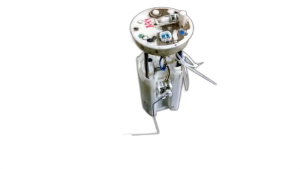
In-tank electric module assembly, 12V, includes fuel sending unit and strainer.
We Have This Part in Stock


The information in this article is provided for general reference and educational purposes only. Vehicle specifications, procedures, and part compatibility can vary by production date, trim level, and region. Always consult your vehicle's factory service manual and verify part numbers before purchasing or performing repairs. Safety-critical components such as airbags, seat belts, and braking systems should be installed by a qualified professional.
- Honda CR-V:
- 🎬 Helpful Videos
- 🛍️ Shop This Part
- Vehicle Fitment & Compatibility Warning
- Known Issues, Recalls, and Technical Service Bulletins (TSBs)
- Safety Recall on Replacement Fuel Pumps (2013-2016 Models)
- TSBs on Fuel Leaks (2014-2016 Models)
- Symptoms of a Failing Fuel Pump
- Buying a Used 2007-2016 CR-V Fuel Pump: What to Check
- 1. Verify Compatibility First
- 2. Physical Inspection
- 3. Mileage and Source
- 4. Why Used OEM is Often Better Than New Aftermarket
- Replacement Overview
- Cost Comparison
- Frequently Asked Questions (FAQ)
- Technical Specifications and Part Numbers
- Common OEM Part Numbers
- Key Specifications
- 🎟️ Get 5% Off