

1997-2002 Taurus & Sable Fuel Pump Guide: DOHC vs. OHV and Common Failures
This guide covers the common failure symptoms, replacement costs, and critical compatibility differences for the fuel pump in the 1997-2002 Ford Taurus and Mercury Sable.
- You MUST identify your engine before buying a pump. Check if your VIN's 8th digit is 'U'/'2' (OHV) or 'S' (DOHC). They are not interchangeable.
- Symptoms of failure include a whine from the tank, engine hesitation, loss of power, hard starting, and stalling.
- There are no safety recalls for this part, but Ford issued TSBs for noisy pumps and radio interference.
- Replacement is difficult as the fuel tank must be dropped. This is not a beginner-friendly DIY job.
Key Compatibility Warnings: DOHC vs. OHV vs. Flex Fuel
The most critical factor when purchasing a replacement fuel pump for a 1997-2002 Ford Taurus or Mercury Sable is matching it to your specific engine. Ford used multiple versions of the 3.0L V6 engine during this period, and they do not use the same fuel pump. Using the wrong pump can result in improper fuel pressure, incompatible electrical connectors, or a no-start condition.
Warning: Before ordering, you must verify which engine your vehicle has. The wrong fuel pump will not work.
How to Identify Your Engine
The easiest way to identify your engine is by checking the 8th character of your Vehicle Identification Number (VIN). The VIN is located on a tag on the driver's side of the dashboard (visible through the windshield) and on a sticker in the driver's side door jamb.
- VIN Code 'U' or '2': This indicates the 3.0L OHV (Over Head Valve) "Vulcan" V6. This is a 12-valve engine.
- VIN Code 'S': This indicates the 3.0L DOHC (Dual Over Head Cam) "Duratec 24V" V6. This is a 24-valve engine.
- Flex Fuel Vehicles (FFV): Some models, particularly in the 2000-2002 range, were equipped with a Flex Fuel version of the OHV engine that could run on E85 ethanol. These vehicles often require a specific fuel pump designed to handle the corrosive properties of ethanol. Check your vehicle's original specifications or fuel cap for FFV identification.
All standard gasoline models in this year range use a 16-gallon fuel tank.
Symptoms of a Failing Fuel Pump
A weak or failing fuel pump can cause a wide range of symptoms, from subtle annoyances to leaving you stranded. Here are the most common signs:
- Whining Noise From the Fuel Tank: A loud, high-pitched whine from the rear of the car is a classic early warning sign. The noise may be more noticeable when the fuel tank is low or when you first turn the key.
- Engine Sputtering or Hesitation: The engine may sputter or hesitate during acceleration because the pump can't supply the extra fuel the engine demands.
- Loss of Power Under Load: The vehicle may feel sluggish or lose power when climbing hills, towing, or accelerating hard. This happens because the weak pump can't maintain adequate fuel pressure when demand is high.
- Difficulty Starting or Long Crank Times: The engine may take longer than usual to start because the pump is slow to build pressure in the fuel lines. A completely failed pump will result in the engine cranking but never starting.
- Engine Stalling: The engine may stall unexpectedly, sometimes after it has warmed up. This can be particularly dangerous if it happens in traffic.
- Decreased Fuel Economy: An inefficient pump can sometimes send too much fuel, or a leak in the assembly can cause a drop in MPG.
Known Issues, TSBs, and Recalls
While there are no major safety recalls from the NHTSA for the fuel pump on the 1997-2002 Taurus and Sable, Ford did issue a couple of Technical Service Bulletins (TSBs) related to the fuel pump assembly. A TSB is a notice sent to dealerships about a common problem and a recommended repair.
TSB for Noisy Fuel Pumps (1996-1997 Models)
In January 1997, Ford issued TSB #51066 (also listed as #51162) for noisy fuel pumps on 1996-1997 Taurus and Sable vehicles. The bulletin acknowledges a noise issue and states that a revised fuel pump was released to fix it. If you have an early model with a loud pump, it may be the original design.
TSB for Radio Interference (Multiple Models including Taurus/Sable)
TSB 02-16-4 addresses a "whining" or "buzzing" noise heard through the radio speakers. This is caused by radio frequency interference (RFI) from the fuel pump motor. The official fix is to install an electronic RFI filter on the fuel pump's wiring inside the fuel tank. If you experience this issue, it points to electrical noise from the pump but doesn't necessarily mean the pump is failing mechanically.
TSB for Fuel Gauge Issues (2002 Models)
NHTSA ID #10008290 references a TSB for the fuel gauge system on 2002 models. Since the fuel level sending unit is part of the pump assembly, an erratic or inaccurate fuel gauge can sometimes be fixed only by replacing the entire unit.
Buying a Used Fuel Pump: What to Check
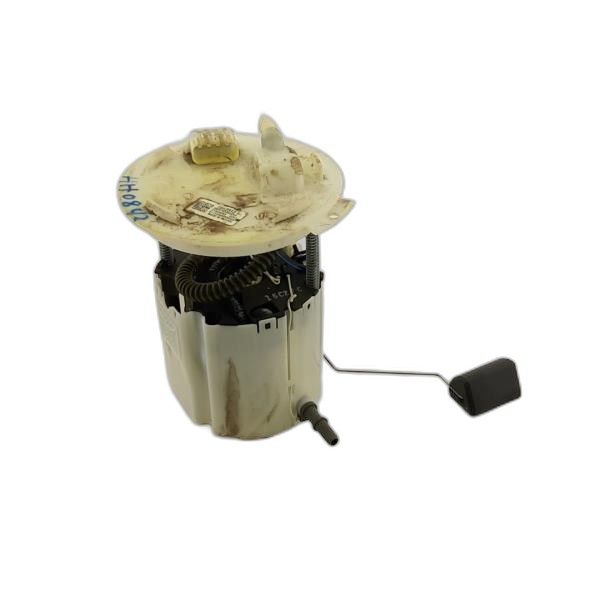
A used OEM fuel pump can be a reliable and cost-effective alternative to expensive new parts or lower-quality aftermarket options. Here’s what to inspect before you buy:
- Verify the Part Number and Engine Type: This is the most important step. Double-check that the pump came from a vehicle with the exact same engine (DOHC, OHV, or Flex Fuel) as yours. Cross-reference the OEM part numbers if possible.
- Inspect the Electrical Connector: Look closely at the main electrical connector on top of the pump assembly. The pins should be clean and straight. Avoid any pump with melted plastic, charring, or heavy corrosion on the connector, as this indicates it was overheating and drawing too much current—a sign of imminent failure.
- Check the Plastic Housing: The plastic top hat and body of the assembly should be free of cracks, especially around the fuel line connections. A cracked housing can cause dangerous fuel leaks.
- Examine the Fuel Level Sender: Ensure the float arm is present and moves freely. The float itself should not be saturated with fuel or cracked. A damaged sender will cause your fuel gauge to read incorrectly.
- Look for Debris: Check the inlet strainer (the small mesh sock at the bottom) for excessive dirt or rust particles. A heavily contaminated strainer suggests the pump was operating in a dirty tank, which can shorten its life.
- Ask About Mileage: If possible, choose a pump from a lower-mileage vehicle. Like any electric motor, a fuel pump has a finite lifespan.
Cost of Replacement
The cost to replace a fuel pump in a 1997-2002 Taurus or Sable varies significantly based on the parts used and shop labor rates.
| Part/Service | Estimated Cost | Notes |
|---|---|---|
| New OEM Part | $900 - $1,100+ | Can be difficult to find new from dealers. Price is for the part only. |
| New Aftermarket Part | $80 - $350 | Wide range of quality and price. Brands like Delphi or Carter are generally higher quality than budget options. |
| Used OEM Part | $50 - $150 | A cost-effective option that retains original factory quality if sourced from a reputable recycler. |
| Shop Labor | $225 - $450 | Typically 2-3 hours of labor. The fuel tank must be dropped for access. |
| Total (Independent Shop, Aftermarket Part) | $300 - $800 | A common real-world cost for most owners. |
| Total (Dealer, OEM Part) | $1,100 - $1,500+ | Represents the highest potential cost for the repair. |
Replacement Overview and Difficulty
- Difficulty: 4 out of 5 (Difficult)
- Estimated Time: 2.5 - 4 hours
- DIY Feasible: For experienced mechanics only.
Replacing the fuel pump on these vehicles is a challenging job because there is no access panel under the rear seat. The fuel tank must be lowered from the vehicle to access the pump.
Safety Warning: Working with gasoline is extremely dangerous. This job should only be attempted by those with experience. Always work in a well-ventilated area, disconnect the battery, and have a fire extinguisher rated for gasoline fires nearby.
General Steps:
- Depressurize the fuel system.
- Disconnect the negative battery terminal.
- Safely drain as much fuel from the tank as possible. A heavy tank is difficult and dangerous to handle.
- Raise and support the vehicle securely on jack stands.
- Disconnect the fuel filler neck, electrical wiring, and vapor (EVAP) lines connected to the tank.
- Support the fuel tank with a transmission jack and unbolt the tank straps.
- Carefully lower the tank enough to access and disconnect the fuel lines and main connector from the top of the pump.
- Lower the tank completely and remove it from under the vehicle.
- Unscrew the locking ring that holds the fuel pump assembly in place and carefully lift the old pump out.
- Install the new pump with a new seal, re-secure the locking ring, and reverse the process to reinstall the tank.
Pro Tip: Before starting the engine, cycle the key from 'Off' to 'On' (without cranking) 2-3 times for a few seconds each. This allows the new pump to prime the fuel system and purge air from the lines, ensuring a quicker start.
Frequently Asked Questions (FAQ)
How do I know for sure if I have a DOHC or OHV engine?
The 8th digit of your VIN is the definitive source. 'U' or '2' means you have the OHV Vulcan engine. 'S' means you have the DOHC Duratec engine. Visually, the DOHC Duratec engine has a more complex, metallic intake manifold on top, while the OHV Vulcan has a simpler, often black, upper intake.
Is there a recall on the fuel pump for my 2001 Taurus?
No. There are no active or past NHTSA safety recalls for the fuel pump on any 1997-2002 Ford Taurus or Mercury Sable. Recalls you may see online are for different model years or different vehicle problems.
Can I just replace the small pump motor instead of the whole assembly?
While individual pump motors are sold, it is not recommended. The complete assembly includes the fuel level sender, strainer, and internal wiring, which are also common failure points. Replacing the entire module is a more reliable long-term repair and ensures all components are new and compatible.
My engine runs fine, but my fuel gauge is stuck or reads empty. Is this the fuel pump?
Yes, this is very likely the problem. The fuel level sending unit is integrated into the fuel pump assembly. When the sender fails, the only way to fix it is to replace the entire fuel pump module. This is a common failure on many vehicles as they age.
Technical Specifications
OEM Part Numbers: 1F1F9H307BF 1F1U-9H307-BD 1F1U-9H307-BE 1F1U9H307BD 1F1U9H307BE 1F1U9H307BF 1F1UBD 1F1UBE 1F1Z-9H307-A 1F1Z-9H307-BD 1F1Z-9H307-GA 1F1Z-9H307-GB 1F1Z9H307BD 1F1Z9H307GB 2F1U-9H307-AA
Fits 16-gallon fuel tank. Assembly includes fuel pump, fuel level sending unit, and strainer. Separate versions exist for 3.0L OHV (VIN U/2), 3.0L DOHC (VIN S), and 3.0L Flex Fuel engines.
We Have This Part in Stock





The information in this article is provided for general reference and educational purposes only. Vehicle specifications, procedures, and part compatibility can vary by production date, trim level, and region. Always consult your vehicle's factory service manual and verify part numbers before purchasing or performing repairs. Safety-critical components such as airbags, seat belts, and braking systems should be installed by a qualified professional.
- Ford Taurus:
- Mercury Sable:
- 🛍️ Shop This Part
- Key Compatibility Warnings: DOHC vs. OHV vs. Flex Fuel
- How to Identify Your Engine
- Symptoms of a Failing Fuel Pump
- Known Issues, TSBs, and Recalls
- TSB for Noisy Fuel Pumps (1996-1997 Models)
- TSB for Radio Interference (Multiple Models including Taurus/Sable)
- TSB for Fuel Gauge Issues (2002 Models)
- Buying a Used Fuel Pump: What to Check
- Cost of Replacement
- Replacement Overview and Difficulty
- Frequently Asked Questions (FAQ)
- 🎟️ Get 5% Off