

2007-2015 Ford Edge & Lincoln MKX In-Tank Fuel Pump: A Guide to Recalls, Drivetrains, and Replacement
This guide covers the common failure symptoms, critical recalls, and major differences in replacing the in-tank fuel pump for the Ford Edge and Lincoln MKX.
- Compatibility is critical: Pumps are specific to All-Wheel Drive (AWD) and Front-Wheel Drive (FWD) models. They are not interchangeable.
- Replacement difficulty varies by year: 2007-2010 models have an easier-to-access pump via a panel under the rear seat, while 2011-2015 models require dropping the entire fuel tank.
- Check for recalls: 2007-2008 models were recalled for fuel tank corrosion and leaks in salt-belt states (NHTSA 14V682000). A small batch of 2014 models were recalled for defective pumps (NHTSA 15V005).
- 2.0L EcoBoost engines have two fuel pumps: an in-tank low-pressure pump and an engine-mounted high-pressure pump (HPFP), which has its own unique failure symptoms.
Critical Warnings: Read Before Buying

Compatibility is Crucial: There are several different fuel pumps for the 2007-2014 Ford Edge and 2007-2015 Lincoln MKX, and they are not interchangeable. Using the wrong pump can lead to fuel starvation, engine codes, or a no-start condition. Pay close attention to your vehicle's drivetrain and engine.
All-Wheel Drive (AWD) vs. Front-Wheel Drive (FWD)
The most significant difference is between AWD and FWD models. AWD vehicles have a saddle-shaped fuel tank to accommodate the driveshaft. Because of this, the fuel pump assembly includes a siphon or transfer tube to draw fuel from the passenger side of the tank to the pump on the driver's side. The FWD pump does not have this secondary connection. Installing an FWD pump in an AWD vehicle will result in the engine running out of fuel while the gauge still shows half a tank.
- AWD Pumps: Have an extra port/fitting on the module for the transfer tube.
- FWD Pumps: Do not have this extra port.
Engine Differences: V6 vs. 2.0L EcoBoost
The standard 3.5L and 3.7L V6 engines use a single, in-tank low-pressure fuel pump. However, the optional 2.0L EcoBoost (turbocharged) engine, available on the Ford Edge from 2012-2014, uses a more complex system with two fuel pumps:
- Low-Pressure Fuel Pump (LPFP): This is the in-tank pump covered in this guide. It sends fuel from the tank to the engine at around 40-75 PSI.
- High-Pressure Fuel Pump (HPFP): This is a mechanical pump mounted on the engine. It takes the fuel from the LPFP and pressurizes it to extremely high levels (up to 2,500+ PSI) for the direct injection system.
This guide focuses on the in-tank low-pressure pump, as it is the more commonly replaced component. If you have a 2.0L EcoBoost engine, be aware that a separate HPFP failure can cause similar, but distinct, symptoms.
Known Issues, Recalls, and Technical Service Bulletins (TSBs)

Recall: 2007-2008 Fuel Tank Corrosion (NHTSA #14V682000)
A major safety recall was issued for 2007-2008 Ford Edge and Lincoln MKX vehicles originally sold or registered in salt-belt states. Road salt can cause corrosion under the reinforcement brackets that mount the fuel tank to the vehicle. This can lead to the fuel tank seam splitting, causing a dangerous fuel leak. Symptoms include a strong fuel smell around the vehicle, visible fuel leaks under the car, and a check engine light. A fuel leak in the presence of an ignition source can result in a fire. Dealers were instructed to inspect the tank and either repair it or replace it free of charge. Before purchasing a used 2007-2008 vehicle from an affected region, verify this recall has been performed.
Recall: 2014 Fuel Pump Manufacturing Defect (NHTSA #15V005)
This recall affects a small number of 2014 Ford Edge vehicles manufactured between April 30, 2014, and May 21, 2014. Improper nickel plating on internal components could cause the fuel pump to seize, leading to a sudden engine stall without warning, which increases the risk of a crash. Ford's recall number for this issue is 14S30. The remedy was to replace the entire fuel pump assembly.
Symptoms of a Failing In-Tank Fuel Pump

When the in-tank fuel pump begins to wear out, it can't supply the engine with a consistent volume and pressure of fuel. This leads to a variety of performance issues.
- Engine Sputtering or Hesitation: Especially at highway speeds or under acceleration, the engine may feel like it's cutting out or stumbling as the weak pump struggles to meet the increased fuel demand.
- Loss of Power: The vehicle may feel sluggish, especially when accelerating, climbing hills, or towing.
- Difficulty Starting: The engine may take longer than usual to crank before it starts. A weak pump has trouble building enough initial pressure in the fuel lines. In severe cases, it can lead to a crank-no-start condition.
- Engine Stalling: The engine may stall unexpectedly, sometimes after running for a while. This can be caused by the pump overheating and temporarily shutting down.
- Whining Noise From the Fuel Tank: A failing fuel pump motor will often make a loud, high-pitched whining or humming sound that can be heard from the rear of the vehicle. A healthy pump makes a very quiet hum when the key is first turned on.
- Sudden Engine Surging: In some cases, a failing pump can deliver fuel inconsistently, causing the vehicle to surge or lurch forward unexpectedly.
Symptoms of a Failing High-Pressure Fuel Pump (2.0L EcoBoost Only)
If you have the 2.0L EcoBoost engine, a failing HPFP may present with these symptoms:
- Hesitation or sputtering, often between 2,000 and 4,000 RPM.
- Check Engine Light with codes like P0087 (Fuel Rail/System Pressure - Too Low).
- Rough idle.
- A rattling or knocking noise from the engine bay where the pump is located.
Replacement Overview

The difficulty of replacing the fuel pump on these vehicles depends entirely on the model year.
For 2007-2010 Ford Edge & Lincoln MKX
These earlier models are equipped with a fuel pump access panel under the rear driver's side seat. This makes the replacement significantly easier, as the fuel tank does not need to be removed from the vehicle. The job involves removing the rear seat cushion, unscrewing the metal access plate, disconnecting the fuel lines and electrical connector, and then removing the pump assembly from the tank.
- Difficulty Rating: 2 out of 5
- DIY Feasible: Yes, for those comfortable working with fuel systems.
- Estimated Time: 1-2 hours
For 2011-2014 Ford Edge & 2011-2015 Lincoln MKX
The updated models from 2011 onward do not have a fuel pump access panel. To replace the pump, the entire fuel tank must be lowered from the vehicle. On AWD models, this is even more complex as it typically requires removing the exhaust and driveshaft to gain clearance. This is a much larger and more dangerous job due to the need to work under the vehicle with a heavy, potentially partially-full fuel tank.
- Difficulty Rating: 4 out of 5 (FWD), 5 out of 5 (AWD)
- DIY Feasible: Not recommended for beginners. Requires a vehicle lift or tall jack stands and expertise in handling fuel systems safely.
- Estimated Time: 3-5 hours
Pro Tip: Regardless of the method, always work in a well-ventilated area, disconnect the battery, and have a Class B fire extinguisher nearby. It's also best to perform the job when the fuel tank is as empty as possible.
Buying a Used Fuel Pump
A used OEM fuel pump can be a reliable and cost-effective alternative to expensive new parts, especially considering the high price of a new OEM unit. Since fuel pumps are designed to last over 100,000 miles, a low-mileage used part can offer excellent value.
What to Check Before You Buy:
- Verify Compatibility: This is the most important step. Double-check that the part came from a vehicle with the same drivetrain (AWD or FWD) and engine. Get the VIN of the donor vehicle if possible to confirm its specifications.
- Inspect the Electrical Connector: Look for any signs of melting, corrosion, or burnt pins on the main electrical connector. This can indicate an overheating pump or a bad electrical connection that could cause the replacement to fail.
- Check the Plastic Housing: Inspect the plastic module for any cracks or damage that may have occurred during removal or storage.
- Look at the Strainer: The fuel strainer (the 'sock' at the bottom) can give clues about the health of the donor vehicle's fuel tank. If it is excessively dark, black, or full of debris, it suggests the pump was operating in a contaminated environment, which can shorten its life.
- Mileage: Ask for the mileage of the donor vehicle. A pump from a vehicle with under 100,000 miles is a much safer bet than one with high mileage.
Cost Comparison
Prices can vary based on your location, the specific part number, and the retailer. These are typical estimates.
| Part Type | Estimated Cost |
|---|---|
| New OEM | $250 - $500 |
| New Aftermarket | $75 - $300 |
| Used OEM | $50 - $125 |
| Shop Labor | $200 - $600+ (Varies significantly between access panel vs. tank drop) |
Frequently Asked Questions (FAQ)
Can I use an AWD pump in an FWD vehicle?
While it may physically fit, it is not recommended. The AWD pump is designed to work with a transfer tube that doesn't exist in an FWD tank. It's always best to use the exact part specified for your vehicle's drivetrain.
Do I need to replace the fuel filter at the same time?
The in-tank fuel pump module for these vehicles has an integrated fuel filter/strainer. This strainer is part of the assembly and is not typically serviced separately. When you replace the entire module, you are also replacing the primary filter.
My gas gauge is inaccurate after replacing the pump. What's wrong?
The fuel pump module includes the fuel level sending unit, which has a float arm. If the gas gauge is reading incorrectly after replacement, the float arm may have been bent during installation or is stuck on something inside the tank. The module may need to be removed to inspect and correct the position of the float arm.
What is the fuel pump driver module?
The fuel pump driver module (FPDM) is a separate electronic controller that regulates the voltage sent to the fuel pump, effectively controlling its speed and the fuel pressure. A failing FPDM can cause symptoms similar to a bad fuel pump, such as stalling or a no-start condition. On 2011-2014 models, it is located on the driver's side frame rail, where it is exposed to rust. If a new fuel pump doesn't solve your issue, the FPDM and its relay should be tested.
Helpful Videos
Technical Specifications
OEM Part Numbers: 7T439C260AA 7T439C260BA 7T439H307AA 7T439H307AB 7T439H307BA 7T439H307BB 7T43AA 7T43AB 7T43BA 7T43BB 7T4Z9H307A 7T4Z9H307B 7T4Z9H307G 7T4Z9H307H 8T439C260AA DT4Z9H307A
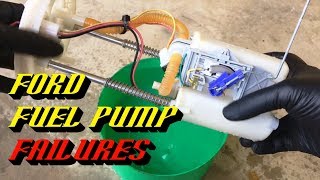
The fuel pump is a 12V electric turbine-style pump housed within a plastic module that includes the fuel sending unit, float, and an integrated strainer. AWD and FWD versions have different outlet configurations.
We Have This Part in Stock
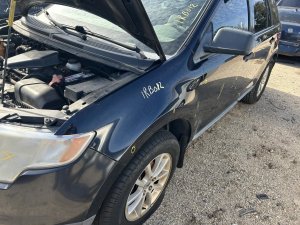



The information in this article is provided for general reference and educational purposes only. Vehicle specifications, procedures, and part compatibility can vary by production date, trim level, and region. Always consult your vehicle's factory service manual and verify part numbers before purchasing or performing repairs. Safety-critical components such as airbags, seat belts, and braking systems should be installed by a qualified professional.
- Ford Edge:
- Lincoln MKX:
- 🎬 Helpful Videos
- 🛍️ Shop This Part
- Critical Warnings: Read Before Buying
- All-Wheel Drive (AWD) vs. Front-Wheel Drive (FWD)
- Engine Differences: V6 vs. 2.0L EcoBoost
- Known Issues, Recalls, and Technical Service Bulletins (TSBs)
- Recall: 2007-2008 Fuel Tank Corrosion (NHTSA #14V682000)
- Recall: 2014 Fuel Pump Manufacturing Defect (NHTSA #15V005)
- Symptoms of a Failing In-Tank Fuel Pump
- Symptoms of a Failing High-Pressure Fuel Pump (2.0L EcoBoost Only)
- Replacement Overview
- For 2007-2010 Ford Edge & Lincoln MKX
- For 2011-2014 Ford Edge & 2011-2015 Lincoln MKX
- Buying a Used Fuel Pump
- What to Check Before You Buy:
- Cost Comparison
- Frequently Asked Questions (FAQ)
- 🎟️ Get 5% Off