

2002-2014 Ram 1500 Fuel Pump: Solving Long Cranks, Stalling, and Compatibility Issues
This guide clarifies the complex compatibility of gasoline fuel pumps for the 2002-2010 Dodge Ram 1500 and 2011-2014 Ram 1500, helping you diagnose common failures and choose the right part.
- Compatibility is extremely tricky; you MUST verify the truck's year, engine, and tank size (26-gallon vs. 34/35-gallon) before buying.
- A long crank time before starting is the most common early symptom, caused by a failed internal check valve.
- A used OEM Mopar pump is often a more reliable and cost-effective choice than a new, cheap aftermarket pump.
- Replacement is a difficult job that involves either dropping the heavy fuel tank or lifting the entire truck bed.
Understanding Fuel Pump Issues in 3rd & 4th Gen Ram 1500s

The fuel pump is a critical component in 2002-2010 Dodge Ram 1500 and 2011-2014 Ram 1500 trucks. Failures can leave you stranded, but diagnosing the problem can be tricky. Even more confusing is finding the correct replacement part, as compatibility depends on your truck's year, engine, and fuel tank size. This guide covers everything you need to know about the gasoline fuel pumps in these trucks.
Note: This guide is for gasoline engine trucks only. Numerous recalls exist for high-pressure fuel pumps (HPFPs) on Ram trucks with diesel engines, but there are no major recalls for the gasoline fuel pumps discussed here.
Symptoms of a Failing Fuel Pump

When your fuel pump starts to go bad, it will give you several warning signs. Here are the most common symptoms owners report:
- Long Crank Time: The engine turns over for several seconds before it finally starts, especially after sitting overnight. This is often caused by a failed check valve inside the fuel pump module, which allows fuel pressure to bleed back into the tank.
- Engine Stalling: The truck may stall unexpectedly, particularly while driving. This happens when the pump fails to provide a consistent supply of fuel. It may restart after cooling down, but the problem will persist.
- Whining Noise from Fuel Tank: A loud humming or whining sound coming from the rear of the truck is a classic sign of a struggling fuel pump motor.
- Loss of Power & Hesitation: When accelerating, merging, or climbing a hill, the truck may feel sluggish or hesitate. A weak pump can't deliver the extra fuel needed under load.
- Engine Sputtering: At highway speeds, the engine may sputter or surge as the pump struggles to maintain consistent pressure.
- Difficulty Starting: The engine cranks, but refuses to start. This can indicate the fuel pump has failed completely.
- Erratic or Inaccurate Fuel Gauge: If your fuel gauge is stuck on empty, full, or moves randomly, the sending unit, which is part of the fuel pump module, has likely failed. This often triggers the check engine light with code P0463.
Known Issues & Variant Differences

Finding the right fuel pump for these trucks is the biggest challenge. Fitment depends on three key factors: model year, engine, and fuel tank size. Always verify these details before purchasing a part.
Generation Differences
- 2002-2008 Dodge Ram 1500 (3rd Gen): This generation has multiple pump variations. Early models (2002-2003) had options for 3.7L, 4.7L, and 5.9L gasoline engines. The 5.7L HEMI was introduced in 2003. Compatibility is strict based on engine and tank size.
- 2009-2014 Ram 1500 (4th Gen): The body style changed in 2009. These trucks use different fuel pumps than the 3rd Gen. The primary gasoline engines were the 3.7L V6 and 5.7L V8.
Fuel Tank Size: The Critical Factor
Ram offered two primary tank sizes, and the fuel pump modules are not interchangeable between them. The tank size is directly related to the truck's bed length.
- 26-Gallon Tank: Typically found on trucks with the 6' 3" bed (Short Bed).
- 34 or 35-Gallon Tank: Typically found on trucks with the 8' bed (Long Bed) or some Quad Cab configurations.
Warning: Installing a pump designed for a 26-gallon tank into a 35-gallon tank (or vice-versa) will result in an incorrect fuel gauge reading and may cause the fuel pickup to sit at the wrong height, leading to fuel starvation even when the tank isn't empty.
Buying a Used Fuel Pump: What to Check

A reliable, used OEM Mopar fuel pump can be a smarter choice than a cheap, new aftermarket part. Aftermarket pumps, especially budget-friendly options, have a reputation for premature failure of the pump motor, check valve, or sending unit. An OEM unit is designed for the vehicle and built to a higher quality standard.
- Confirm Donor Vehicle Specs: This is the most important step. Get the Year, Engine, and Bed Length (to determine tank size) of the truck the part came from. Do not buy a pump without this information.
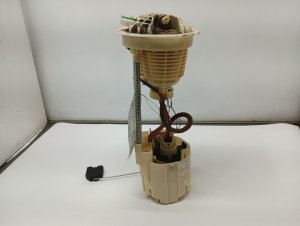
- Inspect the Housing: Check the white plastic top of the module for any cracks, especially around the fuel line ports and electrical connector. A cracked housing can leak fuel vapors and is unsafe.
- Check the Electrical Connector: Look at the pins inside the connector. They should be straight, clean, and free of any corrosion or signs of overheating (discoloration, melted plastic).
- Examine the Float Arm: Ensure the metal arm for the fuel level float is present and moves freely. It should not be bent or damaged.
- Match Part Numbers: If possible, match the OEM part number stamped on the top of the unit to your original pump. This is the best way to guarantee compatibility.
Replacement Information
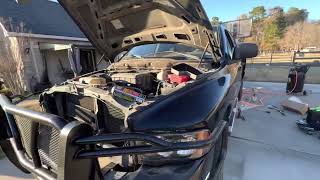
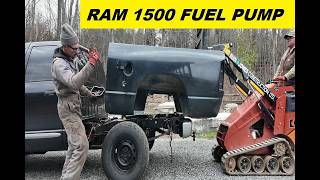
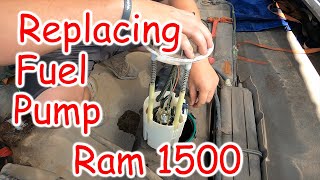
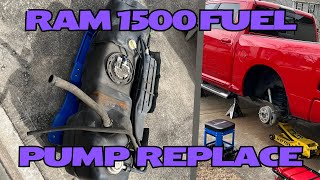
Replacing the fuel pump on a Ram 1500 is a significant job. The most common method is to drop the fuel tank. Some DIY mechanics prefer to unbolt and lift the truck bed for access 🎬 See how to replace the pump by lifting the bed, which avoids handling a heavy, fuel-filled tank.
- Difficulty: 4 out of 5
- DIY Feasibility: Possible for experienced DIYers, but potentially dangerous due to the need to handle gasoline and a heavy fuel tank.
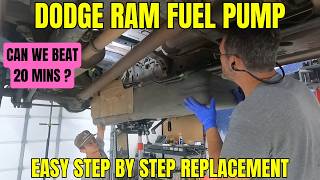
- Procedure (Tank Drop Method): The basic steps include relieving fuel pressure, disconnecting the battery, siphoning fuel or running the tank near empty, raising the truck, supporting the tank with a jack, disconnecting the filler neck, EVAP lines, and electrical connector, lowering the tank, cleaning the area around the pump, removing the lock ring (often with a brass punch and hammer), and swapping the module. 🎬 Watch: How to drop the tank and swap the pump
Cost Comparison
Prices can vary significantly based on the brand and source.
| Part Type | Estimated Cost |
|---|---|
| New OEM (Mopar) | $350 - $550+ |
| New Aftermarket | $125 - $350 |
| Used OEM | $50 - $150 |
| Shop Labor | $250 - $450 |
Frequently Asked Questions (FAQ)
My truck takes a long time to start. Is it the fuel pump?
Most likely, yes. A long crank time after the truck has been sitting is a classic symptom of a bad check valve inside the fuel pump module. The check valve is supposed to hold pressure in the fuel line, but when it fails, the fuel drains back into the tank, and the pump has to re-prime the entire system every time you start the vehicle.
Can I replace just the fuel level sending unit or the pump motor?
While it is sometimes possible to disassemble the module and replace only the failed component (like the pump motor itself), it is not recommended. The entire assembly is sold as a single, sealed unit for a reason. It is more reliable and often easier to replace the complete module. A failed sending unit almost always requires replacing the whole assembly.
Do I have to drop the fuel tank to replace the pump?
No, but the alternative is to lift the truck bed. This requires disconnecting the filler neck, taillight wiring, and removing the large bed bolts. For many, this is easier than safely lowering a heavy, awkward fuel tank that may still contain flammable gasoline. The choice depends on your equipment and personal preference.
My fuel gauge is wrong, but the truck runs fine. What's the problem?
This indicates a failure of the fuel level sending unit, which is part of the fuel pump module. The float or the resistor it contacts has worn out. The only proper fix is to replace the entire fuel pump module. This issue often logs a P0463 trouble code.
Helpful Videos
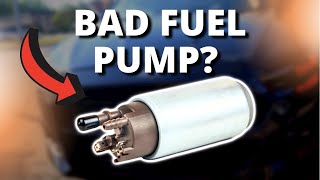

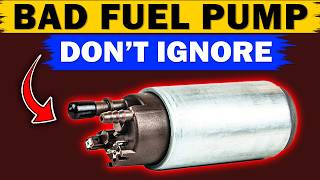
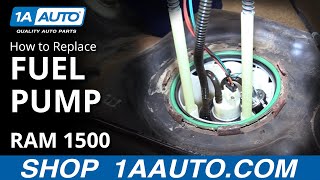
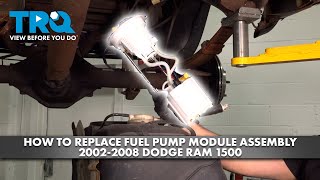
Technical Specifications
OEM Part Numbers: 05104694AA 5104694AA 5104694AB 5104694AC RL104694AC 05134554AB 05072763AA 05072763AB 05072763AD 05072764AA 05086278AA 68027917AE 55398694AD 52122656AB 68086502AA 68145520AA
Fitment is specific to fuel tank size (26-gallon or 34/35-gallon) and engine type (3.7L V6, 4.7L V8, 5.7L V8, 5.9L V8).
We Have This Part in Stock



The information in this article is provided for general reference and educational purposes only. Vehicle specifications, procedures, and part compatibility can vary by production date, trim level, and region. Always consult your vehicle's factory service manual and verify part numbers before purchasing or performing repairs. Safety-critical components such as airbags, seat belts, and braking systems should be installed by a qualified professional.
- Dodge Ram 1500:
- Ram 1500:
- 🎬 Helpful Videos
- 🛍️ Shop This Part
- Understanding Fuel Pump Issues in 3rd & 4th Gen Ram 1500s
- Symptoms of a Failing Fuel Pump
- Known Issues & Variant Differences
- Generation Differences
- Fuel Tank Size: The Critical Factor
- Buying a Used Fuel Pump: What to Check
- Replacement Information
- Cost Comparison
- Frequently Asked Questions (FAQ)
- 🎟️ Get 5% Off