

2011-2016 BMW 528i & 535i Fuel Pump: Decoding Failures and the In-Tank Recall
Learn to distinguish between low-pressure (LPFP) and high-pressure (HPFP) pump failures and understand the critical recall affecting early F10 models.
- A critical recall (NHTSA 16V-746) affects the in-tank pump on early models (approx. 2011-2012) due to a melting electrical connector that can cause stalling and fuel leaks.
- These cars have two pumps; always diagnose the in-tank low-pressure pump (LPFP) first before replacing the more expensive engine-mounted high-pressure pump (HPFP).
- When buying a used pump, you MUST inspect the electrical connector on top for any signs of melting, browning, or heat damage.
- Common failure symptoms include long engine cranking, sudden stalling, hesitation under acceleration, and a whining noise from the rear seat area.
Understanding the F10 Fuel System: LPFP vs. HPFP

When diagnosing fuel problems on a 2011-2016 BMW 528i or 535i, it's crucial to know that there are two fuel pumps. Confusing them can lead to incorrect diagnosis and expensive, unnecessary repairs.
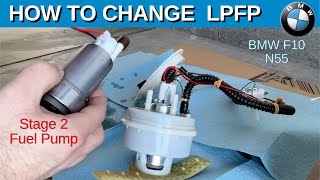
- Low-Pressure Fuel Pump (LPFP): This is the part located inside the fuel tank, accessible from under the rear seat cushion. It is a complete module that often includes the fuel level sender. 🎬 Watch a video overview of the low-pressure fuel pump Its only job is to lift fuel out of the tank and deliver it to the engine. The OEM part number 7308433 refers to a component of this in-tank system.
- High-Pressure Fuel Pump (HPFP): This is a smaller, mechanical pump mounted directly on the engine (the N20 in the 528i and N55 in the 535i). It takes the fuel supplied by the LPFP and pressurizes it to extremely high levels required for direct injection. HPFP failure is also a known issue on these engines, particularly early N55 models in the 535i.
Many symptoms of failure overlap, but diagnosis should always start by confirming the LPFP is working correctly before suspecting the more expensive and difficult-to-replace HPFP.
Symptoms of a Failing Low-Pressure Fuel Pump

When the in-tank LPFP begins to fail, it can't supply the engine with a consistent volume or pressure of fuel. This leads to a number of distinct symptoms:
- Long Cranks to Start: The engine turns over for several seconds before it finally starts. This happens because the system takes longer to build up adequate fuel pressure. While also a symptom of HPFP failure, it's a classic sign of a weak LPFP.
- Engine Stalling: The engine may shut off unexpectedly while driving, especially during acceleration or at high speeds. This is a serious safety risk and was a primary concern in the official recall.
- Hesitation or Sputtering: When you press the accelerator, the car may hesitate, sputter, or feel jerky. This indicates the engine is being starved of fuel under load.
- Whining Noise from Rear Seat: A distinct humming or whining sound coming from the area of the rear seat is a tell-tale sign of a struggling fuel pump motor.
- Sudden Loss of Power: The engine may suddenly lose power and go into a reduced-power "limp mode" to protect itself.
- Check Engine Light: A failing pump can cause lean fuel conditions, which may trigger diagnostic trouble codes like P0087 (Fuel Rail/System Pressure - Too Low), though this code is more commonly associated with the HPFP.
Safety Warning: A failing fuel pump is not just an inconvenience; it can be dangerous. An engine that stalls in traffic can lead to a crash. If you experience sudden stalling, do not continue to drive the vehicle.
Known Issues & Critical Recall (NHTSA 16V-746)

The most significant known issue for the in-tank fuel pump on these vehicles is a major safety recall.
NHTSA Recall 16V-746: In-Tank Fuel Pump Connector
BMW issued a safety recall for a large number of vehicles, including the 2011 F10 5-Series sedans. The issue was not with the pump motor itself, but with the electrical connector on top of the fuel pump assembly.
- The Defect: The wire terminals on the connector were improperly crimped from the factory. This poor connection could lead to high electrical resistance, generating significant heat.
- The Consequences: The heat could melt the plastic connector and the top flange of the fuel pump assembly. This could cause a fuel leak, a strong fuel odor, and a fire risk. It could also cause the pump to stop working intermittently or altogether, leading to a no-start condition or sudden engine stalling while driving.
- Affected Vehicles: This recall primarily affects earlier models in the 2011-2016 production run, specifically those produced up to July 2011. Before purchasing any parts, owners of 2011-2012 models should check with a BMW dealer or use the NHTSA website with their VIN to see if their vehicle was affected and if the free repair was completed.
Buying a Used Fuel Pump: What to Inspect

A used OEM fuel pump can be a reliable and cost-effective alternative to expensive new parts, especially if it comes from a low-mileage, late-model-year vehicle. However, due to the recall, careful inspection is mandatory.
- Inspect the Electrical Connector: This is the most important check. Look closely at the plastic connector on top of the pump and its corresponding harness plug. There should be absolutely no signs of melting, browning, charring, or deformation. If you see any heat damage, reject the part immediately.
- Verify the Part Number: Ensure the part number on the unit matches the required part for your vehicle. Common part numbers include 7308433 and the updated replacement 16117341301.
- Check the Donor Vehicle's Year: Pumps from later models (2013-2016) are less likely to have been part of the original defective batch involved in the recall. Prioritizing a part from a newer vehicle is a smart move.
- Examine the Assembly for Cracks: Inspect the entire plastic housing, especially around the top flange and hose connections. Look for any hairline cracks or physical damage that could cause leaks.
- Ask About Mileage: While the pump motor itself is fairly robust, lower mileage is always better. A pump from a vehicle with under 100,000 miles is preferable.
Pro Tip: When replacing the fuel pump, it is also best practice to replace the large lock ring and the rubber gasket that seals the pump to the tank to prevent fuel leaks and vapor smells.
🎬 See these helpful tips for removing the fuel pumpCost Comparison
Replacing the low-pressure fuel pump can vary in cost. Choosing a used OEM part offers significant savings over a new dealer part.
| Part Type | Estimated Cost |
|---|---|
| New OEM (Dealer) | $450 - $600 |
| New Aftermarket (Bosch, VDO, Pierburg) | $250 - $400 |
| Used OEM | $75 - $175 |
| Shop Labor | $200 - $350 |
Replacement Overview

Replacing the in-tank fuel pump is a manageable DIY job for those comfortable working with automotive fuel systems.
- Difficulty: 3/5
- Estimated Time: 2 - 2.5 hours
- Tools: Basic hand tools, trim removal tools, and a special lock ring tool (or a brass punch and hammer used carefully).
- Procedure: The process involves disconnecting the battery, removing the rear seat bottom cushion, removing the sound-deadening material, and opening the metal access panel on the right (passenger) side of the vehicle. After disconnecting the fuel line and electrical plug, a large black lock ring is removed to allow the pump assembly to be lifted out of the tank. Installation is the reverse of removal. 🎬 Watch this step-by-step LPFP replacement walkthrough
Warning: Always work in a well-ventilated area and disconnect the battery before starting. Gasoline and its vapors are extremely flammable. Have a fire extinguisher rated for gasoline fires nearby.
Frequently Asked Questions (FAQ)
Is the fuel pump for the 528i the same as the 535i?
For the 2011-2016 model years, the in-tank low-pressure fuel pump (LPFP) assembly is shared between the 528i and 535i, as well as their xDrive variants. However, always verify the specific part number before purchasing.
My car is a 2011 535i. How do I know if the fuel pump recall was performed?
You can contact any BMW dealership service department with your vehicle's VIN. They can look up its service history and tell you if recall campaign 16V-746 is open or if it has been completed. You can also check for open recalls on the NHTSA website.
Can I drive my BMW with a failing fuel pump?
No. It is not recommended or safe. The primary risk is the engine stalling without warning, which could leave you stranded in a dangerous situation, such as in the middle of an intersection or on a highway.
What is the unit on the other side of the fuel tank?
Because the F10 has a saddle-shaped fuel tank that sits over the driveshaft, there are two units inside. The right (passenger) side typically houses the main fuel pump assembly. The left (driver) side houses a secondary fuel level sender and a suction jet pump that siphons fuel from the left side of the tank over to the right side where the main pump can access it. This ensures the entire tank capacity can be used.
Helpful Videos
Technical Specifications
OEM Part Numbers: 7308433 16117341301 16117434205
System Type: Low-Pressure Fuel Pump (LPFP). Target Operating Pressure: Approximately 5 Bar / 72 PSI.
We Have This Part in Stock



The information in this article is provided for general reference and educational purposes only. Vehicle specifications, procedures, and part compatibility can vary by production date, trim level, and region. Always consult your vehicle's factory service manual and verify part numbers before purchasing or performing repairs. Safety-critical components such as airbags, seat belts, and braking systems should be installed by a qualified professional.
- BMW 528i:
- BMW 535i:
- 🎬 Helpful Videos
- 🛍️ Shop This Part
- Understanding the F10 Fuel System: LPFP vs. HPFP
- Symptoms of a Failing Low-Pressure Fuel Pump
- Known Issues & Critical Recall (NHTSA 16V-746)
- NHTSA Recall 16V-746: In-Tank Fuel Pump Connector
- Buying a Used Fuel Pump: What to Inspect
- Cost Comparison
- Replacement Overview
- Frequently Asked Questions (FAQ)
- 🎟️ Get 5% Off