

1997 Taurus & Sable Fuel Pump Guide: Solving DOHC No-Start Issues
Your complete guide to diagnosing, replacing, and buying a used fuel pump and sender assembly for the 1997 Ford Taurus and Mercury Sable with DOHC engines.
- This assembly is ONLY for 1997 Taurus/Sable models with a DOHC engine (3.0L Duratec or 3.4L SHO). It will not fit the common OHV Vulcan engine.
- A no-start condition is the most common symptom. Always check the fuel pump inertia switch in the trunk before assuming the pump is bad.
- Replacement is a difficult job that requires dropping the fuel tank; there is no easier access panel.
- When buying a used assembly, prioritize inspecting the electrical connector for any signs of melting or corrosion, as this indicates a high risk of failure.
Symptoms of a Failing Fuel Pump and Sender Assembly


A failing fuel pump assembly can cause a range of problems, from annoying to critical. Because the assembly has two main parts (the pump and the sender), you might experience symptoms related to fuel delivery, the fuel gauge, or both.
Fuel Pump Failure Symptoms:
- Engine Won't Start: The most common and severe symptom. The engine will crank but won't fire up because it's not receiving fuel. You might hear a popping sound as the engine tries to catch.
- Whining Noise from Fuel Tank: A loud whining or humming sound from the rear of the vehicle is a classic sign of a fuel pump motor that is wearing out or struggling. A healthy pump makes a quiet hum when you first turn the key, but a loud, persistent whine indicates a problem.
- Engine Stalling, Especially Under Load: The car may start and idle fine, but when you accelerate, go up a hill, or put the engine under stress, it may sputter or stall completely. This happens because the weak pump can't supply the increased volume of fuel the engine needs.
- Loss of Power and Sputtering: You may notice the vehicle hesitates, sputters, or feels sluggish during acceleration. This indicates an inconsistent fuel supply.
- Difficulty Starting: The engine may take longer than usual to start because the pump is slow to build up adequate pressure in the fuel lines.
Fuel Sender Failure Symptoms:
- Inaccurate or Erratic Fuel Gauge: The fuel gauge may read full when the tank is empty, empty when it's full, or jump around randomly.
- Fuel Gauge Stuck in One Position: The needle may not move from full, empty, or somewhere in between, regardless of the actual fuel level.
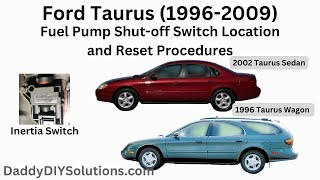
Pro Tip: Before you suspect the fuel pump, always check the inertia switch! This safety device is designed to shut off the fuel pump in a collision and can sometimes be tripped by hitting a large pothole. On 1997 Taurus and Sable sedans, it's located on the right side of the trunk, behind the liner. On wagons, 🎬 Watch: How to locate and reset the fuel shut-off switch it's behind a service panel in the right rear cargo area. Pushing the red button to reset it might solve your no-start problem instantly.
Vehicle-Specific Issues, Recalls, and Technical Service Bulletins (TSBs)

For the 1997 Ford Taurus and Mercury Sable, there are specific issues and factory communications to be aware of regarding the fuel system.
Compatibility Warning: DOHC Engines Only
Warning: This fuel pump and sender assembly is ONLY for models equipped with a Double Overhead Cam (DOHC) engine. These include the 3.0L DOHC Duratec (VIN 'N') and the 3.4L DOHC SHO (VIN 'G'). It will NOT fit the more common 3.0L OHV Vulcan engine (VIN 'S' or 'U'). Always verify your engine type before ordering. The 8th character of your Vehicle Identification Number (VIN) indicates your engine type.
Known TSBs
Ford issued several Technical Service Bulletins (TSBs) related to the fuel pump on these vehicles:
- TSB #98251: Addresses concerns of the fuel pump assembly wires chafing, which could lead to a blown fuse, an inoperable fuel pump, and a no-start condition.
- TSB #98-4741: Pertains to issues with fuel gauge accuracy or erratic operation, directly related to the sender unit.
- TSB #BC0196970201: Notes that some 1996-1997 Taurus/Sable vehicles experienced noisy fuel pumps, and a revised pump was released to fix the noise.
- TSB #4676 / #11793: Describes a hard-start or no-start condition when the vehicle is parked on a steep incline with less than 1/4 tank of fuel. This points to an issue with the fuel pickup inside the assembly.
Recalls
As of mid-2024, there are no specific NHTSA recalls for the fuel pump itself on the 1997 Ford Taurus or Mercury Sable. Later model year Taurus vehicles were involved in fuel pump-related recalls, but these do not apply to the 1997 models.
Buying a Used Fuel Pump and Sender Assembly: What to Look For
A low-mileage used OEM fuel pump assembly can be a reliable and cost-effective alternative to expensive new parts, especially when cheap aftermarket units have questionable quality. Here’s what to inspect:
- Verify Compatibility: Double-check that the part came from a 1997 Taurus or Sable with a DOHC engine. Cross-reference the OEM part numbers (F7DU9H307LA, F7DZ9H307LB, PFS92, etc.) if possible. The most critical check is the electrical connector—ensure it matches your vehicle's harness exactly.
- Inspect the Electrical Connector: Look closely at the pins on top of the assembly. Avoid any unit with burnt, melted, or heavily corroded pins. This indicates a past electrical issue that could have damaged the pump motor or may cause problems with your vehicle's harness.
- Check the Plastic Housing: The top plate and body are made of plastic. Inspect it carefully for any cracks, especially around the fuel line nipples and the outer edge. A cracked housing will leak fuel vapors and is unsafe.
- Examine the Strainer: Look at the fuel strainer (the 'sock') at the bottom of the pump. If it is black with dirt, rust, or debris, the pump has ingested a lot of contaminants and its lifespan may be shortened. This also suggests the donor vehicle's fuel tank was dirty.
- Check the Float and Arm: Ensure the fuel sender's float arm moves freely and isn't bent or damaged. The float itself should not be saturated with fuel.
Cost Comparison
Prices can vary based on location and supplier, but here is a general cost expectation for the complete assembly.
| Part Type | Estimated Price Range |
|---|---|
| New OEM (Motorcraft) | $480 - $670 |
| New Aftermarket | $75 - $215 |
| Used OEM | $50 - $125 |
| Shop Labor Cost | $230 - $350 |
Replacement Overview
Replacing the fuel pump assembly on a 1997 Taurus or Sable is an advanced DIY job due to the need to lower the fuel tank.
- Difficulty: 4 out of 5
- Estimated Time: 2.5 - 4 hours
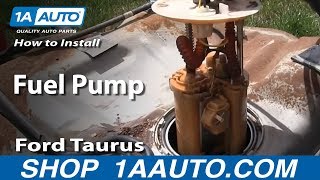
- Process Summary: The vehicle must be safely lifted. The fuel tank needs to be drained as much as possible to make it lighter and safer to handle. The exhaust and various heat shields may need to be partially removed. The fuel filler neck, vapor lines, and electrical connectors are disconnected before the tank straps are unbolted, allowing the tank to be lowered with a jack. 🎬 Watch: How to safely lower the tank and replace the pump The lock ring holding the pump assembly is then removed (often requiring a special tool or careful use of a hammer and punch), the old assembly is lifted out, and the new one is installed.
Warning: Working with gasoline is extremely dangerous. Perform this job in a well-ventilated area away from any ignition sources like pilot lights or sparks. Disconnect the battery before starting.
Frequently Asked Questions (FAQ)
Do I have to drop the fuel tank to replace the pump?
Yes. Unlike some vehicles, the 1997 Ford Taurus and Mercury Sable do not have an access panel under the rear seat. The only way to access the fuel pump assembly is by lowering the fuel tank from underneath the car.
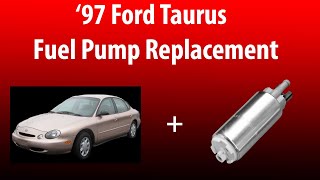
🎬 See this step-by-step 1997 Taurus fuel pump replacementWhat is the Constant Control Relay Module (CCRM)?
On these vehicles, the fuel pump relay is not a separate, plug-in relay. It is integrated into a larger black box called the Constant Control Relay Module (CCRM), which is located next to the battery. If you've tested the inertia switch and the pump, and there's still no power, the CCRM could be the culprit.
Can I just replace the pump motor instead of the whole assembly?
While it is sometimes possible to buy just the internal pump motor, it is highly recommended to replace the entire assembly. The assembly includes the sender, strainer, and housing, which can all wear out. A new strainer is critical for the longevity of the new pump, and an old sender can cause an inaccurate fuel gauge. Given the difficult labor involved, replacing the complete unit ensures you won't have to drop the tank again soon for a related failure.
My fuel gauge is broken but the car runs fine. Is it the sender?
Most likely, yes. If the car starts and runs without issue but the fuel gauge is inaccurate, stuck, or dead, the fuel sender portion of the assembly has failed. Unfortunately, since the sender is part of the assembly inside the tank, the replacement procedure is the same as replacing the entire pump.
Helpful Videos
Technical Specifications
OEM Part Numbers: F7DU9H307LA F7DULA F7DZ9H307LB F7PZ9350AA F7PZ9350CA PFS92
Fits 1997 Ford Taurus and 1997 Mercury Sable with DOHC engines (3.0L Duratec VIN 'N' or 3.4L SHO VIN 'G'). Assembly includes in-tank fuel pump, fuel level sending unit, and strainer.
We Have This Part in Stock


The information in this article is provided for general reference and educational purposes only. Vehicle specifications, procedures, and part compatibility can vary by production date, trim level, and region. Always consult your vehicle's factory service manual and verify part numbers before purchasing or performing repairs. Safety-critical components such as airbags, seat belts, and braking systems should be installed by a qualified professional.
- Ford Taurus:
- Mercury Sable:
- 🎬 Helpful Videos
- 🛍️ Shop This Part
- Symptoms of a Failing Fuel Pump and Sender Assembly
- Fuel Pump Failure Symptoms:
- Fuel Sender Failure Symptoms:
- Vehicle-Specific Issues, Recalls, and Technical Service Bulletins (TSBs)
- Compatibility Warning: DOHC Engines Only
- Known TSBs
- Recalls
- Buying a Used Fuel Pump and Sender Assembly: What to Look For
- Cost Comparison
- Replacement Overview
- Frequently Asked Questions (FAQ)
- 🎟️ Get 5% Off