

2017-2019 Alfa Romeo Giulia Quadrifoglio Fuel Pump: Stalling, Recalls, and Diagnosis
This guide covers the widespread fuel pump failures, recall information, and replacement costs for the 2.9L V6 Alfa Romeo Giulia Quadrifoglio.
- A major safety recall (NHTSA #93C) affects 2017-2019 models due to fuel pumps that can fail suddenly, causing a dangerous engine stall while driving.
- This specific fuel pump ONLY fits the 2.9L V6 Quadrifoglio model and is NOT interchangeable with the 2.0L engine version.
- The most common symptoms are sudden loss of power, engine stall with no restart, and OBD-II codes P008A or P0087 for low fuel pressure.
- Replacement is not a simple DIY job as it requires a professional scan tool to perform post-installation electronic procedures.
Vehicle Fitment and Part Number Warning

Warning: This in-tank fuel pump assembly is specifically for the 2017-2024 Alfa Romeo Giulia Quadrifoglio, which is equipped with the 2.9L twin-turbo V6 engine. It is not compatible with Giulia models that have the 2.0L 4-cylinder engine. The part numbers are physically different and will not interchange. Always verify the part number before purchase.
Known Issues, Recalls, and Technical Service Bulletins (TSBs)

A significant issue affects the fuel pump on these vehicles, leading to a major safety recall. Many owners 🎬 Watch: Learn more about the investigation into these fuel pump issues. have experienced sudden and unexpected engine stalling while driving.
Recall 93C: Sudden Fuel Pump Failure
Stellantis (Alfa Romeo's parent company) issued a recall for approximately 54,000 Giulia and Stelvio vehicles, including 2017-2019 Giulia models with both the 2.9L V6 and 2.0L engines. The recall, identified by NHTSA, addresses a defect where the low-pressure fuel pump can fail without warning.
The root cause is believed to be components within the pump that are sensitive to heat, which can cause them to warp and stop fuel flow. This results in fuel starvation and a sudden loss of power, often while driving at speeds over 25 mph. In many cases, the vehicle cannot be restarted after it stalls. As of late 2025, the manufacturer was still developing a permanent remedy for this issue.
TSB 18-001-18: Low Fuel System Pressure
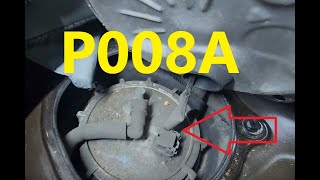
Prior to the recall, Alfa Romeo released Technical Service Bulletin #18-001-18 for 2017-2018 Giulia models built on or before August 30, 2017. This bulletin was created to address customer complaints of an illuminated Malfunction Indicator Lamp (MIL) and the diagnostic trouble code P008A-00 - Low Pressure Fuel System Pressure - Too Low. The prescribed fix was to inspect and, if necessary, replace the fuel pump module.
Symptoms of a Failing Fuel Pump

A failing fuel pump on the Giulia Quadrifoglio often provides little to no warning before a critical failure. Key symptoms include:
- Sudden Engine Stall: The most reported and dangerous symptom is the engine completely shutting off while driving.
- Warning Lights: Multiple warnings may appear on the dashboard simultaneously, such as "Service Engine," "Service Electronic Throttle Control," and "Start/Stop Unavailable."
- Failure to Restart: After stalling, the engine will typically crank but will not start, or it may start for a few seconds and then die again.
- Hesitation Under Acceleration: Some owners notice a loss of power or fuel pressure drop specifically during hard acceleration at higher RPMs.
- Check Engine Light with Code P0087 / P008A: If the pump is failing but has not died completely, it will often trigger a check engine light with a code for low fuel system pressure.
Buying a Used Fuel Pump: What to Check

For a high-performance vehicle like the Quadrifoglio, a quality used OEM fuel pump is often a better choice than a questionable aftermarket part. Here’s what to inspect before buying a recycled unit:
- Verify the Part Number: The most important step. Ensure the part number matches your original pump. Common numbers for the 2.9L V6 are 00505688900 or 505474790. Do not purchase a pump intended for the 2.0L engine.
- Inspect the Electrical Connector: Check the plastic connector and pins on top of the pump assembly. Look for any signs of melting, discoloration, or charring. This can indicate an overheating pump or a poor electrical connection, which is a major red flag.
- Check the Fuel Level Sender: The fuel level sender is the arm and float attached to the pump assembly. Make sure the arm moves freely and is not bent or damaged. A damaged sender will cause an inaccurate fuel gauge reading.
- Ask About Mileage: While even low-mileage pumps from 2017-2019 could be part of the defective batch, choosing a lower-mileage unit from a later model year (2020+) may increase your chances of getting a more reliable part. Used pumps can be found with mileage as low as 20,000-45,000 miles.
- Condition of the Strainer: Look at the fuel strainer (the mesh sock at the bottom). It should be relatively clean. A heavily contaminated or dark, sludgy strainer suggests the pump came from a vehicle with a very dirty fuel tank, which can shorten the pump's life.
Replacement Cost Breakdown
The cost to replace the fuel pump can vary based on location and whether you choose a new or used part. Due to the recall, a dealer may perform this work for free on affected 2017-2019 models once a final remedy is available.
🎬 Watch: Managing repairs and costs once your factory warranty expires.| Part Type | Estimated Cost |
|---|---|
| New OEM | $500 - $600 |
| New Aftermarket | Not Widely Available (for 2.9L V6) |
| Used OEM | $140 - $250 |
| Shop Labor | $160 - $240 |
| Total (Shop Installed, Used OEM) | $300 - $490 |
| Total (Shop Installed, New OEM) | $660 - $840 |
Replacement Overview & Difficulty
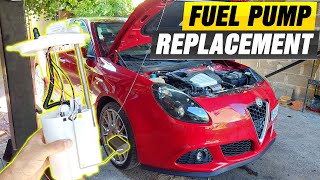
Replacing the in-tank fuel pump on a Giulia is a moderately difficult job, primarily because it involves working with the fuel system and requires a specific electronic procedure after installation.
- Difficulty Rating: 4 out of 5
- DIY Feasible: Not recommended for beginners.
- Procedure Summary: The technician will first relieve pressure from the fuel system and disconnect the battery. Access to the pump is typically under the rear seat cushion via a metal access cover. The fuel lines and electrical connector are disconnected, and a large retaining ring is unscrewed to remove the pump assembly from the tank.
- Special Tools Required: A professional scan tool is needed after installation. According to Alfa Romeo's service information, a "Fuel Supply System Components Replacement" procedure must be performed, followed by a reset of the "Self-Adaptive Parameters." Skipping this step can result in incorrect fuel delivery or persistent error codes.
Pro Tip: Always replace the large rubber fuel pump tank seal (O-ring) when replacing the pump. Reusing the old seal can lead to fuel leaks and dangerous fumes.
Frequently Asked Questions (FAQ)
Can I drive my Giulia if I suspect the fuel pump is failing?
No. The primary symptom is a sudden, complete engine stall while driving, which is extremely dangerous. If you experience any hesitation, power loss, or fuel-related error codes, do not drive the vehicle and have it inspected immediately.
Will a fuel pump from a 2.0L Giulia fit my 2.9L Quadrifoglio?
No. The fuel pump assemblies for the 2.0L 4-cylinder and 2.9L V6 engines are different parts and are not interchangeable. You must use a pump specifically designed for the Quadrifoglio.
My 2018 Giulia is covered by the recall, but there's no fix yet. What should I do if my pump fails?
If your pump fails, you will need to have the vehicle towed for repair. You can choose to pay for a replacement (either new or used) to get the car back on the road. Some owners have reported being able to get a refund for the repair once a recall remedy is officially released, so be sure to keep all receipts and documentation.
Do I need to replace the fuel filter at the same time?
The fuel pump assembly includes an integrated fuel strainer (pre-filter). There isn't a separate, traditionally-styled fuel filter that requires routine replacement on this vehicle. When you replace the pump assembly, you are also replacing the primary filter sock.
Helpful Videos


Technical Specifications
OEM Part Numbers: 00505688900 505474790 68330183AA 68408467AA 68408468AA 68481907AA
This is the low-pressure, in-tank fuel pump assembly. It includes the pump motor, fuel level sending unit (float), and fuel strainer.
We Have This Part in Stock


The information in this article is provided for general reference and educational purposes only. Vehicle specifications, procedures, and part compatibility can vary by production date, trim level, and region. Always consult your vehicle's factory service manual and verify part numbers before purchasing or performing repairs. Safety-critical components such as airbags, seat belts, and braking systems should be installed by a qualified professional.
- Alfa Romeo Giulia:
- 🎬 Helpful Videos
- 🛍️ Shop This Part
- Vehicle Fitment and Part Number Warning
- Known Issues, Recalls, and Technical Service Bulletins (TSBs)
- Recall 93C: Sudden Fuel Pump Failure
- TSB 18-001-18: Low Fuel System Pressure
- Symptoms of a Failing Fuel Pump
- Buying a Used Fuel Pump: What to Check
- Replacement Cost Breakdown
- Replacement Overview & Difficulty
- Frequently Asked Questions (FAQ)
- 🎟️ Get 5% Off