

Hyundai Palisade, Kia Telluride & Sorento Throttle Body Issues: Stalling, Limp Mode & Replacement Costs (2017-2025)
This guide covers the common failure symptoms, OBD-II codes, replacement costs, and DIY relearn procedures for the throttle body on Hyundai and Kia models with the 3.3L and 3.8L V6 engines.
- The most common failure symptoms are a check engine light, the vehicle entering 'limp mode' with reduced power, and a rough or stalling idle.
- After replacement, a simple 'relearn' procedure is required, which can be done without special tools by cycling the ignition key.
- A used OEM part is a cost-effective alternative to a new dealer part, often costing between $45 and $150 versus $450+ for new.
- This throttle body (part #35100-3L100) is used on the 3.3L and 3.8L V6 engines in the Palisade, Telluride, Sorento, Sedona, and Cadenza.
Symptoms of a Failing Throttle Body

A faulty throttle body can cause a range of noticeable engine problems. Because it directly controls the air supply, any malfunction can disrupt the air-fuel mixture and lead to poor performance. Here are the most common signs that the throttle body in your Kia or Hyundai V6 may be failing:
- Check Engine Light: This is often the first indicator. The vehicle's computer monitors the throttle body's position and performance. If it detects a problem, it will trigger a warning light. Common diagnostic trouble codes (DTCs) associated with throttle body failure include P0121, P0222, P0638, P2110, P2118, P2119, and P2135.
- Limp Mode (Reduced Engine Power): To prevent potential engine damage, the vehicle's computer may put the car into a 'limp-home mode'. This will severely limit engine power and acceleration, making the vehicle feel very sluggish. A "Reduced Power" warning may also appear on the dashboard.
- Rough or Unstable Idle: A malfunctioning throttle body can't regulate airflow correctly at idle. This can cause the engine to idle too high, too low, or fluctuate unpredictably. You might feel shaking or notice the engine sounds like it's about to stall at a stoplight.
- Poor Acceleration or Hesitation: When you press the gas pedal, you may experience a delay or hesitation before the vehicle responds. This happens because the throttle plate isn't opening correctly to allow more air into the engine.
- Stalling: In more severe cases, the engine may stall completely, especially when coming to a stop or at low speeds. This can be dangerous in traffic.
Vehicle-Specific Issues, Recalls, and TSBs

This electronic throttle body, part number 35100-3L100, is shared across several popular models, including:
- 2020-2025 Hyundai Palisade (3.8L V6)
- 2020-2025 Kia Telluride (3.8L V6)
- 2019-2020 Kia Sorento (3.3L V6)
- 2019-2021 Kia Sedona (3.3L V6)
- 2017-2020 Kia Cadenza (3.3L V6)
Despite its wide use, research has not identified any specific recalls or widespread Technical Service Bulletins (TSBs) from Hyundai or Kia for premature failure of this specific throttle body on these V6 models. Most issues appear to be related to normal wear and tear of electronic components over time rather than a specific design flaw. Some owners of the Kia Telluride have reported a feeling of delayed throttle response, but this is often related to the vehicle's drive mode settings (like Eco mode) rather than a faulty part.
DIY Replacement and Relearn Procedure

Replacing the throttle body is a manageable job for a DIY mechanic with basic tools. The difficulty is low, and it typically takes less than an hour.
Replacement Steps:
- Disconnect the Battery: Always disconnect the negative battery terminal before working on electronic components.
- Remove the Air Intake Hose: Loosen the clamp holding the large plastic air intake hose to the throttle body and pull the hose off.
- Disconnect the Electrical Connector: Carefully unplug the electrical connector from the throttle body.
- Remove Mounting Bolts: There are typically four 10mm bolts holding the throttle body to the intake manifold. Remove these bolts.
- Install the New Throttle Body: Clean the mounting surface on the intake manifold. Install the new or used throttle body with a new gasket. Torque the bolts to the manufacturer's specification.
- Reconnect and Reassemble: Re-attach the electrical connector and the air intake hose. Reconnect the negative battery terminal.
Pro Tip: On some models, two coolant hoses run through the throttle body to warm it in cold climates. If your vehicle has these, be prepared to clamp them off to minimize coolant loss. You will need to top off and possibly bleed the cooling system after replacement.
Required Throttle Relearn/Calibration Procedure
After installing a new or used throttle body, you must perform a 'relearn' procedure. This allows the car's computer (ECM) to calibrate itself to the new part's closed and open positions. Skipping this step can lead to a high or erratic idle. Fortunately, this does not require a special scan tool for most Hyundai and Kia vehicles.
Simple Relearn Method:
- Ensure the engine is warmed up.
- Turn the ignition to the 'ON' position (do not start the engine). For push-button start, press the button twice without your foot on the brake.
- Leave it in the 'ON' position for 10-15 seconds. You may hear the new throttle body making slight movements as it calibrates.
- Turn the ignition 'OFF' and wait for 10 seconds.
- Repeat this on/off cycle a few times before starting the engine.
If the simple method doesn't resolve an idle issue, a full ECU reset by disconnecting the battery's negative terminal for about 15 minutes can also work.
Buying a Used Fuel Injection Throttle Body

A used OEM throttle body can be a reliable and cost-effective alternative to an expensive new part. Since these are electronic components, a visual inspection is key. Here’s what to look for:
- Verify the Part Number: Make sure the part number is an exact match: 35100-3L100.
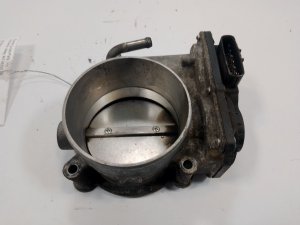
- Inspect the Electrical Connector: Check the pins inside the electrical connector. They should be straight, clean, and free of any corrosion or green buildup. Damaged pins are a major red flag.
- Check the Throttle Plate: Look inside the bore. The butterfly valve (throttle plate) should be relatively clean. Manually push it open; it should move smoothly without sticking or binding and spring back shut cleanly.
- Look for Physical Damage: Inspect the housing for any cracks, deep gouges, or signs that it has been dropped. Ensure all mounting points are intact.
- Consider the Source: Purchase from a reputable seller that offers a warranty. A warranty provides peace of mind that you can get a replacement if the part is defective.
Why Used OEM vs. New Aftermarket? For critical electronic parts like a throttle body, a used OEM (Original Equipment Manufacturer) unit is often a better choice than a cheap new aftermarket part. The OEM part was built to the manufacturer's exact specifications for quality and performance. Aftermarket electronics can sometimes have compatibility or longevity issues.
Cost Comparison
The cost to replace a throttle body can vary significantly depending on the parts source and labor rates. Here is a general breakdown of expected costs:
| Part/Service | Estimated Cost |
|---|---|
| New OEM (Dealer) | $450 - $700 |
| New Aftermarket | $95 - $280 |
| Used OEM | $45 - $150 |
| Shop Labor | $110 - $215 |
| Total (New OEM Installed) | $560 - $915 |
| Total (Used OEM Installed) | $155 - $365 |
Legal and Emissions Requirements
The throttle body is a key component of the emissions system because it regulates the air-fuel ratio. A malfunctioning throttle body will cause a Check Engine Light, which will result in an automatic failure of an emissions inspection in states that require it. However, unlike catalytic converters, throttle bodies are generally not subject to California Air Resources Board (CARB) compliance rules, meaning there are no separate 'California' and 'Federal' emissions variants of this part.
Frequently Asked Questions
Can I clean my throttle body instead of replacing it?
Sometimes, issues like a rough idle or slight hesitation can be caused by carbon buildup inside the throttle body bore, which prevents the plate from closing properly. In these cases, a thorough cleaning with a dedicated throttle body cleaner can solve the problem. However, if the issue is an electronic failure of the internal motor or position sensor, cleaning will not help and the entire unit must be replaced.
Do I need a special tool to program the new throttle body?
No. For the listed Hyundai and Kia models, a dealership scan tool is typically not required for programming. The simple key-on, key-off relearn procedure is usually sufficient to calibrate the new part and restore normal idle.
What happens if I keep driving with a bad throttle body?
It is not recommended. While the vehicle may be drivable in 'limp mode', you will have severely limited power, making it unsafe for normal traffic or highway speeds. Continued driving could also lead to unpredictable stalling, which is a significant safety hazard.
Is a bad throttle body the same as a bad accelerator pedal sensor?
No, but they can have similar symptoms. The accelerator pedal position (APP) sensor tells the computer how far you're pressing the gas pedal. The computer then signals the throttle body motor to open the throttle plate. A diagnostic scan can usually distinguish between a faulty pedal sensor and a faulty throttle body.
Technical Specifications
OEM Part Numbers: 35100-3L100 351003L100
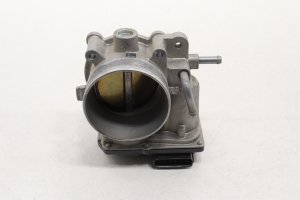
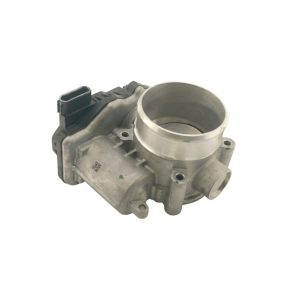
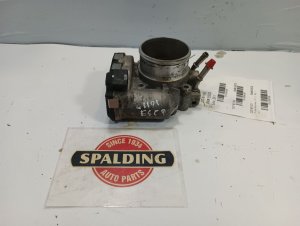
Electronic Throttle Body with 6-pin electrical connector.
We Have This Part in Stock



The information in this article is provided for general reference and educational purposes only. Vehicle specifications, procedures, and part compatibility can vary by production date, trim level, and region. Always consult your vehicle's factory service manual and verify part numbers before purchasing or performing repairs. Safety-critical components such as airbags, seat belts, and braking systems should be installed by a qualified professional.
- Kia Sorento:
- Kia Sedona:
- Kia Cadenza:
- Hyundai Palisade:
- Kia Telluride:
- 🛍️ Shop This Part
- Symptoms of a Failing Throttle Body
- Vehicle-Specific Issues, Recalls, and TSBs
- DIY Replacement and Relearn Procedure
- Replacement Steps:
- Required Throttle Relearn/Calibration Procedure
- Buying a Used Fuel Injection Throttle Body
- Cost Comparison
- Legal and Emissions Requirements
- Frequently Asked Questions
- 🎟️ Get 5% Off