

Hyundai & Kia Throttle Body Guide (2015-2025): Limp Mode, Stalling & Engine Variants
This guide covers the common throttle body failures, symptoms, and replacement details for a wide range of 2015-2025 Hyundai and Kia vehicles, helping you identify the correct part for your specific engine.
- The most critical step is to identify your vehicle's engine (e.g., 2.0L, 1.6L Turbo) to ensure you get the correct throttle body.
- A failing throttle body is a common cause of 'limp mode,' rough idle, and stalling in these Hyundai and Kia models.
- After replacement, a simple 'relearn' procedure (turning the key on and off) is usually required to calibrate the new part and prevent idle issues.
- A used OEM throttle body is often a reliable and much cheaper alternative to a new dealer part, but inspect the connector pins and verify the part number.
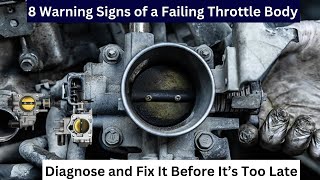
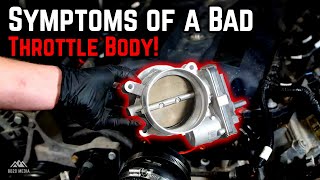
Symptoms of a Failing Throttle Body

A faulty throttle body can make your car difficult or even unsafe to drive. The most common issue is the vehicle entering "limp mode," a self-preservation feature where the engine's power is drastically reduced. You'll know it's happening if the car refuses to accelerate and the RPMs won't go above a certain limit (often around 2000 RPM). Here are the most common signs of failure:
- Check Engine Light: The most obvious sign. The ECM will detect a problem with the throttle body's operation or its position sensor and trigger a warning light. Common codes include P0638, P2110, P2118, P2119, P0121, and P0222.
- Limp Mode (Reduced Engine Power): The car will have very little power and won't accelerate properly. This is a safety measure to prevent potential engine damage.
- Rough or Unstable Idle: The engine may idle too high, too low, or fluctuate unpredictably. It might feel like the car is shaking or about to stall at a stoplight.
- Stalling: In severe cases, the engine may stall completely, especially when coming to a stop or when the engine is cold. This happens because the throttle body can't regulate airflow properly at idle.
- Poor or Delayed Acceleration: You might press the gas pedal and feel a delay or hesitation before the car starts to pick up speed. This makes the car feel sluggish and unresponsive.
- Jerking or Surging: The car may jerk or surge unexpectedly while driving as the throttle body struggles to maintain a consistent airflow.
Engine & Part Variants: Identifying the Correct Throttle Body

Not all throttle bodies are the same, even for the same car model. The correct part depends entirely on the engine. Hyundai and Kia use a shared set of engines across their model lines. It is critical to verify your vehicle's engine before ordering a part. You can usually find your engine size (e.g., 2.0L, 1.6T) on the engine cover or in your owner's manual.
Throttle Bodies for 2.0L Naturally Aspirated Engines
This is one of the most common engines found in these vehicles. It's a reliable workhorse, but the throttle body can still fail or become dirty.
- Common Vehicles: 2017-2025 Hyundai Elantra, 2018-2025 Hyundai Kona, 2016-2024 Hyundai Tucson, 2017-2024 Kia Forte, 2021-2025 Kia Seltos, 2019-2025 Kia Soul. 🎬 Watch: Maintenance tips for a dirty Kia Soul throttle body
- Known OEM Part Numbers: 35100-2E700, 35100-2E710, 351002E410 (Kia).
- Issues: Besides electronic failure, these are prone to carbon buildup over time, which can cause a rough idle and hesitation. Cleaning the throttle body is a common maintenance item. 🎬 See how to clean the throttle body on a Hyundai Elantra
Throttle Bodies for 1.6L Turbo (T-GDI) Engines
The turbocharged 1.6L engine offers more performance and is found in many sportier trims and 'N-Line' models.
- Common Vehicles: 2015-2024 Hyundai Sonata, 2016-2024 Hyundai Tucson, 2015-2022 Hyundai Veloster, 2021-2024 Kia K5, 2021-2025 Kia Sorento.
- Known OEM Part Numbers: 35100-2B340.
- Issues: A failure on a 2022 Kona with the 1.6T engine was reported to cause limp mode and a P0638 code. The charge pipe connection on the K5 can be tricky to remove for service.
Throttle Bodies for Other Engines (2.0L Turbo, 2.4L, 2.5L, Hybrids)
This guide focuses on the most common engines, but these vehicles were also offered with other powertrains.
- 2.0L Turbo ('N' Models): Found in performance models like the Elantra N and Kona N. These use a specific, larger throttle body to handle the increased airflow.
- 2.4L/2.5L Engines: Found in larger vehicles like the Sonata, Santa Fe, Tucson, and Sorento. These will have their own specific part numbers, like 35100-2GPD0.
- Hybrid/PHEV Models: These often use the 1.6L engine as a base but may have different part numbers or software. Always verify by part number for hybrid models.
Warning: The variety of engines used in these cars makes it easy to order the wrong part. Always confirm your engine size (1.6L, 1.6L Turbo, 2.0L, etc.) before purchasing a replacement throttle body.
Buying a Used Fuel Injection Throttle Body

A used OEM throttle body is an excellent, cost-effective alternative to an expensive new part from the dealer. Because these are electronic components, you need to know what to look for to get a good part.
- Verify the Part Number: This is the most important step. Match the part number from your old throttle body to the used part. If you can't read it, verify the correct part number for your vehicle's specific engine and year.
- Inspect the Connector: Check the electrical connector pins. They should be straight, clean, and free of any corrosion or damage. A damaged connector is a major red flag.
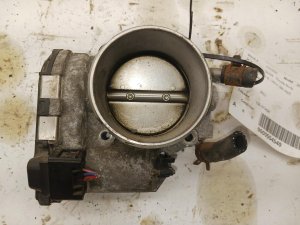
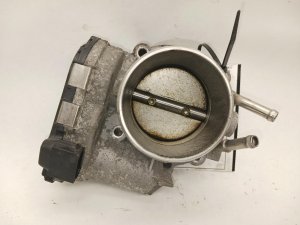
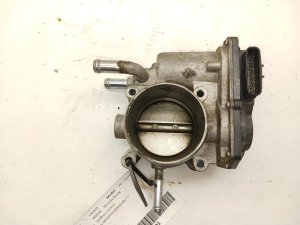
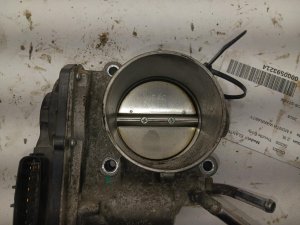
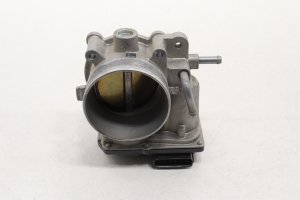
- Check the Throttle Plate: Look inside the throttle body bore. A thin layer of black carbon is normal, but avoid parts with heavy, caked-on grime. Manually (and gently) move the butterfly valve with your finger; it should move smoothly without sticking or binding.
- Mileage Isn't Everything: A part from a lower-mileage vehicle is generally better, but how the car was maintained matters more. A well-maintained part with 100,000 miles can be better than a neglected one with 50,000.
- Why Used OEM is Often Better: A used original equipment (OEM) part was built to the manufacturer's exact specifications for materials and electronic calibration. Many cheap aftermarket throttle bodies have lower quality sensors and motors that can fail prematurely or cause performance issues, even when new.
Replacement Overview & Calibration

Replacing the throttle body is a straightforward job for a DIYer with basic tools. It's typically located at the end of the air intake tube, bolted to the intake manifold.
- Disconnect the Battery: This is a crucial safety step before working on any electronic components.
- Remove the Air Intake Ducting: Loosen the clamps holding the large plastic or rubber intake tube to the throttle body and air filter box.
- Disconnect the Electrical Connector: Carefully unclip the wiring harness from the throttle body.
- Remove Mounting Bolts: The throttle body is usually held on by four bolts. Remove them and carefully pull the throttle body away from the intake manifold. Be ready for a small amount of coolant to leak if your model has coolant lines running to it.
- Installation is the reverse of removal. Use a new gasket if the old one is damaged.
Throttle Body Relearn/Calibration Procedure
After installing a new or used throttle body, you must perform a "relearn" procedure so the car's computer can calibrate to the new part. If you skip this, you may have a high or erratic idle. While procedures can vary slightly, this is a common method for Hyundai and Kia:
Pro Tip: A simple relearn procedure often works. First, ensure the engine is warm. Turn the ignition to the 'ON' position (without starting the engine). Wait 10-15 seconds. Turn the ignition 'OFF' and wait another 10 seconds. Repeat this cycle a few times before starting the engine. Some sources suggest disconnecting the battery for 15-30 minutes will also reset the ECU and force it to relearn.
Cost Comparison
| Part Type | Estimated Cost |
|---|---|
| New OEM | $350 - $600+ |
| New Aftermarket | $100 - $250 |
| Used OEM | $50 - $150 |
| Shop Labor | $100 - $200 |
Prices are estimates and can vary based on location, vehicle, and specific part number.
Legal & Emissions Information
While a throttle body is a critical emissions component (as it controls the air/fuel ratio), it is not subject to the same state-specific legal requirements as a catalytic converter. There are no CARB-compliant vs. EPA-only versions of a throttle body. However, a failed throttle body will cause your vehicle to fail an emissions inspection because it will trigger the Check Engine Light. There is no theft concern for this part.
Frequently Asked Questions
Can I just clean my throttle body instead of replacing it?
Sometimes, yes. If your issue is a rough idle or slight hesitation caused by carbon buildup, a thorough cleaning can restore performance. However, if the problem is an internal electronic failure (bad sensor or motor), which is common and causes limp mode, cleaning will not help and the unit must be replaced.
Do I need a special tool to program the new throttle body?
Usually, no. Most Hyundai and Kia models do not require a dealership scan tool for programming. The simple key-on/key-off relearn procedure is typically sufficient to calibrate the new part. In some rare cases or if the simple relearn doesn't work, a reset with an OBD-II scan tool might be needed.
What happens if I drive with a bad throttle body?
It is not recommended. While you might be able to limp the car a short distance, driving with a faulty throttle body can be dangerous due to the sudden loss of power and unpredictable stalling. It won't typically cause a chain reaction of damage to other components, but it makes the vehicle unreliable and unsafe for normal driving.
Why do some throttle bodies have coolant lines attached?
Some throttle bodies have small hoses that circulate hot engine coolant through the housing. This is done to prevent ice from forming on the throttle plate in very cold and humid conditions, which could cause the throttle to stick. When removing a throttle body with these lines, be prepared to clamp the hoses or have a small pan ready to catch any spilled coolant.
Helpful Videos


Technical Specifications
OEM Part Numbers: 35100-2B340 35100-2J410 35100-2M417 3510003HA0 351002GPD0 351002J410 351002M417 35100-03HA0 35100-2E700 351002B340 351002E710 351002E410
Varies by engine application. The key specification is the bore diameter and electronic calibration, which must match the vehicle's original part.
We Have This Part in Stock


The information in this article is provided for general reference and educational purposes only. Vehicle specifications, procedures, and part compatibility can vary by production date, trim level, and region. Always consult your vehicle's factory service manual and verify part numbers before purchasing or performing repairs. Safety-critical components such as airbags, seat belts, and braking systems should be installed by a qualified professional.
- Hyundai Elantra:
- Hyundai Kona:
- Hyundai Sonata:
- Hyundai Tucson:
- Kia Seltos:
- Hyundai Santa Fe:
- Hyundai Veloster:
- Kia Forte:
- Kia K5:
- Kia Sorento:
- Kia Soul:
- Kia Sportage:
- Hyundai Ioniq:
- KIA K4:
- Kia Niro:
- Kia Optima:
- 🎬 Helpful Videos
- 🛍️ Shop This Part
- Symptoms of a Failing Throttle Body
- Engine & Part Variants: Identifying the Correct Throttle Body
- Throttle Bodies for 2.0L Naturally Aspirated Engines
- Throttle Bodies for 1.6L Turbo (T-GDI) Engines
- Throttle Bodies for Other Engines (2.0L Turbo, 2.4L, 2.5L, Hybrids)
- Buying a Used Fuel Injection Throttle Body
- Replacement Overview & Calibration
- Throttle Body Relearn/Calibration Procedure
- Cost Comparison
- Legal & Emissions Information
- Frequently Asked Questions
- 🎟️ Get 5% Off