

2005-2008 Porsche 911 Fuel Rail Guide: Diagnosing Leaks and Fitment Issues
This guide covers the common failure symptoms, replacement costs, and critical compatibility details for the fuel injection rail on 2005-2008 Porsche 911 Carrera and Targa models.
- A raw fuel smell is the most critical symptom and indicates a dangerous leak that poses a fire hazard; the vehicle should not be driven.
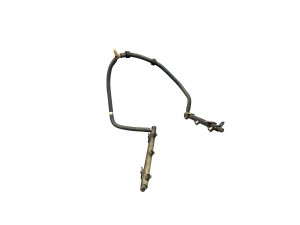
- This fuel rail (part #99711093103) is a single assembly that fits ONLY the 2005-2008 Porsche 911 with a 3.6L or 3.8L naturally aspirated engine. It does NOT fit Turbo, GT2, or GT3 models.
- When replacing the fuel rail, it is mandatory to install new O-rings on all six fuel injectors to prevent leaks.
- Replacement is feasible for an experienced DIYer as the intake manifold does not need to be removed, but care must be taken when working with fuel lines.
Symptoms of a Failing Fuel Injection Rail
Failures of the fuel rail on the 997.1 generation Porsche 911 are most often related to age and heat cycles causing leaks. The symptoms are often distinct and should be addressed immediately due to the serious risk of fire.
- Strong Fuel Smell: This is the most common and dangerous symptom. A strong smell of raw gasoline, especially noticeable in the engine bay, around the rear of the car, or in an enclosed garage after parking, points to a leak in the fuel system. You should not smell fuel at any time from a properly functioning vehicle.
- Visible Fuel Leaks: You may see fuel weeping or dripping from the connections where the fuel injectors meet the rail, or from the fuel line fittings. On these Porsches, leaks may not always be significant enough to leave a puddle on the ground but can still create a hazardous vapor.
- Poor Engine Performance: A leak can cause a drop in fuel pressure, leading to a variety of running issues. These include a rough or erratic idle, engine hesitation or stumbling during acceleration, and general power loss.
- Engine Misfires & Check Engine Light: Inconsistent fuel pressure can starve certain cylinders of fuel, causing misfires. This will often trigger a Check Engine Light with codes related to lean fuel conditions (e.g., P0171, P0174) or specific cylinder misfires (e.g., P0300-P0306). A faulty fuel pressure sensor, sometimes mounted on the rail, can also cause these symptoms and may log codes like P0087.
- Decreased Fuel Economy: If the system is leaking fuel or the engine computer is injecting extra fuel to compensate for low pressure, your miles per gallon (MPG) will noticeably decrease.
Warning: A fuel leak of any kind is a critical safety issue. Do not drive a vehicle if you smell raw gasoline, as it poses a significant fire risk. Do not park it in an enclosed space like a garage until the leak is repaired.
Known Issues, Recalls, and Technical Service Bulletins (TSBs)
While Porsche has issued fuel system-related recalls for other models and later 911 generations, searches of the NHTSA database show no specific recalls for the fuel injection rail itself on the 2005-2008 Porsche 911 Carrera or Targa models. The primary issues reported by owners are age-related leaks from seals and O-rings rather than a widespread defect with the rail itself.
Pro Tip: A fuel smell is not always from the fuel rail. Other common sources on a 997 include leaking fuel injector O-rings, a cracked fuel pump sender flange on top of the tank (smell may be stronger in the front trunk or cabin), or issues with the EVAP system charcoal canister and vent lines.
Compatibility Warning: The fuel rail for the 3.6L and 3.8L naturally aspirated (NA) engines (Carrera, Carrera S, Targa) is a single, integrated assembly. It is completely different from the separate left and right fuel rails used on the 911 Turbo, GT2, and GT3 models of the same era. The parts are not interchangeable. Always verify the part number and engine application before purchasing.
Buying a Used Fuel Injection Rail: What to Check
For a durable, non-electronic part like a fuel rail, a quality used OEM component is an excellent alternative to an expensive new one. Cheap aftermarket replacements are not generally available for this specific part, making used OEM a primary choice for budget-conscious repairs.
- Physical Inspection: Carefully inspect the entire rail for any signs of damage. Look for cracks, deep gouges, or dents, especially around the injector ports and fuel line connections. Check all threaded fittings to ensure they are not stripped or cross-threaded. Avoid any rail that shows signs of previous repairs like welding or epoxy.
- Verify Compatibility: Double-check that the rail came from a 2005-2008 Porsche 911 with a 3.6L or 3.8L naturally aspirated engine. The correct OEM part number is 99711003103, which was later superseded to 99711093103. A rail from a Turbo or GT model will not fit.
- Corrosion Check: Look for any heavy corrosion, particularly inside the ports where the injectors seat. Minor surface discoloration is normal, but avoid any parts with heavy rust or pitting that could compromise sealing.
- Plan for New Seals: Even if a used rail comes with old injectors or seals, you must discard them. Always install new fuel injector O-rings and seals. These are inexpensive and absolutely critical for preventing dangerous fuel leaks. The O-rings become hard and brittle with age and will not seal properly if reused.
Cost Comparison for a 2005-2008 Porsche 911 Fuel Rail
| Part Type | Estimated Cost |
|---|---|
| New OEM | $515 - $750 |
| Used OEM | $250 - $400 |
| New Aftermarket | Not generally available for standard replacement. |
| Shop Labor | $400 - $750 |
Replacement Information
Replacing the fuel rail on a 997.1 Carrera is a moderately difficult job that a skilled DIY mechanic can perform. Unlike some other vehicles, the intake manifold does not need to be removed. However, access is tight, and extreme care must be taken when working with the fuel system.
- Difficulty: 3 out of 5
- Estimated Time: 2-3 hours
- Process Overview:
- Depressurize the fuel system and disconnect the battery.
- Remove the engine cover and airbox for access.
- Disconnect the fuel lines from the rail. Have rags ready to catch spilled fuel.
- Unplug the electrical connectors from all six fuel injectors.
- Unbolt the four mounting screws holding the rail to the engine. The torque for these bolts is 6 ft-lbs (8 Nm).
- Carefully lift the entire rail assembly with the injectors attached.
- Remove the clips holding the injectors to the old rail and transfer them to the new rail, making sure to install new, lubricated O-rings on each injector.
- Installation is the reverse of removal. Before starting the engine, turn the key to the 'on' position to prime the system and carefully check all connections for leaks.
Frequently Asked Questions (FAQ)
Do I need to replace both fuel rails?
On the 2005-2008 naturally aspirated 911 models (Carrera, Targa), the fuel rail is a single, integrated assembly called a "fuel collection pipe" that serves both cylinder banks. You will replace it as one unit. This is different from Turbo models, which have separate left and right rails.
Can I reuse my old fuel injectors and seals?
You can typically reuse your fuel injectors if they are functioning correctly. However, you MUST replace all the rubber O-rings and seals on the injectors. Reusing old, hardened seals will almost certainly result in a dangerous fuel leak.
What else should I replace at the same time?
Since you will have improved access to the top of the engine, it's a good time to inspect and potentially replace spark plugs, ignition coils, and the Air-Oil Separator (AOS) and its associated vacuum lines if they are old or showing signs of wear.
Is a fuel smell always a sign of a bad fuel rail?
No. While the fuel rail is a potential culprit, a fuel smell can also come from leaking injector O-rings, a cracked fuel pump flange (often smelled in the front of the car), or a leak in the evaporative emissions (EVAP) system. Proper diagnosis is key before replacing parts.
Technical Specifications
OEM Part Numbers: 99711093103 99711003103
Torque for fuel rail mounting bolts: 6 ft-lbs (8 Nm).
We Have This Part in Stock

The information in this article is provided for general reference and educational purposes only. Vehicle specifications, procedures, and part compatibility can vary by production date, trim level, and region. Always consult your vehicle's factory service manual and verify part numbers before purchasing or performing repairs. Safety-critical components such as airbags, seat belts, and braking systems should be installed by a qualified professional.
- Porsche 911: