

2017-2025 Tesla Model 3 & Model Y Charge Port Door: Freezing, Sticking, and Replacement
A complete guide to diagnosing and fixing common charge port door problems on the Tesla Model 3 and Model Y, from frozen latches to total failure.
- The most common failure is the door freezing shut in cold weather; use the 'Defrost Car' feature in the app to activate the built-in heater before charging.
- This part is for North American (NACS) vehicles only and does NOT fit the 2024+ Model 3 'Highland' refresh.
- Early Model 3s (pre-March 2018) are prone to failure from water ingress; replacement with an updated part is the only permanent fix.
- Replacement is a straightforward DIY job that requires removing the trunk trim and driver's side taillight.
Common Symptoms of a Failing Charge Port Door

When the charge port door on a 2017-2023 Tesla Model 3 or 2020-2025 Tesla Model Y begins to fail, the symptoms are usually obvious. Because you can't charge the vehicle if the door won't open, it's a problem that needs to be addressed quickly.
1. Charge Port Door Will Not Open
This is the most common failure. You may press on the door, use the app, or press the charger button, but the door remains shut. You might hear a clicking noise, which indicates the car has received the command, but the latch fails to release. This can be caused by several things:
- Frozen Shut: In cold weather, ice buildup around the seal and in the latch mechanism is a frequent cause.
- Debris in Mechanism: Dirt and road grime can jam the latch or hinge.
- Actuator Motor Failure: The small electric motor that operates the latch can burn out or fail.
- Sensor or Software Glitch: The car may not register the command. A simple vehicle reboot (holding both scroll wheels on the steering wheel) can sometimes fix this.
2. Door Will Not Latch Closed or Opens Randomly
The door may refuse to stay shut or may pop open on its own, sometimes when another door is closed or while the car is parked. This can be due to a failed latch mechanism, an obstruction, or a faulty position sensor that is incorrectly telling the car the door is not closed. In some cases, the touch sensor that allows you to tap the door to open it can become faulty and too sensitive, causing it to open randomly.
3. 'Tap to Open' Feature Fails
If you can open the door from the app or touchscreen but not by tapping on the door itself, a small magnet inside the door assembly may have fallen off. This magnet is what triggers the sensor to open the door. It can often be reattached with a strong adhesive.
Known Issues, Recalls, and Technical Service Bulletins (TSBs)

While there are no major safety recalls for the charge port door itself, Tesla has issued service bulletins to address common complaints.
Compatibility Warning: The charge port door for the 2017-2023 Model 3 and 2020-2025 Model Y is specific to vehicles built for the North American market with the North American Charging Standard (NACS). It will not fit vehicles intended for other regions like Europe. Crucially, it will not fit the updated Tesla Model 3 (known as 'Highland') released for the 2024 model year and newer.
Service Bulletin SB-19-44-002: Water Ingress in Early Model 3
For Model 3 vehicles built before approximately March 26, 2018, Tesla issued a bulletin regarding water getting into the inductive sensor within the charge port door assembly. This moisture causes the door to become inoperative. The official fix is to replace the entire charge port door assembly with an updated part. If you own an early Model 3, this is a likely cause of failure.
Service Bulletin SB-20-10-001: Door Alignment (Overflush)
This bulletin applies to both the Model 3 and Model Y and addresses a condition where the charge port door protrudes, sitting 'overflush' with the left taillight. The procedure involves adjusting the underlying sheet metal. If the adjustment is unsuccessful after several attempts, the bulletin recommends replacing the charge port door assembly.
Common Issue: Cold Weather Freezing
The most widely reported problem is the charge port door and latch freezing shut in icy conditions. To combat this, Tesla recommends preconditioning the vehicle or enabling 'Defrost Car' in the mobile app. This activates a heater in the charge port inlet. On some software versions, you can turn on the charge port heater directly in the 'Service' menu. If you're stuck, owners have had success pouring warm (not hot) water over the door, using a de-icer spray, or even placing a chemical hand warmer inside the port area for 5-10 minutes to thaw the latch.
Buying a Used Charge Port Door for Your Model 3 or Model Y

A used OEM charge port door is an excellent, cost-effective option, especially since it comes pre-painted from the factory. However, there are critical details to check before buying.
1. Verify Vehicle and Regional Compatibility
This is the most important step. Ensure the part is from a 2017-2023 Model 3 or 2020-2025 Model Y. Confirm it is for the North American (NACS) market. Do not purchase a part intended for the 2024+ Model 3 'Highland' or a European model, as it will not fit or function correctly.
2. Physical Inspection
When inspecting a used part, check the following:
- Paint and Finish: Look for deep scratches, scuffs, or signs of delamination. Since it's a cosmetic part, you want it to match your vehicle's condition.
- Hinge Assembly: Check the plastic hinge for any cracks or stress marks. This is a common point of failure.
- Latch and Motor: Inspect the latching mechanism for visible damage.
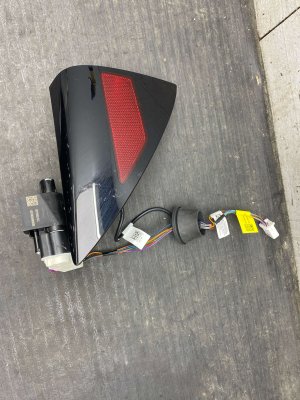
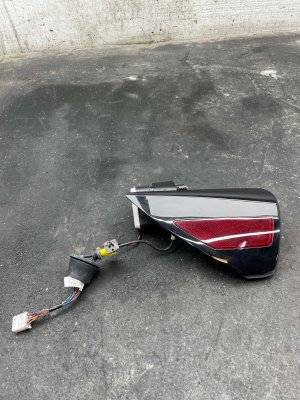
- Wiring and Connector: Ensure the electrical connector and its pins are straight and free of corrosion. The wiring harness should not be frayed or damaged.
- Magnet: Check that the small magnet for the 'tap to open' feature is present on the inside of the door.
3. Part Number Revisions
Tesla has released many revisions of this part, identified by the letter at the end of the part number (e.g., -G, -H, -J). Later revisions often include improvements to address known issues like water ingress or freezing. While several part numbers may be compatible, opting for a later revision (like 1566302-10-J) can be beneficial.
Replacement Overview
Replacing the charge port door assembly is a manageable DIY task for those comfortable with basic tools and removing interior trim panels.
- Difficulty: 2 out of 5
- Estimated Time: 1-1.5 hours
- Tools Required: Trim removal tools, 8mm and 10mm sockets, T-20 and T-25 Torx bits.
The general process involves:
- Opening the trunk and removing the driver's side trim panel to access the area behind the taillight.
- Removing the left (driver's side) taillight assembly, which is held in by two 8mm nuts and a plastic bump stop.
- Unbolting the three 10mm bolts that hold the charge port assembly to the body.
- Disconnecting the electrical connector from the charge port module.
- Installation is the reverse of removal. After installation, it is recommended to perform a 'Charge Port Door Calibration' routine from the vehicle's service menu on the touchscreen to ensure proper operation.
Pro Tip: Before re-installing all the trim, connect the new charge port door and test its function using the touchscreen or app. This ensures it works correctly before you put everything back together.
Cost Comparison
| Part Type | Estimated Cost |
|---|---|
| New OEM | $210 - $250 |
| New Aftermarket | Not commonly available |
| Used OEM | $70 - $175 |
| Shop Labor | $150 - $300 |
Frequently Asked Questions (FAQ)
How do I manually open the charge port door if it's stuck?
There is a manual release cable located inside the trunk on the driver's side. Pull back the carpet trim, and you will find a small cable. Pulling this cable will manually unlatch the charge port door. Use this as a last resort to avoid damaging the mechanism.
Why won't my charge port open in the cold?
Ice has likely formed in the latch mechanism. Use the 'Defrost Car' feature in your Tesla app for 30-45 minutes before you need to charge. This activates a small heater in the charge port inlet designed to thaw any ice.
Is the charge port door the same for the Model 3 and Model Y?
Yes, for the specified year ranges (2017-2023 Model 3 and 2020-2025 Model Y), the charge port door assembly is the same part and is interchangeable between the two models.
Do I need to paint a replacement charge port door?
If you buy a new OEM part, it will come primed and will need to be painted to match your vehicle. If you buy a used OEM part, it will already be painted. The key is to find a used part from a vehicle with the same factory paint code to ensure a perfect match.
Will this part fit my 2024 Tesla Model 3?
No. The 2024 Model 3, known as the 'Highland' refresh, uses a different charge port door design. This part is only compatible with Model 3 vehicles from the 2017-2023 model years.
Technical Specifications
OEM Part Numbers: 1084854-00-G 147660801G 1490374-10-C 1490374-10-E 149037410C 1566302-00-A 1566302-00-G 1566302-00-H 1566302-10-G 1566302-10-J 156630210G
Designed for North American Charging Standard (NACS). Includes motorized latch, position sensors, and wiring harness.
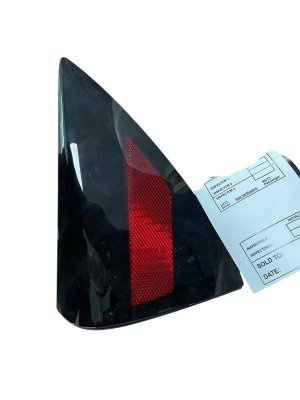
We Have This Part in Stock


The information in this article is provided for general reference and educational purposes only. Vehicle specifications, procedures, and part compatibility can vary by production date, trim level, and region. Always consult your vehicle's factory service manual and verify part numbers before purchasing or performing repairs. Safety-critical components such as airbags, seat belts, and braking systems should be installed by a qualified professional.
- Tesla Model 3:
- TESLA MODEL 3:
- TESLA MODEL Y:
- 🛍️ Shop This Part
- Common Symptoms of a Failing Charge Port Door
- 1. Charge Port Door Will Not Open
- 2. Door Will Not Latch Closed or Opens Randomly
- 3. 'Tap to Open' Feature Fails
- Known Issues, Recalls, and Technical Service Bulletins (TSBs)
- Service Bulletin SB-19-44-002: Water Ingress in Early Model 3
- Service Bulletin SB-20-10-001: Door Alignment (Overflush)
- Common Issue: Cold Weather Freezing
- Buying a Used Charge Port Door for Your Model 3 or Model Y
- 1. Verify Vehicle and Regional Compatibility
- 2. Physical Inspection
- 3. Part Number Revisions
- Replacement Overview
- Cost Comparison
- Frequently Asked Questions (FAQ)
- 🎟️ Get 5% Off