

2014-2020 BMW i8 Front Headrest: Active System, Deployment & Used Buying Guide
This guide explains the i8's crash-activated safety headrest, how to tell if it has deployed, and what to inspect when buying a used replacement.
- The i8 uses a 'Crash-Active Headrest' with a pyrotechnic charge that deploys in a rear-end collision; it is a one-time-use safety device.
- A deployed headrest will be pushed forward and trigger an airbag light. It must be fixed by replacing the internal charge with a repair kit (approx. $125-$160).
- When buying used, the most critical inspection is to ensure the headrest is not deployed and that its metal support posts are perfectly straight.
- Replacement is moderately difficult (3/5) because the seat's rear cover must be removed to disconnect the electrical connector before the headrest can be pulled out.
Understanding the i8's Active Headrest System
The front headrests on all 2014-2020 BMW i8 models are not simple passive components. They are an advanced safety feature called Crash-Active Headrests. This system is designed to protect front occupants from whiplash during a rear-end impact. When the vehicle's sensors detect a rear collision of sufficient force, they send a signal to the airbag control unit, which then triggers a pyrotechnic gas generator inside the headrest. This charge deploys the headrest, pushing it forward by up to 60 millimeters (2.4 inches) and upward by 40 millimeters (1.6 inches) in a fraction of a second. This rapid movement closes the gap between the headrest and the occupant's head, cradling it and reducing the violent backward motion that causes neck injuries.
Warning: The active headrest system is a one-time-use device. Once deployed, the internal pyrotechnic charge must be replaced. Driving with a deployed headrest compromises the vehicle's safety system and will cause a permanent airbag warning light on the dashboard.
Symptoms of Failure or Deployment
Problems with the i8 headrest fall into two categories: cosmetic/mechanical issues and active system deployment.
1. Active Headrest Deployment
This is the most serious issue and almost always occurs after a rear-end collision. You will notice several symptoms simultaneously:
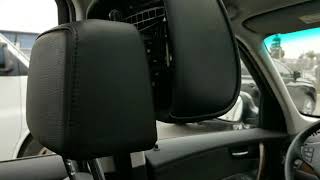
- Headrest Pushed Forward: The headrest will be visibly angled forward toward the front of the car and will feel locked in this position.
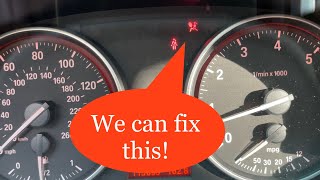
- Airbag Warning Light: The SRS (airbag) warning light on the instrument cluster will be illuminated and will not turn off.
- Fault Codes: A diagnostic scan of the vehicle will show fault codes related to the active headrest, such as '93AE Active Headrest Left' or '93AF Active Headrest Right'.
2. Cosmetic or Mechanical Issues
These are less severe and do not typically affect safety, but they are common reasons for replacement.
- Damaged Upholstery: Rips, tears, stains, or heavy wear on the leather or fabric surface.
- Cracked Plastic Trim: The plastic base or trim pieces around the posts can become brittle and crack over time.
- Bent Posts: The metal support posts can get bent during a collision, even if the active headrest does not deploy. A headrest with bent posts should always be replaced.
- Adjustment Failure: While the i8 headrest height is adjusted manually, the release button can fail, making it difficult or impossible to raise or lower the headrest.
Buying a Used 2014-2020 BMW i8 Headrest
A used OEM headrest is a great value, but careful inspection is crucial to ensure you are not buying a deployed or damaged part. Follow these steps before purchasing:
- Confirm It Is Not Deployed: This is the most important check. A deployed headrest will be pushed forward and locked. Compare it to photos of a new headrest to understand the correct, non-deployed angle. Do not buy a headrest that is stuck in the forward position.
- Inspect the Support Posts: The two metal posts should be perfectly straight and parallel. Lay the headrest on a flat surface to check for any bending. Bent posts are a clear sign the part came from a vehicle involved in an accident and should be rejected.
- Check the Electrical Connector: At the bottom of one of the posts, you will find a small electrical connector for the pyrotechnic charge. Ensure the connector and a short length of wire are present and undamaged. Do not buy a headrest with a cut or broken connector.
- Examine Cosmetic Condition: Carefully check the leather or fabric for any rips, deep scratches, sun fading, or stains. Check all plastic trim pieces for cracks or stress marks, especially around the base where the posts enter the seat.
- Verify the Part Number: Ask the seller for the OEM part number and match it to your needs. This is especially important given the differences between the Coupe and Roadster models.
Fitment: Coupe vs. Roadster
The initial data for this part contained conflicting information about interchangeability. Research confirms the i8 Coupe is a 2+2 seater, while the i8 Roadster is a strict 2-seater, with the convertible top mechanism located behind the front seats. While the front seats appear visually similar, some users have noted differences in seat adjustability. Because the surrounding interior trim and body structure are different, it is not confirmed that the headrests are directly interchangeable between Coupe and Roadster models. To ensure compatibility, it is safest to purchase a headrest that came from the exact same model (Coupe or Roadster) as your own vehicle.
Replacement Information
Replacing the i8's active headrest is more complex than a standard headrest because of the electrical connection to the airbag system.
- Difficulty: 3/5 (Moderate)
- Tools Required: Plastic trim removal tools, possibly a small pick or screwdriver.
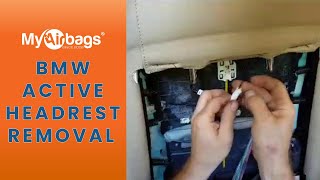
- Procedure Overview: The seat back panel must be carefully unclipped and removed to gain access to the headrest's electrical connector. Once the panel is off, the connector can be unplugged. The headrest is then removed by pressing the release button at the base of the post and pulling the headrest straight up. 🎬 Watch: How to remove a BMW active headrest Installation is the reverse of removal. Ensure the electrical connector 'clicks' into place securely.
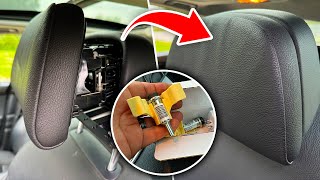
Pro Tip: If your headrest deployed in an accident, you may not need to replace the entire assembly. BMW offers a 'Repair Kit, Crash-Active Head Restraint' which contains a new pyrotechnic charge. 🎬 See how to replace the pyrotechnic charge unit This kit is significantly cheaper than a complete new headrest. After replacement, the airbag fault codes must be cleared from the SRS module using a compatible diagnostic scan tool.
Cost Comparison
| Part Type | Estimated Price Range | Notes |
|---|---|---|
| New OEM Headrest Assembly | $500 - $700 | Price for a complete new unit from a BMW dealer. |
| Used OEM Headrest | $100 - $200 | Common price on marketplaces like eBay. Inspect carefully before buying. |
| New OEM Active Headrest Repair Kit | $125 - $160 | Contains the replacement pyrotechnic charge. This is the typical solution for a deployed headrest. |
| New Aftermarket | Not Available | No direct-fit aftermarket headrests are manufactured for the BMW i8. |
| Shop Labor (Replacement) | $150 - $250 | Typically 1 hour of labor to remove the seat back, replace the unit or repair kit, and clear codes. |
Frequently Asked Questions (FAQ)
Can I reset a deployed active headrest myself?
No. Unlike some mechanical systems, the BMW i8 uses a pyrotechnic charge that is a one-time-use device. Once it has deployed, the spent charge must be replaced with a new one using an OEM repair kit. 🎬 Watch: Cheap and easy way to fix blown headrests The airbag system fault codes must also be cleared with a scan tool.
Is it safe to drive with a deployed headrest or an airbag light on?
You can physically drive the car, but it is not recommended. A deployed headrest will not provide protection in a subsequent accident. Furthermore, an active airbag/SRS warning light often indicates that the entire supplemental restraint system (including airbags) may be disabled. You should have the system repaired as soon as possible.
How do I remove the front headrest on my BMW i8?
First, you must remove the rear seat back panel to access and disconnect the electrical wire for the active headrest charge. After it is unplugged, press the small button on the plastic trim where one of the metal posts enters the seat, and pull the headrest straight up and out of the seat.
Are the headrests from the i8 Coupe and i8 Roadster the same?
This is not confirmed. The Coupe and Roadster have different rear interior structures to accommodate the roof system. While the seats look similar, there could be minor differences. To guarantee a perfect fit, you should only buy a headrest from the same model as your car.
Helpful Videos
Technical Specifications
OEM Part Numbers: 52107365082 52107365084 736508602
Features a pyrotechnic gas-cartridge deployment system as part of the vehicle's Supplemental Restraint System (SRS).

The information in this article is provided for general reference and educational purposes only. Vehicle specifications, procedures, and part compatibility can vary by production date, trim level, and region. Always consult your vehicle's factory service manual and verify part numbers before purchasing or performing repairs. Safety-critical components such as airbags, seat belts, and braking systems should be installed by a qualified professional.
- BMW i8:
- 🎬 Helpful Videos
- Understanding the i8's Active Headrest System
- Symptoms of Failure or Deployment
- 1. Active Headrest Deployment
- 2. Cosmetic or Mechanical Issues
- Buying a Used 2014-2020 BMW i8 Headrest
- Fitment: Coupe vs. Roadster
- Replacement Information
- Cost Comparison
- Frequently Asked Questions (FAQ)
- 🎟️ Get 5% Off