

1987-1989 Nissan Pathfinder Front Knuckle: Diagnosing Noises and Solving Alignment Issues
This guide covers how to identify failures in your front knee assembly, from bad wheel bearings to bent knuckles, and what to inspect when buying a used part.
- This part is drivetrain-specific: 4WD knuckles have a hole for the CV axle, while 2WD knuckles do not. Verify by visual match, not just part number.
- The knuckle itself rarely fails; symptoms usually come from the wheel bearing or ball joint housed within it.
- Replacement requires a hydraulic press to install a new wheel bearing and ball joint, making this a difficult job for most DIY mechanics.
- A wheel alignment is mandatory after installation to prevent unsafe handling and rapid tire wear.
Critical Compatibility Warning: 4WD vs. 2WD Models
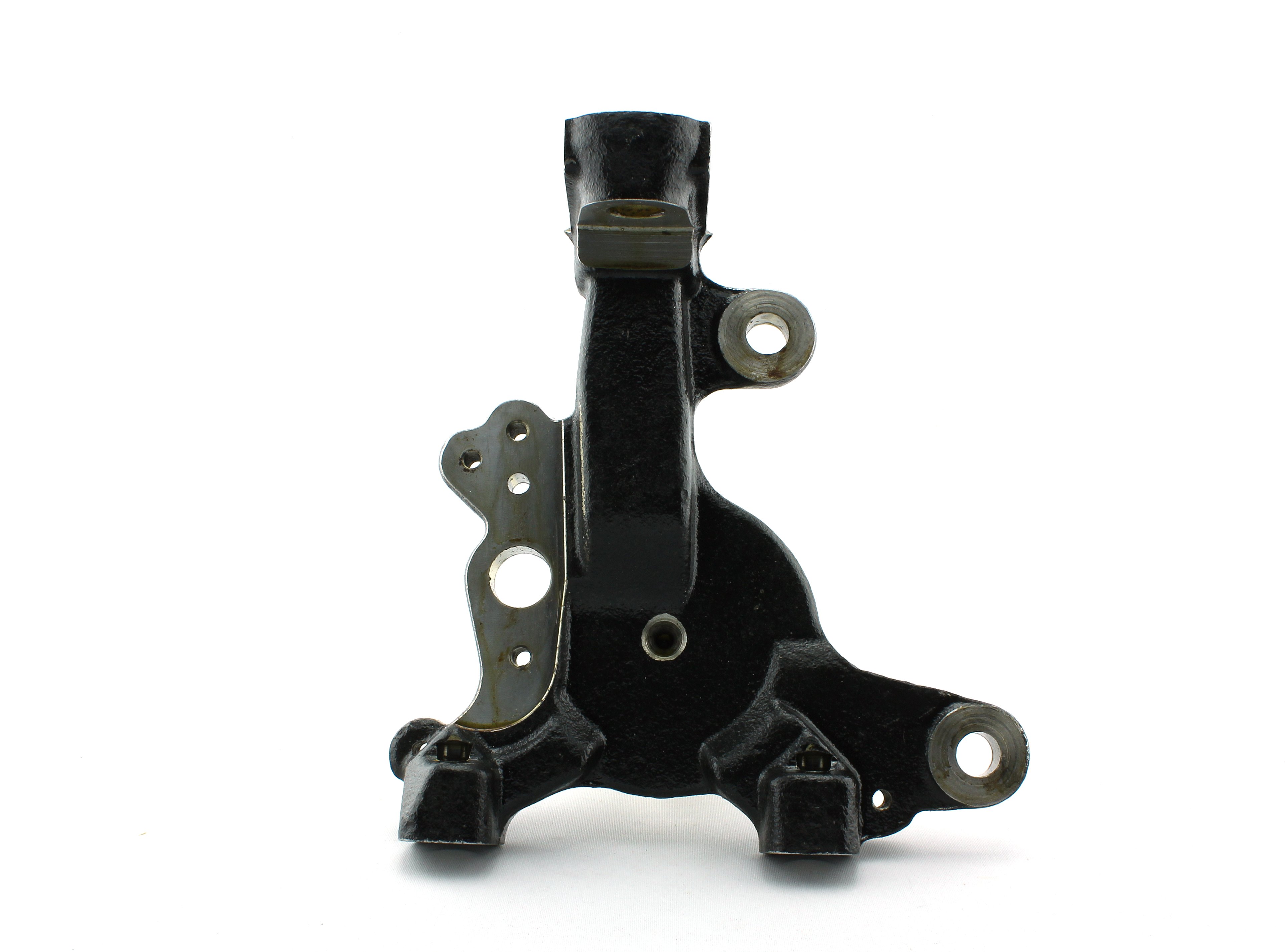
Warning: The front knee assembly for the 1987-1989 Nissan Pathfinder is specific to the drivetrain. This part fits 4-Wheel Drive (4WD) models ONLY and will not fit 2-Wheel Drive (2WD) vehicles. The 4WD knuckle has a large opening through its center for the front CV axle to pass through and power the wheel. The 2WD version is a solid spindle with no opening for an axle. Always visually match the new part to your old one before installation.
Be aware that some part numbers, such as 40014-01G50, may be listed for both 2WD and 4WD models in different databases. It is essential to verify compatibility by the physical design of the part or with the vehicle's VIN, not by part number alone.
Symptoms of a Failing Front Knee Assembly
The steering knuckle itself is a very durable piece of metal that typically only fails from a significant impact, like hitting a curb or a major pothole. Most symptoms that seem to come from the knuckle are actually caused by the replaceable components it holds or connects to.
1. Grinding, Humming, or Growling Noises
A constant grinding, humming, or growling sound from the front wheel area that changes pitch or intensity with vehicle speed is a classic symptom of a bad wheel bearing. The noise may get louder or quieter when turning the steering wheel one way or the other, which helps isolate which side is failing. Since the wheel bearing is pressed directly into the steering knuckle, this is the most common failure associated with the assembly.
2. Clunking, Popping, or Knocking Sounds
Sharp clunking or popping noises, especially when driving over bumps or turning at low speeds, usually point to worn-out ball joints or tie rod ends. Worn ball joints, which connect the knuckle to the control arms, will allow for excessive movement, creating a clunk as the suspension moves up and down. Forum users also frequently report that worn steering linkage, a known weak point on this Pathfinder generation (WD21), can cause similar noises.
3. Vehicle Pulling and Uneven Tire Wear
If the steering knuckle itself is bent from an impact, it will alter the suspension geometry. This will cause the vehicle to pull to one side, make the steering wheel off-center, and lead to rapid, uneven tire wear. Often, a bent knuckle will prevent a technician from being able to perform a proper wheel alignment.
Buying a Used Front Knee Assembly: What to Inspect
Since new OEM knuckles for this generation are largely discontinued and expensive, a quality used OEM part is often the best choice. An original Nissan knuckle is made from high-quality steel and manufactured to precise dimensions. Here’s what to look for:
- Check for Cracks and Bending: Carefully inspect the entire knuckle for any hairline cracks, especially around the mounting points for the ball joints, tie rod, and brake caliper. Look for any signs of bending or deformation that would indicate it was removed from a wrecked vehicle.
- Inspect Mounting Holes and Threads: Ensure the threaded holes for the brake caliper bracket are clean and not stripped. Check the tapered holes for the ball joints and tie rod end for any signs of excessive wear or distortion.
- Assume Wear Parts are Bad: Any used knee assembly will likely come with the old wheel bearing and ball joint still installed. You should always assume these parts are worn out. Plan to have a machine shop press out the old components and install a new wheel bearing, new seals, and a new lower ball joint before you install the knuckle on your vehicle.
- Mileage is Not the Main Concern: The knuckle itself is a solid component without a typical wear life based on mileage. Its condition is based on whether it has suffered impact damage. A straight, crack-free knuckle from a high-mileage vehicle is perfectly acceptable, as you will be replacing the wear items anyway.
Known Issues, Recalls, and TSBs
- Suspension Recall: There was a recall issued on July 26, 1990, for the suspension on 1987-1990 Nissan Pathfinders. Details are limited, but it indicates a potential factory issue with suspension components from this era.
- Weak Steering Linkage: Owners and mechanics on forums for the WD21 platform (1987-1995 Pathfinder) frequently note that the factory steering components, particularly the idler arm and center link, are a weak point and wear out, causing loose steering and clunking noises. When diagnosing front-end noises, these parts should be inspected closely.
Replacement Considerations
Pro Tip: Replacing the steering knuckle is the perfect time to refresh the entire front suspension. Since you will have it all apart, it is highly recommended to replace the lower ball joint, wheel bearing, and hub seals at the same time. Also, inspect the upper ball joint, tie rod ends, and CV axle boots.
Special Tools and Procedures
This is not a simple bolt-on repair for a beginner. Replacing the components within the steering knuckle requires specialized equipment.
- Hydraulic Press: A hydraulic shop press is required to safely press the old wheel bearing and lower ball joint out of the knuckle and to press the new ones in without damaging them or the knuckle.
- Wheel Alignment: A four-wheel alignment is mandatory after replacing a steering knuckle. Failure to do so will result in poor handling and rapid tire wear.
Torque Specs
Using correct torque specifications is critical for safety. The bolts and nuts for the ball joints, tie rod, and brake caliper must be tightened to factory specifications to prevent parts from coming loose. These specifications should be sourced from a factory service manual (FSM) for the 1987-1989 Pathfinder. Do not rely on generic torque charts.
Cost to Replace a Front Knee Assembly
Prices can vary significantly based on your location, the parts you choose, and how much related work is performed at the same time.
| Part or Service | Estimated Cost |
|---|---|
| New OEM Knuckle | $250 - $600+ (if available, most are discontinued) |
| New Aftermarket Knuckle | $100 - $250 |
| Used OEM Knuckle | $50 - $150 |
| Shop Labor (Knuckle Replacement) | $250 - $400 |
| Shop Labor (Pressing Bearing/Ball Joint) | $75 - $150 |
| Mandatory Wheel Alignment | $100 - $200 |
Frequently Asked Questions (FAQ)
Can I replace the wheel bearing without a hydraulic press?
It is not recommended. Attempting to hammer in a new wheel bearing can damage the bearing races or the knuckle itself, leading to premature failure. The proper method is to use a hydraulic press with correctly sized drivers.
What's the difference between a wheel bearing noise and a CV joint noise?
A bad wheel bearing typically makes a humming or grinding noise that gets louder with speed. A bad CV (Constant Velocity) joint, which is part of the front axle, usually makes a clicking or popping sound that is most noticeable during sharp turns at low speed.
Is it safe to drive with a bad knee assembly?
No, it is not safe. A failing wheel bearing can seize or collapse, causing the wheel to lock up or detach. A bent knuckle compromises steering control, and a broken knuckle can lead to a complete loss of steering and the wheel separating from the vehicle. These issues should be addressed immediately.
Why does my Pathfinder clunk over bumps if the ball joints are new?
If you've replaced the ball joints and still hear a clunk, check other common wear items on the WD21 Pathfinder. The most likely culprits are worn sway bar end links, sway bar frame bushings, or a worn steering idler arm.
Technical Specifications
OEM Part Numbers: 40014-01G00 40014-01G50 40014-31G00 40014-31G50 40014-9Z400
Material: Cast Iron. Compatibility: Fits 4WD models only. The knuckle houses the wheel bearing, lower ball joint, and provides mounting points for the brake caliper and tie rod end. Note: Part number compatibility can be inconsistent in online catalogs; always verify the part matches your vehicle's drivetrain (4WD vs. 2WD) visually.
We Have This Part in Stock

The information in this article is provided for general reference and educational purposes only. Vehicle specifications, procedures, and part compatibility can vary by production date, trim level, and region. Always consult your vehicle's factory service manual and verify part numbers before purchasing or performing repairs. Safety-critical components such as airbags, seat belts, and braking systems should be installed by a qualified professional.
- Nissan Pathfinder:
- 🛍️ Shop This Part
- Critical Compatibility Warning: 4WD vs. 2WD Models
- Symptoms of a Failing Front Knee Assembly
- 1. Grinding, Humming, or Growling Noises
- 2. Clunking, Popping, or Knocking Sounds
- 3. Vehicle Pulling and Uneven Tire Wear
- Buying a Used Front Knee Assembly: What to Inspect
- Known Issues, Recalls, and TSBs
- Replacement Considerations
- Special Tools and Procedures
- Torque Specs
- Cost to Replace a Front Knee Assembly
- Frequently Asked Questions (FAQ)
- 🎟️ Get 5% Off