

2007-2009 Land Rover LR3 Front Knee Assembly: Diagnosing Hub Roar vs. Control Arm Clunks
This guide covers the common failure symptoms, replacement costs, and critical inspection points for the LR3's front steering knuckle and wheel hub assembly.
- The most common failure is the wheel bearing, causing a speed-dependent roar. A clunking noise is almost always the separate but related lower control arm bushings.
- When replacing the knee assembly, it is critical to also inspect and likely replace the front lower control arms, as their bushings are a notorious failure point on the LR3.
- Installation requires a new, one-time-use axle nut (RFD500020) torqued to a very high 258 ft-lbs (350 Nm). A heavy-duty torque wrench is required.
- A low-mileage used OEM assembly is often a better value than a new, cheap aftermarket part due to superior bearing quality and durability.
Symptoms of a Failing Front Knee Assembly
Diagnosing front-end noises on an LR3 requires listening carefully, as different failed components make distinct sounds. The knee assembly itself primarily fails at the wheel bearing, but it's closely related to the frequently failing control arm bushings.
1. Humming, Roaring, or Grinding Noise
This is the classic sign of a bad wheel bearing. The noise is rotational and directly related to vehicle speed. It often starts as a faint hum and progresses to a loud roar or grinding sound. A key diagnostic trick is to notice how the sound changes when turning; for example, a failing right-front wheel bearing will often get louder when turning left, as more weight is loaded onto that corner.
2. Clunking or Banging Over Bumps
While a severely worn wheel bearing can cause clunking, this sound on an LR3 is most often caused by failed front lower control arm bushings. These are fluid-filled bushings that wear out, allowing the control arm to move and bang against the frame, especially when braking or going over bumps. Since the control arms bolt to the knee assembly, this issue is often addressed at the same time.
3. ABS, Traction Control, or Suspension Warning Lights
The wheel speed sensor, which is essential for the Anti-lock Braking System (ABS) and Dynamic Stability Control (DSC), reads a tone ring on the wheel hub. Excessive play from a worn-out bearing can disrupt this sensor's reading, causing intermittent or constant warning lights on the dashboard. You may also see air suspension warnings if the system detects a fault.
4. Steering Wheel Vibration or Looseness
A bad wheel bearing can cause vibrations felt in the steering wheel, which worsen with speed. The steering may also feel less precise or 'loose' due to the excessive play in the wheel assembly.
Buying a Used 2007-2009 LR3 Front Knee Assembly: What to Look For
For a vehicle like the LR3 where front-end components are common wear items, a low-mileage used OEM knee assembly can be a smart purchase, offering factory-grade materials at a significant discount.
Pro Tip: The wheel bearing is the primary wear item. A cheap new aftermarket hub assembly often uses a lower-quality bearing that may fail prematurely. A genuine used OEM assembly with low mileage often provides better long-term durability.
- Mileage Check: Wheel bearings on the LR3 commonly fail between 70,000 and 120,000 miles. When buying used, look for an assembly from a vehicle with significantly less mileage to ensure a long service life.
- Physical Inspection is Key: Before buying, you must inspect the assembly. Hold the knuckle firmly and try to spin the wheel hub by hand. It must spin smoothly and silently. Any roughness, grinding, or catching indicates a bad bearing.
- Check for Play: Grab the hub and try to wiggle it. There should be zero play or wobble. Any movement means the bearing is worn out and the assembly is not worth buying.
- Inspect the Knuckle: Check the cast iron knuckle for any signs of cracks, especially around the mounting points for the control arms and brake caliper. Ensure the threads for all mounting bolts are clean and undamaged.
- Verify Compatibility: The initial buyer warning is critical. Confirm the brake caliper mounting points match your vehicle's setup (standard vs. V8 models). Also, check that the hub splines for the CV axle are in good condition, with no signs of stripping or excessive wear.
Known Issues, TSBs, and Recalls
While there are no specific NHTSA recalls for the front knee assembly on the 2007-2009 LR3, several related service bulletins and common problems are relevant.
- No Direct Recalls: Searches of the NHTSA database show no recalls for the steering knuckle or wheel hub for this model year range. A widely known recall for cracking front knuckles applied to much later 2014-2017 Range Rover models, not the LR3.
- TSB for Suspension Knocks (LTB00123): Land Rover issued a technical service bulletin for a 'knock' from the front suspension when driving over rough surfaces. The procedure involves checking the torque of numerous suspension components, including the stabilizer bar links, control arm nuts, and tie rod ends, highlighting how easily noises can develop if fasteners are not properly tightened.
- Common Control Arm Failure: The single most common related issue is the failure of the front lower control arm bushings. These are so common that most owners and shops recommend replacing the entire control arm assembly rather than attempting to press out the old bushings.
- Air Suspension Faults: The LR3 is known for air suspension issues, often related to a failing compressor or height sensors. While not part of the knee assembly, these faults can occur at the same time and complicate diagnosis.
Warning: An alignment is absolutely required after replacing the knee assembly or any related suspension components like control arms or tie rods. Failure to do so will result in poor handling and rapid, uneven tire wear.
Cost Comparison: LR3 Front Knee Assembly
The core component that fails is the wheel hub/bearing assembly, which bolts to the knuckle. Prices below reflect replacing the hub, but labor often involves the entire knee assembly.
| Part/Service | Estimated Cost |
|---|---|
| New OEM Hub Assembly (Land Rover Branded) | $400 - $550 |
| New OES Hub Assembly (Timken, OEM Supplier) | $270 - $390 |
| New Aftermarket Hub Assembly | $50 - $150 |
| Used OEM Knee Assembly (Knuckle + Hub) | $110 - $200 |
| Shop Labor (Hub Replacement Only) | $350 - $500 per side |
| Shop Labor (Control Arm Replacement) | $300 - $500 additional per side |
Related Parts That Commonly Fail at the Same Time
Due to the significant labor involved, it is highly recommended to inspect and likely replace several related parts when the front knee assembly is removed.
- Front Lower Control Arms: This is the #1 related failure. The bushings wear out, causing clunks and handling issues. It is far easier to replace the entire arm (which includes a new lower ball joint) than to press new bushings into the old arm.
- Front Upper Control Arms: While less common than the lowers, the bushings and ball joint on the upper arms can also wear out. Inspect them for play.
- Tie Rod Ends: These connect the steering rack to the knuckle. Check for any play or worn boots. They are inexpensive and easy to replace at the same time.
- CV Axle Shaft: Inspect the rubber boots for any tears or grease leaks. If you hear clicking when making sharp turns, the CV joint is failing and the axle should be replaced.
- Sway Bar Links: Worn links can cause a rattling or clunking noise over small bumps. They are simple and cheap to replace.
Installation Tips and Torque Specs
Replacing the front knee assembly is a job for an experienced DIYer with heavy-duty tools. The axle nut torque is very high and requires a large breaker bar and torque wrench.
Warning: The large axle hub nut is a one-time-use, torque-to-yield part. It MUST be replaced with a new one (Part Number RFD500020) during installation to prevent it from backing off.
| Component | Torque Spec | Notes |
|---|---|---|
| Axle Hub Nut | 350 Nm (258 ft-lbs) | Must use a new nut. Stake the nut collar into the axle keyway after torquing. |
| Hub-to-Knuckle Bolts (x4) | 115 Nm (85 ft-lbs) | Use thread locker. |
| Lower Ball Joint Nut | 115 Nm (85 ft-lbs) | Connects knuckle to lower control arm. |
| Tie-Rod End Nut | 76 Nm (56 ft-lbs) | Connects steering tie rod to knuckle. |
| Brake Caliper Bracket Bolts | 275 Nm (203 ft-lbs) | Verify spec, this is very high. Often recommended to use new bolts. |
| Wheel Lug Nuts | 140 Nm (103 ft-lbs) | Torque in a star pattern. |
Frequently Asked Questions (FAQ)
Can I just replace the wheel bearing instead of the whole hub assembly?
While technically possible, it is not recommended. The bearing is pressed into the hub with thousands of pounds of force. Removing the old bearing and pressing in a new one without damaging the new bearing or the hub requires a large hydraulic press and special tools. It is far easier and more reliable to replace the entire hub-and-bearing assembly, which comes pre-assembled.
Do I need a wheel alignment after replacing the front knee assembly?
Yes, absolutely. Removing the knuckle from the control arms and tie rod completely changes the alignment angles (camber, caster, and toe). Driving without an alignment will cause poor handling, pulling to one side, and will destroy your tires in a very short time.
My LR3 makes a clunking noise. Is it the wheel bearing?
It's more likely the front lower control arm bushings. A clunk or bang, especially when braking or hitting a bump, is the classic symptom of worn control arm bushings on an LR3. A bad wheel bearing typically makes a continuous humming or roaring noise that increases with speed.
What exactly is a 'Knee Assembly?'
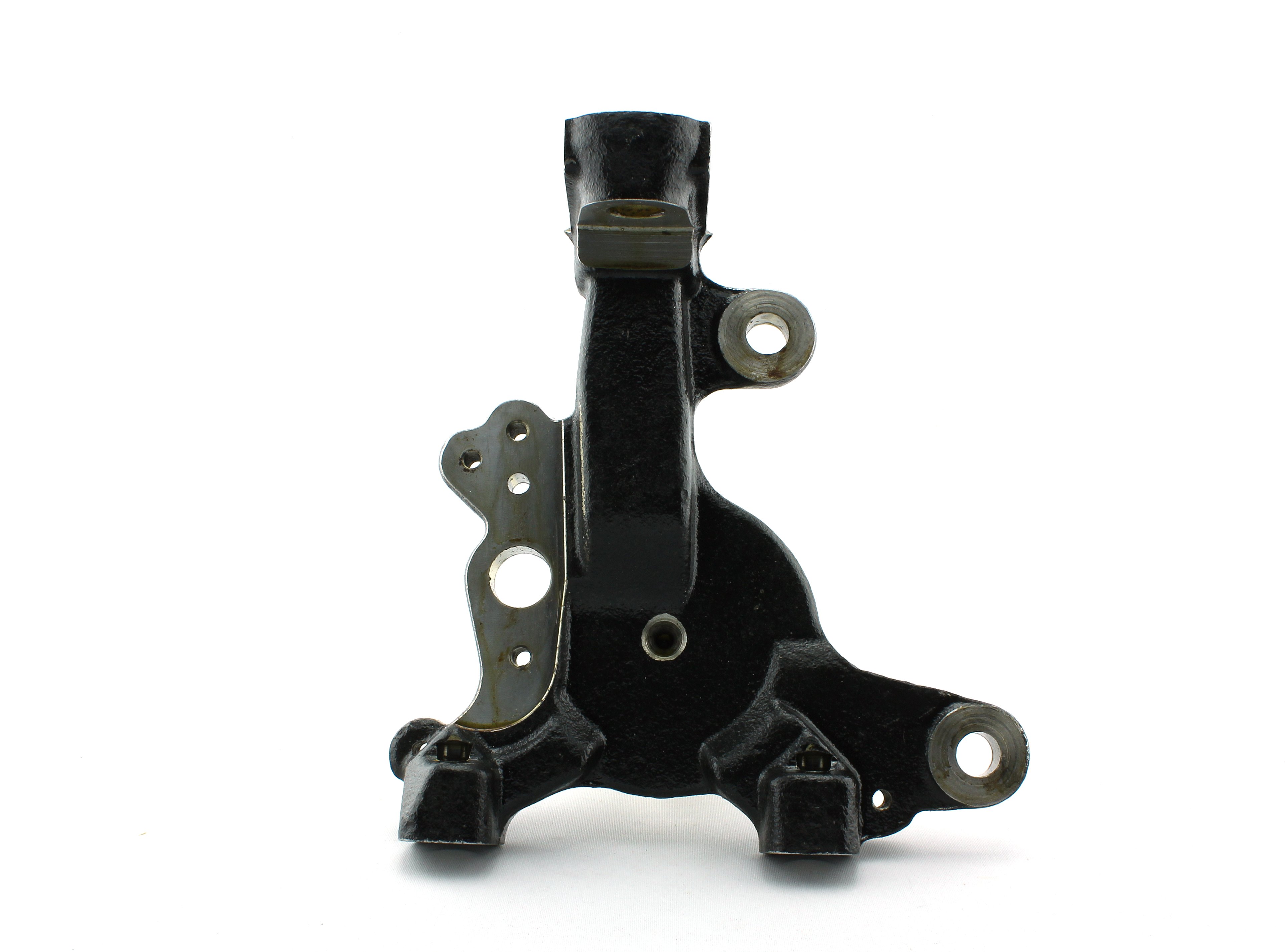
The term 'Knee Assembly' is industry slang for the combination of the steering knuckle, the wheel hub, and the wheel bearing, often sold as a single unit from a recycler. It's the central component that the wheel, brakes, and suspension arms all attach to.
Technical Specifications
OEM Part Numbers: LR010670 LR014147 LR076692 RFD500020 RUB000224 RUB500260 LR048083
Axle Hub Nut Torque: 350 Nm (258 ft-lbs). Wheel Hub to Knuckle Bolt Torque: 115 Nm (85 ft-lbs). Lower Ball Joint Nut Torque: 115 Nm (85 ft-lbs).
We Have This Part in Stock


The information in this article is provided for general reference and educational purposes only. Vehicle specifications, procedures, and part compatibility can vary by production date, trim level, and region. Always consult your vehicle's factory service manual and verify part numbers before purchasing or performing repairs. Safety-critical components such as airbags, seat belts, and braking systems should be installed by a qualified professional.
- Land Rover LR3:
- 🛍️ Shop This Part
- Symptoms of a Failing Front Knee Assembly
- 1. Humming, Roaring, or Grinding Noise
- 2. Clunking or Banging Over Bumps
- 3. ABS, Traction Control, or Suspension Warning Lights
- 4. Steering Wheel Vibration or Looseness
- Buying a Used 2007-2009 LR3 Front Knee Assembly: What to Look For
- Known Issues, TSBs, and Recalls
- Cost Comparison: LR3 Front Knee Assembly
- Related Parts That Commonly Fail at the Same Time
- Installation Tips and Torque Specs
- Frequently Asked Questions (FAQ)
- 🎟️ Get 5% Off