

2007-2009 Toyota Camry Front Bumper Guide: Decoding Japan vs. USA Builds
Before buying a replacement front end assembly for your 2007-2009 Camry, you must verify your vehicle's build location and trim, as key components are not interchangeable.
- You must verify if your Camry is Japan-built (VIN starts with 'J') or USA-built (VIN starts with '1', '4', or '5') as front-end parts are not interchangeable.
- SE models have a different front bumper cover and grille design than CE, LE, and XLE models.
- When buying used, prioritize intact mounting tabs on the bumper cover and avoid any reinforcement bars or energy absorbers that show signs of impact.
- A new bumper cover, whether OEM or aftermarket, will come unpainted and requires professional painting to match your vehicle.
The Japan vs. USA Build: The Most Critical Check

Before purchasing any front end component for a 2007-2009 Toyota Camry, the single most important step is to determine where your vehicle was manufactured. Toyota produced this generation of Camry in both Japan and North America (USA), and many front-end parts are not interchangeable between the two. Using a part from the wrong build location will result in poor fitment, panel gaps, and installation problems.
Pro Tip: Check the first digit of your Vehicle Identification Number (VIN). You can find the VIN on your driver's side door jamb sticker or at the base of the windshield. If the first digit is 'J', your Camry was built in Japan. If it starts with '1', '4', or '5', it was built in North America.
Key components that differ between Japan-built and USA-built models include:
- Bumper Covers: The mounting points and overall shape can have subtle differences. Part listings frequently specify 'USA Built' or 'Japan Built'.
- Bumper Energy Absorbers: The foam or plastic absorber behind the cover is shaped differently.
- Radiator Core Support: The underlying frame that holds the radiator, headlights, and bumper can vary.
- Headlights: While sometimes interchangeable, there can be wiring or mounting differences.
Always confirm your vehicle's origin before ordering parts to avoid costly returns and installation headaches.
Symptoms of Front End Assembly Damage

Unlike mechanical parts that fail internally, damage to the front end assembly is almost always the result of an impact and is typically visible.
- Visible Damage to Bumper Cover: This is the most obvious symptom. Look for cracks, deep scuffs, punctures, or paint that is spider-webbed, which indicates the plastic has been flexed.
- Poor Panel Gaps: Uneven gaps between the bumper cover, fenders, and hood are a clear sign of a past impact or improper repair. This suggests the underlying support structures may be bent.
- Broken or Cracked Grille: The grille is often one of the first parts to break in a minor front-end collision.
- Misaligned or Damaged Headlights: If a headlight is pushed back, angled incorrectly, or has broken mounting tabs, it points to damage to the radiator support it mounts to.
- Rattling or Whistling Noises: A loose bumper cover, undertray, or fender liner can rattle or vibrate at speed. A poor fit can also create air gaps that cause a whistling sound.
Buying a Used 2007-2009 Camry Front End Assembly

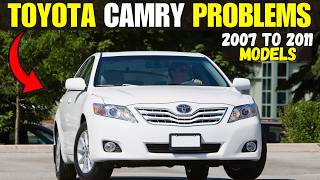
Purchasing a used OEM front end assembly 🎬 See what common issues to check before buying a used Camry can be a smart way to save money while ensuring a perfect fit. However, careful inspection is key.
How to Verify Compatibility
- Confirm Build Location: Use your VIN to determine if you need parts for a Japan-built or USA-built model.
- Match Trim Level: The front bumpers for SE models are different from those for CE, LE, and XLE models. SE models feature a distinct lower grille opening and provisions for fog lights. Hybrid models may also have unique grille designs for better aerodynamics.
- Check Part Numbers: If possible, match the OEM part number from your damaged part to the used one. For example, OEM part number 52119-06919 is a common bumper cover for USA-built models.
What to Inspect on a Used Part
- Bumper Cover: Minor scuffs and scratches are acceptable, as the cover will need to be repainted to match your vehicle anyway. The most important things to check are the mounting tabs. Ensure all tabs, especially those in the corners that attach to the fender, are intact and not torn. Avoid covers with deep gouges, cracks, or previous poor repairs (visible filler or sanding marks).
- Reinforcement Bar (Rebar): This is a critical safety component. Inspect it carefully for any signs of bending, kinking, or heavy rust. A compromised rebar will not protect you or your vehicle properly in another collision. Do not purchase a bent reinforcement bar.
- Energy Absorber: This part is designed to be a one-time use item. If a used assembly includes the foam or honeycomb absorber, inspect it for any signs of compression, cracking, or deformity. If there is any doubt about its condition, it is best to purchase a new one. Part number 52611-06050 is a common absorber for USA-built models.
- Grille and Emblems: Check for cracked slats, broken mounting clips, and heavy pitting or flaking of the chrome or paint.
Warning: Never buy a used energy absorber or reinforcement bar that shows any sign of impact damage. These are one-time-use safety components designed to crush and absorb energy. A previously compressed part offers significantly reduced protection.
Known Issues, Recalls, and Service Bulletins
While there are no recalls for the front bumper assembly itself, the 2007-2009 Camry generation has several relevant issues and recalls.
- NHTSA Recall 12V491000: A massive recall was issued for a faulty power window master switch that could overheat and pose a fire risk. This affects 2007-2009 Camry models.
- NHTSA Investigation (2007-2008 Hybrid): An investigation was opened into the brake system of 2007-2008 Camry Hybrid models for potential loss of braking assist, which could increase stopping distances.
- Melting Dashboard: Many owners of this Camry generation have reported that the dashboard material can become sticky, soft, or melt when exposed to heat and sunlight, causing a distracting glare on the windshield. Toyota had a warranty enhancement program for this, but it has since expired. 🎬 Watch this guide on common 2007–2011 Camry problems and fixes
Cost Comparison
Prices for front end components can vary significantly based on the source. A used OEM bumper cover is often a fraction of the price of a new one from the dealer and typically offers better fitment than a cheap aftermarket alternative. All new bumper covers, whether OEM or aftermarket, come unpainted.
| Part | New OEM (Unpainted) | New Aftermarket (Unpainted) | Used OEM |
|---|---|---|---|
| Front Bumper Cover | $280 - $410 | $100 - $250 | $100 - $200 |
| Energy Absorber | $60 - $95 | $30 - $50 | $25 - $45 |
| Grille Assembly | $150 - $250 | $50 - $100 | $40 - $80 |
| Shop Labor (Bumper Cover R&R) | $200 - $500 | ||
| Professional Painting | $300 - $600 | ||
Frequently Asked Questions (FAQ)
How do I know for sure if my Camry was built in Japan or the USA?
Check the VIN (Vehicle Identification Number) on the driver's side door jamb sticker or on the plate visible through the driver's side of the windshield. If the VIN starts with the letter 'J', it was made in Japan. If it starts with a number like '1', '4', or '5', it was made in North America. This is the most reliable way to determine your car's origin.
Can I install an SE model bumper on my LE or XLE Camry?
Yes, this is a common swap, but it requires more than just the bumper cover. To properly fit an SE bumper on a non-SE model, you will also need the corresponding SE-specific lower grille inserts and potentially different fog lights and brackets. While the main mounting points to the frame are the same, the trim pieces are not interchangeable.
Do used bumper covers come painted?
Yes, a used bumper cover will be the color of the vehicle it came from. However, it is very unlikely to be a perfect match for your car due to slight variations in paint codes and fading over time. For a professional finish, you should plan on having the used bumper cover sanded, prepped, and repainted to match your vehicle's specific paint code.
Is it safe to drive with a cracked bumper cover?
If the damage is purely cosmetic (a small crack or scuff) and the bumper is still securely attached to the car, it is generally safe to drive. However, if the bumper cover is loose, hanging, or has sharp, broken edges, it can become a hazard. A loose bumper could detach at speed, and sharp edges can be dangerous to pedestrians. Furthermore, a cracked cover may hide damage to the underlying energy absorber and reinforcement bar, which are critical for safety.
Helpful Videos
Technical Specifications
OEM Part Numbers: 52119-06919 52119-33943 52119-06921 52611-06050 52021-06040 52021-06041 52535-06030 52536-06020 52611-33160 53101-06070 53101-06080-A0 53101-33210
Compatibility is determined by the vehicle's manufacturing origin (Japan or USA, checked via VIN) and trim level (SE vs. non-SE).
We Have This Part in Stock


The information in this article is provided for general reference and educational purposes only. Vehicle specifications, procedures, and part compatibility can vary by production date, trim level, and region. Always consult your vehicle's factory service manual and verify part numbers before purchasing or performing repairs. Safety-critical components such as airbags, seat belts, and braking systems should be installed by a qualified professional.
- Toyota Camry:
- 🎬 Helpful Videos
- 🛍️ Shop This Part
- The Japan vs. USA Build: The Most Critical Check
- Symptoms of Front End Assembly Damage
- Buying a Used 2007-2009 Camry Front End Assembly
- How to Verify Compatibility
- What to Inspect on a Used Part
- Known Issues, Recalls, and Service Bulletins
- Cost Comparison
- Frequently Asked Questions (FAQ)
- 🎟️ Get 5% Off