

2019-2022 Nissan Altima Front End: Navigating Headlights, Cameras, and Sensors
This guide covers the critical compatibility points—from LED headlights to radar sensors—when repairing or replacing the front end assembly on your 2019-2022 Nissan Altima.
- Compatibility is critical: You must match the headlight type (Halogen vs. LED) and check for the presence of a front camera, fog lights, and parking sensors.
- Sensor recalibration is mandatory after replacement. Failure to recalibrate the front radar and camera systems after installation creates a significant safety risk.
- A used OEM assembly is often superior to new aftermarket parts in terms of fitment and proper mounting for sensitive sensors.
- Inspect all mounting tabs on used parts. Broken tabs on headlights or the bumper cover will result in poor alignment and are a common issue with salvaged parts.
Symptoms of a Damaged Front End Assembly

Failure of a front end assembly is almost always due to a collision. The symptoms are often visible but can also be electronic. Look for these common signs of damage:
- Visible Damage: This is the most obvious sign, including cracked bumper covers, a broken grille, shattered headlights, or a bent radiator support.
- Panel Misalignment: After an impact, you may notice uneven gaps between the bumper, fenders, and hood. This indicates that the underlying support structure or mounting tabs are bent or broken.
- Headlight and Fog Light Issues: Damaged headlights may be dim, aimed incorrectly, flicker, or accumulate moisture inside the housing. Broken mounting tabs can cause the entire headlight to vibrate while driving.
- Warning Lights and Sensor Errors: A key symptom on modern Altimas is the appearance of dashboard warning lights. A slight bump can misalign the forward radar sensor, often located behind the Nissan emblem, triggering a "Front Radar Obstruction" or "Automatic Emergency Braking (AEB) Warning Light" message. Damage to the front camera or its wiring can disable the 360-degree view system.
- Wind Noise: Poorly fitted bumper covers or splash shields can create unusual wind noise at highway speeds.
Known Issues, Recalls, and Technical Service Bulletins (TSBs)

While the front end assembly itself isn't typically recalled, its integrated components are subject to service campaigns and safety notices.
- Forward Emergency Braking (FEB) System Issues: Numerous owners have reported issues with the FEB system, sometimes called "phantom braking," where the car brakes suddenly with no obstacle present. This has been the subject of class-action lawsuits and is often related to the front radar sensor's calibration or function. A blinking AEB light can also be caused by a dirty windshield blocking the lane camera.
- Recall for Rearview Camera: NHTSA recall 21V-484 addresses an issue where damage to the camera harness can cause a distorted or lost rearview image on 2019-2021 Altimas. While this is a rear camera, it highlights the sensitivity of the vehicle's camera systems.
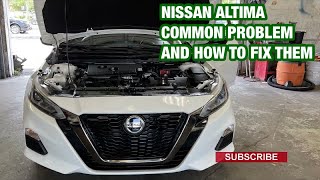
- TSB for Vehicle Pull/Drift: Nissan issued TSB NTB08-097L for diagnosing vehicle pull or an off-center steering wheel 🎬 Watch this guide on diagnosing common Nissan Altima problems, which can be a symptom following a front-end impact that affects alignment.
- TSB for AEB Warning Light: TSB NTB19-042F provides diagnostic guidance for a blinking AEB warning light when no diagnostic trouble codes are stored, often pointing to sensor obstruction.
Warning: Any collision, even a minor one, can misalign the forward radar and camera systems. These systems require professional recalibration to ensure safety features like Automatic Emergency Braking and Intelligent Cruise Control function correctly.
Buying a Used 2019-2022 Altima Front End Assembly: A Buyer's Checklist


Purchasing a used OEM front end assembly is a smart way to save money, but careful inspection is critical due to the many variations. Use this checklist to ensure you get the right parts.
1. Verify Headlight Type: Halogen vs. LED
This is the most common and costly compatibility mistake. Higher trims (like SL and Platinum) came with full LED headlights, while lower trims (like S and SV) used halogen bulbs in projector housings.
- Visual Check: LED headlights often have more complex internal structures and a different Daytime Running Light (DRL) signature compared to the simpler halogen units.
- Part Numbers: Check the numbers on the headlight housings. For example, part number 26010-6CA5B is for a right-hand LED headlamp.
- Connectors: The electrical plugs are different. Always compare the plugs on the used assembly to your vehicle's wiring harness before purchase.
2. Inspect the Grille: With or Without Front Camera
The Intelligent Around View® Monitor (360-degree camera system) was standard on Platinum and optional on other trims. This system includes a small camera mounted in the front grille, typically just below the Nissan emblem.
- Look for the Lens: Inspect the grille for a small, square cutout and the camera lens itself.
- Match Part Numbers: Bumper covers and grilles have different part numbers for camera-equipped models. For example, 62022-6CG0H is a bumper cover for models with a front camera.
3. Check the Bumper Cover: Fog Lights and Parking Sensors
SR and Platinum trims often included factory fog lights. Parking sensors (sonar) were also available on higher trims.
- Look for Cutouts: The bumper cover must have the correct openings and mounting points for fog lights and the small, circular parking sensors.
- Verify Wiring: Ensure the used assembly includes the necessary wiring pigtails for these features if your car has them.
4. Examine for Hidden Damage
- Mounting Tabs: Check every mounting tab on the headlights, grille, and bumper cover. Broken tabs are a major red flag and will lead to poor fitment.
- Radiator Support: Inspect the core support for any signs of cracks, bends, or previous repairs. A bent support will prevent all other panels from aligning correctly.
- Previous Repairs: Look for signs of body filler (Bondo), mismatched paint, or excessive overspray on the back of the parts, which indicate a low-quality previous repair.
Pro Tip: When possible, buy a complete assembly from a single donor vehicle. This greatly increases the chance that all components, brackets, and wiring harnesses will be compatible.
Cost of Replacement (2019-2022 Nissan Altima)
The cost to replace a front end assembly varies widely based on the components needed and the trim level of the vehicle. A complete assembly includes the bumper cover, grille, absorbers, and both headlights.
| Part / Service | Estimated Cost |
|---|---|
| New OEM Assembly (LED, with camera) | $2,500 - $4,000+ |
| New OEM Assembly (Halogen, no camera) | $1,500 - $2,500 |
| New Aftermarket Assembly | $800 - $1,800 |
| Used OEM Assembly | $700 - $2,000 |
| Shop Labor (Installation) | $400 - $800 |
| ADAS Sensor Recalibration | $250 - $800 |
Note: Individual component prices can vary. A single new OEM LED headlight assembly can cost over $900, and a new OEM bumper cover is around $400-$500. Labor costs do not include painting the new bumper cover.
Installation Overview & Difficulty
- Difficulty Rating: 4 out of 5 (Professional installation highly recommended)
- Estimated Time: 4-6 hours for removal and replacement, plus time for painting and sensor calibration.
Replacing the front end assembly is a complex job. The general steps involve:
- Disconnecting the battery.
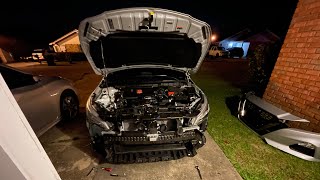
- Removing plastic clips and bolts from the top of the bumper, inside the wheel wells, and underneath the vehicle. 🎬 Watch this step-by-step video on removing the front bumper
- Carefully disconnecting all electrical connectors for lights and sensors.
- Removing the bumper cover, followed by the grille and headlights.
- If the radiator support is damaged, it must be unbolted from the frame rails, which is a major structural job.
- Installation is the reverse of removal, paying close attention to panel alignment.
Crucially, after installation, the vehicle MUST undergo ADAS recalibration. The forward radar and lane camera must be precisely aimed using specialized targets and software to ensure they function correctly. Failure to do so can result in faulty collision warnings and create a serious safety hazard.
Frequently Asked Questions (FAQ)
Do I have to recalibrate the front radar sensor after replacing the bumper?
Yes, absolutely. Any work on the front bumper or grille, even just removing and reinstalling it, can affect the radar sensor's alignment. Professional calibration is required to ensure the Automatic Emergency Braking and Intelligent Cruise Control systems work safely. Costs for this service typically range from $250 to $450.
Can I upgrade my Altima from halogen to factory LED headlights?
This is a complex and expensive conversion. It is not a simple plug-and-play swap. The wiring harnesses are different, and the Body Control Module (BCM) may need to be reprogrammed to control the LED headlights correctly. Some LED models also have an auto-leveling feature that base models lack. It is generally more practical to stick with the headlight type your car was built with.
Why are there so many different part numbers for the same headlight?
Part numbers vary based on several factors: left or right side, halogen or LED type, and whether the headlight has auto-leveling features. Nissan may also issue updated part numbers (supersessions) over the years to reflect minor manufacturing changes. Always verify the part number against your vehicle's VIN with a dealership or trusted parts supplier.
Is a used OEM bumper cover better than a new aftermarket one?
For this vehicle, a used OEM bumper is often the better choice. OEM parts guarantee correct fitment, especially around complex headlight shapes and sensor mounts. Aftermarket bumpers can have issues with material thickness, flexibility, and precise mounting points for parking sensors and the radar bracket, potentially complicating installation and ADAS calibration.
Helpful Videos
Technical Specifications
OEM Part Numbers: 26010-6CA0A 26010-6CA0B 26010-6CA5A 26010-6CA5B 26010-6CA6A 26060-6CA0A 26060-6CA0B 26060-6CA5A 26060-6CA5B 26060-6CA6A 26130-6CA0A 26135-6CA0A 62022-6CA0H 62022-6CG0H
Varies by trim. Key distinctions are Halogen (H11 low beam, 9005 high beam) vs. full LED headlights, and presence of front camera for Intelligent Around View® Monitor.
We Have This Part in Stock


The information in this article is provided for general reference and educational purposes only. Vehicle specifications, procedures, and part compatibility can vary by production date, trim level, and region. Always consult your vehicle's factory service manual and verify part numbers before purchasing or performing repairs. Safety-critical components such as airbags, seat belts, and braking systems should be installed by a qualified professional.
- Nissan Altima:
- 🎬 Helpful Videos
- 🛍️ Shop This Part
- Symptoms of a Damaged Front End Assembly
- Known Issues, Recalls, and Technical Service Bulletins (TSBs)
- Buying a Used 2019-2022 Altima Front End Assembly: A Buyer's Checklist
- 1. Verify Headlight Type: Halogen vs. LED
- 2. Inspect the Grille: With or Without Front Camera
- 3. Check the Bumper Cover: Fog Lights and Parking Sensors
- 4. Examine for Hidden Damage
- Cost of Replacement (2019-2022 Nissan Altima)
- Installation Overview & Difficulty
- Frequently Asked Questions (FAQ)
- 🎟️ Get 5% Off