

2020-2025 Audi Q7 Front End: A Guide to S-Line, Sensors, and Collision Repair
This guide details the critical differences in front end assemblies for the 2020-2025 Audi Q7, focusing on trim packages and sensor compatibility for collision repair.
- Compatibility is critical: You must match the assembly to your vehicle's trim (S-Line vs. Base) and sensor options (Adaptive Cruise, Parking Assist).
- Post-replacement ADAS calibration is mandatory. Skipping this step can disable crucial safety features like automatic emergency braking.
- A 'Front End Assembly' is a collection of parts. Verify if the bumper cover, grille, lower valances, and impact absorber are all included in a used purchase.
- A used OEM assembly is often a better choice than a new aftermarket one due to guaranteed fitment and sensor placement accuracy.
Symptoms of a Damaged Front End Assembly

Damage to the front end assembly is almost always the result of a collision. Beyond obvious cosmetic issues, there are several functional symptoms to watch for.
- Visible Damage: This includes cracks, deep scratches, or punctures in the bumper cover, a broken grille, or cracked headlight lenses. After even a minor impact, check for broken mounting tabs on the backside of the bumper and grille, as these are critical for proper fitment.
- Poor Panel Alignment: Uneven gaps between the bumper, fenders, and hood are a clear sign of a bent frame or, more commonly, broken or improperly installed mounting brackets.
- Warning Lights: A collision can easily damage the sensitive electronics housed in the front end. Look for dashboard warnings related to 'Audi pre sense', 'Adaptive cruise assist', or 'Lane assist'. These indicate a problem with the radar sensors or front camera, which may require recalibration or replacement.
- Headlight Malfunctions: If headlights are dim, flickering, or aimed incorrectly, the impact may have damaged the housing, bulbs, or internal leveling motors. Error messages related to the headlight system may also appear.
Buying a Used 2020-2025 Audi Q7 Front End Assembly: A Buyer's Checklist


Purchasing a used front end assembly is an excellent way to save money, but for the 2020-2025 Q7, it's a process filled with potential compatibility traps. The difference between a perfect fit and an expensive mistake comes down to the details of your specific vehicle's options.
Step 1: The S-Line vs. Base/Premium Trap
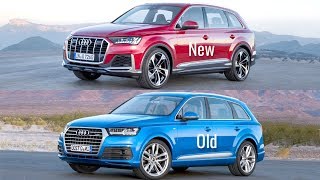
The most significant variation is between the standard (Premium/Premium Plus) front end and the S-Line/SQ7 package. 🎬 Watch: Compare the updated 2020 Audi Q7 exterior styling changes They are not interchangeable without extensive modification.
- Standard Bumper: Features more traditional horizontal lines in the lower air inlets.
- S-Line/SQ7 Bumper: Has a more aggressive design with a distinct 'blade' element in the front bumper and a different lower valance. The grille style, often a honeycomb pattern on SQ7 models, also differs.
Pro Tip: Before you buy, get your vehicle's VIN and confirm its original trim package. Do not rely on visual memory alone. An S-Line bumper will not fit a base model's mounting points or fender lines correctly, and vice-versa.
Step 2: Sensor and Technology Package Verification
The Q7's front end is a hub for its driver-assistance systems. The bumper and grille must have the correct provisions for the sensors your vehicle is equipped with.
- Adaptive Cruise Control (ACC): Vehicles with ACC have one or two large radar sensors mounted behind the grille. The grille itself will have specific cutouts or a compatible design to allow the radar to function. A grille from a non-ACC car will block the sensors.
- Lane Keep Assist / Audi Pre Sense: This system primarily uses a camera mounted high on the windshield, but it works in conjunction with the front radar sensors. A recall was issued for some 2020 models where the front camera heating element could overheat, posing a fire risk.
- Parking Sensors: Most Q7s have small, circular ultrasonic parking sensors embedded in the bumper cover. Ensure the replacement bumper has the correct number of holes in the correct locations. A bumper without these holes cannot be easily modified.
Warning: Never buy a front bumper or grille without confirming the sensor options. A part without the correct cutouts for ACC or parking sensors is the wrong part, even if it looks identical otherwise.
Step 3: Headlight Technology (LED vs. Matrix LED)
The 2020-2025 Q7 was available with different tiers of headlight technology. While they may look similar, their internal components and wiring are different.
- Standard LED: The base headlight option.
- HD Matrix-Design LED: An upgraded option with more advanced adaptive lighting capabilities.
- HD Matrix-Design LED with Laser Light: The top-tier option, identifiable by a blue accent element inside the housing.
When buying a complete front end, ensure the headlights match your car's original specification to avoid compatibility issues and error codes.
Step 4: Physical Inspection of the Used Assembly
- Check All Tabs: Carefully inspect the back of the bumper and grille for broken or repaired mounting tabs. These are essential for a secure, rattle-free fit.
- Look for Hidden Cracks: Flex the bumper cover slightly to reveal any hairline cracks that may have been painted over. Pay close attention to corners and areas around sensor mounts.
- Verify Completeness: A 'front end assembly' can mean different things to different sellers. Confirm exactly what is included: the main bumper cover, the center grille, lower grilles, impact absorber (the foam or plastic piece behind the cover), and any necessary brackets.
- Why Used OEM is a Smart Choice: For a vehicle like the Q7, a used Original Equipment Manufacturer (OEM) assembly is often superior to a new aftermarket part. Used OEM parts guarantee perfect fitment, proper material thickness, and correct sensor placement, which is not always the case with cheaper aftermarket copies.
Known Issues, Recalls, and Technical Service Bulletins (TSBs)
While there are no recalls for the front end assembly as a whole, several relate to components housed within it:
- Recall 90N7 (NHTSA 23V-212): Affects some 2020 Q7 models. An incompatibility between the front camera software and its heating element could cause overheating, increasing the risk of a fire. The fix involves a software update and heater element replacement.
- Recall 90TV (NHTSA 25V-900): A software error can prevent the rearview camera image from displaying, which is part of the broader camera system.
- TSB A9023492071958_1: Addresses a condition where the instrument cluster may display faults for 'Audi adaptive light', 'Audi pre sense', and 'Audi cruise assist'. This can be related to sensor issues in the front of the vehicle.
Cost of Replacing a 2020-2025 Audi Q7 Front End Assembly
Costs can vary significantly based on the components needed and your vehicle's specific options. The following is an estimated breakdown for key parts.
| Part | New OEM Price | New Aftermarket Price | Used OEM Price |
|---|---|---|---|
| Front Bumper Cover (Primed) | $1,100 - $1,700 | $200 - $1,200 | $400 - $900 |
| Front Grille (varies by ACC) | $1,100 - $1,850 | $250 - $600 | $220 - $550 |
| LED Headlight Assembly (One) | $1,900 - $3,000+ | $550 - $1,200 | $750 - $1,500 |
| Shop Labor (Installation & Paint) | $800 - $1,500 (Does not include calibration) | ||
| ADAS Calibration | $600 - $1,000+ | ||
Installation and Calibration

Warning: Replacing the front bumper on a 2020-2025 Audi Q7 requires mandatory ADAS calibration. Failure to do so can result in the failure of safety systems like automatic emergency braking and adaptive cruise control.
Installation involves removing the wheels and fender liners to access bolts, disconnecting multiple sensor harnesses, and carefully transferring components. 🎬 Watch: Step-by-step DIY guide to removing the front bumper However, the most critical step is what happens after the new bumper is on.
Any time the front bumper is removed or replaced, or if the vehicle is in a collision, the forward-facing radar sensors for the Adaptive Cruise Control and Audi Pre Sense systems must be professionally recalibrated. This procedure requires specialized equipment to align the sensors precisely. Many body shops send the vehicle to an Audi dealer for this final step. A four-wheel alignment is often required as part of the calibration process.
Frequently Asked Questions (FAQ)
Can I upgrade my base Q7 to an S-Line or SQ7 front end?
It is not a direct swap. It requires the S-Line/SQ7 specific bumper, grille, and potentially other mounting brackets and fender liners to align correctly. While possible, it is a complex and expensive conversion.
Do I need to paint a used front bumper assembly?
Almost always, yes. Even if you find a bumper in the same color, there will likely be minor color variations due to sun exposure and different paint batches. For a perfect match, a professional body shop will need to paint and blend the new panel into the adjacent fenders and hood.
What does ADAS calibration involve and why is it necessary?
ADAS calibration involves using specialized targets and diagnostic tools to precisely aim the vehicle's radar and camera sensors. After a bumper replacement, the angle of the radar sensors can be off by a fraction of a degree, which can cause the system to misjudge distances to other cars, leading to false warnings or, worse, failure to brake in an emergency. It is a critical safety procedure.
Will a used front end assembly void my car's warranty?
No, installing a used OEM part will not void your entire vehicle warranty. However, if that specific used part fails or causes a failure in a related system, the repair for that issue would not be covered by the manufacturer's warranty. The rest of the vehicle's warranty remains intact.
Helpful Videos

Technical Specifications
OEM Part Numbers: 4M0-805-594-C 4M0-805-594-F 4M0-807-065-AA-GRU 4M0805594D 4M0805594F 4M0807065AA 4M0807065AAGRU 4M0807065ABGRU 4M0807065AD 4M0807065ADGRU 4M0807065Q 4M0807065QGRU 4M0807065R 4M0807065RGRU 4M0807065TGRU 4M0853651AJ
The front end assembly consists of multiple components. Key variations depend on trim package (S-Line or non-S-Line) and the presence of sensors for Parking Assist, Adaptive Cruise Control (ACC), and different headlight technologies (Standard LED, Matrix LED, Laser Light).

The information in this article is provided for general reference and educational purposes only. Vehicle specifications, procedures, and part compatibility can vary by production date, trim level, and region. Always consult your vehicle's factory service manual and verify part numbers before purchasing or performing repairs. Safety-critical components such as airbags, seat belts, and braking systems should be installed by a qualified professional.
- Audi Q7:
- 🎬 Helpful Videos
- Symptoms of a Damaged Front End Assembly
- Buying a Used 2020-2025 Audi Q7 Front End Assembly: A Buyer's Checklist
- Step 1: The S-Line vs. Base/Premium Trap
- Step 2: Sensor and Technology Package Verification
- Step 3: Headlight Technology (LED vs. Matrix LED)
- Step 4: Physical Inspection of the Used Assembly
- Known Issues, Recalls, and Technical Service Bulletins (TSBs)
- Cost of Replacing a 2020-2025 Audi Q7 Front End Assembly
- Installation and Calibration
- Frequently Asked Questions (FAQ)
- 🎟️ Get 5% Off