

1994 Ford Bronco Frame: Inspecting for Rust and Mid-Year Design Changes
This guide details common rust-prone areas, how to identify the correct frame horn style for your build date, and what to inspect on a used frame.
- The 1994 model year is a transitional period for the front frame horn design; you must verify the style on a donor frame matches your vehicle to ensure bumper compatibility.
- Rust is the number one killer of these frames. Thoroughly inspect for corrosion at the rear spring hangers, shock mounts, radius arm mounts, and the frame section over the rear axle.
- Frame replacement is an expert-level job requiring a full body-off procedure and is not recommended for DIY mechanics.
- A bent or improperly repaired frame is a critical safety hazard that can cause irreversible alignment problems and unpredictable handling.
Symptoms of a Failing Frame

A compromised frame on a 1994 Bronco is a critical safety issue. Look for these common signs of failure:
- Visible Rust and Corrosion: Surface rust is common, but deep, flaky, or perforated rust is a major red flag. Pay close attention to the areas listed in the inspection guide below, as rust often starts from the inside out on these boxed frames.
- Visible Cracks or Bends: Inspect the entire length of the frame rails. Any visible bowing, twisting, or cracking, especially near suspension mounts or welded joints, indicates serious damage.
- Poor Body Panel Alignment: If the gaps between the doors, fenders, and tailgate are uneven, it can be a sign that the frame is bent or sagging, twisting the body along with it.
- Unusual Noises: Creaking, groaning, or popping sounds when turning, going over bumps, or flexing the suspension can point to a weakened or cracked frame.
- Steering and Alignment Problems: A vehicle that constantly pulls to one side, wanders on the road, or shows uneven tire wear despite proper alignments may have a bent frame altering its suspension geometry.
Warning: The 1994 model year was a transition period for the front frame horn design due to the introduction of front crumple zones. Early 1994 models may have the older 1992-1993 style, while later models have the updated 1994-1996 design. This affects bumper and bracket compatibility. Always verify the style on the donor vehicle matches your own.
Buying a Used 1994 Bronco Frame: A Step-by-Step Inspection Guide


Due to the high cost and difficulty of frame replacement, inspecting a used frame thoroughly is essential. A used OEM frame from a dry climate is often the best choice, as new frames are no longer available from Ford and aftermarket options are expensive and typically for custom builds.
Inspection Checklist:
- Check Critical Rust Areas: These trucks are known to rust in specific spots. Bring a flashlight and a hammer or screwdriver to tap on suspicious areas.
- Rear Leaf Spring Hangers and Shackles: This is one of the most common failure points. Check where the springs mount to the frame.
- Shock Mounts: Inspect both front and rear shock towers for rust and cracks. The front driver's side coil bucket is a known problem area.
- Radius Arm Mounts: Check the large brackets on the side of the frame where the front radius arms attach.
- Frame Over Rear Axle: The section that arches over the rear axle can trap moisture and rust out.
- Body Mounts: Inspect all points where the body bolts to the frame for corrosion.
- Look for Bends and Cracks: Sight down the length of each frame rail from front to back. They should be perfectly straight. Look for ripples in the steel, which indicate a past impact. Pay extra attention to crossmembers and all welded joints.
- Identify Past Repairs: Look for any non-factory welds, patches, or plates. While a professional repair can be acceptable, poorly executed weld jobs can create new weak points. Be wary of fresh undercoating or paint that might be hiding damage.
- Verify Front Frame Horns: As mentioned, 1994 is a split year. Compare the front horns—the extensions that hold the bumper—to your existing frame. Look at the hole patterns and bracket shapes to ensure compatibility.
- Check the VIN Stamp: The Vehicle Identification Number (VIN) is stamped on the frame, typically on the passenger-side rail in the engine bay. Ensure this is present and legible, as it can be important for registration purposes.
Known Issues, Recalls, and Technical Service Bulletins (TSBs)

While there are no recalls specifically for the frame itself on the 1994 Bronco, several related recalls and common issues are important to be aware of.
- NHTSA Recall 94V018000: Concerns fracturing U-clip nuts that could cause the rear bumper to detach from the frame. This highlights the importance of inspecting the rear frame horns where the bumper attaches.
- NHTSA Recall 94V169001: Related to the parking brake system, which relies on frame-mounted components.
- NHTSA Recall 05V388000: A widespread recall for a faulty speed control deactivation switch that could leak and cause a fire. While not a frame issue, it's a critical safety check for any 1994 Bronco.
- Common Rust Issues: Beyond recalls, general frame rust is the most significant known issue for these vehicles, often starting from the inside of the boxed frame rails.
No frame-specific Technical Service Bulletins (TSBs) were issued for the 1994 model year. TSBs for later model Broncos often address issues like frame bracket cracks, but these do not apply to the 1994 generation.
Frame Replacement Cost & Difficulty
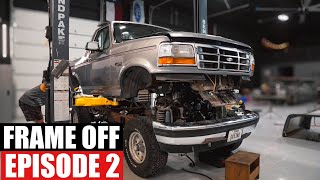
Replacing the frame on a 1994 Bronco is a massive undertaking, rated at the highest difficulty level. It is a frame-off restoration that requires separating the body from the chassis 🎬 Watch this video on pulling a 1994 Bronco frame and transferring the entire drivetrain, suspension, and all other components to the new frame. This job is not feasible for a typical DIY mechanic and requires a professional shop with a vehicle lift and extensive experience.
| Item | Estimated Cost |
|---|---|
| New OEM Frame | Discontinued/Not Available |
| New Aftermarket Frame | $4,500 - $5,500+ (Typically for custom/restoration builds) |
| Used OEM Frame | $500 - $1,500 (Varies by condition and location) |
| Shop Labor for Replacement | $6,000 - $12,000+ (Estimated 40-80 hours) |
Pro Tip: When sourcing a used frame, consider purchasing from a dry, salt-free state (like Arizona or California) to minimize the risk of severe rust. The extra shipping cost is often less than the cost of repairing a rusty frame.
Frequently Asked Questions (FAQ)
Can I repair a rusted or cracked frame instead of replacing it?
Minor surface rust can be removed and treated. Small sections of perforated rust can sometimes be cut out and replaced with new metal by a professional fabricator. However, if the rust is widespread or if there are significant cracks in critical areas, replacement is the only safe option. Sectional repairs must be done by a highly skilled professional to maintain structural integrity.
How do I tell the difference between early and late 1994 frame horns?
The primary difference is in the design for the front crumple zones. You will need to visually compare the front-most section of the frame where the bumper mounts. Look for differences in the number and location of mounting holes and the shape of the frame end caps. The safest method is to take detailed photos of your current frame's horns and compare them directly to the potential replacement.
Will a frame from a Ford F-150 fit my 1994 Bronco?
No. While the Bronco is based on the F-Series platform, its frame is significantly shorter due to the 104.7-inch wheelbase. You must use a frame specifically from a 1992-1996 Bronco for proper fitment of the body, suspension, and other components.
Does a used frame come with a title or VIN?
A used frame will have the VIN from the donor vehicle stamped on it. It does not typically come with a title. It is crucial to check your state's laws regarding frame swaps. Some states may require an inspection and may assign a new state-issued VIN to the vehicle after the swap. Always consult your local DMV before beginning this process.
Helpful Videos
Technical Specifications
OEM Part Numbers: F4TZ-5005-AA F4TZ5005AA
Wheelbase: 104.7 inches Platform: Based on Ford F-Series truck chassis Suspension Design: Twin-Traction Beam (TTB) front, leaf spring rear

The information in this article is provided for general reference and educational purposes only. Vehicle specifications, procedures, and part compatibility can vary by production date, trim level, and region. Always consult your vehicle's factory service manual and verify part numbers before purchasing or performing repairs. Safety-critical components such as airbags, seat belts, and braking systems should be installed by a qualified professional.
- Ford Bronco: