

2019-2023 Audi Q8 Fender Splash Shield: Noise, Damage, and Replacement Guide
Learn to diagnose a damaged or noisy fender liner on your Audi Q8 and see why a used OEM part is often a smarter choice than a cheap aftermarket alternative.
- The fender shield for a standard Audi Q8 will NOT fit the SQ8 or RS Q8 models due to differences in body width.
- The most common symptoms of failure are scraping or flapping noises caused by physical damage from road impacts.
- A used OEM part is highly recommended over a new aftermarket part, as it guarantees correct fitment and material quality, avoiding common noise and rubbing issues.
- Replacement is a simple DIY job for most owners, requiring basic hand tools and about an hour per side.
Symptoms of a Failing Fender Splash Shield
Failures of the fender splash shield are almost always due to physical damage from hitting curbs, large potholes, road debris, or ice buildup in winter. The symptoms are typically easy to hear and see.
- Scraping or Rubbing Noises: This is the most common symptom. A loose or torn section of the liner makes contact with the tire, creating a scraping sound, especially when turning or going over bumps.
- Flapping Sounds at Highway Speeds: If a piece of the liner breaks away from its mounting points, it will flap loudly in the wind, creating a distracting noise.
- Visible Damage or Sagging: You may be able to see that the liner is cracked, has holes in it, or is hanging down and out of position. In some cases, it may be missing entirely.
- Excessive Debris in Engine Bay: If you notice an unusual amount of dirt, leaves, or grime under the hood, it could be a sign that the liner is compromised and no longer sealing the wheel well properly.
Critical Fitment Warning: The fender splash shields for the standard Audi Q8 are NOT compatible with the high-performance SQ8 or RS Q8 models. These models have wider bodywork and different bumper designs that require uniquely shaped liners. Attempting to install a standard Q8 liner on an SQ8 or RS Q8 will result in poor fitment, gaps, and tire rubbing. Always verify the part number for your specific vehicle.
Known Issues, TSBs, and Recalls
As of mid-2026, there are no specific recalls or widespread Technical Service Bulletins (TSBs) from the National Highway Traffic Safety Administration (NHTSA) for fender splash shield failures on the 2019-2023 Audi Q8. Failures are typically isolated incidents of physical damage rather than a manufacturing or design defect. While other recalls exist for the Q8, none pertain to the fender liners.
However, Audi did issue TSB 2064998 for the related outer wheel arch trim on 2019-2021 Q8, SQ8, and RS Q8 models. This bulletin addresses the painted trim piece on the rear door becoming loose or detaching. If you have loose trim in this area, it is a separate issue from the inner fender liner.
Buying a Used Fender Splash Shield: What to Check
A used OEM fender shield is often an excellent value, providing the same quality and fit as a new part for a fraction of the price. However, a careful inspection is essential before buying.
Physical Inspection Checklist
- Verify All Mounting Points: This is the most important step. Carefully inspect every mounting hole and tab around the edge of the liner. Reject any part with cracked, broken, or elongated holes, as it will not install securely and will eventually come loose.
- Check the Part Number: Locate the OEM part number sticker or stamp on the part itself. Confirm it matches the required number for your vehicle's model (Q8), year, and side (left or right). Do not rely on visual appearance alone.
- Inspect for Cracks and Tears: Look for any major cracks, splits, or holes in the main body of the liner. While minor scuffs are normal, significant damage compromises its ability to protect the vehicle.
- Look for Brittleness: The plastic should still have some flexibility. If it feels excessively brittle or is faded from sun exposure, it may crack easily during installation or use.
Why Used OEM is a Smart Buy
For a part like a fender shield, choosing a quality used OEM part is almost always better than a new aftermarket one. New aftermarket liners are cheaper but are often made from thinner, flimsier plastic that doesn't fit correctly. This poor fit can lead to misaligned mounting holes, gaps that let in debris, and the same rubbing or flapping noises you were trying to fix. A used OEM part guarantees the correct material durability and a perfect fit, just as the factory intended.
Replacement Guide
Replacing a fender splash shield is a straightforward job that most DIYers can handle with basic tools.
- Installation Difficulty: 2 out of 5
- Estimated Time: 0.75 - 1.5 hours
- Tools Required: Jack and jack stands, lug wrench, Torx driver set (commonly T25), trim clip removal tool or flathead screwdriver. 🎬 Watch: How to remove Audi wheel arch lining clips
Step-by-Step Process
- Safely jack up the vehicle and support it with a jack stand.
- Remove the wheel on the side you are working on.
- Locate and remove all the Torx screws and plastic push-clips that secure the liner to the fender, bumper, and chassis.
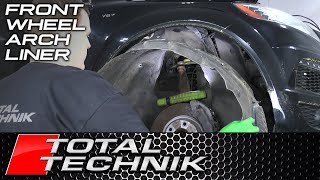
- Carefully pull the old, damaged liner out of the wheel well. 🎬 See this Audi wheel arch liner removal walkthrough
- Maneuver the new liner into position, ensuring all mounting holes line up correctly.
- Install all screws and clips to secure the new liner. Do not overtighten.
- Reinstall the wheel, lower the vehicle, and torque the lug nuts to the manufacturer's specification.
Cost Comparison: New vs. Used vs. Aftermarket
| Part Source | Estimated Cost (Per Side) | Notes |
|---|---|---|
| New OEM | $200 - $310 | Guarantees perfect fit and material quality, but is the most expensive option. |
| New Aftermarket | $40 - $100 | Not recommended. Often made from flimsy material with poor fitment that can cause rubbing and noise issues. |
| Used OEM | $75 - $200 | The recommended choice. Offers OEM quality and fit at a significant discount. |
| Shop Labor | $100 - $200 | Typically billed as 0.75-1.0 hour of labor. |
OEM Part Numbers
Part numbers are frequently updated by the manufacturer. The original part is superseded by newer versions. The numbers below are for reference; always confirm the exact part number for your vehicle's VIN. The part is side-specific.
- Front Right (Passenger Side): 4M8810172K (replaces 4M8810172D, 4M8810172B)
- Front Left (Driver Side): The corresponding left-side part number is 4M8810171K (and its earlier revisions).
Note: Some parts diagrams may use a different prefix, such as 4M8-821-172-K for the front right liner. Always verify with a dealer or trusted parts supplier.
Frequently Asked Questions (FAQ)
Can I drive with a broken or missing fender splash shield?
Yes, but it's not recommended for long. A loose liner can rub against the tire, causing premature wear or damage. If it detaches at speed, it can become a dangerous road hazard. A missing liner exposes the chassis, wiring, and engine components to water and debris, which can lead to rust and more expensive electrical problems over time.
Is the fender liner for the standard Q8 the same as for the SQ8 or RS Q8?
No, they are not interchangeable. The SQ8 and RS Q8 have wider bodies and different aerodynamics, requiring a different part. You must use the specific part number for your exact model to ensure proper fit.
Is replacing a fender liner a difficult DIY job?
No, this is considered an easy DIY task for someone with basic tools. The process involves removing the wheel and a series of screws and clips. It typically takes less than an hour per side.
🎬 Watch: Step-by-step guide to replacing a fender linerWhy is my new cheap aftermarket liner making noise?
Aftermarket liners are often made from thinner, more rigid plastic and may not match the OEM shape perfectly. This can cause them to vibrate at speed or rub against the tire or suspension components, creating new noises. This is a primary reason why a quality used OEM part is a better choice.
Helpful Videos
Technical Specifications
OEM Part Numbers: 4M8810172K 4M8810172D 4M8810172B 4M8810171K 4M8-821-172-K
Material: Plastic or felt-like composite. Position: Front Left (Driver) or Front Right (Passenger). Note: Part is specific to standard Q8 models only.
We Have This Part in Stock


The information in this article is provided for general reference and educational purposes only. Vehicle specifications, procedures, and part compatibility can vary by production date, trim level, and region. Always consult your vehicle's factory service manual and verify part numbers before purchasing or performing repairs. Safety-critical components such as airbags, seat belts, and braking systems should be installed by a qualified professional.
- Audi Q8:
- 🎬 Helpful Videos
- 🛍️ Shop This Part
- Symptoms of a Failing Fender Splash Shield
- Known Issues, TSBs, and Recalls
- Buying a Used Fender Splash Shield: What to Check
- Physical Inspection Checklist
- Why Used OEM is a Smart Buy
- Replacement Guide
- Step-by-Step Process
- Cost Comparison: New vs. Used vs. Aftermarket
- OEM Part Numbers
- Frequently Asked Questions (FAQ)
- 🎟️ Get 5% Off