

Tesla Model S & X (2015-2025) Wiring Harness Guide: Failures, TSBs, and Part Numbers
This guide covers the critical differences between drive unit, body, and frunk harnesses for the Tesla Model S and Model X, including the 'Refresh' and 'Pre-Refresh' generations.
- Tesla's official policy forbids repairing high-voltage (orange) harnesses; any damage requires full replacement, making inspection of used parts critical.
- Harnesses are NOT interchangeable between 'Pre-Refresh' (pre-2021) and 'Refresh' (2021+) models, or between Plaid and Long Range trims.
- Replacement is a professional-only job (5/5 difficulty) due to lethal high voltages that require special procedures to de-energize.
- Check for TSB SB-20-17-004 on 2017-2019 Model X, where the front harness can rub through against a control arm, causing random electrical faults.
Symptoms of Wiring Harness Failure


Symptoms can vary dramatically depending on which harness is failing and the nature of the damage. It's important to distinguish between a high-voltage harness failure and a low-voltage body harness issue.
High-Voltage (HV) Drive Unit Harness Symptoms
A problem with the orange, high-voltage harness is a critical safety issue and will almost certainly make the vehicle undrivable. Symptoms are typically sudden and severe:
- Sudden Loss of Power: The most dangerous symptom is a complete loss of propulsion while driving. The car may enter a reduced-power 'limp mode' or shut down entirely.
- Vehicle Will Not Start or Enter 'Drive': The car may power on its screens but will refuse to shift into Drive or Reverse. The high-voltage contactors in the battery will not engage if a fault is detected in the drive circuit.
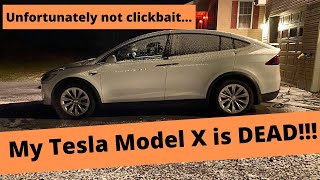
- Critical Dashboard Warnings: You will see severe alerts on the display, such as "Car needs service," "Unable to Start – Electrical System Error," or other messages related to the powertrain and high-voltage system. 🎬 Watch: See what happens when a Model X high-voltage system fails.
Low-Voltage Body/Chassis Harness Symptoms
Failures in low-voltage harnesses are typically caused by issues like chafing or corrosion and can produce confusing, intermittent problems:
- Random Component Failures: Features like parking sensors, cameras, headlights, or power steering may stop working intermittently or all at once.
- Warning Messages: You may see non-critical warnings like "Parking assist unavailable" or other alerts related to specific failed components.
- Water Ingress Issues: Damage to a harness can allow water to enter, leading to corrosion and short circuits that cause a cascade of electrical problems.
Known Issues, TSBs, and Recalls

While there are no widespread recalls for drive unit harnesses, Tesla has issued Technical Service Bulletins (TSBs) for specific wiring issues.
TSB SB-20-17-004: Model X Front Harness Chafing (2017-2019)
On some 2017-2019 Model X vehicles, the main front body harness was routed in a way that allowed it to rub against the right-hand front upper control arm. This chafing can wear through insulation, exposing wires and causing short circuits. Symptoms are often random electrical failures in the front of the vehicle. The fix involves inspecting the harness, repairing wires if needed, and rerouting it with a new clip to provide proper clearance.
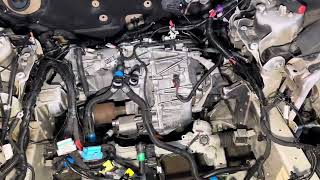
🎬 See this walkthrough on replacing the front main wiring harness.TSB SB-22-17-003: Model S & X EPB Wire Abrasion
On certain Model S and Model X vehicles, the wires for the Electronic Parking Brake (EPB) caliper can suffer from abrasion due to long-term vibration. This can strip the insulation and lead to water ingress or an electrical short, potentially affecting parking brake function. The service procedure involves inspecting the wires and retrofitting them with protective corrugated tubing if it's not already present. If the wires are damaged, the rear chassis harness must be replaced.
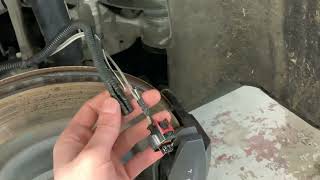
🎬 Watch: How to diagnose a parking brake wiring failure.Vehicle & Part Compatibility Guide

Compatibility is the single most challenging aspect of sourcing a wiring harness for these vehicles. Harnesses are specific to the vehicle's generation, trim level (Long Range vs. Plaid), and sometimes even the production date. Always verify your original part number before ordering.
Warning: Harnesses for 'Pre-Refresh' (2015-early 2021) and 'Refresh' (mid-2021+) models are NOT interchangeable. They have completely different architectures.
2015-2020 Tesla Model X ('Pre-Refresh')
These earlier models have their own unique set of harnesses. The front harness chafing issue (TSB SB-20-17-004) is specific to this generation. A common rear subframe harness for these models is part number 2032448-05-C.
2021-2025 Tesla Model S & Model X ('Refresh')
The 2021 'Refresh' introduced a significant redesign. There are critical differences between the Dual Motor (Long Range) and Tri-Motor (Plaid) versions.
- Long Range (Dual Motor) vs. Plaid (Tri-Motor): The Plaid models have a second drive unit in the rear, requiring a different rear drive unit and subframe harness to power and control it. These harnesses are not interchangeable.
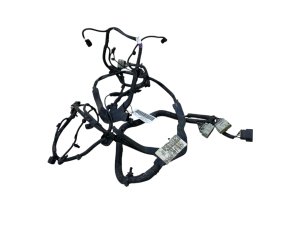
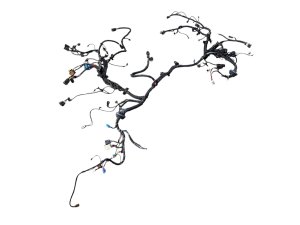
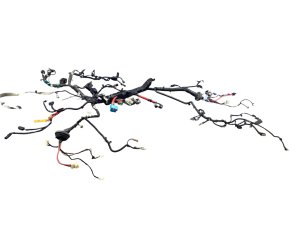
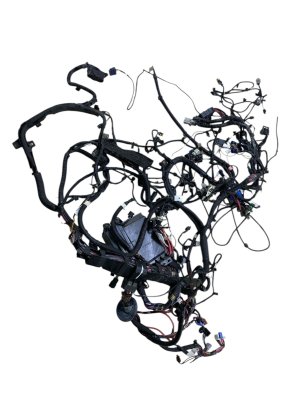
- Frunk Harness (1552584-00-D): One of the most commonly replaced harnesses on the 'Refresh' Model X is the front or 'frunk' harness, with part numbers like 1552584-00-C and 1552584-00-D. This is a low-voltage body harness, not a high-voltage drive harness. It controls components in the front of the vehicle.
- Left-Hand Drive (LHD): Harnesses are typically designed for LHD North American market vehicles and will not fit Right-Hand Drive (RHD) models.
| Part Number | Description | Vehicle Application |
|---|---|---|
| 1552584-00-C / 1552584-00-D | Front Body / 'Frunk' Harness | 2021+ Tesla Model X 'Refresh' (LHD) |
| 2032448-05-C | Rear Subframe Harness | 2016-2020 Tesla Model X 'Pre-Refresh' |
| 1420781-00-C / D | Rear Chassis Harness, LH, Long Range | Model S/X (Check VIN) |
| 1420783-00-C / D | Rear Chassis Harness, LH, Performance/Plaid | Model S/X (Check VIN) |
Buying a Used Wiring Harness
Buying a used OEM harness is often the only practical option, as aftermarket versions are generally not available for these complex parts. However, inspection is critical.
Warning: Tesla's official service guidelines state that high-voltage (orange) circuits are not repairable. Any damage, cut, or abrasion to an orange HV cable requires replacement of the entire harness. Do not buy a used HV harness with any signs of damage.
Physical Inspection Checklist
- Verify Part Number: This is the most important step. The part number on the harness tag must be an exact match for the one you are replacing.
- Inspect All Connectors: Carefully check every plastic connector. Look for cracks, broken locking tabs, or bent pins. A single damaged connector can make the entire harness useless.
- Check for Cuts or Abrasions: Lay the harness out and inspect its entire length. Look for any cuts, scrapes, or areas where the loom is worn through. Pay special attention to areas where the harness might bend or pass through the chassis.
- Look for Corrosion: Check connector pins for any green or white powder, which indicates corrosion from water intrusion. A corroded harness should be rejected.
- No Repairs or Splices: Reject any harness that shows signs of being spliced or repaired, especially on the orange HV cables.
Cost & Replacement Information
Replacing any wiring harness on a Tesla is a complex, labor-intensive job that should only be performed by qualified technicians with high-voltage training.
Pro Tip: The high voltage system carries lethal voltage. It must be properly de-energized using specific software commands and safety procedures before any work can begin. This is not a DIY-feasible repair.
| Cost Category | Estimated Price |
|---|---|
| New OEM Harness | Varies; must be sourced through Tesla Service |
| Used OEM Harness | $150 - $600 |
| Shop Labor Cost | $600 - $3000+ |
Labor costs vary widely depending on which harness is being replaced. A rear drive unit harness, for example, may require removing the entire rear subframe and motor assembly, leading to very high labor charges.
Frequently Asked Questions (FAQ)
Can I drive with a faulty wiring harness?
If you suspect a high-voltage (orange) harness failure, the answer is NO. It can cause a sudden, complete loss of power, which is a severe safety risk. The vehicle should be towed. If it's a low-voltage harness issue causing, for example, a camera to fail, the vehicle may be drivable but with reduced functionality and the risk of further electrical problems.
Can a Tesla wiring harness be repaired?
No, not if it's a high-voltage (orange) cable. Tesla's official policy is that any damage to an HV wire requires replacement of the entire harness. Some low-voltage wires can be repaired by a trained technician, but never within 4 inches (100mm) of a connector.
Why are there different harnesses for Plaid and Long Range models?
The Plaid versions of the Model S and Model X use a Tri-Motor setup, with two motors on the rear axle. The Long Range (Dual Motor) version has one motor in the rear. This fundamental difference in the drivetrain requires a different rear wiring harness to power and control the additional motor.
My car makes a grinding or 'milling' noise. Is that the harness?
No, a grinding or milling noise is almost always a symptom of a mechanical issue inside the drive unit itself, such as a failing bearing. While a harness failure can stop the drive unit from working, it will not cause a mechanical noise.
Helpful Videos
Technical Specifications
OEM Part Numbers: 1552584-00-C 1552584-00-D 2032448-05-C 1420781-00-C 1420783-00-C 2036885-00-A 3135152-01-C
High-voltage (HV) harnesses are distinguished by their bright orange sheathing for safety. Low-voltage harnesses manage data and power for all other vehicle systems.
We Have This Part in Stock

The information in this article is provided for general reference and educational purposes only. Vehicle specifications, procedures, and part compatibility can vary by production date, trim level, and region. Always consult your vehicle's factory service manual and verify part numbers before purchasing or performing repairs. Safety-critical components such as airbags, seat belts, and braking systems should be installed by a qualified professional.
- TESLA Model X:
- Tesla Model S:
- 🎬 Helpful Videos
- 🛍️ Shop This Part
- Symptoms of Wiring Harness Failure
- High-Voltage (HV) Drive Unit Harness Symptoms
- Low-Voltage Body/Chassis Harness Symptoms
- Known Issues, TSBs, and Recalls
- TSB SB-20-17-004: Model X Front Harness Chafing (2017-2019)
- TSB SB-22-17-003: Model S & X EPB Wire Abrasion
- Vehicle & Part Compatibility Guide
- 2015-2020 Tesla Model X ('Pre-Refresh')
- 2021-2025 Tesla Model S & Model X ('Refresh')
- Buying a Used Wiring Harness
- Physical Inspection Checklist
- Cost & Replacement Information
- Frequently Asked Questions (FAQ)
- 🎟️ Get 5% Off