

Ford & Lincoln 3.5L/3.7L Internal Water Pump: The Hidden Flaw and Costly Repair (2012-2020)
An in-depth guide to the timing chain-driven water pump failure that affects many Ford Explorer, Edge, Taurus, Flex, and Lincoln models, leading to catastrophic engine damage.
- The water pump is located inside the engine and driven by the timing chain, making replacement extremely labor-intensive and expensive.
- Failure can cause catastrophic engine damage by leaking coolant directly into the engine oil.
- An external coolant leak from the passenger side of the engine is the primary warning sign and requires immediate attention.
- There is no recall for this issue; repair costs are the owner's responsibility. When replacing the pump, it is critical to also replace the timing chains, guides, and tensioners.
The Critical Design Flaw: An Internal, Timing-Chain-Driven Pump

The single most important thing to understand about the water pump in the 3.5L and 3.7L naturally aspirated V6 engines is its location. Unlike most water pumps that are bolted to the outside of the engine and are relatively easy to access, this pump is located internally, behind the front engine cover (also called the timing cover). It is driven by the same timing chain that keeps your engine's camshafts and crankshaft synchronized. This design choice, likely made for packaging reasons in transverse (sideways) engine layouts, is the root cause of a common and extremely expensive failure. All vehicles covered in this guide share this transverse engine layout and are susceptible to this issue.
Vehicles covered by this guide include:
- 2012-2018 Ford Edge
- 2013-2019 Ford Explorer
- 2013-2019 Ford Taurus
- 2012-2019 Ford Flex
- 2013-2019 Ford Police Interceptor Sedan & Utility
- 2012-2015 Lincoln MKX
- 2013-2016 Lincoln MKZ
- 2013-2016 Lincoln MKS
- 2017-2020 Lincoln Continental
Warning: This guide applies ONLY to the naturally aspirated (non-turbo) 3.5L V6 and the 3.7L V6 engines. The 3.5L EcoBoost (turbocharged) engine in vehicles like the F-150 or longitudinally-mounted Explorers uses a different, externally mounted water pump with a completely different replacement procedure.
Symptoms of a Failing Water Pump


When this internal water pump begins to fail, it can present symptoms in two distinct ways: an external leak (the early warning) or an internal leak (the catastrophic failure).
1. External Coolant Leak (The Warning Sign)
Ford engineers designed a "weep hole" passage to give a warning when the pump's shaft seal starts to fail. Coolant that leaks past the seal is collected in a channel and directed out of a small hole in the side of the engine block.
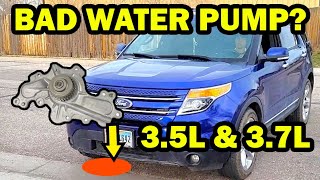
- What to look for: A puddle or drips of orange or yellow coolant on the ground under the passenger side of the engine. 🎬 Watch: How to spot this RF corner antifreeze leak
- Specific Location: The leak will often run down the side of the engine block, appearing near or below the A/C compressor and alternator. You may need a flashlight and mirror to trace it back to the weep hole on the block.
- What it means: This is your final warning. The pump's internal bearing and seal are failing. The vehicle should be repaired immediately before the leak worsens or turns into an internal leak.
2. Internal Coolant Leak (Catastrophic Failure)
If the pump seal fails completely or the pump's main gasket gives way, coolant can leak directly into the engine's crankcase. This is the worst-case scenario.
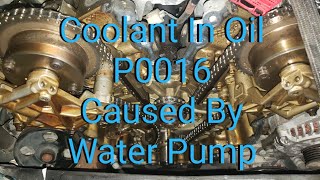
- Coolant in Oil: The coolant mixes with the engine oil, creating a milky, light-brown substance often described as a "chocolate milkshake." You can check for this by looking at the oil dipstick or the underside of the oil filler cap. 🎬 Watch: How to diagnose a failing internal water pump
- Engine Overheating: With coolant being lost into the oil pan, the cooling system can no longer regulate engine temperature, leading to rapid overheating.
- Engine Damage: The coolant/oil mixture is a terrible lubricant. It will quickly destroy engine bearings, camshafts, and other internal components, often leading to complete engine seizure and the need for a full engine replacement.
- Timing Issues (DTC P0016): In some cases, as the water pump bearing develops excessive play, it can cause slack in the timing chain. This can throw off the engine's timing, leading to a rough run condition and a P0016 (Crankshaft/Camshaft Position Correlation) trouble code.
Known Issues, TSBs, and Recalls

Despite numerous owner complaints and several class-action lawsuits filed in the United States and Canada, Ford has not issued a recall for this water pump issue. Searches of the National Highway Traffic Safety Administration (NHTSA) database and for official Technical Service Bulletins (TSBs) show no specific documents addressing the water pump design flaw or offering a revised repair procedure for these vehicles. Owners are typically responsible for the full cost of the repair, especially outside of the vehicle's powertrain warranty period.
Replacement Difficulty & Procedure Overview
Difficulty Rating: 5 out of 5 (Professional Recommended)
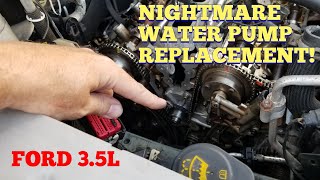
This is one of the most labor-intensive repairs on these vehicles. The book time for this job is typically between 11 and 14 hours, but can take a skilled DIY mechanic several days.
The basic steps involve:
- Disconnecting the battery and draining the cooling system and engine oil.
- Removing the upper intake manifold, fuel rails, and valve covers.
- Supporting the engine and removing the passenger-side engine mount.
- Removing the serpentine belts and accessories like the alternator and A/C compressor to gain access.
- Removing the harmonic balancer from the crankshaft.
- Unbolting and carefully removing the front timing cover.
- Locking the camshafts in place with special tools, then removing the timing chain tensioner and guides to get slack in the chain.
- Unbolting and removing the old water pump.
- Thoroughly cleaning all gasket surfaces.
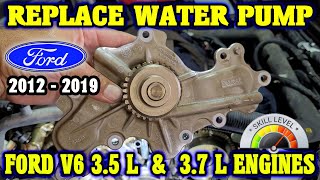
- Installing the new water pump and reassembling everything in reverse order, paying close attention to timing marks 🎬 See this step-by-step water pump replacement walkthrough and torque specifications.
Pro Tip: While the timing cover is off, it is highly recommended to replace the timing chains, guides, and tensioners at the same time. These parts have endured the same mileage as the pump, and replacing them now costs only the price of the parts, saving you from another massive labor bill in the future.
Special Tools Required
This is not a job that can be done with a basic socket set. You will need several specialized tools:
- Camshaft Holding/Locking Plates
- Harmonic Balancer Puller
- Fuel Line and A/C Line Disconnect Tools
- Inch-pound and Foot-pound Torque Wrenches
- Engine Hoist or Support Bar
Buying a Used Engine Water Pump
Warning: It is strongly discouraged to purchase a used internal water pump on its own. The risk of installing a part that is already near the end of its service life is far too high given the massive labor cost to install it.
The only scenario where a used pump might be encountered is as part of a complete used engine assembly. If you are considering purchasing a used 3.5L or 3.7L engine for one of these vehicles, inspection is critical:
- Check the Oil: Pull the dipstick and open the oil fill cap. Look for any signs of a milky, frothy, or light-brown residue. If any is present, the engine has suffered coolant contamination. Do not buy it. The oil should be dark and translucent.
- Verify Mileage: Only consider an engine from a low-mileage donor vehicle. The water pumps are known to fail anywhere from 50,000 to over 150,000 miles, so lower is always better.
- Check the Weep Hole: Inspect the area on the engine block behind where the alternator would sit. Look for any white or colored crusty residue, which indicates a past or present external coolant leak from the pump's weep hole.
- Best Practice: Even if a used engine looks clean, the safest approach is to factor in the cost of replacing the water pump and timing components before installing the engine into your vehicle. The labor is significantly easier when the engine is on a stand.
Cost Breakdown for Replacement
The cost of the water pump itself is a tiny fraction of the total repair bill. The majority of the cost is labor.
| Part/Service | Estimated Cost | Notes |
|---|---|---|
| New OEM (Motorcraft) Pump | $80 - $150 | Part only. Highly recommended for reliability. |
| New Aftermarket Pump | $50 - $200 | Brands like Gates or Duralast are available. Quality can vary. |
| Used OEM Pump | Not Recommended | Extremely high risk due to labor cost. Typically not sold individually. |
| Shop Labor | $1,500 - $4,500+ | Based on 11-14 hours of labor. Varies widely by shop rate and location. |
| Total Professional Job | $2,000 - $5,000+ | Includes pump, gaskets, fluids, and labor. Often includes timing chain components. |
Frequently Asked Questions (FAQ)
Can I just keep adding coolant if I only have a small external leak?
You can, but it's a major risk. An external leak from the weep hole is a sign that the pump's internal seal has failed. This can escalate without warning to a massive internal leak, mixing coolant with your oil and destroying the engine. It is not a matter of if it will fail completely, but when.
Do I have to replace the timing chain at the same time?
While not strictly required, it is almost universally recommended by professional technicians. The labor to access the water pump is identical to the labor for the timing chain. Replacing the chain, guides, and tensioners while the engine is already opened up is cheap insurance against having to pay for the same 12+ hour labor job again if a timing component fails later.
Is there an updated or improved water pump design that fixes this flaw?
There is no evidence of a fundamental redesign of the pump or engine block to relocate the pump externally. While newer OEM part numbers supersede older ones, they follow the same internal, chain-driven design. The failure remains a possibility even with a new OEM replacement. Regular coolant changes (every 40-50k miles) can help prolong the life of the pump's seals and bearings.
Is the water pump on the 3.5L EcoBoost engine the same?
No. The 3.5L EcoBoost engines used in F-150s, Expeditions, and other longitudinally-mounted (rear-wheel-drive based) applications have a traditional, externally-mounted water pump driven by the serpentine belt. This is a much easier and cheaper repair. However, be aware that transverse-mounted EcoBoost engines, like in the Explorer Sport, may still use the internal water pump design.
Helpful Videos
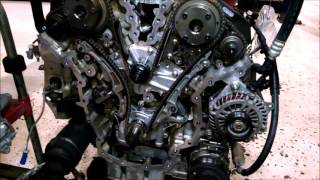
Technical Specifications
OEM Part Numbers: DG1Z-8501-E DG1Z-8501-D DG1Z-8501-C DG1Z-8501-B DG1Z-8501-A AT4Z-8501-B AA5Z-8501-C AT4Z-8501-CA PW-531 PW-533 PW-566 PW-580 PW-606 PW-657
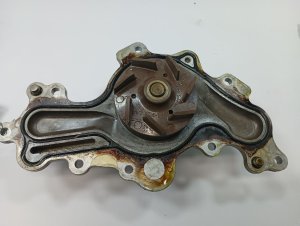
Fits naturally aspirated 3.5L and 3.7L Ford Cyclone V6 engines in transverse (FWD/AWD) applications. Driven by the primary timing chain.
We Have This Part in Stock

The information in this article is provided for general reference and educational purposes only. Vehicle specifications, procedures, and part compatibility can vary by production date, trim level, and region. Always consult your vehicle's factory service manual and verify part numbers before purchasing or performing repairs. Safety-critical components such as airbags, seat belts, and braking systems should be installed by a qualified professional.
- Ford Edge:
- Ford Explorer:
- Lincoln MKZ:
- Lincoln MKX:
- Ford Police Interceptor Utility:
- Lincoln Continental:
- Ford Taurus:
- Ford Flex:
- Ford Police Interceptor Sedan:
- Lincoln MKS:
- Lincoln MKT:
- 🎬 Helpful Videos
- 🛍️ Shop This Part
- The Critical Design Flaw: An Internal, Timing-Chain-Driven Pump
- Symptoms of a Failing Water Pump
- 1. External Coolant Leak (The Warning Sign)
- 2. Internal Coolant Leak (Catastrophic Failure)
- Known Issues, TSBs, and Recalls
- Replacement Difficulty & Procedure Overview
- Special Tools Required
- Buying a Used Engine Water Pump
- Cost Breakdown for Replacement
- Frequently Asked Questions (FAQ)
- 🎟️ Get 5% Off