

Audi 4.2L V8 Valve Cover & Gasket Guide (A6, A8, S6, S8, RS6: 2000-2004)
Your definitive guide to diagnosing and replacing the leaking valve covers and gaskets on the Audi 4.2L 40-valve V8 engine.
- The primary failure is the gasket, not the aluminum valve cover itself. A used OEM cover is a great value if inspected for cracks and warping.
- A burning oil smell is the most common symptom of a leaking valve cover gasket on the 4.2L V8.
- On the RS6 model, the passenger-side replacement is much harder due to a coolant pipe, but the engine does NOT need to be removed. The pipe can be flexed.
- Replacement is a manageable DIY for an experienced mechanic, with a difficulty of 3/5. The bolts should be torqued to 10 Nm in a star pattern.
Symptoms of a Failing Valve Cover Gasket

On the 4.2L 40-valve V8 found in the 2000-2004 Audi A6, 2000-2003 Audi A8, 2002-2003 Audi S6, 2001-2003 Audi S8, and 2003-2004 Audi RS6, the most common valve cover issue is a leak from a hardened, brittle gasket. The cover itself is a durable aluminum casting, but the rubber gaskets that seal it to the cylinder head degrade over time from constant heat cycles. Here are the tell-tale signs of a failure.
- Burning Oil Smell: This is the most frequent and obvious symptom. Oil drips from the leaking gasket onto the hot exhaust manifolds below, creating a distinct burning smell that often enters the cabin through the ventilation system.
- Visible Oil Leaks and Grime: You will likely see oil residue, seepage, and an accumulation of oily dirt on the side of the cylinder heads, just below the valve covers. In more severe cases, you might see drips on the ground after the car has been parked.
- Oil in Spark Plug Wells: The valve cover gasket set includes seals for the spark plug tubes. When these fail, oil pools in the wells where the spark plugs and ignition coils sit. This can lead to the next symptom.
- Engine Misfires and Rough Idle: Oil contamination on the ignition coils or spark plugs will cause misfires, leading to a rough idle, hesitation, and a flashing Check Engine Light. A significant leak can also create a vacuum leak, disrupting the air-fuel mixture and causing rough running.
- Low Engine Oil Light: A persistent leak will cause a gradual loss of engine oil, which may eventually trigger the low oil level warning on your dashboard between scheduled oil changes.
Known Issues, TSBs, and Recalls

While valve cover gasket leaks are extremely common on these 4.2L V8 engines, there are no specific Technical Service Bulletins (TSBs) or recalls issued by Audi for this problem. The issue is considered a standard wear-and-tear item that occurs as the gasket material ages and hardens after many heat cycles, typically becoming noticeable around 75,000 to 100,000 miles.
It's important to distinguish this common gasket leak from a failure of the Positive Crankcase Ventilation (PCV) system. A clogged PCV valve can cause excessive pressure to build inside the engine, which can force oil past otherwise healthy gaskets. If you are experiencing oil leaks from multiple seals (valve covers, cam seals, main seals), it is wise to inspect the PCV system to ensure it is not the root cause.
Recall Notice: While not related to the valve covers, it's worth noting that some of these vehicles, including the 2001-2004 A6, 2002-2003 S6, and 2003 RS6, were recalled for a fuel tank rollover valve that could crack and leak fuel, posing a fire risk. Owners should ensure this recall has been addressed.
Buying a Used Engine Valve Cover

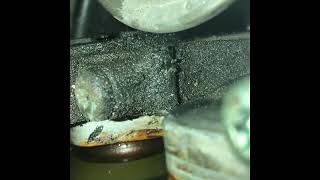
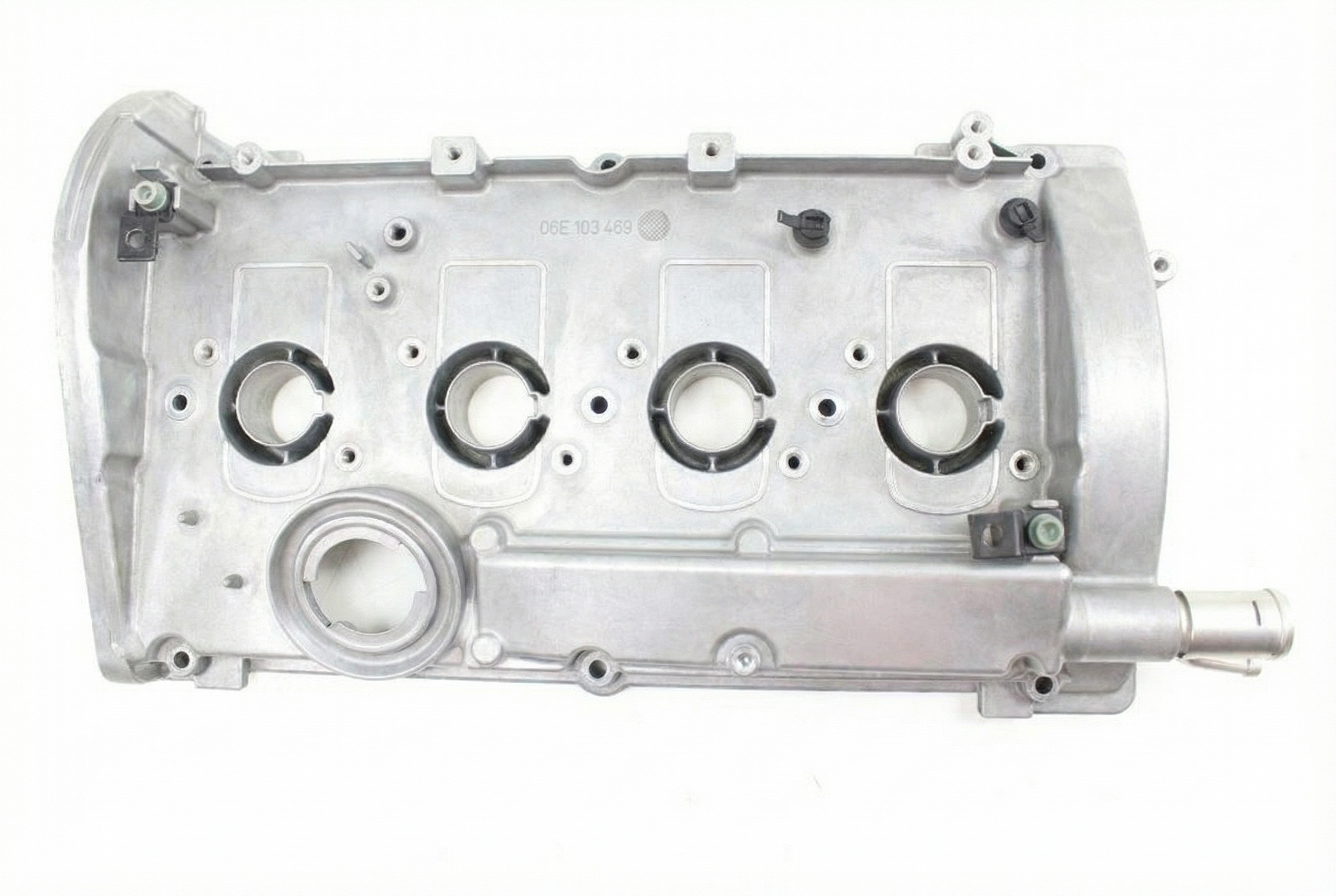
Since the original valve covers are made of durable cast aluminum, purchasing a used OEM part is a very reliable and cost-effective option. The failure point is almost always the inexpensive gasket, not the cover itself. When buying a used valve cover, you get the guaranteed fitment of a factory part at a significant discount. Here’s what to inspect 🎬 Watch this DIY restoration and inspection of Audi V8 covers. before purchasing:
- Check for Cracks: Carefully inspect the entire cover, especially around the bolt holes and corners, for any hairline cracks. While durable, a cover from a wrecked vehicle could have impact damage.
- Verify Flatness (No Warping): Lay the cover's sealing edge on a known flat surface, like a piece of glass or a machinist's straightedge. There should be no significant gaps or rocking. A warped cover will never seal properly, even with a new gasket.
- Inspect Sealing Surfaces: Run your finger along the groove where the gasket sits and the outer sealing edge. It should be smooth and free of deep scratches, corrosion, or gouges that could compromise the seal.
- Check for Sludge Buildup: Look inside the cover. Heavy, thick sludge buildup can be a sign of a poorly maintained engine with infrequent oil changes. A cover from a well-maintained engine will have a light, honey-colored oil film.
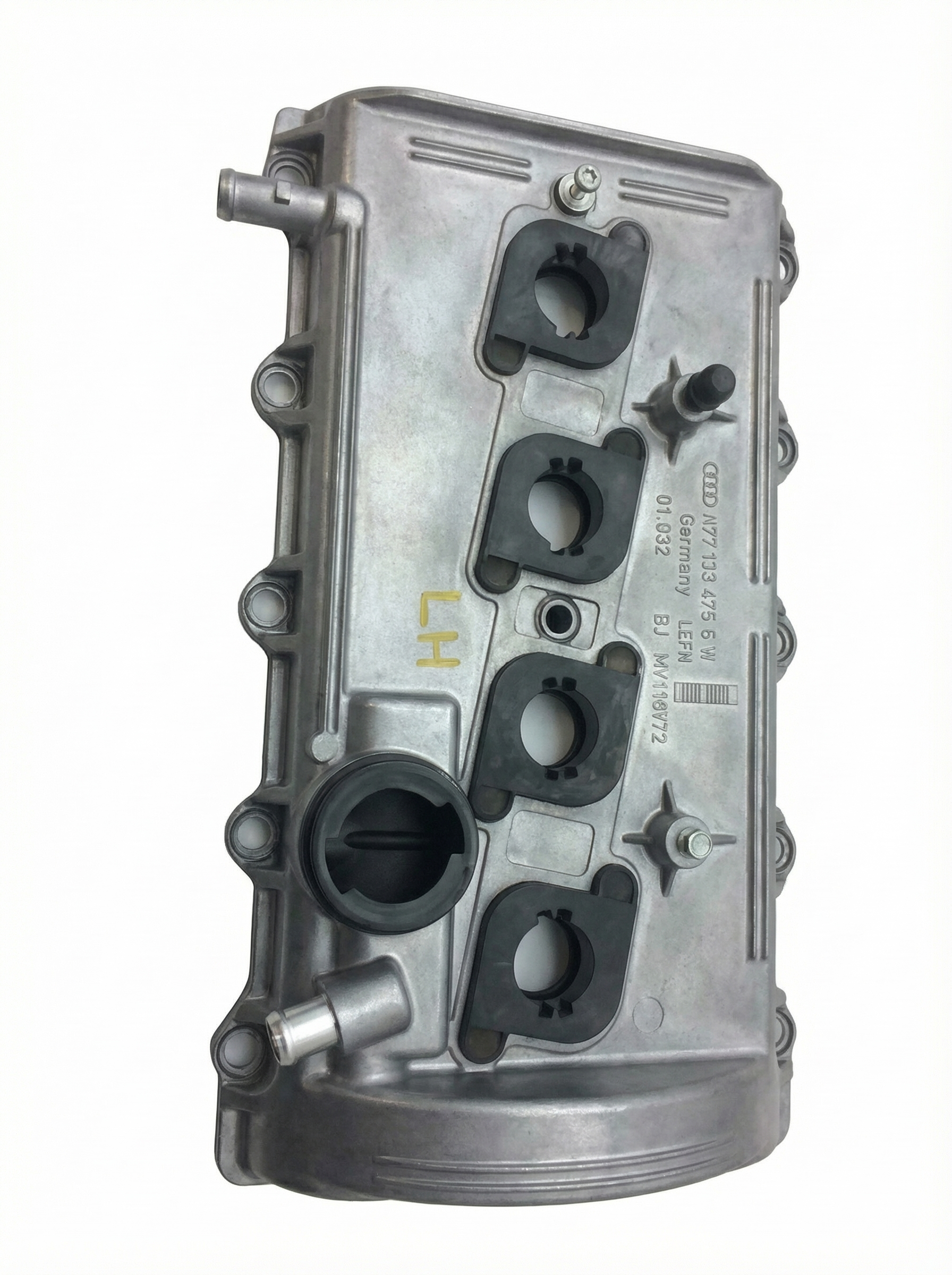
- Confirm Compatibility: These vehicles use a left (driver-side) and a right (passenger-side) specific valve cover. Ensure you are buying the correct one for your needs. The original part numbers may have been superseded, so focus on the side and vehicle model compatibility.
Replacement Information
Replacing the valve cover gaskets on the 4.2L 40-valve V8 is a feasible DIY project for an experienced home mechanic. The process is very similar across the A6, A8, S6, and S8 models as they share the same basic engine architecture. However, space is tight, and some models have unique obstacles.
- Difficulty: 3 out of 5. The procedure is straightforward but requires patience and navigating a cramped engine bay.
- Tools Required: You will need a good socket set, T-30 Torx bits, 10mm hex sockets, extensions, and potentially a wobble socket or a small bit driver for the rear bolts.
- Torque Specs: The valve cover bolts should be tightened to 10 Nm (7.4 lb-ft). It is critical to tighten them in a spiral or star pattern, starting from the center and working your way out, to ensure the cover is drawn down evenly.
Vehicle-Specific Replacement Notes
- Audi A8 (D2): Accessing the covers may require disconnecting the two EFI supply fuel lines at the rear of the passenger-side valve cover. Use two wrenches to avoid damaging the fittings. You will also need to remove the breather hose connecting the two covers.
- Audi RS6 (C5): The passenger-side cover is notoriously difficult to access due to a rigid coolant pipe and a fuel line that run over it. Dealerships may quote an engine-out service for this job, resulting in an extremely high labor cost. However, experienced mechanics and owners have confirmed that the engine does not need to be removed. By removing a front fastener, the coolant pipe can be carefully flexed just enough to provide the clearance needed to remove the valve cover. This is the single biggest difference and challenge for the RS6 model. 🎬 See how to replace RS6 gaskets without removing the engine.
- All Models: The rearmost bolts can be difficult to reach due to heat shielding and tight clearance to the firewall. Some mechanics find it necessary to carefully cut a small flap in the heat shield for access, which can be bent back into place afterward. Using a combination of short T30 sockets, extensions, and wobble joints is often necessary. 🎬 Watch a full walkthrough of the A6 4.2 V8 replacement.
Pro Tip: While you have the valve covers off, it is the perfect time to replace the spark plugs and inspect the ignition coils for oil contamination. It is also highly recommended to replace the half-moon seals and the camshaft chain tensioner gaskets, as these are also common leak points in the same area and require similar disassembly.
Cost Comparison
The cost for this repair is dominated by labor. While the parts are relatively inexpensive, the time it takes to access and replace them can be significant, especially on the RS6.
| Part/Service | Estimated Cost |
|---|---|
| New OEM Valve Cover (Single) | $350 - $720 |
| New Aftermarket Valve Cover (Single) | $150 - $300 |
| Used OEM Valve Cover (Single) | $50 - $150 |
| New Gasket Kit (Both Sides) | $60 - $110 |
| Shop Labor (A6, A8, S6, S8) | $250 - $600 |
| Shop Labor (RS6 - Independent Shop) | $600 - $900 |
Frequently Asked Questions (FAQ)
Is it safe to drive with a leaking valve cover gasket?
For a minor seep, yes, but it should be repaired soon. A small leak can be monitored by checking your oil level frequently. However, a significant leak is a fire hazard if oil drips onto the hot exhaust manifold. It can also lead to engine damage from low oil levels or misfires caused by oil-fouled spark plugs.
Do I need to use sealant on the new gasket?
Yes, but only in specific locations. A small dab of RTV silicone sealant is recommended at the sharp corners where the engine block meets the cylinder head and around the half-moon seals at the back of the head. Do not apply sealant along the entire length of the gasket, as this can cause it to slip out of place and leak.
Are the left and right valve cover gaskets the same?
For some gasket kits, the main perimeter gasket is interchangeable between the left and right sides. However, the valve covers themselves are side-specific, and complete gasket kits often include other seals that are also side-specific. It is always best to order a kit specified for your vehicle or purchase left and right gasket sets separately to ensure a perfect fit.
Why did the dealer quote thousands to fix my RS6 valve cover leak?
Audi's official procedure for the RS6 may call for removing the engine to gain access to the passenger-side valve cover due to an obstructing coolant pipe. This is an extremely labor-intensive process. However, the widely accepted method in the independent repair community is to carefully flex this pipe out of the way, which saves many hours of labor and dramatically reduces the cost.
Helpful Videos

Technical Specifications
OEM Part Numbers: Left (Driver Side) Valve Cover: 077103471P, 077103471M, 077103471 Right (Passenger Side) Valve Cover: 077103472L, 077103472J Valve Cover Gasket Set (Fits Left or Right): 077198025A
Bolt Torque: 10 Nm (7.4 lb-ft)
We Have This Part in Stock


The information in this article is provided for general reference and educational purposes only. Vehicle specifications, procedures, and part compatibility can vary by production date, trim level, and region. Always consult your vehicle's factory service manual and verify part numbers before purchasing or performing repairs. Safety-critical components such as airbags, seat belts, and braking systems should be installed by a qualified professional.
- Audi A6:
- Audi A8:
- Audi S6:
- Audi S8:
- Audi RS6: