

Fixing a Front Engine Oil Leak on Your 2013-2018 Audi S6, S7, RS7, A8 & S8: Why a Small Leak Leads to a Huge Repair Bill
This guide explains the symptoms of a timing cover oil leak on the Audi 4.0T V8 engine and why the repair is one of the most labor-intensive jobs for these vehicles.
- The primary symptom of failure is an oil leak from the front of the engine, but the part itself is rarely the problem—the immense labor cost is.
- Repair requires putting the car in "service position" (front end removal), a 15-25 hour job not feasible for most DIY mechanics.
- It is critical to replace the turbo oil strainer (Recall 21H7), water pump, thermostat, and front crank seal at the same time to avoid thousands in future labor.
- Do not use engine oil stop-leak additives, as they can clog the turbo oil passages and cause catastrophic engine failure.
Symptoms of a Failing Engine Timing Cover

The signs of a timing cover issue on the 2015-2018 Audi A8, 2013-2018 Audi S6, 2013-2018 Audi S7, 2015-2018 Audi S8, 2013-2018 Audi RS6, and 2014-2018 Audi RS7 are almost always related to a leak. The metal covers themselves rarely fail, but the seals and sealant that hold them in place can degrade over time.
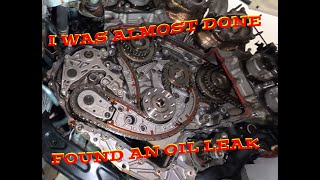
- Oil Leaks at the Front of the Engine: This is the most common symptom. You may notice oil dripping onto the ground from the front of the engine, or see oil residue coating the front of the oil pan and surrounding components. 🎬 Watch: Identifying a timing cover leak on an Audi S7 The leak often originates from the front crankshaft seal, which is seated in the main timing cover.
- Low Engine Oil Level: A persistent leak will cause your engine oil level to drop between oil changes, potentially triggering the low oil warning light on your dashboard.
- Burning Oil Smell: If leaking oil drips onto hot exhaust components, it can create a distinct burning smell.
- Knocking or Rattling Noises: In very rare cases, if the cover itself becomes loose, it could create a rattling or knocking sound as it vibrates against the engine block.
Warning: While a small oil leak might not seem urgent, a significant loss of oil can lead to severe engine damage. It's best to address any leak as soon as it's discovered.
The Real Issue: Extreme Replacement Difficulty

Diagnosing a timing cover leak is straightforward, but the repair is one of the most complex and expensive jobs on these vehicles. The timing cover is buried deep behind the engine's accessory components. To access it, a technician must put the vehicle into what is known as "service position."
This procedure involves removing the entire front of the car, including the bumper, headlights, crash bar, and the whole radiator and cooling fan assembly. This process alone takes many hours before the actual repair can even begin. Forum discussions and shop estimates indicate the total job can take between 15 and 25 hours, making labor the single biggest part of the repair cost.
Pro Tip: Because of the massive labor involved, it is absolutely critical to replace other wear items located at the front of the engine at the same time. Addressing these parts during a timing cover reseal can save you thousands of dollars in redundant labor costs down the road.
Known Issues & "While You're In There" Replacements

If your timing cover is being resealed, consider it a critical opportunity to address other known issues with the 4.0T engine. Do not perform the timing cover job without also doing the following:
1. Turbocharger Oil Strainer (NHTSA Recall 21H7)
The most significant known issue for the 4.0T engine is a faulty turbocharger oil strainer. A recall (Audi code 21H7, NHTSA Campaign 22V178000) 🎬 See this walkthrough for replacing the turbo oil strainer was issued for 2013-2017 A8, S6, S7, S8, and 2014-2017 RS7 models. The original fine-mesh screen can become clogged with carbon deposits, starving the turbochargers of oil and causing them to fail catastrophically. The fix involves replacing the strainer with an updated, less restrictive part. Even if your vehicle had the recall performed, it is wise to inspect the area and replace the associated check valve (Part No. 079103175C) while the engine is accessible.
2. Water Pump and Thermostat
The water pump and thermostat are also located at the front of the engine. Coolant leaks from aging plastic water pump housings are a known issue on these vehicles. Replacing these components requires similar disassembly, so it is highly cost-effective to do them at the same time as a timing cover reseal.
3. Front Crankshaft Seal
This is the most likely source of your oil leak. It is a small, inexpensive seal (Part No. 079103051G) that sits inside the main timing cover. It absolutely must be replaced during this service. The seal is made of a specific material (PTFE) and requires a special tool for proper installation to avoid damage.
4. Serpentine Belt, Tensioner, and Idlers
These parts must be removed to access the timing cover. They are common wear items and are inexpensive to replace. It makes no financial sense to reinstall old belts and pulleys when the labor to access them is already paid for.
Buying a Used Engine Timing Cover: What to Check

Since the timing cover is a durable aluminum casting, a used OEM part is an excellent way to save money, as the part cost is tiny compared to the labor. When inspecting a used timing cover assembly, focus on these key areas:
- Check for Cracks or Fractures: Carefully inspect the entire cover, especially around bolt holes and corners, for any signs of cracking from impact or improper removal.
- Inspect Sealing Surfaces: Run your finger along all the surfaces where sealant will be applied. They must be perfectly flat, smooth, and free of deep scratches or gouges that could compromise the new seal.
- Verify No Warping: Place the cover on a known flat surface to check for any warping. A warped cover will never seal properly.
- Confirm Part Numbers: The 4.0T timing cover is a multi-part assembly. Ensure you are getting the correct pieces for your specific model and year.
Cost to Reseal the 4.0T Engine Timing Cover

The cost is dominated by labor. The parts themselves are relatively inexpensive, especially if you opt for a used cover.
| Part or Service | Estimated Cost |
|---|---|
| New OEM Timing Cover (Main Assembly) | $400 - $800 |
| Used OEM Timing Cover (Main Assembly) | $75 - $200 |
| New Aftermarket Cover Pieces | $50 - $150 |
| Required Seals & Sealant (Front Crank Seal, Liquid Sealant) | $50 - $100 |
| Shop Labor (15-25 hours) | $2,500 - $5,000+ |
| Total Estimated Cost (with new OEM parts) | $3,000 - $6,000+ |
Note: Costs are estimates and will vary based on your location, the specific parts replaced, and the shop's labor rate. This does not include the cost of "while you're in there" parts like the water pump or belts.
Frequently Asked Questions (FAQ)
Is a timing cover replacement a DIY job?
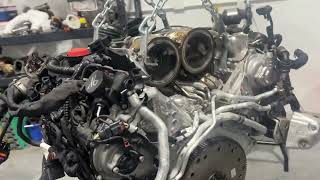
No, this is not a feasible DIY job for most home mechanics. The need to put the car in service position, handle complex components, and potentially use specialized tools for the crank seal makes this a 5/5 difficulty job best left to experienced technicians, 🎬 Watch: Professional insights and removal tricks for the 4.0T engine preferably those specializing in Audi vehicles.
My car has an oil leak. Is it definitely the timing cover?
Not necessarily. The 4.0T engine can also leak oil from the valve cover gaskets or the PCV / oil separator system. A thorough diagnosis by a qualified mechanic is needed to pinpoint the exact source of the leak before committing to such a large repair.
Is the timing cover leak related to the turbocharger recall?
No, the leak itself is not related. However, the location of the turbo oil strainer that is the subject of NHTSA recall 21H7 is in the valley of the engine, and some disassembly of the engine front is required to access it. Because of the overlapping labor, it is essential to address the recall components during a timing cover service.
Can I just use a stop-leak additive instead?
It is strongly advised not to use stop-leak products in this engine. The 4.0T has very small oil passages, particularly the ones feeding the turbochargers. A stop-leak additive could potentially clog these passages, leading to oil starvation and catastrophic turbo failure—the very problem that Recall 21H7 was issued to prevent.
Helpful Videos


Technical Specifications
OEM Part Numbers: 079103051G (Front Crankshaft Seal) D176501A1 (Liquid Sealant) 079103171AQ (Note: This is the REAR sealing flange, not the front cover) 079103173BK (Note: This is the REAR sealing flange, not the front cover)
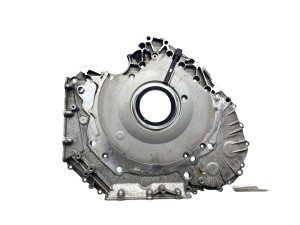
The timing cover assembly consists of multiple cast aluminum pieces sealed with a specific liquid silicone sealant rather than a pre-formed gasket.
We Have This Part in Stock




The information in this article is provided for general reference and educational purposes only. Vehicle specifications, procedures, and part compatibility can vary by production date, trim level, and region. Always consult your vehicle's factory service manual and verify part numbers before purchasing or performing repairs. Safety-critical components such as airbags, seat belts, and braking systems should be installed by a qualified professional.
- Audi A8:
- Audi S6:
- Audi S7:
- Audi S8:
- Audi RS6:
- Audi RS7:
- 🎬 Helpful Videos
- 🛍️ Shop This Part
- Symptoms of a Failing Engine Timing Cover
- The Real Issue: Extreme Replacement Difficulty
- Known Issues & "While You're In There" Replacements
- 1. Turbocharger Oil Strainer (NHTSA Recall 21H7)
- 2. Water Pump and Thermostat
- 3. Front Crankshaft Seal
- 4. Serpentine Belt, Tensioner, and Idlers
- Buying a Used Engine Timing Cover: What to Check
- Cost to Reseal the 4.0T Engine Timing Cover
- Frequently Asked Questions (FAQ)
- 🎟️ Get 5% Off