

2021-2026 Tesla Model S & X Underbody Shield: Damage, Noises & Replacement
Your guide to diagnosing and replacing the easily damaged aero shields that protect the battery and improve range on refresh Model S and Model X vehicles.
- This shield is critical: it protects the high-voltage battery from impact and improves aerodynamic efficiency to maximize range.
- The most common causes of failure are impacts with road debris and driving through deep water or snow, which can rip the panel off.
- Replacement is a simple DIY job (Difficulty 2/5) requiring a 10mm socket, but you MUST enable 'Jack Mode' before lifting the vehicle to protect the air suspension.
- Ensure compatibility: these parts only fit the 2021-2026 'refresh' Model S and Model X. Always match the OEM part number from your old shield when buying a replacement.
Symptoms of a Damaged Underbody Shield

Failure of the underbody aero shield on a 2021-2026 Tesla Model S or Model X is almost always due to physical damage. The symptoms are typically easy to spot and hear.
Scraping or Dragging Noises
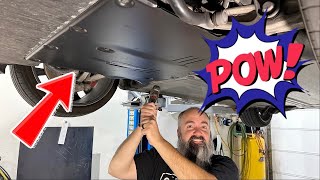
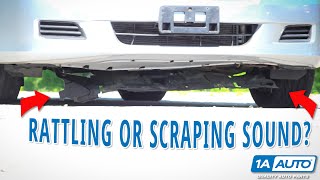
The most common symptom is a scraping, dragging, or flapping sound coming from underneath the vehicle. 🎬 Watch: Identifying common causes of scraping and rattling noises. This noise is often most noticeable at low speeds or when going over bumps, but can become a loud flapping at highway speeds if a section is partially detached. This happens when the shield is cracked or fasteners have broken, allowing part of the panel to hang down and make contact with the road.
Visible Damage or Sagging
A quick visual inspection is often all that's needed. You may see a piece of the black plastic or composite shield hanging lower than the rest of the underbody. In more severe cases, a section might be completely torn off, leaving components exposed.
Vibration at Speed
If a forward section of the shield comes loose, it can catch the wind at higher speeds, causing a significant vibration that can be felt in the cabin. This happens as the air pressure rapidly pulls the loose panel up and down.
Known Issues and Common Causes of Failure

While these shields are designed to be durable, they are a common failure point due to their location. There are no official recalls or Technical Service Bulletins (TSBs) from the National Highway Traffic Safety Administration (NHTSA) for the underbody shields on the 2021-2026 Model S and Model X as of early 2026. However, owner forums report several common failure scenarios.
- Impact Damage: Hitting road debris, steep driveway aprons, parking curbs, or large speed bumps can easily crack or shatter the shield.
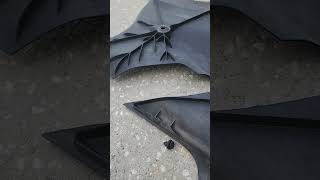
- Water and Snow Damage: Driving through deep standing water or heavy snow is a primary cause of failure. Water or snow can force its way on top of the shield or catch a leading edge, creating immense pressure that rips the panel from its mounting points. Owners in forums have noted that the original composite material can degrade when saturated, similar to heavy-duty cardboard, making it prone to tearing. 🎬 See how to upgrade to a durable composite splash guard.
- Loose Fasteners: Over time, bolts and clips holding the shield can vibrate loose and fall out. This creates a weak spot where the shield can begin to sag and eventually tear.
Pro Tip: After driving through deep water or snow, it's a good idea to visually inspect the underbody shields to ensure they are still secure and not holding debris or water.
Buying a Used Engine Splash Shield

For a part like this, a used OEM shield is often a smart purchase, delivering the same fit and material quality as a new part for a fraction of the price. However, a thorough inspection is key.
What to Inspect on a Used Shield
- Check All Mounting Points: This is the most critical area. Ensure the plastic around every bolt hole and clip slot is intact and free of cracks. A shield with a torn mounting hole is useless.
- Look for Cracks vs. Scrapes: Surface scrapes and minor gouges are purely cosmetic and expected on a used underbody part. They do not affect function. However, reject any shield with visible cracks, especially those radiating from the edges or from a mounting hole.
- Verify Flatness: The shield should be relatively flat and not show signs of heat warping or being bent out of shape.
- Material Integrity: If it's the fiber-composite version, check for areas where the material is delaminating or feels soft and degraded from water saturation.
Aftermarket Aluminum Alternatives
Several companies offer aftermarket skid plates made from aluminum. These are significantly more durable than the OEM plastic/composite shields and offer superior protection against impacts. While more expensive than a used OEM part, they can be a worthwhile upgrade for owners in areas with poor road conditions or heavy snowfall.
🎬 Watch this easy walkthrough for installing an aluminum skid plate.Compatibility Warning: These shields are specific to the 2021 "refresh" (often called Palladium) and newer Model S and Model X. They will not fit the 2012-2020 Model S or 2015-2020 Model X. Always verify your vehicle's build date before purchasing.
Replacement Guide
Replacing an underbody shield is a straightforward job that most DIY mechanics can handle.
- Difficulty: 2 out of 5
- Estimated Time: 0.5 - 1.0 hours
- Tools Needed: Jack and jack stands (or a vehicle lift), 10mm socket/wrench.
Step-by-Step Replacement Process
- Enable Jack Mode: On the vehicle's touchscreen, navigate to Controls > Service > Jack Mode. This is a critical step to prevent damage to the air suspension system.
- Raise the Vehicle: Safely lift and support the vehicle with jack stands to gain access underneath.
- Remove Fasteners: Using a 10mm socket, remove the bolts and plastic clips that secure the shield to the subframe and bumper. The front shield on the Model X, for example, is held by approximately 6 bolts and 14 clips.
- Remove the Shield: Once all fasteners are removed, the damaged shield will come off the vehicle.
- Install the New Shield: Position the replacement shield and loosely install a few bolts by hand to hold it in place.
- Secure Fasteners: Install the remaining bolts and clips. The specified torque for these small bolts is very low, around 3 Nm, so be careful not to overtighten them. Snug is sufficient.
- Lower the Vehicle: Carefully lower the car and remember to disable Jack Mode from the touchscreen.
Cost Comparison
Prices for these shields can vary significantly depending on the source.
| Part Type | Estimated Cost |
|---|---|
| New OEM (from Tesla Service) | $250 - $400 |
| New Aftermarket (Plastic/Composite) | $150 - $250 |
| New Aftermarket (Aluminum) | $200 - $500+ |
| Used OEM | $75 - $150 |
| Shop Labor | $100 - $200 |
OEM Part Number Reference
The underbody of the Model S and Model X is covered by several shields. It is crucial to match the part number from your existing part to ensure you order the correct replacement. Revisions (e.g., ending in -A, -B, -C) are often interchangeable, but the base number must match.
| Part Number | Known Description |
|---|---|
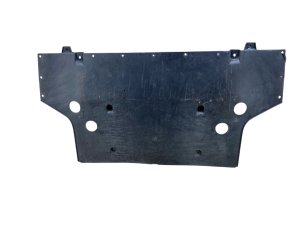
| 1420509-00-A / 1420509-00-B | Front High Voltage Battery Protection Plate |
| 1585184-00-C | Mid Aero Shield Assembly |
| 1588165-00-C / 1588165-00-D | Rear Underbody Lower Aero Shield |
| 1591488-00-A / 1591488-00-B | Underbody Shield Component |
| 1585229-00-B | Front Underbody Aero Shield |
Frequently Asked Questions (FAQ)
Can I drive my Model S or Model X with a broken or missing underbody shield?
You can for short distances, but it is not recommended for long-term use. A dragging shield can be a road hazard to other drivers if it fully detaches. A missing shield exposes the expensive high-voltage battery and drive units to potential impact and water damage, and it also negatively affects the vehicle's aerodynamics, which can slightly reduce your driving range.
Is a damaged aero shield covered under Tesla's warranty?
Generally, no. Damage to underbody shields is almost always considered to be caused by an external factor like road debris, a curb, or deep water, which is not covered by the vehicle's limited warranty. Replacement is typically an out-of-pocket expense.
Why not just remove the shield and not replace it?
This is a bad idea. The shield serves two important functions: it protects the multi-thousand-dollar battery pack from punctures and debris, and it is a key part of the vehicle's aerodynamic design. Driving without it increases the risk of catastrophic damage and reduces energy efficiency.
Is an aftermarket aluminum shield better than the OEM plastic one?
It depends on your needs. For protection, an aluminum shield is far superior and can prevent damage that would destroy the OEM part. However, it is more expensive and heavier. For most drivers, a direct OEM replacement (new or used) is perfectly adequate and maintains the original design and aerodynamic properties.
Helpful Videos
Technical Specifications
OEM Part Numbers: 1420509-00-A 1420509-00-B 1585184-00-C 1588165-00-C 1588165-00-D 1591488-00-A 1591488-00-B 1585229-00-B
Material: Fiber-reinforced composite or plastic. Fasteners: Typically 10mm bolts and plastic push-clips. Torque spec for bolts is approximately 3 Nm.
We Have This Part in Stock

The information in this article is provided for general reference and educational purposes only. Vehicle specifications, procedures, and part compatibility can vary by production date, trim level, and region. Always consult your vehicle's factory service manual and verify part numbers before purchasing or performing repairs. Safety-critical components such as airbags, seat belts, and braking systems should be installed by a qualified professional.
- Tesla Model S:
- Tesla Model X:
- 🎬 Helpful Videos
- 🛍️ Shop This Part
- Symptoms of a Damaged Underbody Shield
- Scraping or Dragging Noises
- Visible Damage or Sagging
- Vibration at Speed
- Known Issues and Common Causes of Failure
- Buying a Used Engine Splash Shield
- What to Inspect on a Used Shield
- Aftermarket Aluminum Alternatives
- Replacement Guide
- Step-by-Step Replacement Process
- Cost Comparison
- OEM Part Number Reference
- Frequently Asked Questions (FAQ)
- 🎟️ Get 5% Off