

2017-2025 Audi & Porsche Piston Guide: EA839 & EA825 Engine Failures and Part Numbers
A detailed guide to diagnosing and replacing failed pistons in the 3.0L V6 (EA839) and 4.0L V8 (EA825) engines found in many modern Audi and Porsche models.
- These engines use different, non-interchangeable pistons for different cylinder banks. You MUST verify the correct part number for your specific cylinder before buying.
- Piston failure in the 3.0L V6 (EA839) is often caused by a known rocker arm bearing issue (2017-2019 models) or an inherent piston design flaw.
- Audi has issued a Piston Skirt Warranty Extension for 8 years/80,000 miles on many EA839-equipped vehicles, which may cover repair costs.
- Replacement is an expert-level, engine-out job with labor costs often exceeding $5,000, making a complete used engine a more common and practical repair.
Engine and Vehicle Fitment Overview

This guide covers the engine pistons for two related, high-performance engine families developed by Audi and Porsche: the 3.0L single-turbo V6 (EA839) and the 4.0L twin-turbo V8 (EA825). These engines are shared across a wide range of vehicles from 2017 to 2025. It is critical to identify your vehicle's specific engine, as pistons are not interchangeable between them, and often not even within the same engine.
Critical Compatibility Warning: Both the 3.0L V6 and 4.0L V8 engines use different piston part numbers for different cylinders. This is not a suggestion; they are physically different and cannot be interchanged. Always verify the exact part number required for your specific cylinder location before purchasing.
- 3.0L V6 (EA839): Uses different pistons for cylinders 1-3 versus cylinders 4-6.
- 4.0L V8 (EA825): Uses different pistons for cylinder bank 1 (right side) versus cylinder bank 2 (left side).
Vehicles with the 3.0L V6 (EA839) Engine:
- 2017-2025 Audi S4
- 2017-2025 Audi S5
- 2017-2025 Audi SQ5
- 2017-2025 Audi Q7 (55 TFSI)
- 2019-2025 Audi Q8 (55 TFSI)
- 2018-2025 Audi A6 (55 TFSI)
- 2018-2025 Audi A8 (55 TFSI)
- 2017-2024 Porsche Panamera (Base)
- 2017-2025 Porsche Cayenne (Base)
- 2019-2021 Porsche Macan S
Note for Porsche Macan owners: This piston fits the 3.0L single-turbo V6 used in 2019-2021 Macan S models. It will not fit the 3.0L twin-turbo V6 used in 2015-2018 Macan S models, which is a different engine (EA837).
Vehicles with the 4.0L V8 (EA825) Engine:
While the prompt focuses on the models listed above, the 4.0L V8 piston is found in higher-performance versions of these platforms, such as:
- Porsche Panamera (GTS, Turbo)
- Porsche Cayenne (GTS, Turbo)
- Audi SQ7, SQ8, RS Q8
- Audi S6, RS6, S7, RS7, S8
Symptoms of a Failing Piston

Piston failure is a critical engine problem. If you notice any of these symptoms, stop driving the vehicle immediately to prevent catastrophic engine damage.
- Engine Knocking or Ticking: A rhythmic metallic ticking or knocking sound that increases with engine speed is a primary warning sign. This can be caused by a failing rocker arm (a precursor to piston damage) or by "piston slap," where the piston itself is rocking inside the cylinder.
- Excessive Oil Consumption: A sudden increase in the need to add engine oil can indicate that damaged piston rings or scored cylinder walls are allowing oil to bypass into the combustion chamber and burn off.
- Blue Smoke from Exhaust: Visible blue-tinted smoke coming from the tailpipe, especially during acceleration, is a clear sign that oil is being burned in the cylinders.
- Engine Misfires and Rough Running: A damaged piston can lose compression, leading to an incomplete burn in that cylinder. This will cause the engine to run rough, hesitate, and trigger a flashing Check Engine Light with codes like P0300 (Random/Multiple Cylinder Misfire) or P0301-P0308 for a specific cylinder.
- Metal Shavings in Oil: This is a definitive sign of internal engine failure. When changing the oil, finding metallic particles or a glitter-like sheen in the used oil or filter confirms that metal components are grinding against each other.
Known Issues, TSBs, and Warranty Extensions

Piston failure in these engines, particularly the 3.0L EA839, is often linked to other known issues. Understanding the root cause is essential for a lasting repair.
Issue 1: Rocker Arm Failure (EA839, primarily 2017-2019 models)
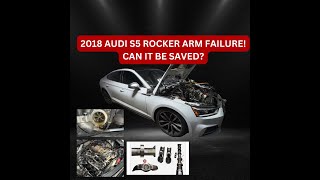
The most significant issue on early EA839 engines is the failure of needle bearings in the rocker arms. These tiny bearings can disintegrate, sending metal fragments throughout the engine. This contaminated oil then scores camshafts, cylinder walls, and can lead directly to piston damage and complete engine seizure. Audi revised the rocker arm design around mid-2019 to use more durable bearings. While some technicians report a low failure rate of 1-2%, many owners and independent shops consider it a major risk for earlier models.
Issue 2: Piston Design Vulnerability (EA839)
Independent engineering analysis has identified potential design weaknesses in the stock EA839 pistons. These include a tendency for the piston to rock in the cylinder, causing premature wear on the piston skirt. Additionally, the oil drain holes in the piston can act as stress points, leading to cracks and eventual ringland failure, even in stock, unmodified engines.
Official Response: Audi Piston Skirt Warranty Extension (EA839)
In response to these issues, Audi of America has extended the warranty for piston skirts on affected vehicles to 8 years or 80,000 miles from the original in-service date. This extension covers failures diagnosed as a defect in material or workmanship. If you own an affected Audi and experience symptoms, contact your dealer immediately and reference this warranty extension. Note that as of early 2026, Porsche has not announced a similar official extension for its vehicles using the same engine.
Issues for the 4.0L V8 (EA825)
The EA825 is generally considered very robust. However, piston damage can occur as a secondary result of other failures:
- Water Pump Failure: A known TSB (Audi 2074303/6) describes how a faulty water pump can leak coolant into vacuum lines, leading to overheating. Severe overheating can warp or crack the aluminum cylinder heads, which in turn can cause piston damage.
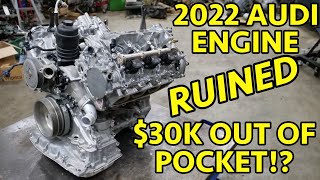
- Broken Valve Springs: Audi issued TSB 2065684/5 for some 2021-2022 models due to faulty valve springs. A broken spring can allow the valve to drop into the cylinder, striking the piston and causing catastrophic damage.
Buying a Used Engine Piston: Inspection and Verification

Replacing a single piston is a massive job, so ensuring the quality of a used part is paramount. For internal engine components like pistons, a used OEM part is often superior to a cheap aftermarket alternative due to precise weight, material composition, and thermal expansion properties that are critical for a balanced, reliable engine.
Pro Tip: When one piston fails, especially due to rocker arm debris, there is a high probability of damage to other cylinders, bearings, and oil passages. A single used piston is typically only a viable repair if the failure was isolated (e.g., a single cracked ringland with no debris) and the rest of the engine is confirmed to be undamaged via borescope and oil analysis.
Physical Inspection Checklist:
- Piston Crown: Inspect the top surface of the piston. Look for any pitting, melting, or unusual marks that could indicate detonation (improper fuel explosion) or contact with a valve.
- Piston Skirt: Examine the sides of the piston. Look for deep vertical scratches or scoring. Heavy scoring indicates it was run with contaminated oil or poor lubrication. Uneven wear patterns can be a sign of the inherent "piston rocking" issue.
- Ring Lands: These are the grooves where the piston rings sit. Carefully inspect them for any cracks, chipping, or warping. A cracked ring land is a common failure mode and renders the piston useless.
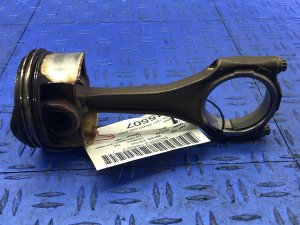
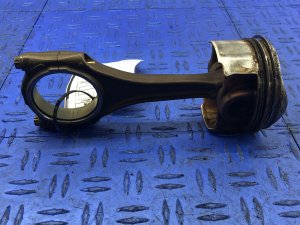
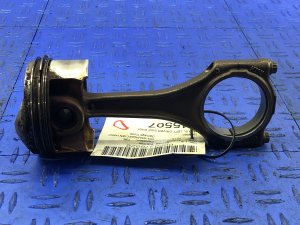
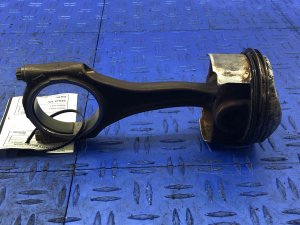
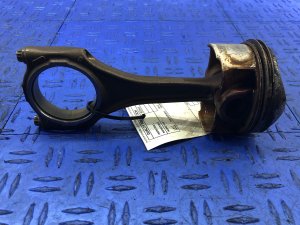
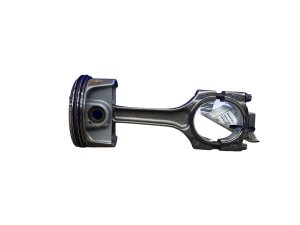
- Connecting Rod: Most used pistons are sold with the connecting rod attached. Check that the rod is straight and has no signs of heat discoloration (blueing). The bearing surfaces at the large end should be smooth.
- Source Vehicle Information: Always try to get the VIN and mileage from the donor vehicle. A piston from a low-mileage, non-wrecked vehicle is ideal. Avoid parts from flood or fire-damaged cars, as water can cause corrosion and heat can alter the metal's integrity.
Replacement Difficulty and Cost

Replacing an engine piston is one of the most intensive repairs possible and should only be performed by an expert technician specializing in European engines.
- Difficulty: 5 out of 5
- DIY Feasible: No. This is not a DIY job.
- Procedure: The engine must be completely removed from the vehicle. It is then fully disassembled on an engine stand to access the crankshaft and pistons. This requires numerous special tools for timing the engine, stretching torque-to-yield bolts, and pressing wrist pins.
- The Rebuild vs. Replace Dilemma: Because labor costs are so high (often exceeding $5,000), replacing a single piston is rarely cost-effective. If an engine has significant damage or high mileage, many shops will recommend replacing the entire engine with a tested, low-mileage used unit. A complete used EA839 engine can often be sourced for $5,000-$10,000, making it a more practical and reliable option than a partial rebuild.
Cost Comparison
| Part/Service | Estimated Cost | Notes |
|---|---|---|
| New OEM Piston (Single) | $250 - $400 | Price is for one piston with rings and pin. Must be ordered from a dealer. |
| New Aftermarket Piston Set (Forged) | $900 - $1,800 | For a full set of 6 or 8. Often for high-performance builds. Brands include Mahle, JE Pistons. |
| Used OEM Piston (Single) | $100 - $200 | Typically includes the connecting rod. A cost-effective option for isolated failures. |
| Shop Labor (Piston Replacement) | $4,000 - $8,000+ | Involves complete engine removal and disassembly. Often exceeds the cost of a used engine. |
| Used Complete Engine (EA839) | $5,000 - $10,000+ | A common alternative to rebuilding a damaged engine. |
Frequently Asked Questions (FAQ)
Can I replace just one failed piston?
Technically yes, but it's often not recommended. The cost of labor to tear down the engine is immense. Furthermore, if the failure was caused by debris (like from a rocker arm), that debris has likely damaged other components. It's also not ideal to have one new piston with new rings in an engine with older components, as this can lead to an unbalanced assembly. Most professionals will recommend a complete used engine if significant internal damage is found.
What is the main cause of piston failure in the 3.0L EA839 engine?
There are two primary, often related, causes. The first is the failure of rocker arm bearings in 2017-2019 models, which sends metal through the engine, scoring cylinder walls and damaging pistons. The second is a potential design flaw in the piston itself that causes it to rock in the cylinder, leading to skirt wear and cracks originating from the oil drain holes.
How do I know which piston part number to buy for my engine?
You must physically inspect the existing pistons or have your mechanic do so. For the 3.0L V6, there are different parts for cylinders 1-3 and 4-6. For the 4.0L V8, there are different parts for the left and right cylinder banks. The part number is often stamped on the piston itself. There is no other reliable way to guarantee you are ordering the correct part.
Is my car covered by the Audi Piston Skirt Warranty Extension?
If you own an Audi with an EA839 engine and it is less than 8 years old and has under 80,000 miles, you may be covered. The coverage is for diagnosed failures of the piston skirt due to a manufacturing defect. You must take the vehicle to an authorized Audi dealer for diagnosis. The warranty extension does not apply to Porsche models at this time.
Helpful Videos
Technical Specifications
OEM Part Numbers: 06M107065AB 06M107065AD 06M107065AK 06M107066AB 06M107066AD 06M107066AK 06M107099 06M107100J 0P2107065K 0P2107066K 9A710706530 9A710706531 9A710706630 9A710706631 PAB107066C
Engine Family: EA839 (3.0L V6 Single-Turbo), EA825 (4.0L V8 Twin-Turbo). Piston design varies by cylinder bank. 3.0L V6 uses separate part numbers for cylinders 1-3 and 4-6. 4.0L V8 uses separate part numbers for Bank 1 and Bank 2.
We Have This Part in Stock

The information in this article is provided for general reference and educational purposes only. Vehicle specifications, procedures, and part compatibility can vary by production date, trim level, and region. Always consult your vehicle's factory service manual and verify part numbers before purchasing or performing repairs. Safety-critical components such as airbags, seat belts, and braking systems should be installed by a qualified professional.
- Porsche Cayenne:
- Porsche Panamera:
- Audi S4:
- Audi S5:
- AUDI SQ5:
- Porsche Macan:
- Audi A6:
- Audi A8:
- Audi Q7:
- Audi Q8:
- Audi A7:
- VOLKSWAGEN TOUAREG:
- Audi RS Q8:
- Bentley Bentayga:
- 🎬 Helpful Videos
- 🛍️ Shop This Part
- Engine and Vehicle Fitment Overview
- Vehicles with the 3.0L V6 (EA839) Engine:
- Vehicles with the 4.0L V8 (EA825) Engine:
- Symptoms of a Failing Piston
- Known Issues, TSBs, and Warranty Extensions
- Issue 1: Rocker Arm Failure (EA839, primarily 2017-2019 models)
- Issue 2: Piston Design Vulnerability (EA839)
- Official Response: Audi Piston Skirt Warranty Extension (EA839)
- Issues for the 4.0L V8 (EA825)
- Buying a Used Engine Piston: Inspection and Verification
- Physical Inspection Checklist:
- Replacement Difficulty and Cost
- Cost Comparison
- Frequently Asked Questions (FAQ)
- 🎟️ Get 5% Off